Men's magazine Doberman.media continues Write about men, about their past and present. Three representatives of the queer community from Belarus shared how they live in their new cities and countries, as well as about the specifics of queer life in their new reality.
An urgent problem for many representatives of the queer community is now emigration and the choice of a new country/city.
Let's look at the world through the eyes of men who now see reality in a completely different way. Our heroes shared their experience of living in their new cities and countries
Heroes
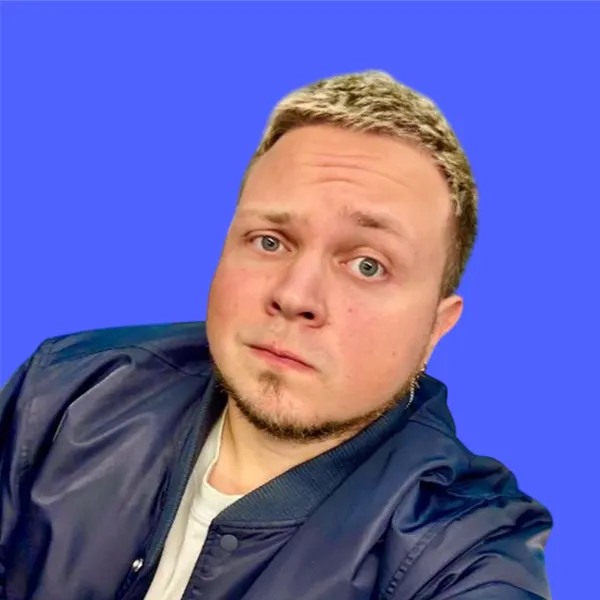
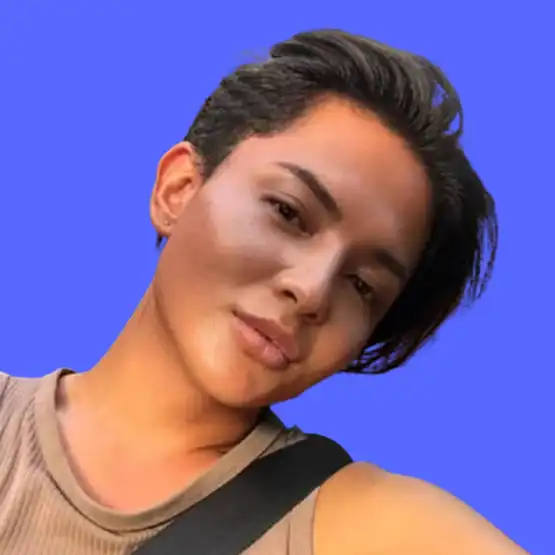
Artyom, 21 years old / Tbilisi

My name is Artem and at the moment I do not live in Belarus. I am engaged in the creation of educational content (graphic design and video editing). I often go to the gym, I try to lead a healthy lifestyle. I am interested in learning various foreign languages, and my goal for the coming years is to learn all the languages of the neighbors of Belarus. I used to do dancing: jazz, funk and hip-hop, but I can't afford to do them as often as I used to. I'm also gay, which I don't think defines me as a person, but in a way, I feel like I'm part of the queer community.
I realized I was gay when I was about 12 years old. I immediately accepted it for myself, but I was afraid of how other people would perceive me. I was afraid that they would stop talking to me and making friends, since I read the experience of other people on the Internet and they did not give me hope. I saw how badly my parents treated gay people and it also didn't allow me to be completely open. But I was lucky enough to have people at my school whom I trusted and was able to open for the first time at the age of 13. We are still friends with some of those people. From that moment on, I gradually became more and more open, and at the age of 19, I decided that I would not hide this fact about me from anyone. In the first two years of university (from 17 to 19 years old) I opened up only to some people, and in the third year I no longer hid anything from anyone. But I did not finish my studies and left Belarus. Now, at 21, I feel even more confident and do not hide my identity in a new country.
In my city, this is a regional center (в Беларуси, – примечание редактора), I felt afraid to hold hands with the guys I went on dates with. Despite this, I fundamentally wanted to show signs of attention to the guys in public, in order to be an example for others that we should not be afraid. Of course, there were unpleasant looks, but this is not the worst thing. One day, when I was walking home from a dance with a group of girls I knew, some guys shouted something like "faggots" because they saw makeup on the eyelids on our entire group. And for them, makeup is not manly, and it is not good in their understanding. In all other respects, I can't remember cases when I would have been denied service or otherwise violated my rights, because for sure the fact of belonging to LGBTQ+ is not very noticeable to me visually.
At the time I left (из Беларуси), there were several things that pushed me to leave. It was hard for me to feel fear for my safety every day. I am the kind of person who demands peace of mind and personal space. I have not finished my path of emigration. My goal is a country where same-sex marriage is legalized, or at least civil unions. I want to focus where I will be more confident in my future.
I don't feel at home in a new country, I still don't have confidence about what will happen to my life in a month or two. As an LGBTQ+ person, life became freer for me immediately after moving. I calmly kissed my now ex-boyfriend and held hands with him as I walked through the streets. There was only one moment when they shouted curses at our backs, but did not dare to come close to us. I feel freer here.
Also, after moving, I was drag queen and performed several times in bars. For comparison: drag culture in Belarus is not developed at all, and therefore in Belarus I would hardly have the opportunity to act in such a role.

The problems I faced in emigration...
Один из вызовов с которым я столкнулся в Грузии-это цены на тестирование на ЗППП, они здесь просто космические. Из-за этого здесь легко подцепить болезнь, если не пользоваться защитой, и также непросто выявить заболевание. Но несмотря на это, сексуальная жизнь у меня здесь более активная из-за того, что город больше моего родного города в Беларуси, и соответственно выбора [парней] больше.
Life in a new country has become freer for me. But most countries in the world are currently freer than Belarus, so this is not surprising. In the near future, I would like to move to a place where I know that my relationship can be legitimized.
If you have the opportunity to emigrate to a freer country, emigrate. Do not wait for a stellar time in Belarus, because you have only one life, do not lose it on imaginary illusory prospects. You will learn the language abroad, find a job, someone will support you. You are not alone, but we, Belarusians, are a solidary people.
If there is no opportunity to emigrate, then remain yourself, try to positively influence the people around you. Show by your example that our community is an integral part of society. Be open about how safe it is for you, it usually gives a positive response. But if someone turns away from you, then this person is not the one you need in life. I know that a large number of us are people with incredible energy, do not lose it on unnecessary people.
On the specifics of queer life in Tbilisi
There are many gay bars and clubs in Tbilisi where QUEER events are regularly held. Vashlovani Street and its surroundings are known to many in the gay community of Tbilisi - there are queer places. A drag ball is regularly held in Tbilisi, where famous people are also invited as a jury or just as guests of honor. Drag balls are held in different clubs, usually they take spaces where they can accommodate more people. I'm not a fan of clubs, raves and other things, but as far as I know, there is a well-developed techno culture here and most of the community attends local events. The gay community in Tbilisi is growing, and in recent years it has become a little more adequate and acceptable. If we take society as a whole, then Georgia is a religious country, but Tbilisi is a more progressive city than the average city in the country. I know many local young people who do not identify with religion, and have absolutely adequate attitudes towards the LGBTQ+ community. But there are also young Christians who are also okay with the LGBTQ community. People who are 30 or older are still not so progressive, but even if you look feminine or have some LGBTQ+ attributes, they will most likely not do anything to you, at most they will say something in the back. Also, the crime rate here is low and therefore violence against members of our queer community is rare.
About the comfort of being queer in Tbilisi
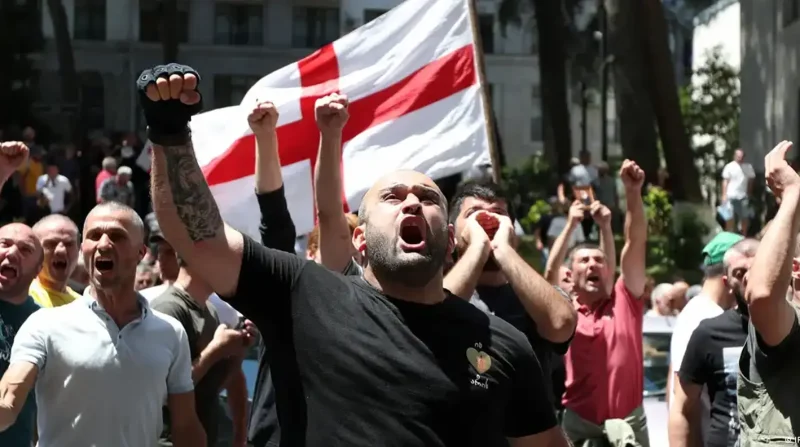
At the moment, the ruling party of Kartuli Otsneba says that it plans to pass a law "on the prohibition of LGBTQ+ propaganda."
Reference. By the end of the spring session of the Georgian legislature, the parliamentary majority from the ruling Georgian Dream party plans to adopt 19 laws under the general title "against LGBT propaganda among minors and for the protection of family values." This was announced at a briefing for journalists by the speaker of the parliament Shalva Papuashvili.
In this atmosphere before the elections that will be held here in October 2024, this does not add peace to me. But until this law is passed, I am not afraid of being gay in Tbilisi as a foreigner. Although, I can't say the same about a certain percentage of local LGBTQ+ people.
Some of them are afraid that someone will find out about their sexual orientation or body dysmorphia. Some local queer people are afraid of being shamed, because being gay or bisexual is not according to Georgian family traditions. Therefore, someone hides their face on dating apps, and someone, for example, does not say their real name. But if you compare my hometown in Belarus and Tbilisi, then people here are definitely freer. Basically, from my personal feelings, I would say that most people don't care who you have sex with, but the main thing is not to stick it out too much and not to shout about it at every corner.
In my opinion, if we compare the difference in the comfort of life between Georgia and Belarus, then it is not scary to live in Georgia. That's all.
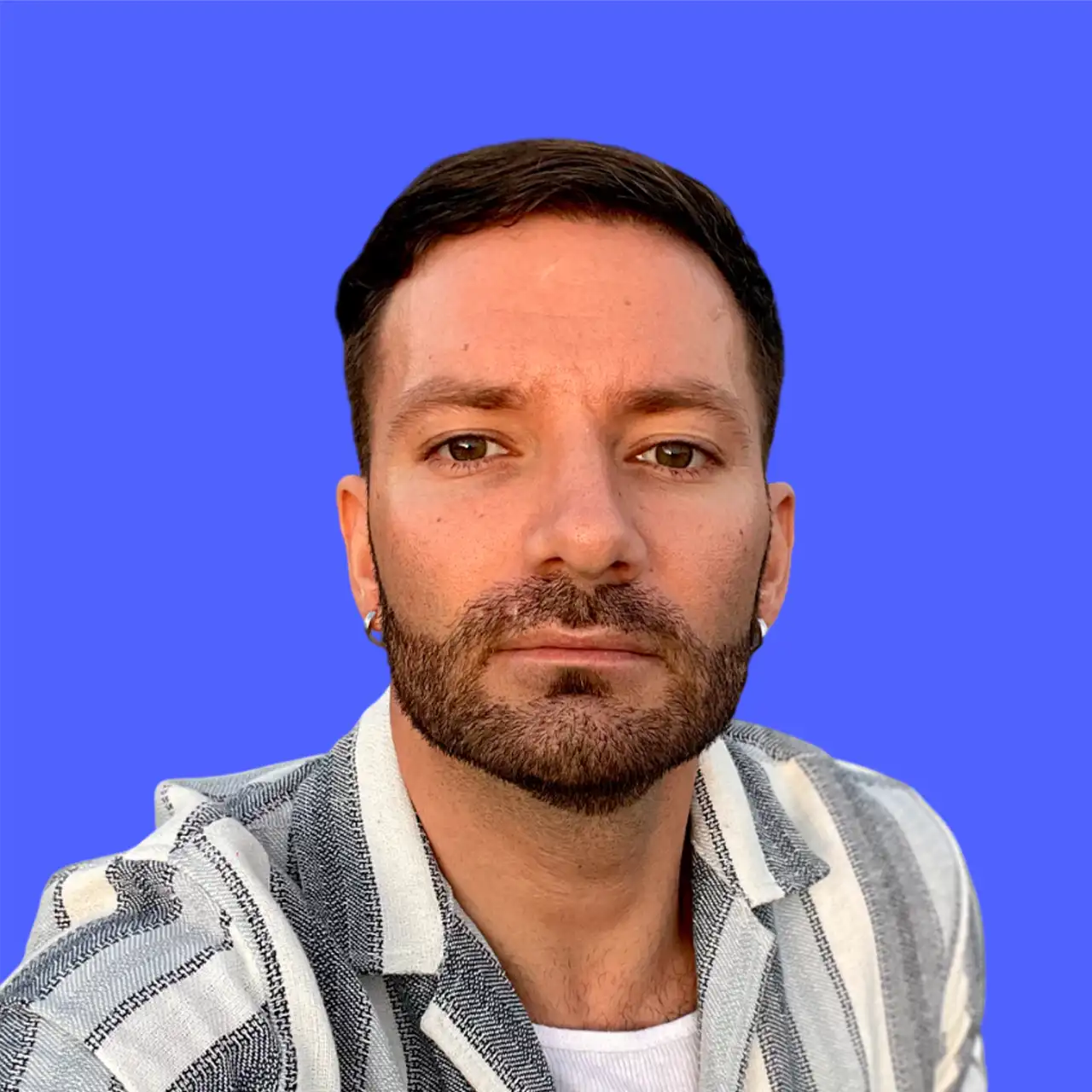
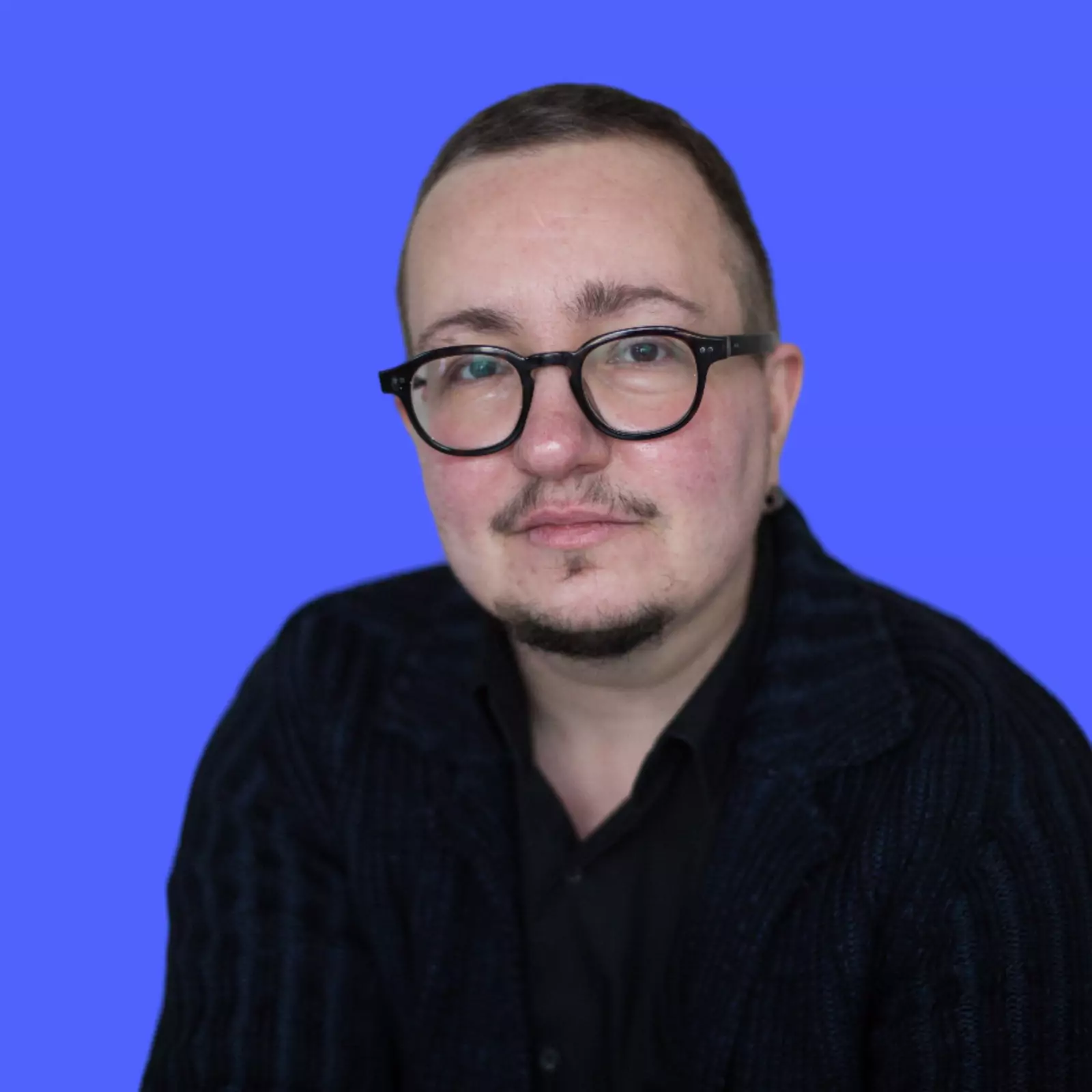
Dima, 22 years old / Berlin
“Berlin – the place to be,” as they say, and it’s true.

My name is Dima, I am 22 years old, and I am from the Belarusian city of Stolbtsy. I don't know if it's worth talking about the fact that everything in Belarus is super in terms of queer culture, about homophobic society and so on?!
As a child, I was called "to the arrows" just every other day simply because of a colored sweater or earring in my ear.
By the way, I realized very early on that I was gay, but I did not have a heavy self-acceptance, on the contrary, I accepted it as my highlight.
In Minsk, where I moved to study, I deliberately forged my passport in order to get into the country's only gay club, Burlesque, at the age of 16. That's where the local queer community hung out. There was nothing else for queers in Minsk. And so the time passed: Minsk, Saturday evening, gay club, champagne, and my 16, and then 17, and then 18 years.
After the elections in 2020 and the beginning of repression against the opposition and free Belarusians, the life of queer people became more difficult, and soon I had to leave with my boyfriend for Kyiv because of the criminal case against me. After living in Kyiv for six months, with the beginning of the war, we were forced to move to Poland.
We didn't really like Poland right away. And we decided to go further, and randomly went to Germany, without any specific goal. And so our next journey began.
We ended up in Nuremberg. We went there because of the documents and met the local Germans and quickly got into their "bubble", as they received us very friendly. They were very supportive and made it clear that being a gay couple is the norm.
I used to feel that I could cause a negative reaction from others with my manifestations of love on the street, and, for example, colored hair. Here there is no such feeling.
Before living in Germany, I really thought that all this (manifestations of love in public places, for example) could be done at home, and not on the street. After all, as the redneck jokes (I don't know how to replace this word), gays should not show themselves in public places, and if they need it, let them kiss at home.
During these six months in Nuremberg, we tried to legalize, while absorbing the culture of freedom. It was an invaluable experience that changed me a lot and revealed me as a person and queer, but, unfortunately, we were not given legalization, and we had to return to Poland.
Here (in Poland), Ukrainians and Belarusians, who brought their homophobia with them, created an unpleasant atmosphere for us. A year and a half in Poland was difficult: we didn't like the way they looked at us, how they treated us, after living there for a year and a half and burning out terribly, we decided to go to visit Berlin for a week, since our contract for an apartment had just ended.
We came to Berlin for a week of partying, but ended up falling in love with this city and have been living here (with my boyfriend, — editor’s note) for the second month now.
“Berlin – the place to be,” as they say, and it’s true.
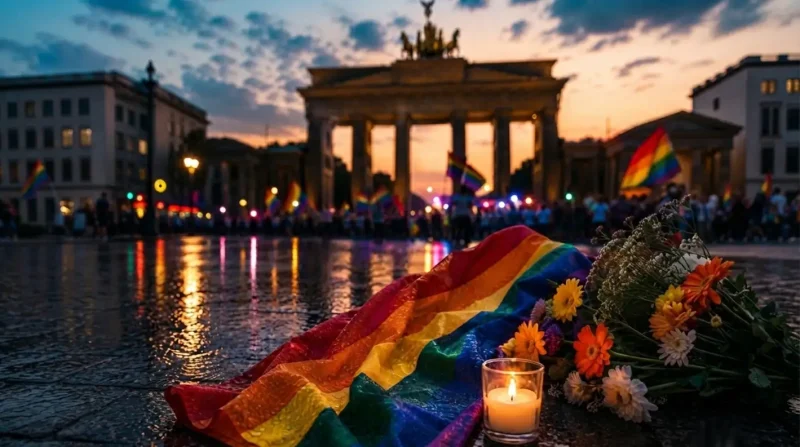
I really feel that Berlin is my place. You don’t need to explain who you are here or prove anything. Berlin accepts you as you are: gay, queer, with dyed hair, holding hands, without any questions. There are entire gay districts here, gay bars, gay clubs, gay saunas, gay hotels. Everything for the queer community. There’s even a gay museum here!! Berlin feels not just like a city, but like home, a place where you can freely express yourself, communicate in any language in the world, and feel part of a global community. Even simple strikes are received with enthusiasm here, because they show freedom and everyone’s right to defend their interests.
In Berlin I feel as free as anywhere. Life here allows me to be “high without drugs,” because every day is filled with new impressions and encounters. And now I know that I am no longer just Belarusian, I am a citizen of the world. And the whole world belongs to me, just as I belong to it.
What would I say to members of the queer community who want to emigrate? If you’re thinking about emigration — dare to do it.
P.S. I wanted to add separately that Germany as a whole is a country of freedom and comfort, and Berlin is the heart of it all.
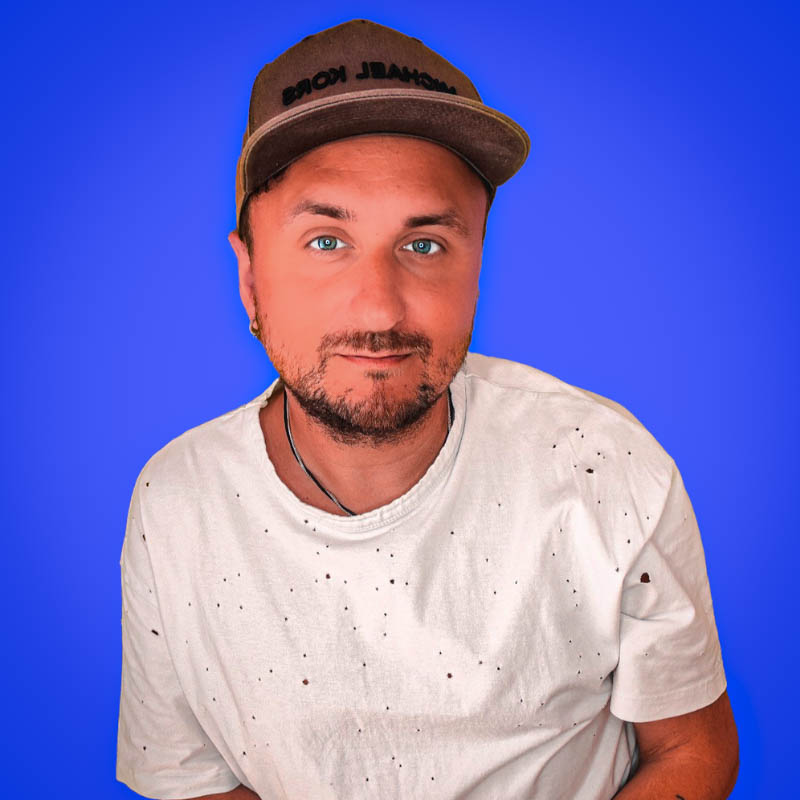
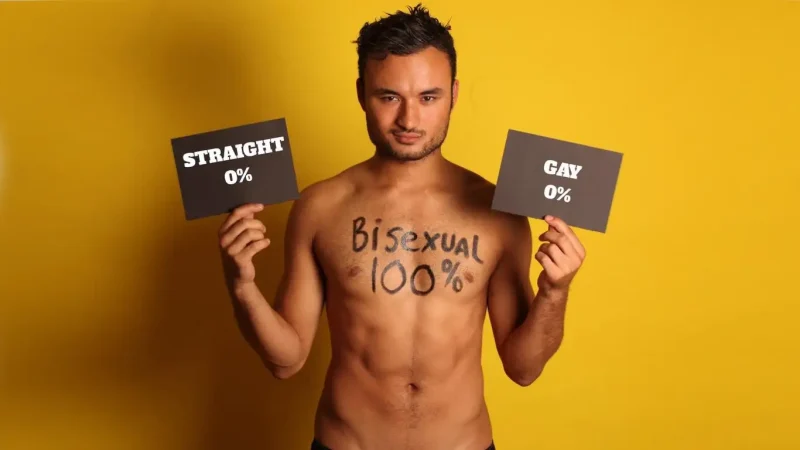
Kirill, 37 years old / Warsaw
My name is Kirill, I am 37 years old. I was born and grew up in Minsk and have been living in Warsaw for 18 years.

On how you evaluate your life before and after emigration
Now, after a while, I understand that in many ways I was very lucky. The period of my growing up fell on still quite good-natured times in Belarus - the late 90s and early 2000s. In addition, my family and my surroundings were not religious, which made my coming out when I was 17 go pretty smoothly.
Over time, I realized that in Belarus I was constantly in a kind of "center" bubble, where there was really little homophobia. At that time, the Internet was already developing quite intensively, there was even a real Belarusian gay portal, which really changed my life dramatically. There was a forum on this portal, but the main one was the chat. Thanks to this chat, I got acquainted with the Minsk queer party and joined it with my head. We had a fairly large company of young people (boys and girls), we were friends, hung out together in such a cult place as Panikovka near the House of Officers, went to clubs - first of all, to the Minsk cult club Narcissus (which we all called Buttercup) on Partizansky Avenue 6A, we even went on some trips.
About life in Belarus
It's hard to believe now, but we behaved really openly and quite freely. Even most of my classmates in the 11th grade already knew that I was gay. But I have never heard a single offensive word in my direction.
I value that period of my life very much, because it largely shaped me as a person.
Doberman.media: If everything was free enough, why did you emigrate? What influenced this?
Everything changed after the 2006 elections, when I moved to Poland under the program of Kastus Kalinouski.
In Warsaw, I felt even more free. Even then, there were quite a lot of clubs, LGBT organizations, and a gay pride parade was held annually, which, of course, could not happen in Belarus. But we must understand that Poland in 2006, and Poland now, are two different countries, with a completely different level of acceptance of LGBTQ+ people by society.
В течение этих 18 лет, которые я здесь живу, Польша прошла путь от гомофобной страны, до достаточно открытой страны с толерантным обществом. И согласно последним социологическим опросам, 66% поляков выступают за введение института общественных партнерств, включая однополые пары. И даже однополые браки поддерживает уже более половины польского общества.
If someone from the LGBT community is thinking about emigration, then Poland can be a good choice, especially when it comes to large cities.
In Warsaw, the mayor of the city has been taking part in the equality parade for several years, there are organizations that are engaged in the education of society, helping non-heteronormative people who find themselves in a difficult life situation.
I also want to add that there is a fairly developed queer life in Warsaw, there are numerous clubs such as Glam, Metropolis, La Pose, bars - Lodi Dodi, Instytut. Various events that are organized by LGBT organizations regularly take place, especially during Pride Month.
0 comments
Enter your email — we’ll send you a one-time code. No passwords or accounts.
Code sent to
If the email doesn't appear in your inbox within a few minutes, check your spam, junk, or promotions folder, as some email services may mistakenly place automated messages there