

Opinion of Doberman.media's editor-in-chief
Damn! I got pissed off! Sometimes it seems to me that some representatives of the Russian-speaking liberal media sphere are so eager to find good news about Russia that they start taking what they want for reality. Especially when it comes to homophobia.
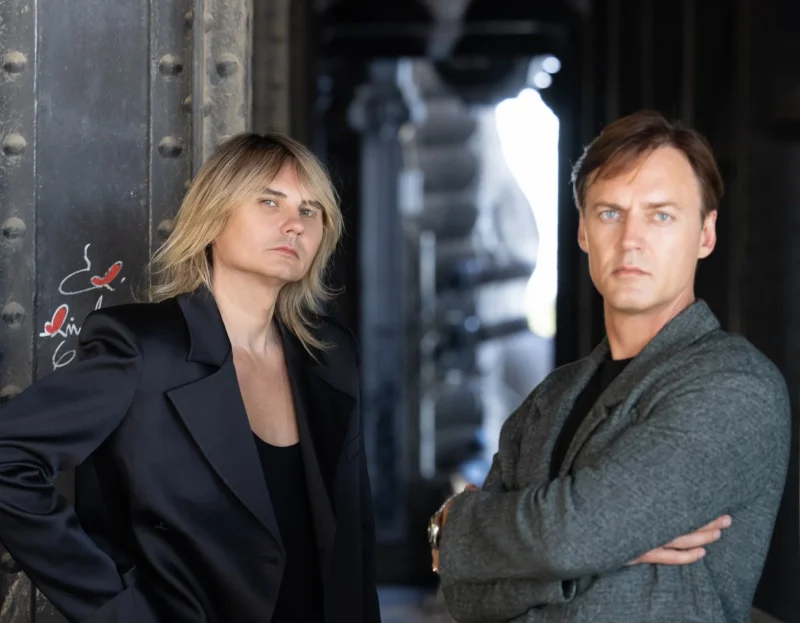
Today on Doberman.media an article was published by Sergey Gortov about the high-profile breakup of Sergey Grey Wiese and Andrey Grigoryev-Apollonov. The principle of Doberman.media is this: every gay man can express his opinion in this online magazine. And unlike other media, no one here reflects on one topic or another; readers are given the right to think for themselves and draw their own conclusions. That is how they communicate with an intelligent audience, which is what the readers of Doberman Media …
But in this article, the author argues that the story of two men, whose relationship is followed by millions of users, supposedly helps overcome everyday homophobia in Russia.
Moreover, the article claims that this story has done more to win acceptance for gays than years of work by human-rights defenders and activists (a quote from Dozhd TV host Anna Mongayt).
I do not agree with this statement! Not only do I disagree, I consider this article dangerous. But at the same time, I see no point in removing it from the site, since major media outlets broadcast such a viewpoint to a massive audience ... I believe it is necessary to explain why I am so fired up.
Let me say right away: I do not intend to downplay Sergey and Andrey's popularity, their openness, or the audience's interest in their private lives. The very fact that millions of people watch the relationship of two men, discuss their love, conflicts, and breakup, truly deserves attention. But there is a huge difference between interest in someone else's private drama and acceptance of gays in real life. And this difference cannot be ignored.
Someone else’s life as a series, and one’s own life as a threat
Let’s imagine a simple situation.
Somewhere in Paris or Berlin, two men live. They are together, they run social media accounts, travel, argue, make up, buy things, go to restaurants, film videos, and tell their followers about their lives. Then problems begin in their relationship. They break up, give interviews, and sort things out publicly. Thousands watch all this, and then millions of people in Russia.
Some sympathize with Sergey, others support Andrey. Some discuss their behavior, some condemn it, and some simply enjoy another episode of a drawn-out internet drama.
And that raises a fundamental question: what exactly does this kind of popularity prove?
It proves that people are interested in watching other people’s lives. Maybe they truly empathize with the heroes. Maybe they see their own experiences reflected in these relationships. But does that mean the same people are ready to calmly accept two gay men in their own lives?
Let’s move this story from Paris or Germany to an ordinary Russian city.
Let’s imagine that the same Sergey and Andrey live not in a European capital, but in an ordinary Russian five-story apartment building. Their neighbors know they are a couple. They come home together, run into each other in the stairwell, go grocery shopping, invite each other over, and sometimes loudly settle their differences. It’s all the same as in the life of any other couple.
Will those same people who now watch their videos with interest be just as calm about two men next door?
Will they greet them in the elevator? Invite them to neighborhood gatherings? Accept their relationship calmly? Or will the whispering behind their backs begin, along with insults, complaints, threats, and attempts to make these people’s lives unbearable?
And if one of the neighbors decides he has the right to tell two men how they should live? What if the conflict spills beyond the internet and turns into a real-life confrontation?
That is when we can see the difference between interest in a gay couple on screen and acceptance of two gay men living side by side.
Geography matters
There is another detail that is somehow often forgotten.
Sergey and Andrey are in the European information and social space. They can openly talk about their relationship, make joint videos, discuss personal conflicts, and appear together in public. Their audience, meanwhile, can be anywhere, including Russia, Belarus, or Kazakhstan.
But the safety of people living in Europe cannot automatically be extended to those who remain in post-Soviet countries.
France and Germany do not become safe for all gay men simply because legal protections exist there. There are still hate crimes, discrimination, and everyday homophobia. But people there have entirely different legal and social mechanisms of protection.
In Russia, the situation is fundamentally different. In recent years, state policy has not merely restricted the rights of queer people. It has steadily created an atmosphere in which mere membership in the community becomes grounds for suspicion, stigmatization, and persecution.
The situation in Belarus is also far from safe. In Kazakhstan, Kyrgyzstan, Armenia, Azerbaijan, and other former Soviet countries, there are their own forms of discrimination, pressure, and public hostility. At the same time, the level of legal protection and the specific risks in these countries differ. They should not be lumped into one category, but nor should we pretend the problem is limited to Russian laws.
Being gay in the post-Soviet space still means facing risks that most heterosexual people do not face. Sometimes the threat comes from the state; sometimes from violence, blackmail, family pressure, dismissal from work, harassment, or fear of appearing in public with one’s partner.
That is precisely why it is so dangerous to create the impression that society has already gradually accepted everything, and that the remaining problems exist mainly at the level of isolated unpleasant incidents.
Everyday homophobia has not disappeared anywhere
It seems to me that, in discussing this story, there is a substitution of concepts.
A person can watch gay bloggers, buy tickets to performances by openly gay men, laugh at their jokes, follow their relationships, and even defend one of them in an online conflict. But that in no way guarantees that he does not feel hostility toward gay men in everyday life.
It is perfectly possible to watch two men kissing on screen calmly, yet feel annoyed when the same men are kissing in the apartment building next door.
You can support your favorite blogger, but not want your own son to turn out gay.
You can feel sympathy for a person going through a divorce from a man, but still believe that same-sex relationships are wrong.
This is not a contradiction that cannot be explained. It is a very real mechanism of selective acceptance. A person makes an exception for specific people he likes, but does not revise his views about the group as a whole.
That is precisely why the popularity of individual openly gay men cannot be used as a universal indicator of social tolerance.
Moreover, screen popularity sometimes creates the illusion of normality that does not exist in real life. We see thousands of comments, views, and discussions and begin to think that society has become much more tolerant. But comments under videos do not show what is happening in families, at work, at school, in apartment buildings, or on the street.
And all the more so, they do not show how safe it is for a person to live openly with their partner.
A dangerous illusion that plays into the hands of homophobia
What particularly worries me is when such conclusions start appearing in major Russian-language media.
In recent years, one can notice attempts to portray Russian society as much more tolerant of gays than is commonly believed. Sometimes examples are used of the popularity of certain bloggers, artists, or public figures. This raises a broader question about the gap between state homophobic policy and society's everyday attitudes.
Studying this contradiction in itself is completely normal. The problem begins when isolated examples of popularity are turned into proof that everyday homophobia supposedly no longer poses a serious threat.
This is a dangerous claim.
Because it can create a false sense of security among gay people themselves. A person looks at the popularity of open bloggers, reads about how millions of Russians follow the relationships of two men, and begins to think that the society around them has already changed. That it is now safe to come out, stop hiding a partner, not worry about neighbors, and not think about the consequences.
But online popularity is not protection from violence. Number of views does not cancel discrimination. And sympathy for a particular blogger does not guarantee safety for a person living next door.
We, as gay media, must be especially careful with such conclusions. Our job is not to artificially look for signs of acceptance where there is not enough evidence for it. Our job is to speak honestly about reality, even when it is unpleasant.
What about activists?
A comparison of bloggers with human rights defenders and gay activists deserves a separate discussion:
"Thanks to this drama, more was done to overcome homophobic attitudes in Russia than all gay activists had managed over all the years of the human rights movement in this area. Because people finally, even if unwillingly, saw that it’s all the same thing. It’s the same love, the same problems, the same sharp edges, the same breakups." It’s the same thing, just people of the same sex, that’s all. And when you watch it, you absolutely, apparently, even if you’re homophobic, switch off from this Milonov-style thing: "So what are they, like, two men?" And you realize that it’s exactly the same. A gay couple’s marriage works exactly the same way as a heterosexual couple’s marriage" — says Anna Mongayt.
Yes, perhaps, ordinary entertainment content sometimes reaches an audience that human rights publications do not reach. Perhaps the story of the relationship between two famous men evokes more emotion than dozens of analytical pieces about discrimination. And this is absolutely not surprising.
But popularity is not the same as results.
For years, human rights defenders have documented cases of violence, helped victims, supported people in danger, pushed for changes in legislation, created safe spaces, and tried to protect those who cannot protect themselves on their own.
Bloggers may unintentionally do important educational work simply by being open about their lives. That is truly valuable. But one does not cancel out the other.
You can't set an emotional story about a few well-known people against the decades of work by those who help ordinary gay men cope with the real consequences of homophobia.
Especially when we have no basis to claim that it was this particular story that changed social attitudes on a national scale.
Don't confuse interest in gay men with acceptance of gays
I don't want this text to be seen as an attack on Sergey Hortov or an attempt to diminish his work. Sergey is gay too, and I understand why the story of an openly same-sex couple may be seen as an important step toward visibility and normalization.
But being gay and still making mistakes in assessing social processes is quite possible. Our identity does not automatically make us right about everything related to homophobia.
I also don’t think Sergei and Andrey’s story should be seen purely negatively. On the contrary, I like that millions of people can observe the relationship between two men and see in it an ordinary human story. That is an important part of visibility.
But I am categorically against drawing the conclusion from this story that everyday homophobia has been defeated or that the danger to gay people in Russia has significantly decreased.
As long as a person in a Russian city is forced to hide their partner, as long as they fear the reaction of relatives, colleagues, and neighbors, as long as openness can lead to harassment, blackmail, or violence, it is premature to talk about overcoming homophobia.
And, perhaps, it is worth asking the simplest question here.
If Sergei and Andrey lived not in Paris or Germany, but in an ordinary Russian home, and if everything that happened to them were known to their neighbors, are we really sure that people’s reaction would have been the same as under their video?
I’m not sure.
And that is exactly why one should not confuse a multimillion audience with multimillion acceptance.
As long as we see gay men as interesting characters on screen, but are not ready to see them as equal people alongside us, homophobia has not gone away.





0 comments
Enter your email and we will send you a one-time code. No passwords, no accounts.
Code sent to
If the email does not arrive in your inbox within a few minutes, check your Spam, Junk or Promotions folder — some mail services may wrongly place automated messages there.