

There are topics the queer community talks about quite often, but in my view we still don’t always get to the heart of the matter. One of them is why we are so afraid of our relatives’ reactions when it comes to our relationships, love, and the right to be ourselves? Why is it that for some people, bringing a loved one home, posting a photo together, introducing a partner to their parents, or simply openly talking about their personal life feels completely natural, while for others it becomes a real ordeal? Why can some speak calmly about their love without thinking about the consequences, while others have to constantly choose their words, hide photos, make up explanations, and control every detail of their lives so they don’t accidentally reveal something the family isn’t ready to accept?
And most importantly: are we really obliged to take our relatives’ reaction into account so much that we give up our own happiness for their peace of mind? It seems to me this question deserves a much more serious discussion.
A life split in two
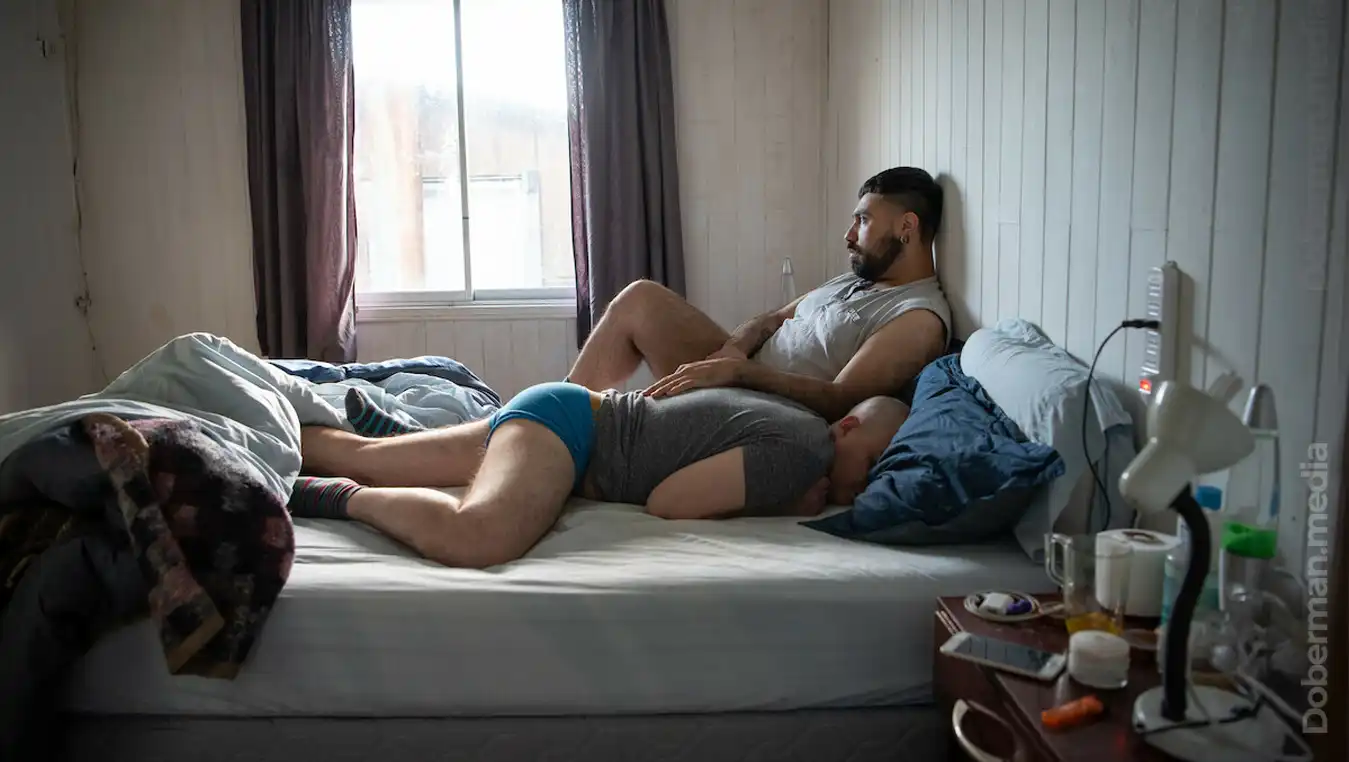
Many queer people know perfectly well what it means to live in two realities at once. In one reality, you are real. You have feelings, attractions, relationships, and someone you love. You can dream about a future together, make plans, go through ordinary everyday moments, and enjoy having someone close by your side.
But there is another reality as well. The one where you have to carefully watch what you say to relatives, what photos you post, who you reply to, and what details of your life you reveal. Sometimes even a simple question from your parents — “Who are you spending time with?” — can trigger inner tension. You start choosing your words carefully, rephrasing things, avoiding certain topics. Not because you are doing anything wrong, but because you already anticipate a possible reaction.
And gradually, secrecy becomes a habit. The saddest thing here is not even that a person cannot openly talk about their relationships. What is much harder is that they begin to get used to the idea that their personal life should exist separately from the rest of their life. It creates a kind of split: there is the person you are for your family, and there is the person you truly are. And no matter how much time passes, this split can drain an enormous amount of emotional energy.
Why does relatives’ opinion become so important?
I don’t think you can simply say to a queer person: “Don’t pay attention to your relatives, live however you want.” That is far too simple a solution for a very complicated situation. For many of us, family is not just the people we are related to. It is our first relationships in life, our first ideas about love, safety, belonging, and acceptance.
From childhood, we are taught how important it is to respect our parents, not disappoint loved ones, preserve family traditions, and listen to the opinions of our elders.
And when a person realizes that their identity or relationships may not match family expectations, a conflict arises inside. On the one hand, there is a desire to live honestly and freely. On the other hand, there is the fear of losing emotional ties with the people who have held an important place in your life.
It is especially hard when parents do not simply express disagreement, but make it clear that their love for the child depends on how well they fit their idea of a proper life. In such a situation, a person may spend years hoping that one day everything will change. That the parents will get used to it. That they will meet the partner and realize that it is still the same person before them. That over time fear will give way to acceptance. But sometimes that does not happen. And then a painful question arises: how much longer should a person wait for permission to live their own life?
Are we really supposed to preserve someone else’s comfort at the cost of our own happiness?
It seems to me that this is where one of the most important boundaries lies. Respecting parents does not mean giving them the right to control your personal life. Taking loved ones’ feelings into account does not mean constantly suppressing your own. You can love your family, maintain relationships with relatives, help them, care about their lives, and still not agree with their views on your identity or relationships. These things are in no way contradictory.
But for some reason, people often expect queer people to be especially accommodating. We are expected to be patient, understanding, and willing to adapt. We are told not to provoke relatives, not to show relationships, not to say too much, not to create awkward situations. In effect, responsibility for family peace is shifted onto the person who is already in a vulnerable position.
But let’s look at the situation from another side. Why should a person who simply wants to love constantly think about how comfortable it is for others to see their love? Why should their partner have to stay invisible so that relatives do not feel uncomfortable? And why is someone else’s discomfort sometimes treated as a more serious problem than the loneliness and inner tension of the queer person themselves? It seems to me we need to learn to ask these questions not only of society, but of ourselves as well.
Coming out is a right, not an obligation
There is another side to this topic that is worth discussing separately. Sometimes in the queer community, openness is seen as a certain measure of freedom. A person told their family, stopped hiding their relationship, posted a photo together — that means they have taken an important step toward accepting themselves. But I do not think it is right to turn openness into a mandatory condition for a full life.
Not everyone is in the same situation. Some people depend financially on their parents. Some live with relatives who may not accept their identity. Some fear losing housing, support, or the ability to see loved ones. For some, revealing personal information can create real safety risks. And in such circumstances, the decision not to talk about one’s relationships may not be a sign of shame, but a way to protect oneself.
We should not judge a person for not being ready for an open conversation yet.
But there is a fundamental difference between a voluntary decision to keep one’s private life private and a situation in which a person is forced to hide out of fear of judgment. The first can be a conscious personal boundary. The second is often the result of pressure from others.
And here it’s important not to confuse freedom with the new expectation of being open to everyone. A queer person has the right to tell their story. The right not to tell it. The right to change their mind. No one should decide for them when the right moment is for coming out.
What if relatives never accept our relationship?
This is probably one of the hardest questions. We often talk about acceptance as if it must inevitably come with time. As if it were enough to explain things properly, choose the right words, be patient, and give relatives time to get used to it. But life doesn’t always unfold that way.
Some parents do change their attitude. At first they are confused, ask questions, try to understand, and then gradually accept their child’s partner. Others may keep their distance, but over time learn to respect their choice. And there are families where rejection remains unchanged.
And then a person has to face a very painful reality: they may never get the family approval they waited for so long. I think it’s important to stop telling queer people that they are obliged to keep fighting for acceptance forever. Yes, you can try talking. You can explain. You can give it time. You can hope for change. But you can’t put your whole life, your own happiness, on hold until someone else finally decides that you have the right to be yourself.
A parent’s love can be a very important part of life. But it should not become a permit to exist.
Do relatives have the right to their own feelings?
Absolutely. It doesn’t seem right to me to say that parents shouldn’t feel any difficult emotions at all if they find out about their child’s queer relationship. Every person has their own life experience, upbringing, cultural background, and idea of family. Sometimes relatives really do need time to rethink beliefs they have held for decades.
But there is a huge difference between feeling confused, asking questions, and trying to understand, and humiliating, blackmailing, threatening, or forcing someone to give up their relationship. Relatives’ feelings matter. But they do not give them the right to violate another person’s boundaries.
And one more thought: acceptance does not necessarily mean that parents must immediately understand every issue of gender identity or sexual orientation.
Sometimes the very first real step is simply being willing to hear your child without turning the conversation into blame. Respect can begin even when there is still no full understanding.
But a queer person is not obliged to become the family therapist who must single-handedly correct all their relatives’ prejudices. That responsibility cannot be placed on just one side.

Why do we sometimes keep hiding our relationships even when we already live independently?
There is another interesting psychological point. Let’s say a person is already an adult. They earn their own living, live separately, are financially independent from their parents, and can make their own decisions. It would seem that nothing now stands in the way of speaking openly about their personal life. But in practice, things can be much more complicated.
The fear of family reaction does not always disappear with financial independence. Sometimes it remains as an internal habit. A person is no longer afraid of losing housing or material support, but still feels guilty toward their relatives. They may think: “Why upset my mom?”, “Why create conflict?”, “Maybe it’s better not to say anything?”
And so a year passes after year. It turns out that even when external circumstances already allow for a freer life, internal limits continue to exist. This shows how deeply family expectations can shape our sense of our own freedom. And perhaps sometimes we need to learn not only to accept ourselves, but also to stop feeling guilty for not meeting other people’s expectations.
Relationships are not a family vote
I think it’s worth talking about partners separately. Imagine that you are in a relationship with someone you love. You want to spend holidays together, introduce each other to friends, travel, make plans, and simply be an ordinary couple. But every time the conversation turns to relatives, you end up coming back to the same question: can you talk about your relationship, or is it better to stay silent again?
And here another difficulty appears. The partner may feel like someone who is being embarrassed. They may feel that their existence is not acknowledged, that they are constantly pushed into the background for the sake of someone else’s family peace. That is why secrecy sometimes affects not only the queer person, but also the other person in the relationship.
Of course, you cannot expect a partner to come out to the whole family immediately. The safety and readiness of both people matter. But it is important to talk honestly with each other. If one person wants to stay private while the other dreams of an open relationship, that does not mean that someone is definitely in the wrong. However, such differences cannot be ignored forever.
Relationships should be built on mutual respect, not on the constant feeling that one person is forced to disappear from the other’s life. And still, I want to emphasize: love should not become a family vote, where relatives decide whether your partner is worthy of being part of your life.
Family is not only blood relation
There is another thought that I consider especially important for the queer community. We are often so focused on the desire to gain acceptance from our biological family that we forget about the possibility of building our own family. A family can consist of people who are not connected to us by blood. These can be friends, partners, kindred spirits, those who stay by our side in difficult times and accept us without the need to constantly prove something.
For some queer people, these kinds of relationships become a real source of support. That does not mean biological family should be devalued or that hope for reconciliation should be abandoned. But it is important to understand: a lack of acceptance from relatives does not mean a person is doomed to loneliness or cannot create close, reliable relationships.
Sometimes family is not those who gave us life, but those around whom we do not have to hide our true selves. And I think that is a very important understanding.
So should we be concerned about the reactions of those close to us?
My answer cannot be unambiguous. Of course, we should care if we are talking about people we love and want to keep relationships with. We are not obliged to become indifferent to the feelings of our parents, relatives, or other close people. But their reaction should not become the main criterion by which we decide how to live our lives.
We can consider our relatives' feelings, but we should not give them the right to make decisions for us.
We can love our parents without agreeing with their ideas about what our lives should be like. We can maintain relationships with our family without hiding our own identity just so everyone around us feels comfortable. And we can accept the fact that some people will never understand our choice. It hurts, but their misunderstanding does not make our love any less real.
Perhaps the hardest thing for a queer person is not to stop loving their family, but to learn not to give up on themselves for the sake of that love.
Instead of a conclusion: when will we finally stop asking for permission to be happy?
I think we should ask ourselves one simple question more often: why do we spend so much time preparing our relatives for our lives, but so little thinking about how to live this life ourselves? Why do we worry in advance about the reaction of people who may not accept our relationships, instead of allowing ourselves at least a little joy in what we have? Why does other people's opinion sometimes become so powerful that we start doubting our own right to love?
I'm not calling on everyone to immediately come out, post photos, hold family discussions, or prove their freedom to anyone. Everyone has the right to their own pace, their own boundaries, and their own choices. But I want queer people to stop seeing their happiness as something they must constantly apologize for.
We are not obliged to live our lives according to other people's expectations. We are not obliged to give up relationships to preserve someone else's idea of the proper family. And we should not feel guilty just because our love doesn't fit into someone's beliefs.
After all, parents, relatives, and society may have their own opinion about our lives. But it is us who have to live this life. And, perhaps, the most important question is not whether our loved ones are ready to accept our love. It is whether we ourselves are ready to stop denying ourselves the right to be loved and happy.
Because our life is not a compromise we are obliged to make with other people's prejudices. And our love should not have to remain a secret just to keep someone else comfortable.







0 comments
Enter your email and we will send you a one-time code. No passwords, no accounts.
Code sent to
If the email does not arrive in your inbox within a few minutes, check your Spam, Junk or Promotions folder — some mail services may wrongly place automated messages there.