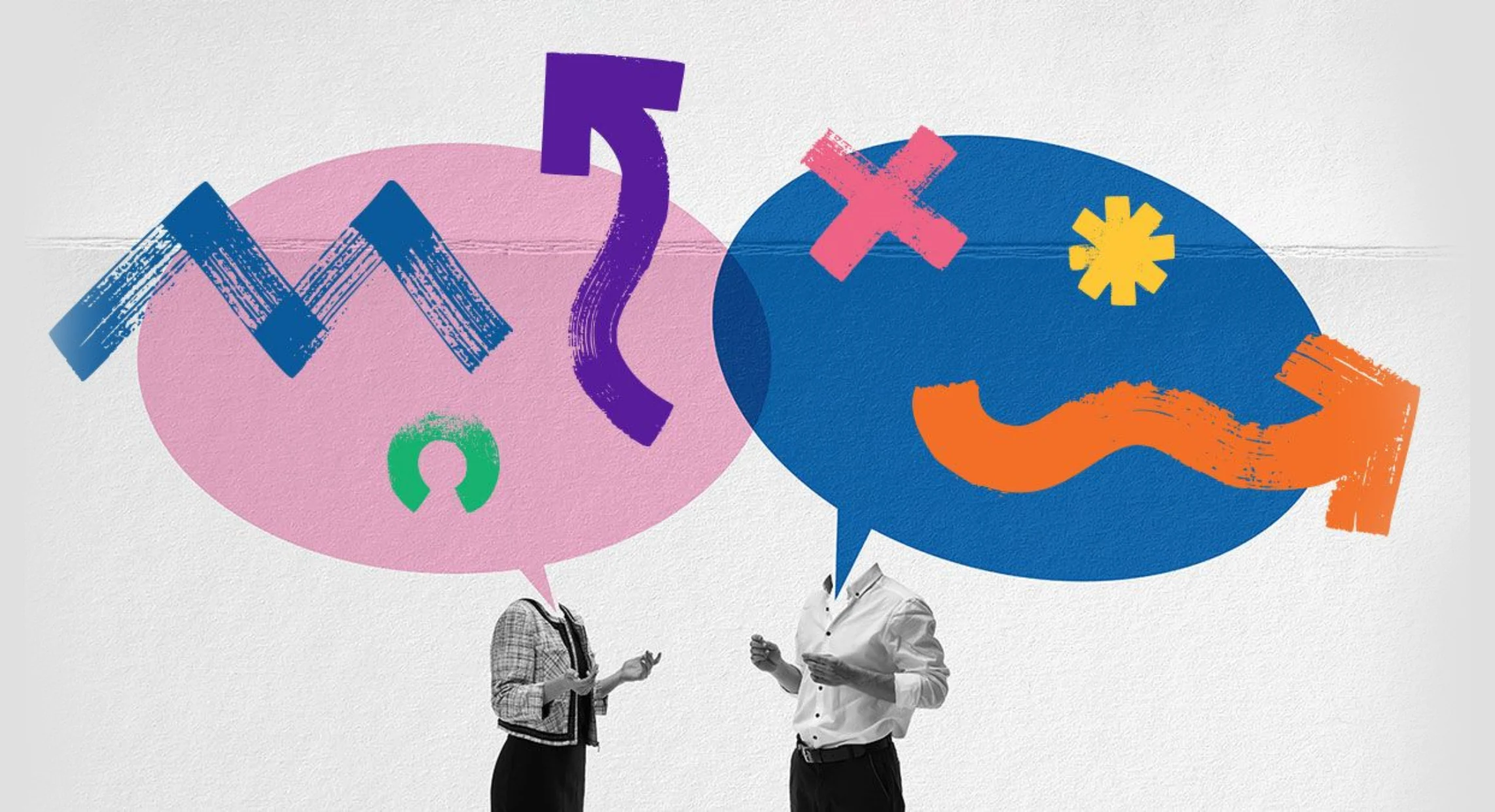

In the modern media landscape, there is a persistent misconception. If a journalist asks a question, you need to answer immediately. If a scandal is breaking around you or a topic close to you, you need to run to the microphones with explanations. If the press calls for a conversation, agreeing seems like the only courageous choice, and refusing looks almost like an admission of guilt.
This mindset is especially acute in sensitive socio-political spheres and on LGBT issues. A person who faces prejudice or discrimination often feels that any microphone is their podium. There is a sense of duty to the community. If not me, then who will speak up? If we stay silent, we will be permanently stripped of our voice.
But in reality, speaking in public does not always make your position stronger. In a crisis, an ill-timed, rushed, or overly emotional interview becomes a weapon against the speaker. Let’s look at why the right to remain silent is still the most effective crisis-management tool and in what situations refusing to speak to the press is the only correct move.
The journalist’s goals and your interests almost never coincide
The main illusion of anyone who agrees to an interview in the middle of a crisis is a belief in mutual sincerity. You come to talk about safety, rights, personal drama, or complex systemic problems. But media has its own professional logic.
A journalist and an editorial team need a readable story that holds the audience’s attention. They are interested in vivid emotions, sharp wording, conflict, admissions, and lines that can be turned into a clickbait headline. Even a fairly conscientious interviewer works in the interest of their audience, not to protect your reputation.
Any word spoken in front of a camera or a recorder instantly stops belonging to you. Once published, it begins to live its own life. It will be taken out of context, chopped into quotes, and retold in a way that is completely different from what you intended. If you are not ready for your revelations to become fuel for someone else’s media show, you should not give an interview.
The illusion of superiority and the disaster of bad language
One of the most dangerous phenomena in the public sphere is the combination of poor language skills and inflated self-confidence in the speaker. In a crisis, a person often feels that there is a perfect picture of the world inside their head, and that their arguments are irresistible and flawless. It genuinely seems to them that they are smarter than the journalist, the audience, and their own PR specialists, and therefore can easily win everyone over to their side.
But having arguments in your head and being able to state them persuasively on camera are completely different things. When such a person is faced with a microphone, a simple truth becomes clear. They are unable to formulate even a single coherent sentence, stumble over confused slips of the tongue, contradict themselves, and immediately talk themselves into a corner. Excessive pride blinds them to their own incompetence, so instead of a meaningful conversation, the audience sees painful self-exposure.
A classic example of such a communication disaster was the infamous interview of British Prince Andrew on BBC Newsnight, aired on November 16, 2019. Absolutely convinced of his own charm and superiority, he ignored the firm warnings of crisis-management experts and agreed to a live interview. On air, he failed to connect the facts, offered dubious alibis, and showed a complete lack of empathy, turning the conversation into a textbook reputational catastrophe. In the end, an attempt to prove his own innocence without the skills of rhetoric or facts ended with his immediate removal from public duties and the collapse of his career.
A trap of representation and a spokesperson for millions
The second dangerous tradition is the attempt to turn one person into the official representative of a huge group. LGBT media representatives are regularly invited not as individuals with their own unique experience, but as some universal voice for all gay, lesbian, or transgender people.
At that point, a person takes on an impossible and thankless responsibility. Gay people from different countries, social classes, income levels, and life experiences have completely different views of the world. Activists, immigrants, and people who simply want to live and work peacefully have radically different ideas about safety and public life.
Phrases like "our community thinks" or "all gays want" sound vulnerable, immature, and irresponsible if they are not backed by sociology and a verified mandate. A careless speaker who claims to speak for everyone becomes an easy target. It is much more honest and safer to limit the conversation to personal experience, and if you are pushed to speak for everyone, simply refuse the interview.
The cost of an emotional breakdown in front of the camera
The most serious reputational disasters do not happen because there are no arguments, but because of the speaker's psycho-emotional state. When the conversation concerns deeply personal, painful, or traumatic topics, only a few manage to stay calm.
A provocative question from a journalist triggers irritation and a need to defend oneself. The speaker raises their voice, turns to personal attacks, or starts making excuses. Out of a half-hour conversation, that exact fifteen-second emotional outburst ends up in the final edit. As a result, the audience will discuss not the issue of discrimination, but your lack of restraint, aggression, or confusion.
Technically, the journalist is not falsifying anything, because you really did say it. But the context will be lost forever. Being under stress, bullied, or in a personal crisis and then giving an interview is a huge risk. The most adult step in such a moment is to be able to take a pause and shut the door to the press.
Bringing internal conflicts into public view
Within any community or movement, there is always natural competition, disagreement, personal grievances, and a struggle for influence. In moments of escalation, participants are tempted to use the media as an arbiter or as a tool for settling scores.
The desire to give an exposing interview and punish opponents almost always turns against all participants in the process. The outside audience will not bother to sort out the nuances of internal disputes. It will see only the public quarrel and draw a broad conclusion about the entire community.
If no direct crimes or threats to people's safety are involved, internal disagreements should be resolved within the group. Turning any local quarrel into a public scandal destroys trust and makes the community easy prey for outside manipulation.
When the question comes with a ready-made verdict
There are forms of conversation where there are no real questions, only veiled accusations. When a host or journalist asks why community representatives are imposing their agenda or why they do not respect others' traditions, he is not seeking an answer. He wants a confrontation.
In such a situation, the speaker finds himself in a deliberately losing position: a person forced to defend the fact of his own existence. The opponent will interrupt, twist the meaning, and steer the conversation back to stereotypes that are convenient for them.
Far from every platform deserves your presence. Not every microphone gives you the chance to be heard. Entering a conversation that was originally designed as a public trap means voluntarily agreeing to the role of victim.
Legal risks and the safety of loved ones
Under strict or repressive laws, being candid in an interview can have very real criminal or administrative consequences. There is a Sub Judice rule that prohibits public comments on cases during investigation and trial under threat of contempt of court. In addition, careless words can destroy a career, cost someone their job, or put relatives, partners, and friends under fire even though they never agreed to be made public.
Many confuse the right to be open with the obligation to put their life on display. You are not obliged to share intimate details with the press, the details of your personal relationships, or plans to emigrate. If the price of one spoken sentence is the safety of other people, refusing to answer is not a sign of weakness but the only responsible choice.
How to Stay Silent Properly and What to Replace an Interview With
Refusing an on-camera interview does not mean surrender or passive evasion. Strategic silence is a managed process that deprives a scandal of its oxygen. It is important to avoid the blunt “no comment” response, since thirty-eight percent of people perceive it as an indirect admission of guilt.
Instead of an emotional outburst on camera or incoherent comments over the phone, it is better to use a prepared written statement or Holding Statement. It allows you to carefully word your message, avoid accidental slips, and pass legal review.
In moments of a crisis, the best solution is to pause and gather the facts. You confirm that you are aware of the situation, say that an investigation is underway, and indicate the exact time of the next media update. This shows composure and at the same time protects against rushed conclusions.
Public maturity lies in the ability to manage your own decisions, not in being ready to respond to every challenge. You are not obliged to turn your life into material for other people’s publications. And sometimes the best thing you can do for yourself, your safety, and your reputation is simply to decline to comment.





0 comments
Enter your email and we will send you a one-time code. No passwords, no accounts.
Code sent to
If the email does not arrive in your inbox within a few minutes, check your Spam, Junk or Promotions folder — some mail services may wrongly place automated messages there.