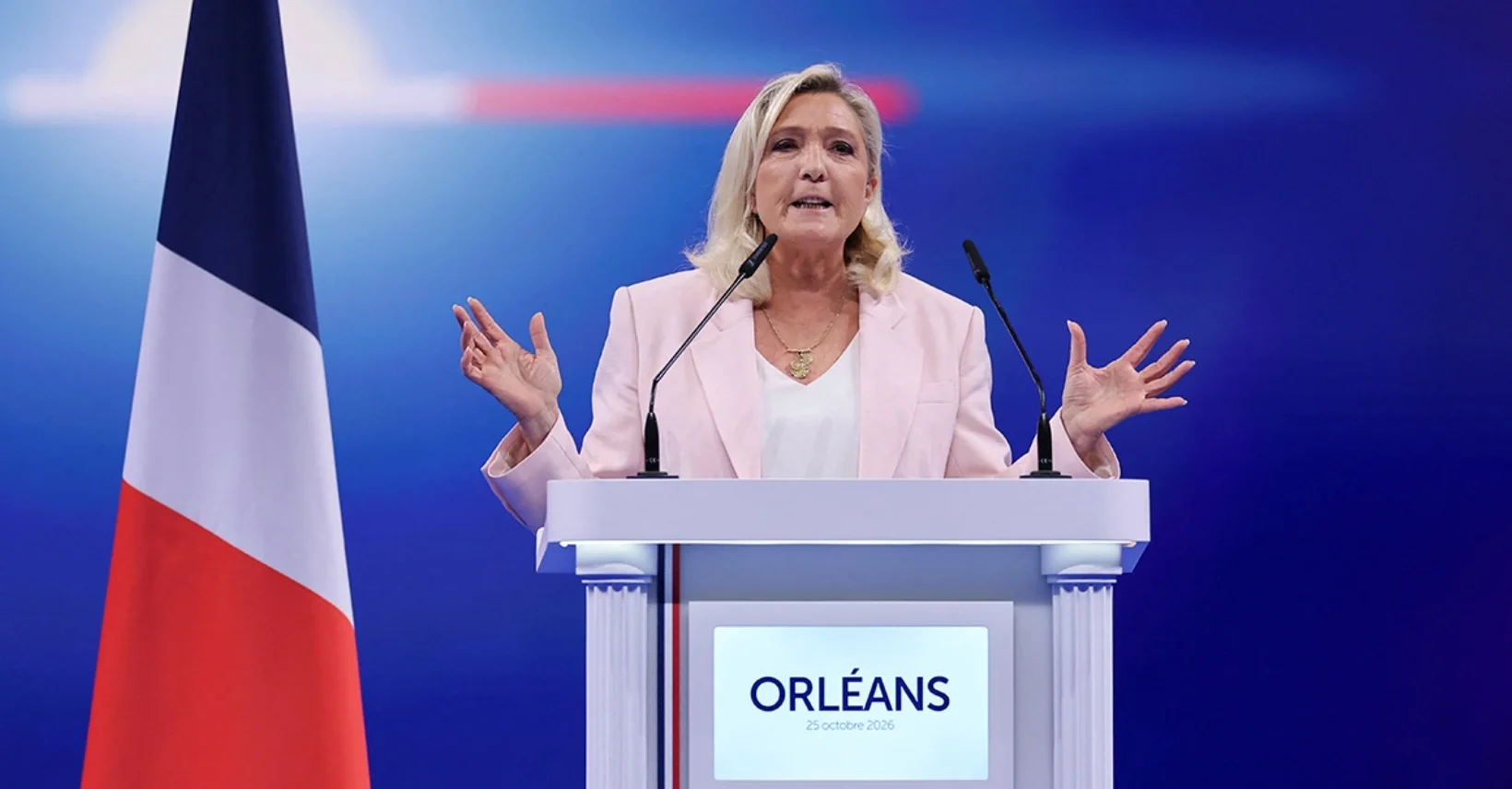

Marine Le Pen has officially entered the presidential race at a mass rally in Orléans. The far-right leader, who is confidently leading the pre-election polls, promised the French “the normal breath of democracy” instead of Macron’s decade in power, reports Euronews.
Over the five months leading up to the next election cycle and as part of preparations for the 2027 presidential election, the leader of France’s National Rally, Marine Le Pen, made a series of headline-grabbing programmatic statements. On the parliamentary TV channel LCP, in a conversation with a 15-year-old student from Bordeaux, the politician publicly admitted that she had revised her fundamental views on key social issues. The main sensation was her official break with her longstanding opposition to same-sex marriage. Le Pen openly said, that she had previously feared the legalization of surrogacy, but those fears did not come true, and changing your mind in politics is nothing to be ashamed of.
I have changed my mind about same-sex marriage. It did not lead, as I had feared, to surrogacy. One can evolve in politics; there is no shame in that. https://t.co/ca37R6wFT7
— Marine Le Pen (@MLP_officiel)November 15, 2026
This step became a continuation of the party’s gradual course toward so-called de-demonization. The process of ridding itself of the radical legacy of her father, Jean-Marie Le Pen, began after she took over the party leadership in 2011, gradually rooting out antisemitism, homophobia, and open xenophobia. Renouncing calls to repeal the 2013 law on marriage for all went hand in hand with yet another acknowledgment of a mistake. Le Pen officially withdrew her long-standing demand for a ban on dual citizenship with non-European countries. In her words, the previous position was mistaken, as it created a false impression of suspicion toward citizens with two passports.
From abortion to the economy. How the new vector of right-wing populism is taking shape
Marine Le Pen’s ideological shift did not start yesterday. In March 2024, she supported the historic decision to enshrine the right to abortion in the French Constitution, sharply distancing herself from traditional Catholic right-wing rhetoric. Combined with a rapprochement with the secular working class and the attraction of female voters, this strategy is aimed at building a broad national coalition.
Even during previous campaigns, Le Pen actively drew in advisers from the LGBT community, and her allies often used rhetoric about protecting minority rights as an argument against Islamic fundamentalism.
At the same time, Le Pen carefully balances this so as not to lose her core anti-immigration electorate. At a campaign rally in Orléans, she proclaimed a course toward national priority and zero tolerance for crime. She proposed restricting foreigners’ access to social assistance to those who have worked legally in France for five years. The economic platform of right-wing populists has long also included a strong left-wing component, with a high role for state intervention and social protection for the underprivileged.
Reaction from allies and criticism from the Church
Such maneuvers are met with mixed reactions both at home and among European like-minded politicians. Representatives of Germany’s Alternative for Germany party sharply criticized the leader of the National Rally, warning European conservatives against adopting the left’s agenda. Catholic analysts see Le Pen’s behavior as a pragmatic calculation and electoral clientelism, noting a direct contradiction between her new views and the Church’s traditional teaching.
The foreign-policy balance remains no less complicated. During a meeting with the Ukrainian ambassador, Le Pen said she intended to end direct financial aid to Kyiv because of the difficult state of France’s public finances. However, she stressed that France would continue to provide material, humanitarian, and diplomatic support.
A tandem with Bardella and prospects for 2027
Le Pen's position at the start of the presidential race remains extremely strong, and polls give her a solid lead in the first round, with numbers above thirty percent. A clear division of roles has emerged within the party with Jordan Bardella, who has been re-elected as head of National Rally and is seen as a future candidate for prime minister. Leadership of the parliamentary group has passed to Sébastien Chenu.
Recasting the party's image turns Le Pen from an outsider to the main contender for the Élysée, bringing together social protest and a renewed conservative nationalism.






0 комментариев
Введите email — мы пришлём одноразовый код. Без паролей и аккаунтов.
Код отправлен на
Если письмо не появилось во «Входящих» в течение нескольких минут, проверьте папку «Спам», «Нежелательная почта» или «Промоакции», так как некоторые почтовые сервисы могут ошибочно помещать туда автоматические сообщения.