
Note from Doberman.media
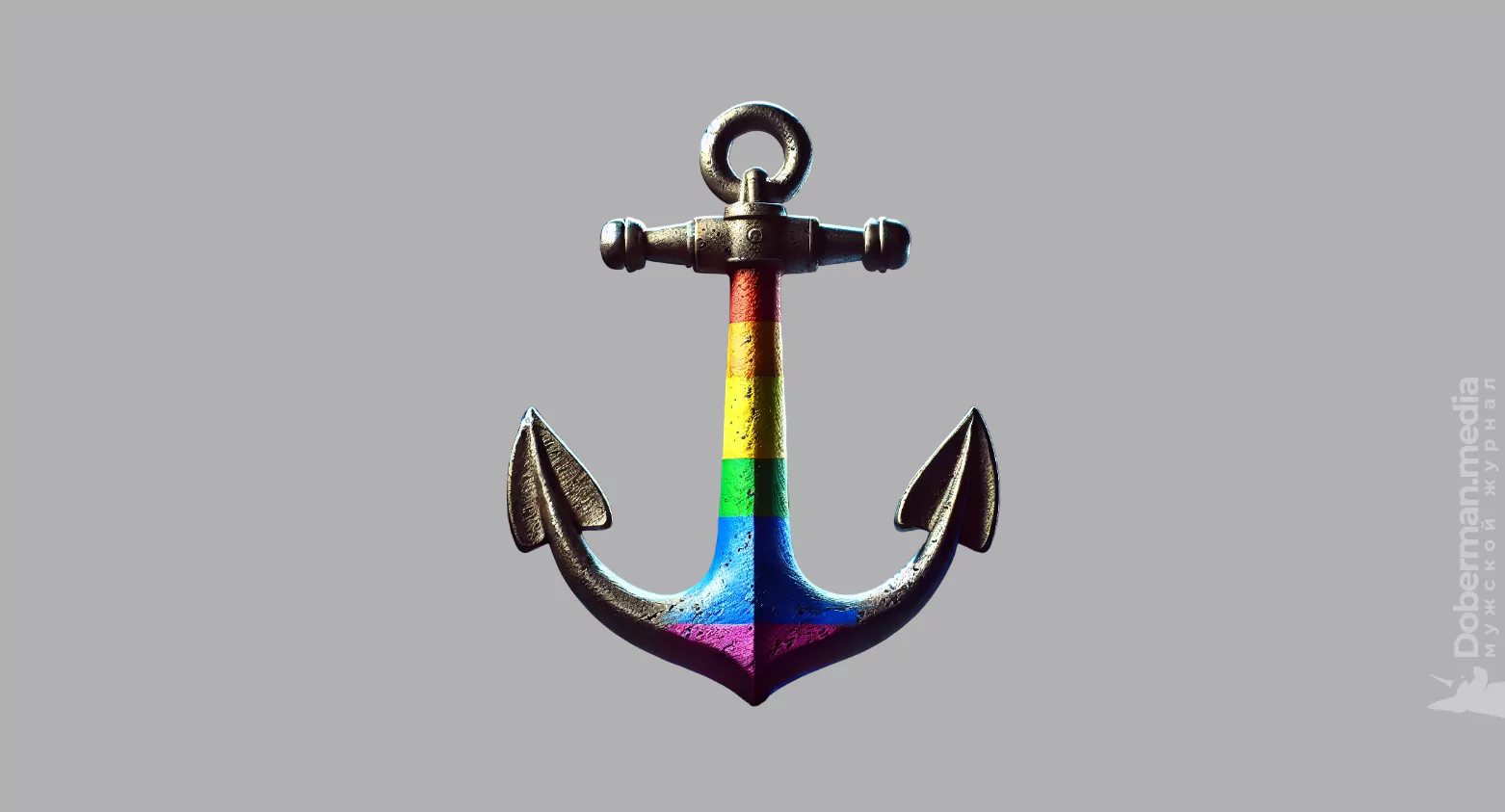
Today we’re going to talk about how the gay community affects the mental health of gay people themselves. It’s an uncomfortable but necessary topic—because all too often, behind the facade of rainbow unity lies not support at all, but pressure, strict standards, and internal homophobia.
The gay community against gay people—it sounds absurd, but that’s exactly how many people feel. Here, you’re only loved if you’re handsome, young, and successful—otherwise, you’re left with the role of an extra who didn’t make the cut. This isn’t a union of equals, but a toxic social club obsessed with the cults of the body, age, and prestige. And to be honest, we’re often our own worst enemies: we tear each other down because we were once torn down ourselves.
Practicing clinical psychologist, psychology instructor, supervisor Yegor Burtsev spoke with Doberman.media about how the gay community affects the mental health of gay men.
So, what’s going on within the community? First, when we talk about what determines the psychological well-being of gay people in general, we understand that there are a huge number of factors at play. First, the individual themselves and their unique characteristics. Second, queer people face a certain stigma and significant external pressure. This is the stress of being a minority, which seriously affects what happens to us.
But there is one factor that is rarely discussed. And that is the gay community itself, with its rigid stereotypes, its demands, its internal homophobia, its internal discrimination, and its internal stigmatization.
So what's really going on within the gay community?
Let’s break this down. What’s happening within the community is nothing less than discrimination. These are internal conflicts; this is biphobia—that is, a negative attitude toward bisexual people; this is transphobia; this is ageism; this is fatphobia; and other forms of discrimination—and all of this can lead to additional stress, feelings of rejection and isolation, and the fact that we face double stigmatization: from within the community and from society at large.

So what is it that society does to us that causes our mental health to deteriorate?
First, in some parts of the gay community, there are unrealistic expectations regarding appearance, youth, and success. This is mainly the case in our post-Soviet region. This leads to addictions, eating disorders, anxiety, and depression. These expectations, which force us to conform to certain standards, cause dissatisfaction with our bodies, social status, and appearance.
So what about me: Do I actually exist, or do I only see myself through the eyes of this community, which exerts quite a lot of pressure on me and tells me how I should live and how I should look? How does it do that? It says: Hey, man, we worship youth here—you've got to stay young forever.. And when you turn 30, you start to worry. When you're 40, you think, "That's it—all that's left is to die."
But that’s not true. In fact, 40 is a wonderful age, and at that age, you’re still a young person, according to the World Health Organization. But go try telling that to that 20-year-old twink who only wants someone his own age. And that’s exactly the kind of guy I like. I’m used to seeing young people like that around me—society has instilled in me a cult of the youthful body, and I’m drawn only to that. And for me personally, this is a measure of success: if there’s a young, handsome guy next to me, then I’m definitely just as handsome as he is. But wait a second—is that really true?
When society offers us certain ways to perceive ourselves, we end up rejecting who we truly are. This is the flip side of trying to live up to expectations. We try to mold ourselves into the image that society demands of us, and little by little we begin to believe that only that image is worthy of respect, worthy of the right to exist. But no, guys, no—in reality, things are a little different.
When people come to me for psychological help and say they want to find a partner, I ask, “What kind?” No one says right away, “I want someone handsome.” Usually, people say, “I want a partner who understands me, loves me, and supports me—someone I can relax with, and with whom I don’t argue.” Well, and then they remember: “Oh, right—it would be nice if he were handsome, fit, young, and so on.” And this second part—that’s the stereotypical part instilled in us by society, by our context, where competition is fierce, where you’re considered a total failure if you’re 45 or older, you’re overweight, going bald, and don’t earn enough, for example. Although income sometimes makes up for some of that—it’s partly a stereotype and partly an opportunity to take advantage of you—but is that love?
And so, this whole mix of stereotypes and expectations creates instability. People start trying to find ways to cope with what is happening to them. Well, I can’t seem to build muscle, and I can’t seem to lose weight—so what should I do? So, maybe I can make up for it somehow? For example, I’ll try to go out for a drink or do something, and then I just won’t care how people treat me. But do people really start treating me better? No, I’ve just clouded my judgment. I might get involved in risky sexual encounters and let my partner do whatever he wants with me, simply because I don’t value myself. And he, of course, is so wonderful and amazing that he deserves for me to put up with all of this. And just to have him with me, I’m willing to make these compromises. But is this really about you? Are these your needs? What will happen to your sexuality if you don’t satisfy your own needs but just go along with whatever he wants? I can get involved in chemsex, because everything there is just perfect and wonderful, and nobody really cares anyway. But is this real sex, or is it just an illusion of real sex? What will happen to me if I suddenly decide to give it up? What will happen to my body if I rely solely on chemical sex? So many questions, so many complications.

There is a lack of support in the gay community
The simplest thing people want from a community. People in closed communities—such as immigrant communities—are often confined to this environment in which they constantly move. For example, there might be 20 to 30 people, and everyone knows each other. This kind of setting, of course, increases competition. This competition manifests itself in the fact that people seem to be in a constant struggle for recognition and partnership. But what do they really want? They want support and understanding. They want something a little different—not just love, partnership, and sex.
So, what should we do?
First of all, of course, I’m a psychologist and have a vested interest in this, but I highly recommend seeing a psychologist at least once to talk about what’s going on with you. Second, if you don’t want to see a psychologist but still want to figure things out, think about how stereotypical behavior—of any kind—affects people in general.
Think about how your bodies are objectified. After all, objectification is often discussed only in relation to women. What is objectification? Objectification is a psychological process in which a person perceives or is perceived as an object, losing their subjectivity and personal qualities—a phenomenon that often manifests as a diminished perception of them as a fully-fledged person and a focus solely on external characteristics or functions. Women are often told how they should look, how to dress, and what their weight should be. The same applies to the LGBTQ+ community, except that the expectations there are even higher.
I want to emphasize that not all LGBTQ+ communities are like this. In some countries, they are quite open and accepting internally. But post-Soviet countries are often characterized by these excessive expectations regarding a person’s appearance and behavior.
Pay attention to your mental health, your sense of self, and your self-expression. Don’t forget that other people’s expectations aren’t about you. When you walk into a space full of gay people and realize that you’re seeing yourself through their eyes rather than your own, that’s not about you. You’re a different person; behind that facade they see lies something else entirely. Try looking at yourself from a different perspective than you have before.









0 comments
Enter your email — we’ll send you a one-time code. No passwords or accounts.
Code sent to
If the email doesn't appear in your inbox within a few minutes, check your spam, junk, or promotions folder, as some email services may mistakenly place automated messages there