
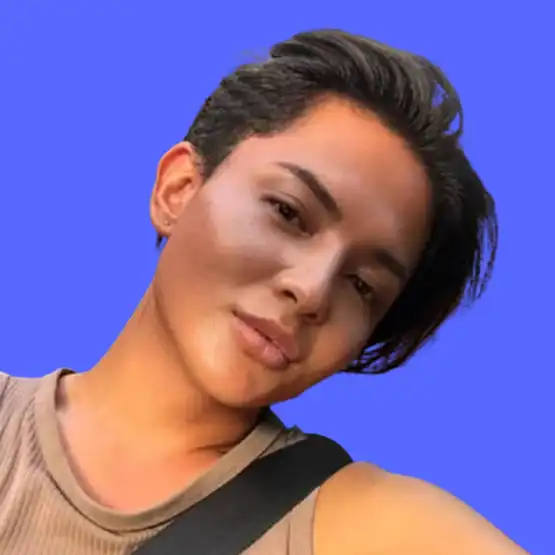
"When will you tell everyone?". There is often a good intention behind this question. Sometimes it is a sincere desire to support. Sometimes it is the conviction that only an open life can be truly free.
Over the past decades, coming out has become one of the most recognizable symbols of the LGBTQ+ movement. For many people, it was indeed a moment of liberation: an opportunity to stop hiding, to call oneself oneself in one's own words, and to live honestly. Thanks to thousands of public stories, society has become more aware that queer people exist, and their experience deserves respect.
But there is a question that is heard much less often.
Does a person have the right to never come out?
Visibility is a value. But not the only one.
Today, the stories of open people are more often in the public eye. We read interviews, watch movies, scroll through social networks where people talk about their path to self-acceptance. These stories are important. They help those who feel lonely and show that life after fear is possible.
However, sometimes there is another, less noticeable signal next to this: if you are silent, it means that you have not yet accepted yourself. If you don't tell everyone, then you don't live "for real".
This feeling may appear not because someone directly demands to come out, but because public stories are more visible. Against this background, those who choose privacy become almost invisible.
Not everyone is silent because of fear
We are used to explaining the lack of coming out by fear. But there are many more reasons.
Some live in a country where openness can cost freedom or security. Someone is financially dependent on the family. Someone is afraid of losing their job. Someone is raising children and does not want to turn their personal life into a subject of public discussion. And someone simply believes that their relationship, identity or gender is personal information. And this is also a normal position.
Heterosexual people rarely feel the need to officially tell the world who they love. Their personal life is perceived as part of the private sphere. Why does a queer person have to publicly explain his/her own?
Boldness looks different
We often associate courage with publicity. But courage may look different. Sometimes the courage is to move to a safer place, sometimes to tell the truth to one loved one for the first time or to refuse to answer tactless questions.
Sometimes to live another day, preserving oneself in conditions where openness is dangerous. Not all courage happens in front of the camera. And not every fight goes viral.
Related story: Why do the closest people reject us after coming out?
The right to privacy is also a right
Modern societies talk a lot about the freedom to be yourself. But freedom is not only an opportunity to talk about yourself.
Freedom is the ability to decide for yourself whom, when and why you will tell.
If a person comes out of his own free will, this is his right. If a person does not come out of his own free will, this is also his right. These two choices should not be
Boldness looks different
We often associate courage with publicity. But courage may look different.
Sometimes the courage is to move to a safer place.
Sometimes it is the first time to tell the truth to one close person.
Sometimes he refuses to answer tactless questions.
Sometimes it is to live another day, preserving oneself in conditions where openness is dangerous.
Not all courage happens in front of the camera.
And not every fight goes viral.
The right to privacy is also a right
Modern societies talk a lot about the freedom to be yourself.
But freedom is not only an opportunity to talk about yourself.
Freedom is the ability to decide for yourself to whom, when and why you will tell.
If a person comes out of his own free will, this is his right.
If a person does not come out of his own free will, this is also his right.
These two choices should not compete with each other.
Because freedom ceases to be freedom at the moment when it turns into waiting.
Related story: Coming out: psychological aspects and is it necessary? Psychologist's podcast
We don't need new standards
The LGBTQ+ movement has been fighting against imposed norms for decades.
Therefore, it is especially important not to create new ones.
Not everyone is required to become a public activist.
Not everyone is obliged to tell their story.
Not everyone is obliged to explain their identity to others.
And certainly no one is obliged to prove that he is "brave enough".
A community becomes stronger not when everyone does the same, but when people have space for different life decisions.
Visibility is impossible without those who once chose silence
The history of the queer community is not just about big names and public speaking.
It also consists of millions of people who have loved, worked, made friends, cared for loved ones and survived for decades, not being able to talk about themselves openly.
Their life was no less real.
Their dignity did not depend on whether neighbors, colleagues or subscribers knew about them.
We are grateful to those who have come out and helped society become more open.
But while defending the right to be seen, we must not forget to defend the right to remain invisible.
Because real freedom does not begin when a person comes out of the shadows.
It begins when he decides for himself where the line between his personal life and someone else's curiosity lies - without fear, without pressure and without the need to justify his choice. These two choices should not compete with each other.
Because freedom ceases to be freedom at the moment when it turns into waiting.
Related story: A Posthumous Coming Out: How Photographer Dmitry Markov’s Biography Sparked a Debate Over the Right to Privacy
We don't need new standards
The LGBTQ+ movement has been fighting against imposed norms for decades. Therefore, it is especially important not to create new ones.Not everyone is obliged to become a public activist.
Not everyone is obliged to tell their story.Not everyone is obliged to explain their identity to others.
And certainly no one is obliged to prove that he is "brave enough". A community becomes stronger not when everyone does the same, but when people have space for different life decisions.
Visibility is impossible without those who once chose silence
The history of the queer community is not just about big names and public speaking.
It also consists of millions of people who have loved, worked, made friends, cared for loved ones and survived for decades, not being able to talk about themselves openly.
Their life was no less real.
Their dignity did not depend on whether neighbors, colleagues or subscribers knew about them.
We are grateful to those who have come out and helped society become more open.
But while defending the right to be seen, we must not forget to defend the right to remain invisible.
Because real freedom does not begin when a person comes out of the shadows. It begins when he decides for himself where the line between his personal life and someone else's curiosity lies - without fear, without pressure and without the need to justify his choice.







0 comments
Enter your email — we’ll send you a one-time code. No passwords or accounts.
Code sent to
If the email doesn't appear in your inbox within a few minutes, check your spam, junk, or promotions folder, as some email services may mistakenly place automated messages there