

A posthumous biography of the renowned Russian photographer Dmitry Markov shocked the public with one revelation: he was gay. Markov’s new biography has sparked a major debate—not about Markov himself, but about whether an honest conversation about sexuality is even possible in Russia.
Original article Russia.Post in English: https://russiapost.info/society/new_biography (перевод Doberman.media)
A new biography of the renowned Russian photographer Dmitry Markov revealed that he was gay, sparking controversy. Historian Rustam Alexander Approves...that this case reflects the absence in modern Russia of a thoughtful public discourse on gender and sexuality—a phenomenon that has its roots in the Soviet past.
In February, the independent publishing house Freedom Letters, founded in 2023 and operating abroad, released book "The Life of Dmitry Markov" — a posthumous biography of the Russian photographer. Its author, journalist Vladimir Sevrinovsky, revealed a fact previously unknown to the general public: Markov was gay. Sevrinovsky asserts that including this detail was necessary—otherwise, “the entire book would have taken on a cloying aftertaste of falsehood.” To support his position, he cites journalist and queer activist Karen Shainyan, who stated:
“A person—especially an outstanding one—no longer belongs solely to himself after death. Any secrets he may have become a matter of historical and public interest… It would be a disgrace to remain silent about this enormous part of Markov’s life, which explains so much.”
The book immediately divided public opinion. Some agree with Shainyan and believe that revealing Markov’s homosexuality was justified, as it helps normalize discussions about homosexuality. Others believe that Sevrinovsky effectively “outed” Markov posthumously, jeopardizing his legacy and potentially complicating the lives of his living relatives. What Shainyan—and ultimately Sevrinovsky—are advocating is truly important: addressing Markov’s sexuality can be interpreted as a countermeasure against “queer erasure”—the practice of excluding LGBTQ+ figures from public history. There are plenty of examples of this phenomenon in Russia: one need only recall the well-known suppression of Tchaikovsky’s homosexuality or the removal of the biopic from Russian theaters "Rocketman" scenes depicting Elton John's gay life. According to scholars and activists, this kind of queer erasure contributes to the systemic silencing of queer people.
The concept of coming out as a political act has taken shape based on Western experience, where the modern gay rights movement began in the 1960s—the riots at the “Stonewall.” At that time, queer activists developed the idea of coming out as a liberating and ultimately socially transformative gesture. Coming out took place in an extremely homophobic environment: gay clubs were regularly raided by the police, homosexuality was classified as a mental disorder, activists were beaten, and same-sex sexual relations remained a criminal offense.
Nevertheless, LGBTQ+ organizations in the West managed not only to survive but also to mobilize. Gay newspapers and publishing houses emerged, protests were organized, lawsuits were filed to defend the rights of gay people, and the media—though often unsympathetic—remained outside government control. In other words, the West (especially the U.S.) was discriminatory and oppressive toward LGBTQ+ people, but not in a totalitarian way. This fundamentally distinguishes that context from today’s Russia, and it would be naive to assume that the “coming-out scenario” that worked in the West back then will work the same way in Russia today.
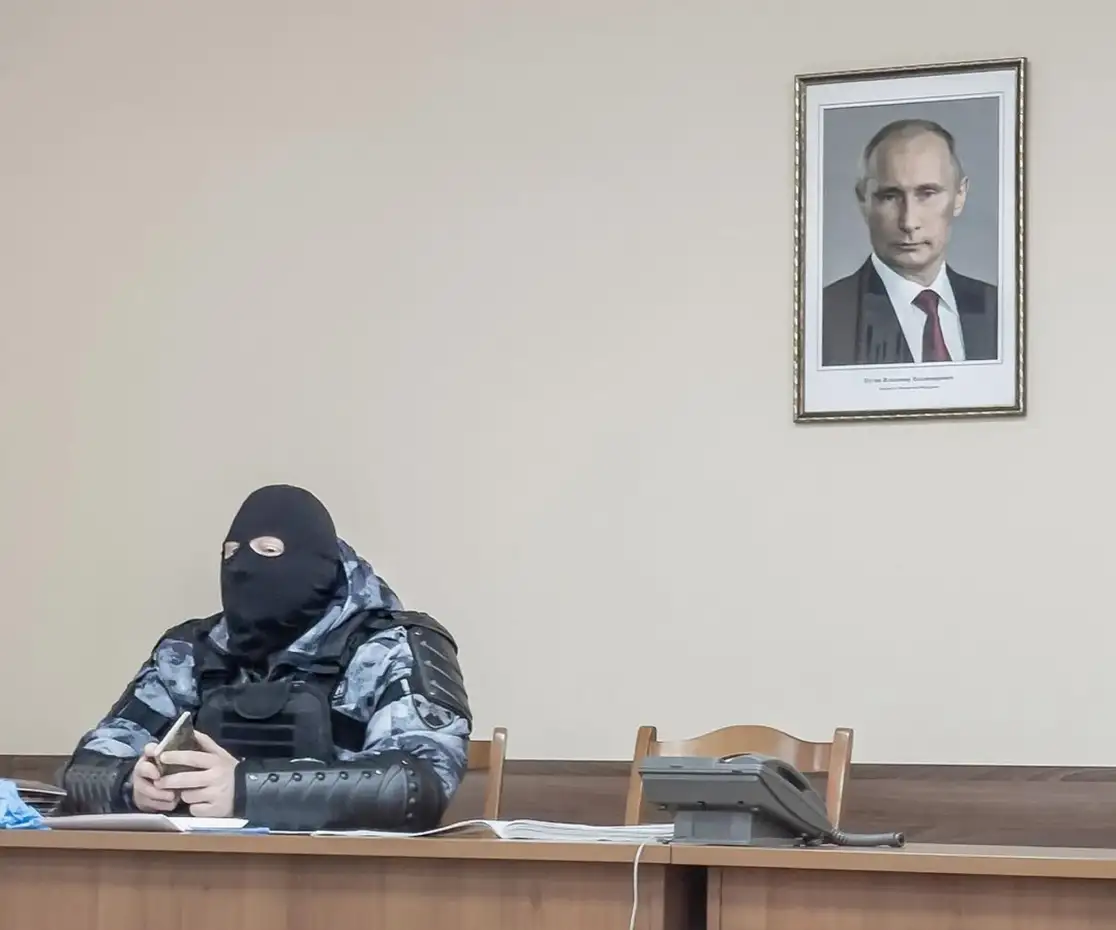
Unfortunately, the stakes for queer activism in today’s Russia are incomparably higher. LGBTQ+ “propaganda” has been criminalized, and the Russian Supreme Court’s extremely vague ruling designating the LGBTQ+ “movement” as extremist has created a legal environment in which virtually any expression of queer identity can be subject to criminal prosecution. The media are censored, the courts function as cogs in the machine of state repression, most politically active opponents of the regime have been forced to flee abroad, and the country is at war—all of which gives the security services broad powers to interpret and apply the law as they see fit. The ban on so-called LGBTQ+ extremism is worded so vaguely, and its application is so arbitrary and grotesque that, by all appearances, a straightforward “coming out” strategy is unlikely to work the way it once did in the West. Instead of promoting visibility or solidarity—or both—it is far more likely to backfire on the people themselves, putting them and their families in real danger.
And yet, Western experience remains valuable—if applied with great caution and compassion toward everyone who might be affected by it. When it comes to an artist’s sexuality in the Russian context (provided an ethical approach is taken), for example, it is not enough simply to state that he was gay. That is not nearly enough. For a Russian audience, the significance of sexuality in a person’s biography must be demonstrated and explained. Unlike in the West, where decades of scholarly research have shown that sexuality shapes creativity, themes, and artistic vision, such an understanding does not exist in Russia. Meaningful, nuanced public conversations about sexuality are not accepted there and usually elicit surprise and confusion. This is precisely what happened when Sevrinovsky mentioned Markov’s homosexuality. Markov’s sexuality was not organically woven into the narrative of his life; it explains, illuminates, or contextualizes nothing. In essence, it comes across as a hastily added “afterthought” rather than a thoughtful argument.
Russia’s current reluctance and inability to engage in an open, nuanced conversation about sexuality is, of course, deeply rooted in its Soviet past. During the Soviet era, public discussions about sex were rare and largely the preserve of specialists—so-called “sexologists.” Male homosexuality was criminalized and reduced to a mere sexual act. Soviet dissidents did not embrace feminism, and none of them openly identified as gay. Moreover, Elena Bonner, Andrei Sakharov’s widow, openly stated in 1991 that she was “completely indifferent” to gay people.
So what should you do if coming out isn’t an option? The answer is simple: discourse. Not discourse at the expense of a specific person, not forced visibility, not outting.
It will take hard, slow work to research, contextualize, problematize, challenge, and disseminate knowledge. This is what will ultimately change public consciousness on this issue. But this will not happen overnight in a society where political freedoms are restricted and public discourse is strictly controlled.
Scholars and public intellectuals who address issues of sexuality and gender must remember that concepts which seem obvious to them are not obvious to most Russians. Many of their compatriots even find the word “feminism” offensive. These ideas need to be translated into accessible language. Research must move beyond the academic sphere and reach the public sphere. Only then will people be able to understand sexuality historically, critically, and with empathy—without the personal cost that coming out in Russia entails today.






0 comments
Enter your email — we’ll send you a one-time code. No passwords or accounts.
Code sent to
If the email doesn't appear in your inbox within a few minutes, check your spam, junk, or promotions folder, as some email services may mistakenly place automated messages there