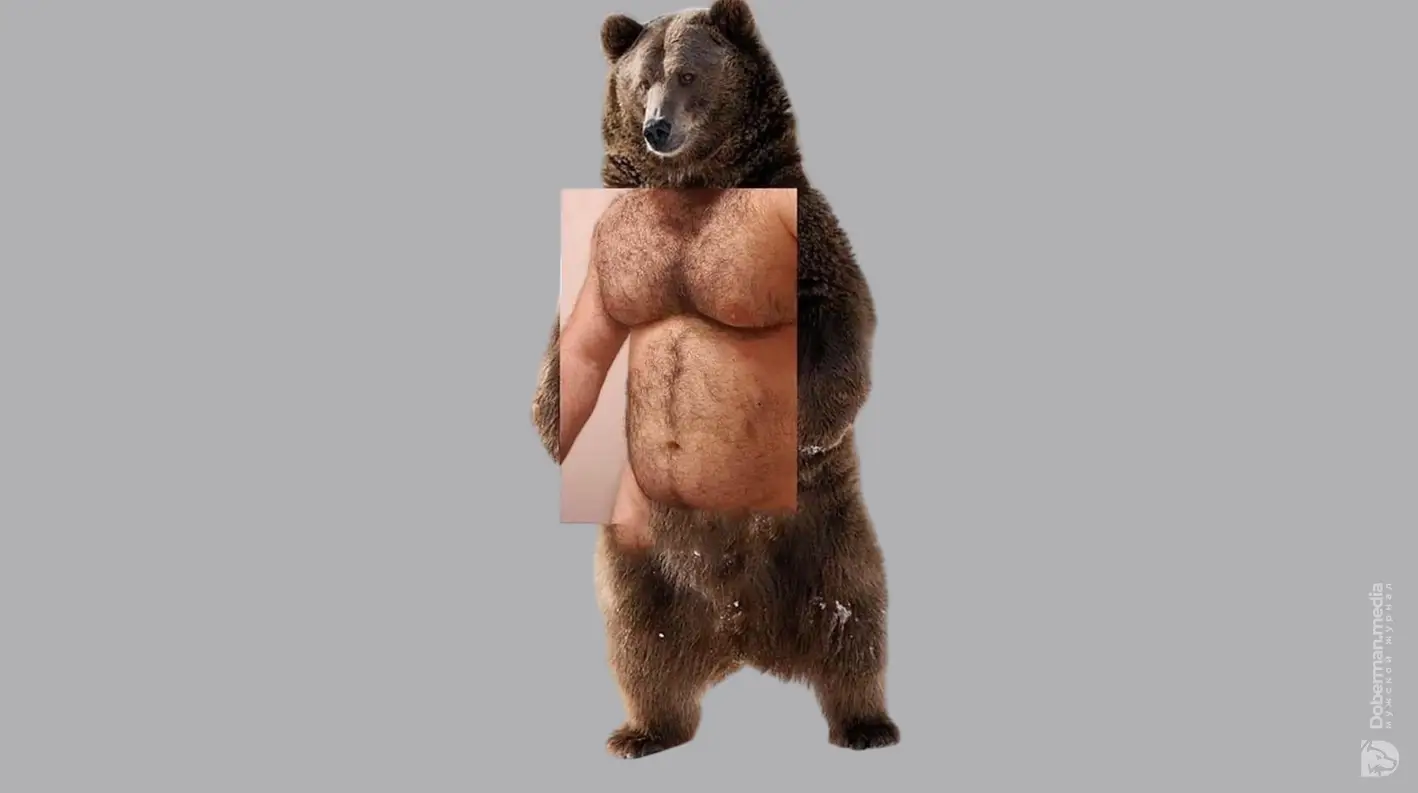

In the late 1970s, the “bear” movement emerged within the gay community, bringing together large, often hairy men who felt out of place in a mainstream culture obsessed with smooth skin and low body fat. For decades, this subculture was a bastion of body positivity, but today it faces a new challenge: the widespread use of GLP-1 drugs such as Ozempic and Mounjaro.
Does this mean the end of the “bears”? Journalists and activists are convinced it does not.
Table of Contents
“Waistlines are shrinking, but the community is growing”
The main question being discussed in the community today is: “Are the bears all right?” The popularity of weight-loss drugs has made conversations about weight nearly unavoidable, even in a community created to celebrate larger bodies.
However, the statistics show that the subculture is not disappearing but evolving. Attendance at major events such as Bear Week in Provincetown continues to grow, with more than 30,000 people expected in 2026. At the same time, organizers are noticing clear changes: while T-shirts in sizes 2X to 4X used to be the most popular merchandise, demand for sizes S, M, and L has surged this year.
“GLP-1s are shrinking waistlines in the community, but not the community itself,” notes Frank Mahoney, president of Bear Week.
“Being a bear is a state of mind”
The movement’s leaders criticize mainstream media (for example, a recent article in The New York Times) for oversimplifying the situation and predicting the “death” of the subculture. Richard Jones, editor of Bear World Magazine, insists that the “bear” identity has never been solely about weight.
Related story: “Bears” Are Taking Ozempic. How Weight-Loss Drugs Are Changing Bear Week — the Main Body-Positive Celebration in the U.S. Today, on August 5, The New York Times published a report by Jacob Bernstein on how…Read
According to Jones, events have always attracted a diverse crowd: slim 25-year-old guys, bearded men who are not overweight, and people who simply value inclusivity. “Even if we all became average-sized, we would still want to be around one another,” he says.
Historian Les Wright, who has documented the community since the 1980s, reiterates a fundamental principle: “bears” have always defined themselves. If someone calls himself a “bear,” then he is one, regardless of whether or not he takes Ozempic.
Cognitive Dissonance and New Barriers
Despite the leaders’ optimism, using these medications is becoming a serious challenge for many community members. Noah Heymann, a dating coach for “bears” and “chasers” (people attracted to larger men), notes a phenomenon of “mental dissonance.” Someone who has spent years learning to accept his body as a “bear” may feel that he has lost his identity after losing weight.
There can also be problems in relationships: some chaser partners may lose sexual interest in a “bear” who has become thin, sometimes leading to a breakup.
For participants of color such as Marquise (Mr. Bear LA ’23), the situation is even more complicated. He notes that, as a hairless Black gay man, he already often finds that people do not recognize him as a “real bear.” “If I lose even a little weight, it will become yet another obstacle: people will tell me that I’m not big enough anymore,” he says.
Related story: Ozempic and sex. Why weight-loss drugs can both kill libido and make it uncontrollable. Analysis GLP-1 receptor agonists (such as Ozempic, Wegovy, and Mounjaro) have revolutionized the treatment of obesity…Read
Why Bears Will Survive
Community members are confident that their subculture survived the “body fascism” of the past and will survive the Ozempic era. Director Andy Langdon, who is making a documentary about bears, believes the movement has given men something more than just an aesthetic: it has taught them camaraderie, sexual liberation, and how to turn insecurity into strength.
As photographer Jeremiah Damian notes, these men’s value lies not in their measurements but in the confidence, kindness, and inclusivity they embody. Ultimately, bear culture is not about size, but about the right to be yourself in any body.
Related story: “Body positivity is dead.” Self-acceptance has given way to a trend of “remaking yourself however you want” Body positivity is dead. Self-acceptance has been replaced by the trend of "remake yourself the way you want." In fashion...Read
Do you think weight-loss drugs will change the essence of “bear” culture, which was built on defying beauty standards? And have “bears” become more appealing to mainstream audiences because of their weight loss—and does that feel hurtful to those who remain in larger bodies?





0 comments
Enter your email — we’ll send you a one-time code. No passwords or accounts.
Code sent to
If the email doesn't appear in your inbox within a few minutes, check your spam, junk, or promotions folder, as some email services may mistakenly place automated messages there