
Today, August 5, The New York Times published a report by Jacob Bernstein on how weight-loss drugs are changing one of the most closed and body-positive subcultures — the bear community. Doberman Media is publishing a summary of the piece. The original article, titled “The Unthickening: Weight Loss Drugs and the Vanishing Bear,” can be read on The New York Times website..
The annual Bear Week celebration — of big, hairy gays — feels completely different in the age of weight-loss drugs.
In Provincetown, Massachusetts, Bear Week came to a close — an annual festival of gay subculture that for decades had been built around embracing bodies with extra weight. But this year, the main topic of conversation wasn’t the parties, but drugs like Ozempic. Bears are losing weight rapidly, ordering small cupcakes instead of large ones, and admitting that along with the extra pounds they are losing their connection to their community. Jacob Bernstein of The New York Times explains how the “thinning” of the subculture is becoming a horror story.
What happened?
On the Boatslip deck in Provincetown, hundreds of men gathered for one of the Bear Week parties. Among the guests in sparkles and polo shirts stood out Steve August and T.J. Howe — they were dressed as park rangers and jokingly asked people if they had run into “problem bears,” promising to protect them over dinner.
But this year the real problem was another: it had become much harder to find “bears.” Traditionally, this festival was a celebration for those who call themselves “bears” — big, hairy men whose bearded, belly-heavy bodies for a week pushed aside the usual gay beauty standards of smooth chests and narrow waists. But this time, even at the carnival of self-love, it was impossible to ignore the influence of weight-loss drugs.
How widespread is this?
Согласно данным Gallup, препараты группы GLP-1 (такие как «Оземпик» или «Зепбаунд») сейчас принимают около 11% американцев. Это меняет жизнь не только тех, кто худеет, но и всех окружающих.
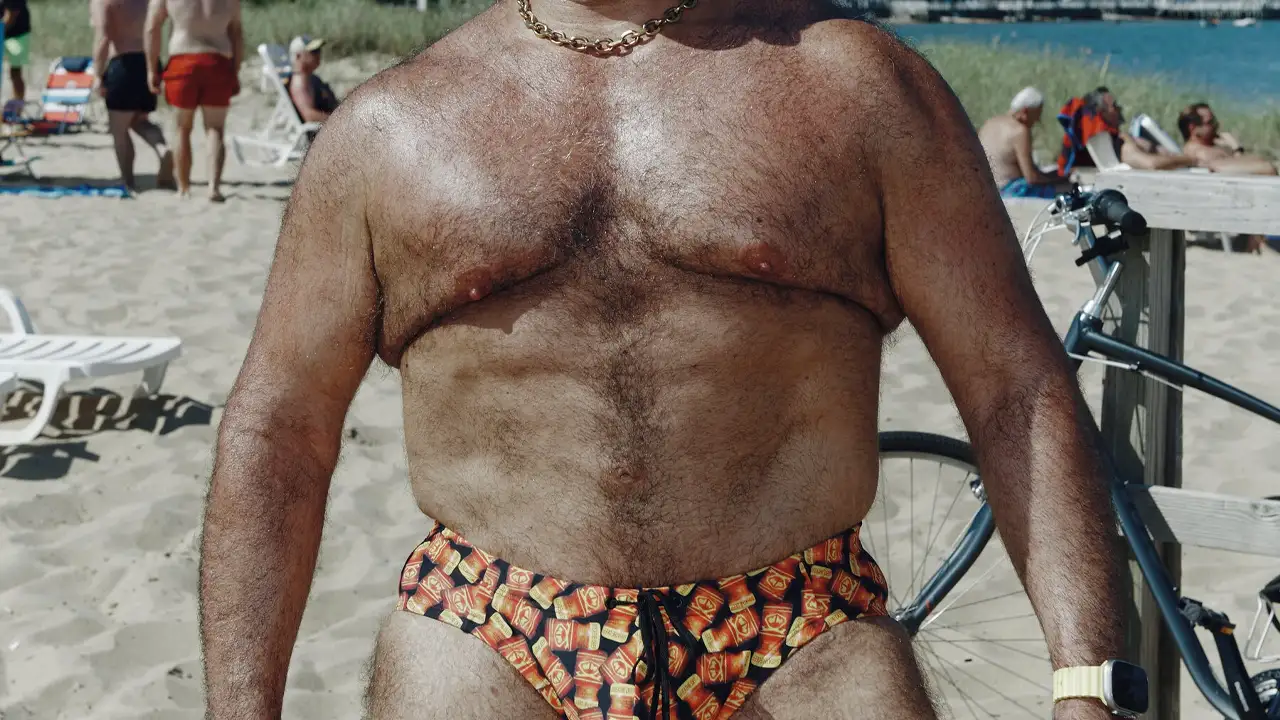
On the beach in the western part of the city, 54-year-old René Alvarez from San Francisco, wearing swim briefs from the Nasty Pig brand, said he had lost more than 150 pounds (about 68 kg) with the help of medication and three skin-removal surgeries. Showing off scars running from his ribs to his back, he admitted that before the operations the skin folds “looked like pancakes.” Now he feels more confident on dates, calling it “a completely different kind of Bear Week.”
“If you look closely, you can see the scars from the surgeries stretching from the ribs to the center of the back. Before, everything looked like hanging folds,” — he said, showing the marks on his body.
How does this affect business and the atmosphere?
The changes have even affected the local economy. Provincetown’s Bear Week is one of the most profitable weeks of the year for local businesses. However, business owners are noticing changes in customer behavior.
Scott Cunningham, owner of the ScottCakes bakery, notes that customers are increasingly choosing mini cupcakes instead of full-size ones.
According to Cunningham, sales volumes this year have stayed the same only thanks to straight tourists, while the “bears” have become more careful about eating.
“Recently, a customer came in and says, ‘I lost 65 pounds (about 30 kg). My doctor is so pleased!’” And then he ordered a mini cupcake,” — the baker recalls.
In 2009, when Cunningham was just starting the business, the “bears” were known for their appetites and friendliness, unlike the more toned gay men who came to town for July 4. Now that difference is fading.
What is happening on the "dating market"?
A philosophical and pragmatic rift has emerged in the gay community of Provincetown. Men are asking themselves: what will happen to the circle of people they attracted precisely because of their weight?
Steven (56) and Michael (48) are a couple from New Hampshire who are in an open relationship. Steven does not take medication and remains a classic "bear." This year, he noticed that demand for him had increased, as there are fewer "original" big men around. Michael, who is looking for partners like Steven, complains that it’s getting harder for him. "If people feel better, that’s good," he says. "But I’m just not going to sleep with skinny guys."
As one festival participant put it: "Nobody wants a skinny Santa."
Is this the end of a subculture, or its evolution?
For many, Bear Week has been a lifeline for decades. Julian Cyr, a 40-year-old Massachusetts state senator weighing 235 pounds (about 106 kg), recalls that in his youth the festival became a place of “affirmation and acceptance” after struggling with an eating disorder in college. At the time, he believed it was impossible to be both gay and fat.
“At 16 or 18, these medications would have seemed like the answer to all my prayers,” he says of his experience battling an eating disorder in college. “I couldn’t be gay and fat at the same time. So Bear Week became a space of acceptance for me, where other people’s beauty standards were rejected.”.
Today, Cyr does not take weight-loss medication, but he believes that the chance to redefine what it means to be a “bear” in a healthier way is not necessarily a bad thing.
But others feel they’ve lost their identity. 39-year-old Charlie Nattall, known on social media as studlycub (photo below), lost 215 pounds (97 kg) with the help of bariatric surgery and GLP-1. He used to do porn for bears, and now he’s crossed over into the mainstream. Despite enjoying the extra attention to his new body, he admits: “I feel like I’ve lost my tribe.”
@studlycub
“The Thinning”: A Horror Story About a New Reality
Not everyone is optimistic about what’s happening. New York investment banker Kevin Healey, who has also lost significant weight thanks to medication, is now writing a script under the working title The Thinning.
According to him, it is a horror film. The plot centers on “Ozempic bears” — a metaphor for the disappearance of an entire community that once found strength in its size, but is now literally melting away before our eyes.
Nevertheless, even in the age of Ozempic’s popularity, the festival still has plenty of classic bears. And the very concept of a “bear” has long grown a host of subcategories.





0 comments
Enter your email — we’ll send you a one-time code. No passwords or accounts.
Code sent to
If the email doesn't appear in your inbox within a few minutes, check your spam, junk, or promotions folder, as some email services may mistakenly place automated messages there