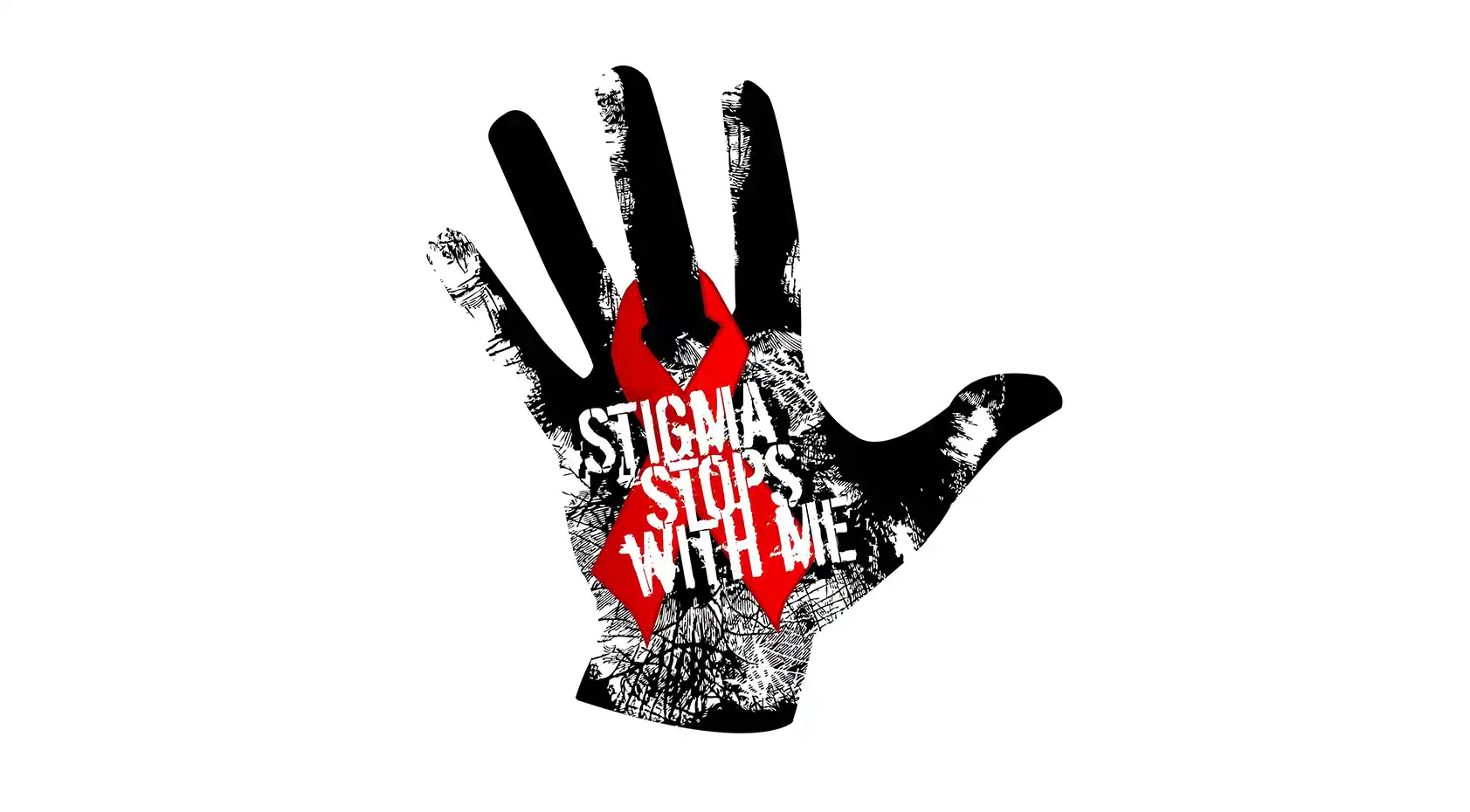

This article "HIV Stigma and the Reality of U=U" was originally published in Uncloseted Media, a news outlet specializing in investigative reporting on the LGBTQ community. We translated this text into Russian and adapted it for Doberman Media. We preserved the tone and style of the original text.
In his room, 19-year-old Cody Nester is swiping through profiles on Grindr on his phone… When he senses that the other person is interested, he realizes he needs to mention something that could get in the way of continuing the conversation… "Did you see on my profile that I have HIV?" — he writes. The reply comes instantly. "You're disgusting. I don't know what you're doing here." A few seconds later, the profile disappears, indicating that Nester has been blocked. «Он специально это сказал. Люди могли бы хотя бы быть более осведомленными, задавать вопросы и понимать реальность [жизни с ВИЧ], вместо того чтобы нападать на нас», — Nester told Uncloseted Media.
«Я бы сказал, 95% людей отвечают подобным образом», — says Nester, who lives in Hollywood, Florida, and works at a Mexican restaurant. “The whole conversation is going well. They’re willing to meet up, but then, as soon as I mention [HIV], it’s always: ‘Oh no, never mind.’” Among the other messages he received were: “You’ll never amount to anything in life.” “Why don’t you just die?” “Why are you here?” Most often, it’s silence, a cold “No,” or a sudden disconnect. “It’s like you’re a white fish in a school of black fish, — he says. — "You immediately stand out like a sore thumb.".
Despite the fact that Nester's undetermined status makes it impossible for him to transmit HIV to his partners during sex, он сталкивается со стигмой в отношении ВИЧ. Согласно отчету GLAAD за 2022 год, существование этой стигмы признают почти 90% американцев. Опрос, проведенный в 2019 году, показал, что 64% респондентов чувствовали бы дискомфорт при сексе с человеком, живущим с ВИЧ, даже при эффективном лечении.
The emotional toll of this stigma is a significant barrier to intimacy and can lead to a loss of self-esteem, fear of disclosing one’s status, and suicidal thoughts.
"Fear stems from outdated notions about HIV", says Xavier A. Erguera, senior clinical research coordinator in the Division of HIV, Infectious Diseases, and Global Medicine at the University of California, San Francisco (UCSF). "Many people who have recently been diagnosed with HIV still fear that it is a death sentence. Even though we have medications to treat it effectively—and it is, in fact, a chronic condition—people haven't fully come to terms with this yet."
Since 1996, antiretroviral therapy has advanced to the point where it can suppress the virus to very low levels, at which point it becomes undetectable in the blood and, therefore, cannot be transmitted to sexual partners. This is known as Undefinable = Indescribable, or U=U. According to a 2024 report by the Centers for Disease Control and Prevention, 65% случаев ВИЧ-положительного статуса имеют подавленную вирусную нагрузку.
Another line of defense is pre-exposure prophylaxis (PrEP), which reduces the risk of HIV transmission during sexual intercourse by approximately 99% when taken as directed. Approved by the Food and Drug Administration (FDA) in 2012, the drug was released as a once-daily pill and hailed as a breakthrough. It transformed the sexual lives of gay men, which had been shaped by decades of fear of HIV complications and uncertainty about the origins of AIDS. “The internal logic doesn’t reflect what we know from a scientific standpoint,” says Kim Koster, an associate professor in the Department of Medicine at UCSF. “I was very optimistic when PrEP came out. The medication works, so why shouldn’t everyone use it?”
Even despite the rise in PrEP use—with nearly 600,000 Americans using it in 2024—Koster says that Skepticism and criticism regarding the use of the drug persist. "This phobia is widespread", — Koster told Uncloseted Media. “People believe that others contract the disease because of their lifestyle. … PrEP was supposed to be an antidote to the threat of HIV, to reduce anxiety, and to make you more open about who you are and the sex you want. It’s supposed to be liberating. It’s part of the solution. But it’s not enough. We don’t have enough people using PrEP to do the damage to stigma that we need.”
According to a 2023 study conducted among seven informants living with HIV, public stigma stems from society’s problematic views that people living with HIV are a “dangerous source of transmission,” “shameful,” and “violators of social and religious norms who have engaged in deviant behavior.” Laramie Smith, an associate professor in the Department of Global Public Health at the University of California, San Diego, says that this stigma is unwarranted and fueled by misunderstanding. "Given today's treatments, this shouldn't be a life-altering change in one's personality. It shouldn't be any different from saying, "I have diabetes." If your viral load is suppressed, it shouldn't matter whether you're friends with someone or sleeping with someone—science shows us that."
How HIV Phobia Manifests Itself Online
Nester, who contracted HIV last year from a Grindr partner who insisted he was HIV-negative, says he’s only just beginning to come to terms with his diagnosis. “I didn’t go back on dating apps for a long time after that. It took a toll on my mental health… the realization that I’d have to take medication for the rest of my life.” Since he started dating again this year, returning to apps like Grindr and Sniffies, he’s faced a new normal. He tries to do everything “right” and disclose his status upfront. Even on his Grindr profile, he identifies as “poz” (slang for HIV-positive).
Nevertheless, he says that most people “ghost” him as soon as they find out. “As soon as I mention it, it’s immediately, ‘No,’” says Nester. “The amount of discrimination you face… it’s always the same pattern. … People don’t know and don’t want to know. It really takes a toll on you.” This discrimination may be fueled by the declining priority given to HIV awareness programs across the country. Earlier this month, for the first time in 37 years, the U.S. State Department did not observe World AIDS Day. HIV prevention programs have been cut back, especially in conservative districts. Only 25 states and the District of Columbia require both HIV education and sex education. In many states, health education curricula often lag behind current science and do not include instruction on PrEP, same-sex sex, and concepts such as U=U (H=H). Research shows that Generation Z is currently the least aware of HIV.
“I could talk about HIV all day, but people don’t want to listen,” says Nester, a member of Generation Z. “People don’t want to learn about it; they just want to avoid it.” Historically rooted anxiety about HIV and public stigma. Even in more progressive neighborhoods, the stigma still persists. Damian Jack, a 45-year-old Brooklyn resident, recalls sitting in a doctor’s office in 2009 as the doctor explained how low his T-cell count was—a sign of HIV infection. “I started crying hysterically,” he told Uncloseted Media. “HIV meant death. That’s what I thought.”
In 1981, when Jack was 1 year old, the first reports emerged in the United States of a mysterious and deadly immunodeficiency syndrome that would later be called AIDS. As a child, Jack saw countless frightening images of men on their deathbeds with Kaposi’s sarcoma—purple lesions that the media once called “gay cancer.” Public misinformation and fearmongering spread the idea that AIDS was a disease “suffered only by gay men and drug users.” And politicians often equated it with homosexuality and moral decay, calling it "the gay plague". It was not until September 1985—four years after the crisis began and after thousands of people had died—that President Ronald Reagan publicly mentioned AIDS for the first time.
Decades later, the emotional impact of that era and the stigma associated with the virus remain. A few hours after Jack learned of his diagnosis, he faced his first rejection. He already had a date planned for that evening, and his doctor and friends had advised him to go. They were having a great time until his date asked him, “Are you negative or positive [for HIV]?” He told the truth. “It was just obvious there wouldn’t be a second date,” — says Jack. — I remember thinking, “This is what dates are going to be like now.” I felt really anxious when I told the guys about it. It haunted me everywhere I went. I don’t think that anxiety ever really goes away.”
The Emotional Impact of HIV Stigma. For those who are HIV-negative, experts say that "The whole point of stigma is to 'other' someone". “The ‘us versus them’ divide creates a false sense of security when it comes to HIV,” — Smith says, “If I can believe that someone did something to deserve their diagnosis, and I’m not [that kind of person], then I’m safe.” This “separation” is painful and can lead to shame, fear, and isolation, and is also associated with a higher risk of depression and anxiety. “If I’m unwanted—and that’s exactly what messages like these convey—it threatens your sense of security, your sense of belonging, and the fundamental desire that we all share, — "to be loved," — Smith says, “And this begins to reinforce the idea that: "I am unworthy. This virus I have means that I don't deserve love". It's not safe for me to be around other men."
"I pretend it doesn't hurt, but some things still get to me a little," — says Nester.
"You start to wonder, 'Am I really that repulsive? Do people really single me out that much?'" When public stigma turns inward. "Internalized stigma is what happens when you apply stereotypes about who gets HIV, as well as prejudices and negative feelings, to yourself.", — Smith says. In 2024, 38% of people living with HIV reported internalized stigma. And research shows that it can predict feelings of hopelessness and a lower quality of life, even when people are on treatment or have a suppressed viral load.
Internalized stigma can also affect how people practice safe sex and talk about the virus. Опрос мужчин, имеющих половые контакты с мужчинами, проведенный в 2019 году, показал, что люди, которые ощущали более сильную стигму на уровне сообщества, с меньшей вероятностью знали о функциях безопасного секса, доступных в приложениях для знакомств (таких как поля для раскрытия ВИЧ-статуса, а также информация и ресурсы по сексуальному здоровью), и использовали их. «[ВИЧ-фобия], вероятно, является самой интенсивной, подрывной формой фанатизма, которую вы можете испытать», — Joseph Monroe Jr., a 48-year-old Bronx resident, told Uncloseted Media.
"Go infect someone else"
On dating apps, men would send him messages like: "You look like you have that thing." and "Go infect someone else". Monroe Jr. also encountered misinformed people who made crude remarks about how he contracted the virus: “Who f**ked you? That’s how you got it, right?” people would say to him. “Eventually, you internalize all these stereotypes about who gets HIV—that you were promiscuous, that you didn’t care about yourself, that you did something wrong,” says Smith. “You carry that with you, and then you have to retrain yourself: ‘No, that’s not true.’” "It's just a health condition."».
What HIV acceptance and raising awareness look like. For those living with HIV, acceptance seems a long way off. “You live under the threat of HIV and the threat that others see you as a threat. This affects you socially and sexually,” says Koster. “People withdraw into themselves. They don’t put themselves out there and have a mediocre quality of life. To feel empowered, you have to be legitimate and visible in the world, and that’s hard to do given the existing stigma.” Researchers say the way forward lies in both dialogue and medicine.
Koster says she talks about HIV and PrEP wherever she can, including salons, cafes, and restaurants. “Whenever I get into a taxi with someone, I make a point of bringing up HIV so the driver gets used to hearing about it. … We have a long way to go in terms of coverage and awareness, and every little bit helps.” Part of this involves raising awareness through targeted marketing campaigns. PrEP remains deeply misunderstood outside major urban centers, with uneven coverage among minority groups and gaps in usage in the “Bible Belt.” And a 2022 survey in the U.S. showed that 54,5% людей, живущих с ВИЧ, не знали, что означает U=U, and less than half of Americans agree that people living with HIV who are taking appropriate medication cannot transmit the virus.
Although the fight against stigma is a slow process, there is hope for acceptance. Years after Jack was diagnosed, in 2021, he told a man he was on his third date with that he was HIV-positive but had an undetectable viral load. His date’s response was almost casual: "Oh, is that all? I thought you were going to say you had a boyfriend or something like that. I'm on PrEP. I'm fine.". "It was so nice to hear him say that and accept me," says Jack. "I thought, 'This is my kind of person. You're my kind of person.'". A year later, they got married. But 19-year-old Cody Nester in Florida doesn't feel that kind of acceptance. He's still scrolling through profiles labeled "Nothing but Negative Guys" and tries to ignore hateful posts.
"It still hurts, but I know it comes from fear," — he says. “I wasn’t very knowledgeable about HIV before I became infected. … When I became infected, I really dove into the issue and started learning. I really think that [HIV and stigma] exist because people are uninformed. … When people don’t know the details, they tend to get scared.” Additional reporting by Nandika Chatterjee.







0 comments
Enter your email — we’ll send you a one-time code. No passwords or accounts.
Code sent to
If the email doesn't appear in your inbox within a few minutes, check your spam, junk, or promotions folder, as some email services may mistakenly place automated messages there