
This is a Present Time article
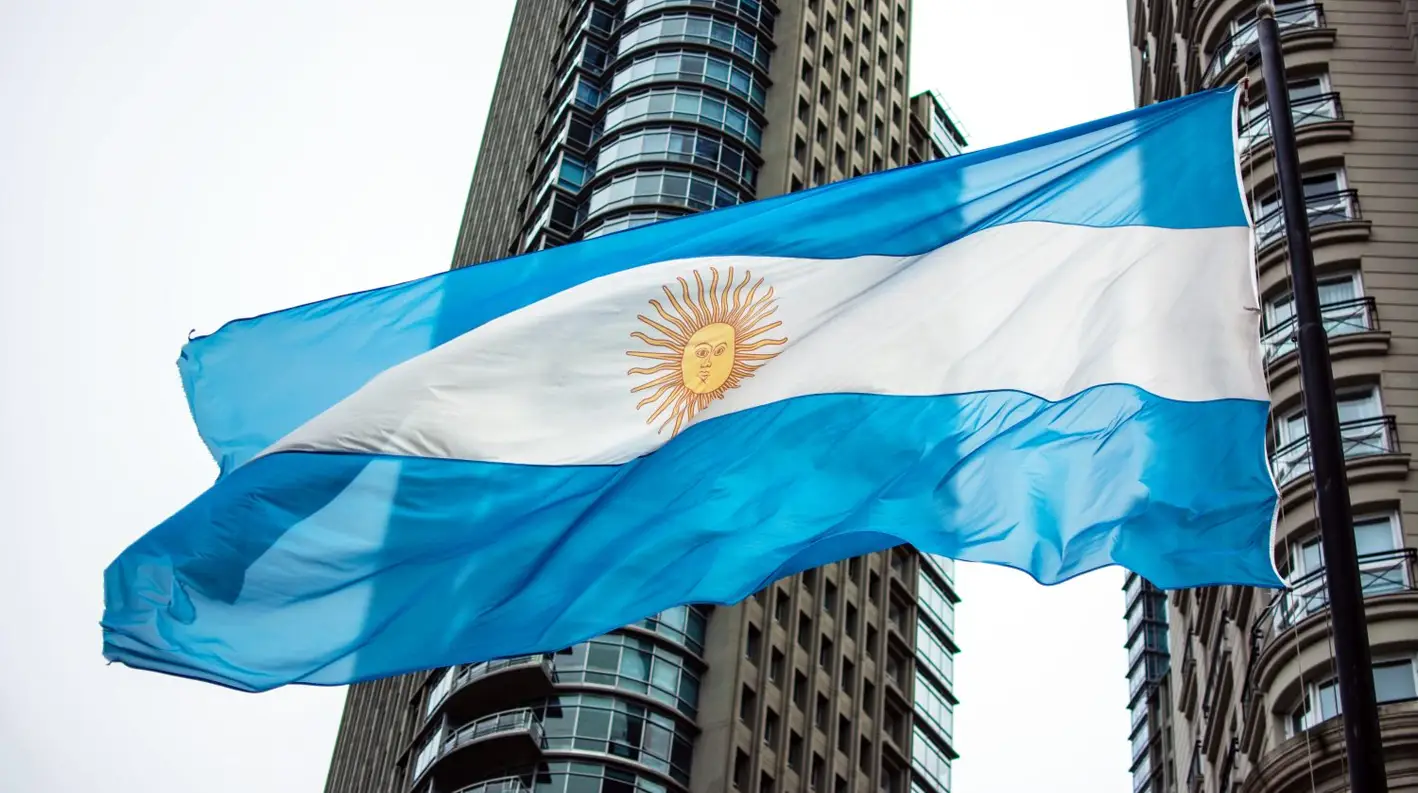
Over the past four years, Russians in Argentina have become the largest group applying for political asylum. According to given According to Co.Na.Re. (the National Commission for Refugee Affairs), cases involving Russian nationals account for 55% of the total. Between January 2022 and December 2025, 3,213 applications were submitted by Russians. The Commission does not disclose the number of positive decisions by country, but overall statistics show that more than 50% of applicants are granted refugee status after a wait that can last several years. Most Russians who have received this status are – members of the LGBTQ+ community. The fact that queer cases are rejected by Co.Na.Re. extremely rarely was confirmed by Present Time at the Argentine LGBT+ Federation (Federación Argentina LGBT+).
Statistics for 2026 have not yet been published. However, lawyer Anastasia Domini, who assists Russian-speaking migrants and refugees in Buenos Aires and also coordinates a support group at the Argentine LGBT+ Federation told Current Time that, after a brief lull, the flow of queer people from Russia to Argentina began increasing again in the second half of 2025. Those who held out until the very end are now deciding to emigrate.
Dima's Two Moms
Margarita and Elena are a lesbian couple and two of the many Russian queer refugees in Argentina. They have been together for almost twenty years. Margarita and Elena arrived in Buenos Aires with their two-year-old son Dima on December 9, 2022—four days after Putin signed a law imposing a total ban on everything the Russian authorities call “LGBT propaganda.”
“I was having panic attacks. I would wake up at night thinking that Lena would be called up [to serve in the war] as a doctor, and that our son would be taken away. According to Russian documents, I’m nobody to Dima—just some unrelated woman,” – Margarita recalls.
In her experience, Russian society, which was already homophobic, began rapidly growing more radical after the full-scale war against Ukraine began: “People would approach me at playgrounds and ask who I was to the child if he already had another mother. When the two of us went out with the stroller, grandmothers would call their grandchildren over and whisper in their ears. The children would then run up to Lena and me and ask which one of us was the mother. Dima has beautiful curly hair. We didn’t cut it for a long time. Then suddenly all the children at the playground—surely prompted by their parents—started calling Dima a girl. I explained a hundred times that he was a boy, but it was no use. It made my hair stand on end.”
In late September 2022, Elena, a surgeon by profession, did in fact receive a summons to report to the military enlistment office. At the time, the family was living in a rented apartment in a large city in European Russia. Margarita was staying home with their child, while Elena worked at a hospital. They were investing all their money in a house under construction that they had bought with a mortgage. “I didn’t go to the military enlistment office. I was afraid they wouldn’t let me leave again. I had heard about cases, when single mothers were taken away,” Elena says.
Within a month, the couple sold everything they could: their car, bicycles, and personal belongings. They put their nearly completed house up for sale and, in late October 2022, flew via Belarus to Turkey, while their relatives cursed them. They called Margarita and Elena “traitors to the motherland.” The families of the two women rejected their decision to emigrate just as strongly as they rejected their sexual orientation and romantic relationship.
Margarita and Elena come from a small town in northern Russia. They met at school and quickly became best friends. After graduation, they continued to stay in close touch, even from afar. “We wrote a million letters to each other. We never lost touch,” recalls Margarita, who spent a year in Germany as an exchange student after high school. Elena enrolled in medical school in another city. At the time, both women had experience of long-term relationships with men.
After returning from Germany, Margarita switched to a distance-learning program and moved to the city where Elena was studying. There, she moved into Elena’s dorm room. “At first, there were four of us in the room, but then Margarita and I were left on our own. That was when we realized that we weren’t really friends at all—and hadn’t been for a very long time. But as girls from conservative families, the thought had never occurred to us before. The emotional intimacy we had always shared became physical as well. That was all there was to it,” Elena says. They kept their relationship secret from everyone. After graduation, it was time to return to their hometown, where Elena had a medical residency waiting for her.
The women describe the next few years as “hell.” Their parents exercised total control over them: “Someone saw you holding hands with a woman. Do you realize how ashamed I am in front of people I know? Are you sleeping at home tonight? Why don’t I walk you home? Why aren’t your lights on? I just happen to be out for a walk in your neighborhood. Will you open the door? When are you getting married? What about children? It’s about time.” The couple met in secret and at night. The only person who knew they were together was Margarita’s best friend.
Once Elena had completed her residency and worked the required period after graduation, the couple was finally able to move to another region of Russia. They wanted to stop hiding and simply live together. But Margarita’s parents soon bought a house in the same city. Her mother demanded that she explain who Elena was to her. Margarita replied that she was family. “She cursed me. She said she wished she’d never given birth to me. She wanted me to sell the one-room apartment that she and my father had bought for me and give them the money. So I did. After that, my mother didn’t speak to me for three years,” Margarita recalls.
The women also faced problems at work because of their sexual orientation. At the hospital, the chief physician constantly found fault with Elena. As it later turned out, he had severed ties with his own daughter because she was a lesbian and treated employees poorly if he suspected they were queer. Margarita had to resign from the store where she held a management position. Her superiors forced her to leave after one of her colleagues outed her.
Margarita reconciled with her mother only a year before her mother died of cancer. At the time, the couple was expecting their son, Dima. In 2019, Elena became pregnant after her fifth IVF attempt. It had taken four years: “I tried to obtain a state-funded place to cover at least part of the cost of the procedure. I would go in and explain that I was a doctor, a healthy single woman, and that I wanted IVF. ‘Why do you want IVF? Could you be a lesbian? How will you explain to your child where he came from?’ One colleague accused us of trying to take a place away from people who supposedly needed IVF more.”
Dima is now six years old and has started first grade at an Argentine school. Margarita and Elena married in Buenos Aires in March 2023, and in December 2024 they were granted refugee status as members of the LGBT community. Margarita is now preparing to formally adopt Dima so that, as she and Elena had wanted from the very beginning, all of the boy’s documents will list the names of both mothers in the “parents” field.
A year and a half passed between the interview at Co.Na.Re. and the family receiving refugee status and residence permits. The family now lives in Buenos Aires. Dima's mothers have already applied for Argentine citizenship; he will only be able to do so himself once he turns eighteen. The women admit that despite all the difficulties of emigration, they feel much more comfortable in their new country than they did back home. They live openly, without hiding anything from anyone. Argentina does not provide benefits for refugees. The Russian women work remotely. When enrolling their son in a public kindergarten and school, they stated in the paperwork that he had two mothers—and encountered no misunderstanding whatsoever.
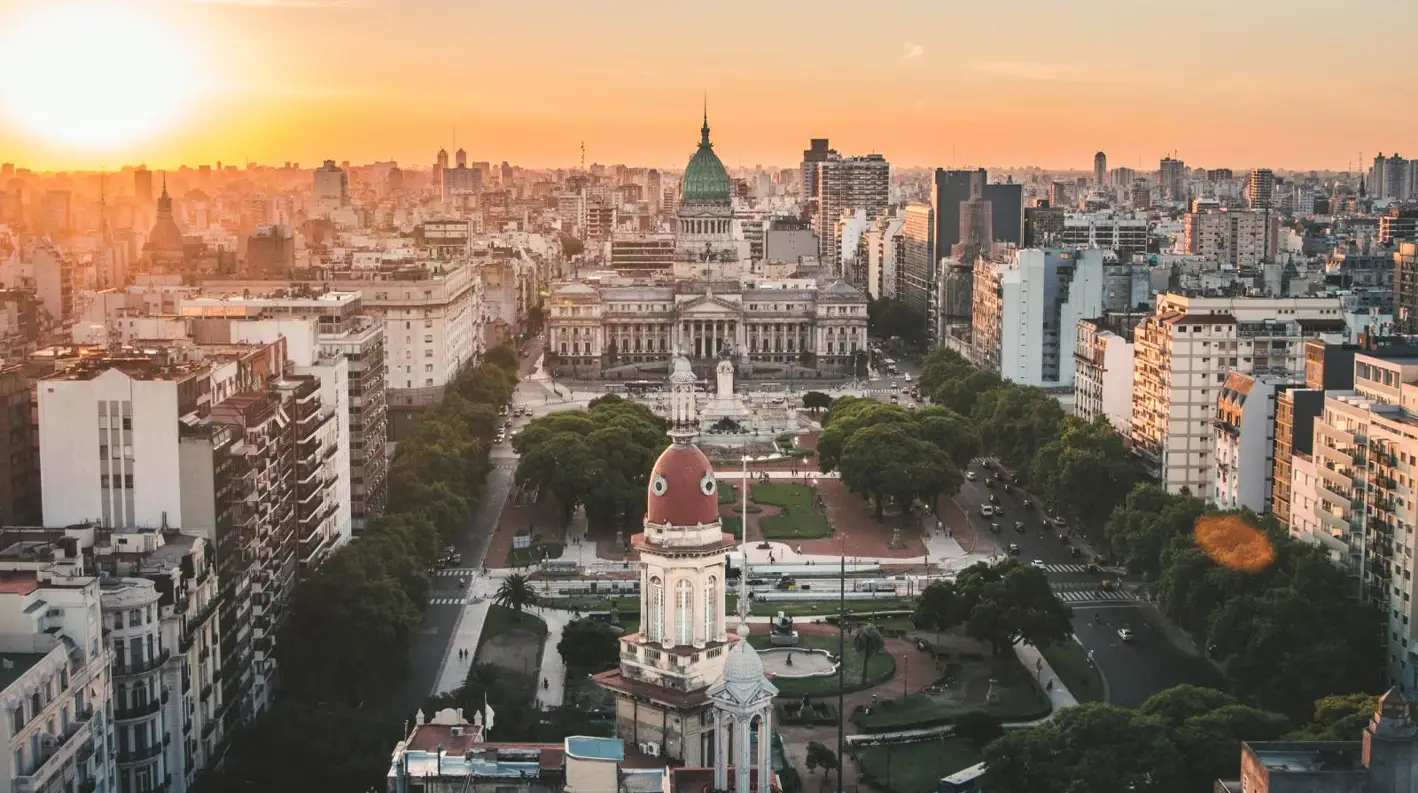
Argentina became the first country in Latin America to legalize same-sex marriage, back in 2010. Same-sex couples here can have and adopt children. Gender transition is legal in the country. Buenos Aires repeatedly was called one of the most gay-friendly cities in Latin America. The Argentine capital even has metro station, named in honor of Carlos Jáuregui, an openly gay man and activist for the rights of LGBTQ people. So when Russia first legally banned gender transition and, in November 2023, the Supreme Court declared the “international LGBT movement” “extremist,” Argentina became one of the main destinations for queer emigration.
“At first I was euphoric, and then I cried for several weeks.” Akhra
“At Co.Na.Re. (the National Refugee Commission), they asked me very personal and detailed questions, but did so as tactfully and kindly as possible. They asked how and when I realized I was gay. They asked about my first sexual experience. I told them how I had been threatened and persecuted. The state-appointed lawyer cried during my two-hour interview,” recalls Akhra, an Abkhaz man who lived in Russia for 12 years.
He moved to Moscow from Abkhazia in the late 2000s, immediately after finishing school. “I lived in different versions of Moscow. It changed—a lot. In the early years, I didn’t make much effort to hide my sexual orientation. Besides, there are always more women in the restaurant industry, where I work. And where there are fewer men, there are fewer problems,” Akhra says. According to him, the situation began to deteriorate in 2012, when Putin returned to the presidency after a hiatus, protests in the country were suppressed, and the very first law against so-called “LGBT propaganda” among minors was drafted.
The young man tried to return to his homeland. There, he was forcibly outed and threatened with death. His family was threatened as well. Akhra describes homophobia in Abkhazia as “total” and “primitive.” He is afraid to speak publicly about the persecution he endured: his relatives are still in his homeland. To avoid putting them in danger, Akhra has been forced to cut off contact with his family ever since.
He speaks Abkhaz, Russian, and English fluently. He is learning Spanish. Akhra spent several years working for an American company outside Russia. He was there when the full-scale war against Ukraine began: “For me, this is a profound tragedy. I was born at the height of the Georgian-Abkhaz war. I had only ever used the word ‘war’ in the context of something that must never happen again. When Russia attacked Ukraine, I went to the office and said there was no way I would return to Moscow. After the contract ended, management allowed Ukrainians and Russians to choose any airport as their final destination.”
Akhra chose Argentina because he could enter without a visa. He knew virtually nothing about the country. He arrived in Buenos Aires in June 2022 for a two-month vacation, intending to recover and decide what to do next. Akhra liked the city and the locals’ welcoming attitude toward LGBTQ+ people so much that he applied for refugee status ten days later. At the end of 2024, Akhra received a temporary residence permit, and a year later, Argentine citizenship.
“At first, I was euphoric, but then it all hit me. I cried for several weeks. When the whole ordeal with the persecution in Abkhazia happened, I went into survival mode and did not allow myself to process it. But now that the cycle has finally ended and I am safe, all the pain and fear have been released. It was as if I relived it all. I felt it throughout my entire body. I feel better now,” Akhra says.
In Buenos Aires, the refugee found a “family”—his term for a large circle of close friends, most of them Russian-speaking. They support one another. He also went with them to his first Pride event in Argentina: “I get the sense that queer people make up about thirty percent of all new Russian emigrants in Buenos Aires. There really are a lot of us. I can see it among my friends, acquaintances, and clients. I have also noticed that heterosexual Russian emigrants who used to be neutral toward queer people have become much more queer-friendly since moving to Argentina. Because your environment changes you.”
A residence permit with an “HIV” diagnosis
Vitaly Panferov speaks openly about being HIV-positive. His status enabled the Russian citizen to regularize his status in Buenos Aires, and he has already renewed his temporary residency once. Panferov learned that any migrant in Argentina has the right to apply for a residence permit on medical grounds after his original plan to regularize his status through a student visa fell through; as a matter of principle, he did not want to seek asylum on the grounds that he was gay.
Vitaly Panferov is originally from Zhukovsky, near Moscow. He is a lawyer by training. In Russia, where Vitaly lived for 25 years, his friends and parents knew about his sexual orientation. But he could not even dream of living openly. Vitaly kept all his romantic relationships secret. He left Russia with his boyfriend at the time. In December 2022, they married in South Africa, and in early 2023 they moved to Argentina.
For the sake of obtaining student visas, both enrolled in a private multimedia arts school, which cost about $70 per person per month. But six months later, the young couple split up due to financial problems and domestic violence. They never managed to fully launch the candle-making business they had planned to start. Their savings were running out. According to Panferov, his ex-husband abused alcohol and beat him. The Russian later filed a complaint against his ex-husband with the Domestic Violence Office at the Supreme Court. Vitaly had a panic button installed on his phone. The court prohibited the aggressor from coming within 300 meters of the victim, but imposed no other penalty.
In late 2023, the government of far-right president Javier Milei came to power in Argentina. Economic policy changed radically, and the cost of living in the country began rising rapidly in dollar terms. According to statistics, Buenos Aires ranks as the second most expensive city to live in South America, just behind Montevideo, the capital of Uruguay. Realizing that he could no longer afford his studies, Vitaly began looking for other ways to legalize his status. At the same time, he began a brief relationship with an Argentinian man. It ended in February 2024 with a positive HIV test. “When I went to get tested, I explained to the doctor that I was gay and had had unprotected sex with a man. In Russia, I would never have dared to say that. But here, the doctor reacted to what I said as if it were completely normal. I remember how amazed I was,” Vitaly admits. He is certain that he contracted HIV after arriving in Argentina. He had been tested before emigrating, as had his ex-husband, and both results were negative.
While in Russia, which ranks among the world’s top five countries by number of people living with HIV, migrants who test positive may be deported, even if they have lived in the country for many years (the authorities refuse extend his residence permit), Panferov immediately began receiving medication in Argentina. Under the local “National law on HIV, viral hepatitis, other sexually transmitted infections, and tuberculosis,” absolutely everyone living in Argentina, including foreign nationals regardless of their legal status, is entitled to state-funded antiretroviral therapy.
HIV-positive migrants are not only protected from deportation; they can also apply for a one-year temporary residence permit on medical grounds and renew it. According to official statistics, Argentina, with a population of 46 million, is home to 140,000 people living with HIV. Of these, 87% are aware of their diagnosis. More than half of those infected receive medication from public healthcare facilities. Antiretroviral therapy is also covered by all private health insurance plans.
After three years of legal residence in the country, Vitaly Panferov will apply for permanent residency. According to Panferov, he has been receiving his medication without any problems for two years, although he has heard of drug shortages at several hospitals. He says that being HIV-positive has changed very little in his life and that he has never faced discrimination in Buenos Aires. Vitaly now earns a living by advising migrants on options for obtaining legal status on medical grounds. Whether a person contracted HIV in Argentina or in their home country is of no fundamental importance.
The Argentine authorities and LGBTQ policy
When asked why they chose distant Argentina as their destination, even though none of the people featured in this article had ever been there before, the interviewees cited the same reasons: visa-free entry, allowing Russians to stay in Argentina as tourists for 90 days; laws protecting the rights of queer people; and a clear asylum application process.
As human rights advocates from the “Argentine LGBT+ Federation” told Current Time, and by early 2023 they were literally inundated with inquiries from Russians who wanted to emigrate to Argentina and were asking how to do it. The number of inquiries then began to decline. Presumably, however, this was not because the flow of queer refugees had decreased, but because dedicated groups and chats had emerged where all the information needed to apply for asylum was compiled. These groups, mostly on Telegram, have relatively few members and are private to protect them as much as possible from bots and provocateurs; current and prospective queer migrants use them to communicate and share their experiences. To gain access to a chat, users must pass moderation by telling their story. The people featured in this article named “LGBTQ Immigration to Argentina,” which has nearly 1,200 members, as one of the most useful and popular groups. There are also groups for same-sex couples who are moving with children or planning to have a child in Argentina.
Margarita, Elena, Akhra, and Vitaly arrived in Argentina and began the legalization process while the country was governed by, or had only very recently ceased to be governed by,
the left-wing Frente de Todos coalition. Since the 2000s, its member parties had gradually made the protection of LGBTQ+ rights part of government policy. Former president Cristina Kirchner (2007–2015) personally lobbied for the legalization of same-sex marriage in 2010. In 2006, Argentine schools introduced the mandatory ESI (Comprehensive Sexuality Education) curriculum, which covers gay men, lesbians, nonbinary identities, and transgender identities, among other topics. Organizations protecting the queer community received government grants. The country had a Ministry of Women and Gender Diversity.
Much changed when President Milei and a right-wing government came to power in late 2023. Protecting queer people ceased to be part of government policy: the Ministry of Women and Gender Diversity was disbanded, and human rights organizations were stripped of funding, as was sex education in kindergartens and schools. The authorities plan to prohibit by decree the use of “non-binary person” in the “sex” field of official documents.
In 2025, at the forum in Davos, President Milei spoke out against the queer community and “gender ideology.” “In its most radical forms, gender ideology is nothing less than the rape of children. They are pedophiles,” the Argentine leader said. He called laws providing public funding for hormone therapy and gender-affirming surgery absurd. According to the libertarian, an entire generation has supposedly suffered because of gender-diversity policies and will now spend the rest of their lives in psychiatric clinics. In a similar vein speak out members of Javier Milei's party and his supporters.
“I Don’t Have to Hide Here.” Eleonora Awaits Asylum
Eleonora, a transgender girl, emigrated from Kazan to Buenos Aires in late 2024. She could not leave earlier because she was waiting to turn 18. Soon after she came of age, she received a military draft notice for compulsory service. Human rights advocates from “Prizyva.Net” helped her avoid being sent into the army.
Eleonora realized she was a trans girl at around the age of 14. At the college she enrolled in after ninth grade, she told a new friend about her identity, and the friend shared this information with the entire class. “I was bullied. They would wait for me after classes. Beat me up. Of course, I didn’t go to the police. Who would have bothered to deal with it?” Eleonora recalls. Her mother would leave for long periods to work in Moscow, leaving the children with their grandmother. Neither woman accepted Eleonora as a trans girl, and both reacted negatively to her decision to leave Russia. She saved the $1,500 she needed to emigrate to Argentina by working at Burger King. Eleonora used the money to buy a ticket to Buenos Aires and cover her initial living expenses there.
She applied for refugee status more than a year ago, but has not yet even been called for an interview at Co.Na.Re. Since Javier Milei came to power, all bureaucratic procedures involving migrants and refugees have become longer and more complicated. According to lawyer Anastasia Domini, it now takes an average of at least a year and a half from the time a case is opened at Co.Na.Re. until the applicant is called for an interview, and another year and a half before a decision is made. If the decision is positive, the applicant becomes eligible for a residence permit in Argentina.
Every three months, Eleonora receives a document stating that her case is under review, but she cannot leave Argentina, or the case will be closed immediately. Under the national “the Gender Identity Law” any trans person living in the country is entitled to free hormone therapy. In practice, however, under the right-wing government, people without Argentine documents have begun experiencing problems accessing therapy at public hospitals. The Argentine LGBT Federation told Current Time that this is illegal and advised those affected to contact the organization for assistance.
According to Eleonora, for the first six months she was able to receive therapy without any problems using a document from Co.Na.Re., but she was later denied it and told that public funds were now reserved exclusively for Argentines. “I spend more than $200 out of pocket every month,” the trans girl says. She plans to complete her medical transition in the future. By law, once Eleonora receives a residence permit as a refugee, she will be able to join the waiting list for free surgery. But it is currently difficult to predict when that will happen.
Eleonora rates her personal comfort as a transgender person after moving from Kazan to Buenos Aires as “10 out of 10.” She no longer has to wear men’s clothing or refer to herself using masculine grammatical forms. “I don’t have to hide here,” the immigrant says. Eleonora considered returning to Russia only once, when she completely ran out of money. She had no way to pay the rent, and a charitable organization helped the Russian woman find accommodation at a monastery in Buenos Aires Province. Eleonora admits that she felt extremely uncomfortable there, but had no choice but to stay. Her financial situation has since improved: the trans girl works at a bar and rents a home in the Argentine capital.
The people featured in this article say they have no regrets whatsoever about their decision to emigrate to Argentina and feel much safer and more comfortable there than in Russia. But the rhetoric of the current government makes them uneasy, and they describe Javier Milei's stance toward queer people as openly homophobic.
Margarita and Elena believe in the overall tolerance of Argentine society and say that there is simply no perfectly safe place for LGBTQ+ people anywhere in the world today, while Argentina remains one of the best countries in this respect. Akhra says he has not experienced physical or verbal aggression directed at him in Buenos Aires, but has noticed that more and more people on gay dating apps have begun hiding their faces because they do not want to disclose their sexual orientation. These changes make Akhra uneasy.
For those who have not yet obtained residency, the situation with hospitals and healthcare is a major concern. For decades, Argentina's public healthcare system was free for everyone: citizens and foreigners alike, regardless of their legal status. Bolivians, Paraguayans, and Peruvians came to receive treatment at the expense of the Argentine budget. In May 2025, amid record cuts to healthcare and education funding, Milei's government decided to implement a reform, which allowed public hospitals to charge nonresidents for treatment. Hospitals are forced to do so because the funding allocated by the government is not enough to cover both Argentines and foreigners. In late January 2026, Buenos Aires Mayor Jorge Macri stated: “The era when foreigners received medical care free of charge is over. Everyone without a DNI must pay.” The same restrictions introduced in several provinces, including Salta and Mendoza.
Human rights advocates from Federacion Argentina LGBT (“Argentine LGBT Federation”) report that hate crimes have been on the rise in the country since the right came to power. According to the latest report,
in the first six months of 2025, the number of hate crimes against queer people in Argentina rose by 70%. Seventeen people were killed, and 85 sustained injuries of varying severity. Trans women are the most frequent targets of attacks. At the same time, the city of Buenos Aires remains one of the region's safest places for queer people.
“In our country, political violence targeting sexual diversity is not an abstract category or a metaphor. It is an ongoing practice of persecution through incitement to hatred that we see in various spheres,” write human rights advocates from the “Argentine LGBT Federation.” According to them, this behavior goes unpunished because of local and federal officials.






0 comments
Enter your email — we’ll send you a one-time code. No passwords or accounts.
Code sent to
If the email doesn't appear in your inbox within a few minutes, check your spam, junk, or promotions folder, as some email services may mistakenly place automated messages there