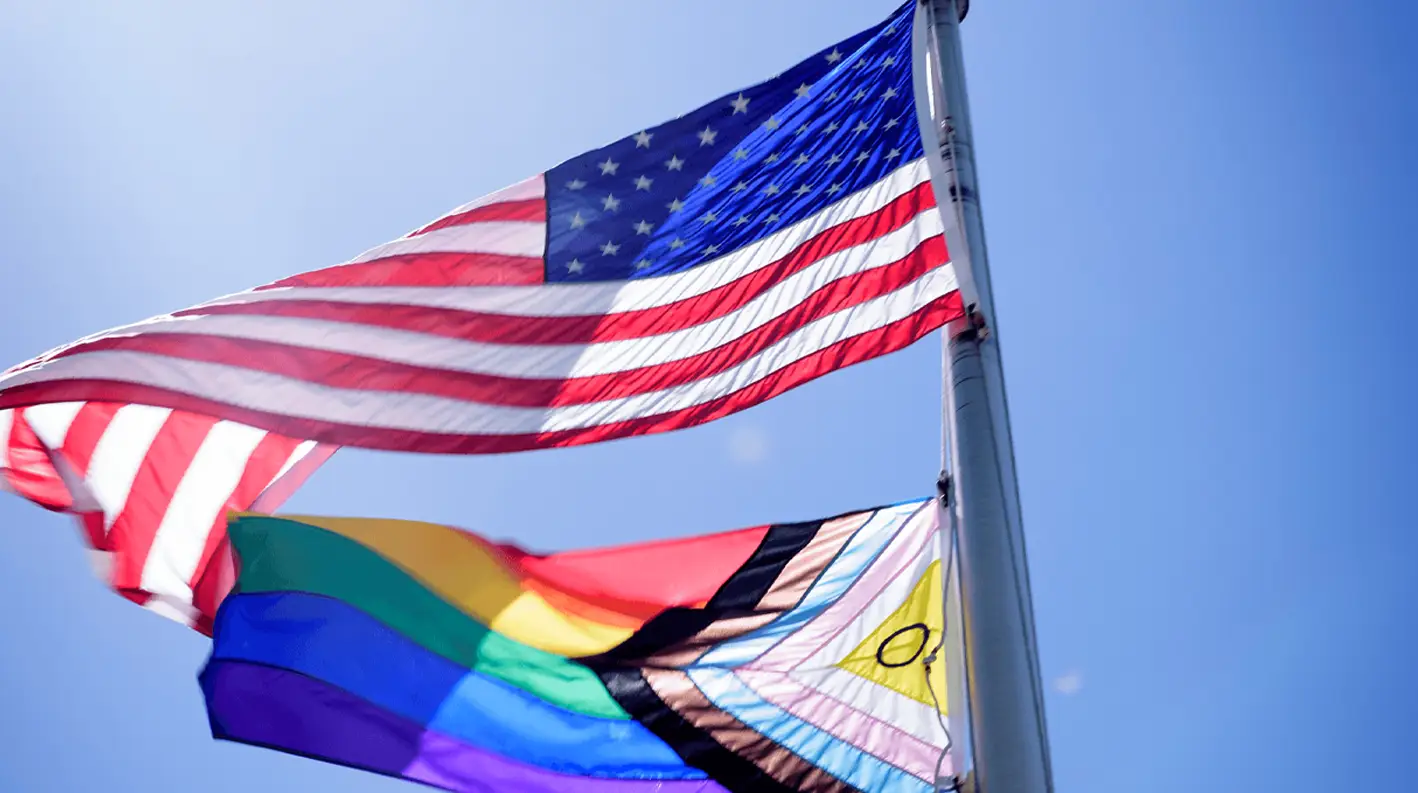

Over seven decades, the CIA went from purging LGBT officers to supporting them—until the second Trump administration began undoing that progress.
At the very end of World War II, Carmel Offie, an openly gay officer with the Office of Strategic Services (OSS), successfully carried out two highly complex operations to evacuate German scientists and diplomats from the Soviet occupation zone. Just a few years later, Offie, who had become one of the first full-time employees of the newly established Central Intelligence Agency (CIA), was fired solely because of his sexual orientation. He became one of the first victims of a sweeping government campaign to purge gay, lesbian, bisexual, and transgender people from federal agencies, which historians would later call the “Lavender Scare” (Lavender Scare).
Over the next seven decades, the CIA underwent a long and painful transformation: from systematically targeting and firing LGBT employees to actively recruiting them, publicly recognizing their contributions, and providing their partners with full benefits. Today, however, this historic transition has encountered an unprecedented reversal.
With the arrival of Donald Trump’s second administration in 2025, the U.S. intelligence community began rapidly dismantling its entire diversity and inclusion infrastructure, effectively returning to practices of exclusion and suspicion.
Table of Contents
In a nutshell: what is happening?
- The historic compromise has been shattered. For 70 years, the CIA moved toward recognizing the rights of LGBT officers: from persecution during the McCarthy era to “tacit acceptance” in the 1970s and 1980s and, finally, full legal equality in the 2010s.
- A new wave of restrictions. Since January 2025, Trump's executive orders have dismantled diversity, equity, and inclusion (DEI) programs. The CIA banned the activities of the employee advocacy group ANGLE, Pride events, and even the use of pronouns in corporate email signatures.
- Transgender officers under attack. A ban has been imposed on using restrooms consistent with one's gender identity. The elimination of nonbinary gender markers in passports is forcing undercover officers to use documents that do not match their appearance, directly endangering their safety and CIA operations.
- Mass firings. In February 2025, Director of National Intelligence Tulsi Gabbard fired 100 transgender intelligence employees (including three CIA officers) for participating in a private chat. Concerns are growing within the agency over the onset of a full-blown new “Lavender Scare.”
Part I: The Era of Persecution and Serving in Silence (1941–1980)
The “Lavender Scare” and Lie Detectors (1941–1960)
During World War II, U.S. intelligence agencies, facing an acute personnel shortage, paid little attention to the private lives of their employees in the OSS or military intelligence. After the war ended, however, attitudes changed dramatically. The leadership of the intelligence community concluded that homosexuality was a critical vulnerability. The reasoning was simple: employees who concealed their sexual orientation were supposedly easy targets for blackmail by foreign intelligence services, which could force them to divulge state secrets.
- In 1948 The CIA introduced regular polygraph examinations that included direct questions about homosexual contacts, with the aim of identifying and subsequently dismissing such employees.
- In April 1953 President Dwight Eisenhower signed Executive Order No. 10450. This document officially established “sexual perversion” as direct grounds for denying access to classified information.
From that point on, the persecution became systematic. Hundreds of careers were destroyed and lives shattered on the basis of nothing more than rumors, suspicions, or confessions extracted under extreme psychological pressure during lie detector tests.
Serving in Silence (1960–1980)
In the 1960s and 1970s, the CIA’s attitude toward LGBT employees began to soften gradually—though highly inconsistently and unofficially. It became somewhat easier to pass pre-employment screening, but being openly homosexual still remained automatic grounds for disqualification.
Within the agency itself, fierce debates raged over whether admitting to homosexuality during a polygraph examination should automatically result in dismissal. Some members of the leadership favored a more pragmatic approach resembling the unofficial “don’t ask, don’t tell” policy. George H. W. Bush, who headed the CIA from 1976 to 1977, became the first Director of Central Intelligence to openly question the wisdom of dismissing LGBT officers, challenging the long-standing claim that their sexual orientation inherently made them vulnerable to blackmail.
In 1967, under pressure from Congress, the question about “homosexual tendencies” was removed from civil service medical questionnaires. Nevertheless, the CIA ignored this recommendation and continued to ask the question during its own medical examinations and polygraph tests. As one 30-year veteran of the agency recalled, by this time it was already possible to try to challenge the Office of Security's recommendations to dismiss gay employees, although sexual orientation officially remained legal grounds for termination until the 1990s.
Part II: A Divided Agency and the First Victories (1980–2013)
A Battle on Two Fronts (1980–1995)
This period was marked by profound internal contradictions. On the one hand, the official rules were becoming more flexible. Under a 1980 directive issued by the Director of the CIA, homosexuality was to be considered merely one factor in assessing an employee's stability and susceptibility to pressure, but was no longer, “in and of itself,” a barrier to access to Sensitive Compartmented Information (SCI).
On the other hand, harsh dismissals continued in practice. In 1982, an officer with an outstanding record was dismissed from the CIA after honestly disclosing his sexual orientation during a polygraph test. This led to a decade of litigation that reached the U.S. Supreme Court, which ultimately upheld the CIA Director's authority to dismiss employees on national security grounds. Between 1985 and 1992, federal courts repeatedly sided with the CIA, affirming the legality of denying security clearances to LGBT applicants.
The atmosphere within the agency remained hostile, causing almost all LGBT officers to conceal their private lives for fear of immediate dismissal. At the same time, the classic “blackmail threat” argument was rapidly losing its force: as more and more people came out, foreign intelligence services had less and less leverage over them.
The Clinton Era and the Creation of ANGLE (1995–2013)
The real breakthrough came in the mid-1990s.
- In 1995 President Bill Clinton signed Executive Order No. 12968, prohibiting the denial of access to classified work on the basis of sexual orientation.
- In 1998 his next Executive Order No. 13087 completely prohibited discrimination against LGBT citizens in all branches of the federal government.
The CIA was forced to revise its personnel policies. For the first time in history, officers were officially permitted to serve openly. The only condition was that they show no signs of “inappropriate behavior, irresponsibility, or emotional instability.”
In 1996, a group of employees led by Trace Ballard founded the ANGLE association (Agency Network for Gay, Lesbian, Bisexual, and Transgender Officers and Allies). The creation of this group initially caused serious concern among the CIA’s conservative leadership. LGBT officers themselves also feared that joining ANGLE could result in punishment for having concealed information during previous background checks.
In addition, another major obstacle was the 1996 Defense of Marriage Act (DOMA), which prohibited the federal government from recognizing same-sex unions. As a result, the partners of CIA employees were not eligible for health insurance or family benefits.
The situation began to change in the late 2000s:
- In 2009 The U.S. Office of Personnel Management (OPM) added “gender identity” to the list of protected categories.
- In 2011 For the first time, OPM formally established procedures for gender transition in the workplace at federal agencies.
- In June 2013 With the support of CIA leadership, Julia Kearly became the first transgender officer to transition successfully and openly within the agency.
- In June 2013 The U.S. Supreme Court, in United States v. Windsor ruled DOMA unconstitutional, finally allowing the CIA to provide equal rights and benefits to the families of all its employees.
Part III: From Recognition to Prohibition (2013–2026)
The “Golden Age” of Inclusion (2013–2017)
The Supreme Court’s ruling in Obergefell v. Hodges in 2015, legalizing same-sex marriage throughout the United States, finally resolved the legal inconsistencies. This significantly simplified matters for LGBT employees working abroad: their spouses became eligible for standard diplomatic visas and benefits, although in some conservative countries they still faced visa denials or were required to leave the country every three months.
Under CIA Director John Brennan (2013–2017), inclusion became part of the agency’s official brand.
- In 2014 Brennan commissioned a large-scale study that found that LGBT employees still felt subtle pressure and feared that coming out would hinder their career advancement.
- In 2016 a three-year diversity strategy was approved, making the LGBT community a priority recruitment group.
- The CIA released an official documentary “ANGLE of Ascent”, chronicling the transformation of the agency’s internal culture.
The First Trump Administration (2017–2021)
When Trump took office in 2017, public support for the LGBT community within government agencies was rolled back. The State Department quickly removed from its website an apology to victims of the historical “Lavender Scare,” while Attorney General Jeff Sessions rescinded protections for transgender workers.
Within the CIA, LGBT employees chose to scale back their public activities. Nevertheless, the institutional infrastructure—the Office of Diversity, training programs, and the ANGLE group—continued to operate. When Trump announced a ban on transgender people serving in the military in July 2017, CIA officers sent the agency's leadership a memorandum warning that the ban would harm national security by causing the loss of military specialists with rare language and technical skills who had been detailed to the intelligence community. When President Joe Biden took office in 2021, the ban was temporarily lifted, and all inclusion and healthcare programs were fully reinstated.
Part IV: A New Direction. 2025 and Beyond
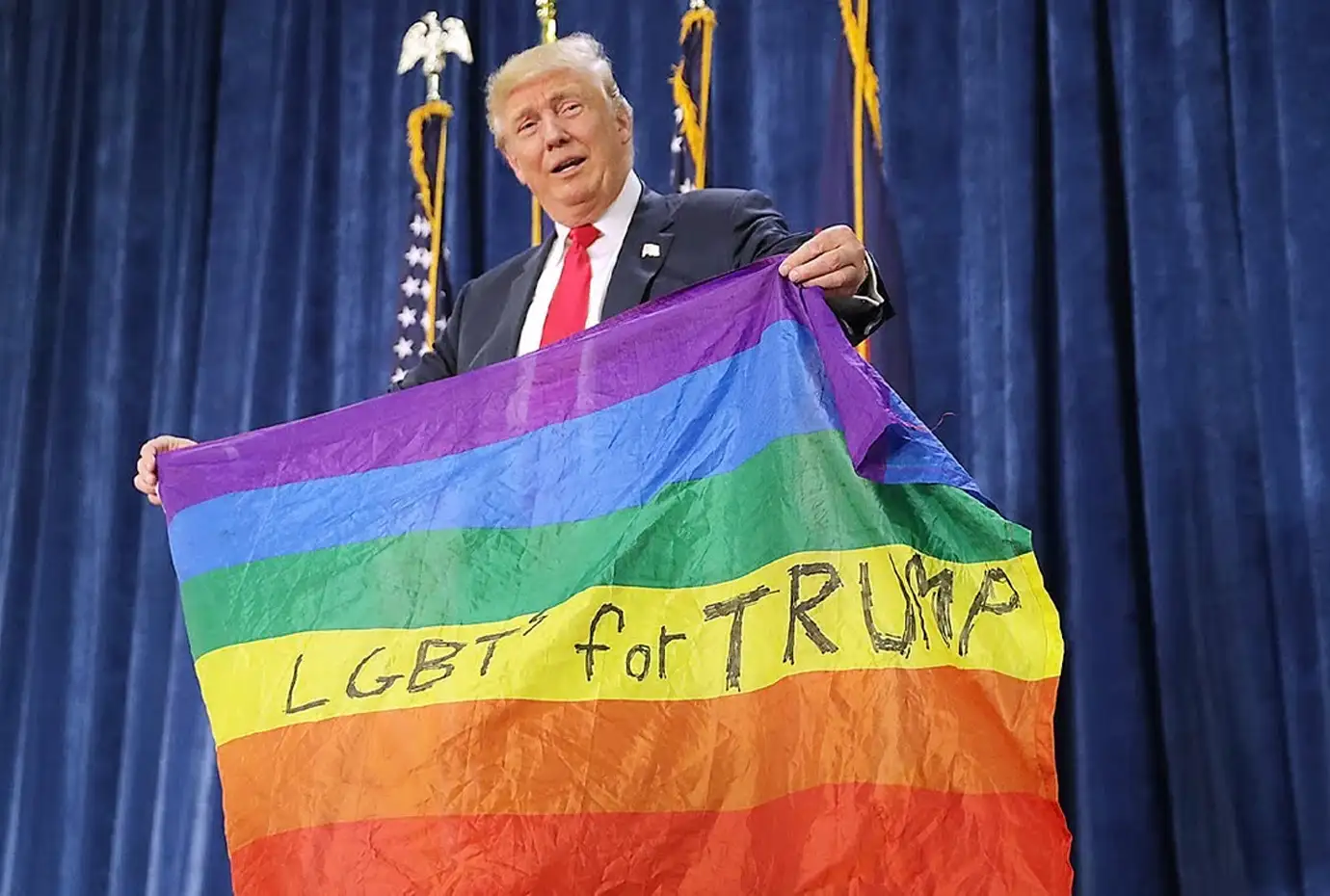
In January 2025, immediately after returning to the White House, Donald Trump signed Executive Order No. 14151, ordering the immediate termination of all diversity, equity, and inclusion (DEI) programs in the federal government. The ANGLE association, which had existed for nearly 30 years, was officially banned.
Rapid changes began at the CIA:
- Personnel purges. All employees temporarily assigned to the now-closed Office of Diversity and Inclusion were placed on administrative leave or dismissed. In February 2025, a federal court upheld the CIA director's authority to dismiss employees through an expedited process without the right to appeal. At least 51 employees of the CIA and the Office of the Director of National Intelligence (ODNI) lost their jobs. Panic-fueled rumors spread within the agency about the existence of lists of people who had ever been involved in ANGLE activities.
- Censorship and everyday restrictions. The CIA completely purged its website of references to LGBT topics, prohibited Pride Month events, and banned the use of gender pronouns in workplace emails.
- A blow to transgender employees. Executive Order No. 14168 required federal employees to use only restrooms corresponding to their biological sex as recorded at birth. This created enormous practical difficulties at CIA headquarters and overseas stations, where there are virtually no gender-neutral unisex restrooms.
- A threat to operational security. The same Executive Order No. 14168 eliminated the option of using nonbinary gender markers in U.S. passports. Transgender CIA officers must now obtain documents corresponding to their sex at birth. For officers working under deep cover, this creates a critical risk: any discrepancy between their documents and their actual appearance instantly blows their operational cover and puts their lives at risk.
- Mass dismissal of military specialists. Executive Order No. 14183 reinstated the ban on transgender people serving in the military, initiating the discharge of thousands of service members, including those who supported key CIA operations.
- Fired over a group chat. On February 25, 2025, Director of National Intelligence Tulsi Gabbard announced the immediate dismissal of 100 intelligence officers (including three CIA employees). The reason was their participation in a previously officially sanctioned National Security Agency (NSA) group chat where gender transition and the protection of rights were discussed.
The Gap Between Values and Reality
Many historians and analysts now openly speak of the onset of a new “Lavender Scare.” Although same-sex marriage in the United States is still protected by law (in November 2025, the Supreme Court declined to reconsider its ruling in the Obergefellcase), the situation for transgender CIA officers has become catastrophic, while the pervasive climate of fear has paralyzed other LGBT employees.
As early as a year before the official ban, ANGLE was documenting cases of Pride event notices being defaced within the CIA and an increase in everyday harassment of LGBT personnel.
The history of the CIA’s relationship with its own LGBT personnel has always been one of a vast gulf between its stated values and its actual treatment of people. For decades, the agency demanded exceptional honesty, courage, and devotion to duty from its employees while severely punishing them for being honest about who they were. The officers who, despite the pressure, served in silence for decades and fought for change from within helped modernize the CIA and make it a more effective instrument for protecting U.S. national security.
Today, the gains of the past thirty years are in danger of being completely erased. The central question facing the LGBT community in Langley (Langley — is a community in the state of Virginia where the headquarters of the Central Intelligence Agency (CIA) is located) right now: can the CIA's institutional memory of why inclusion truly matters to the agency's survival weather this political storm?
This article is based on an analysis of historical documents and testimony from CIA employees. All opinions and assessments expressed are those of the authors of the original study and do not reflect the official position of the U.S. government.








0 comments
Enter your email — we’ll send you a one-time code. No passwords or accounts.
Code sent to
If the email doesn't appear in your inbox within a few minutes, check your spam, junk, or promotions folder, as some email services may mistakenly place automated messages there