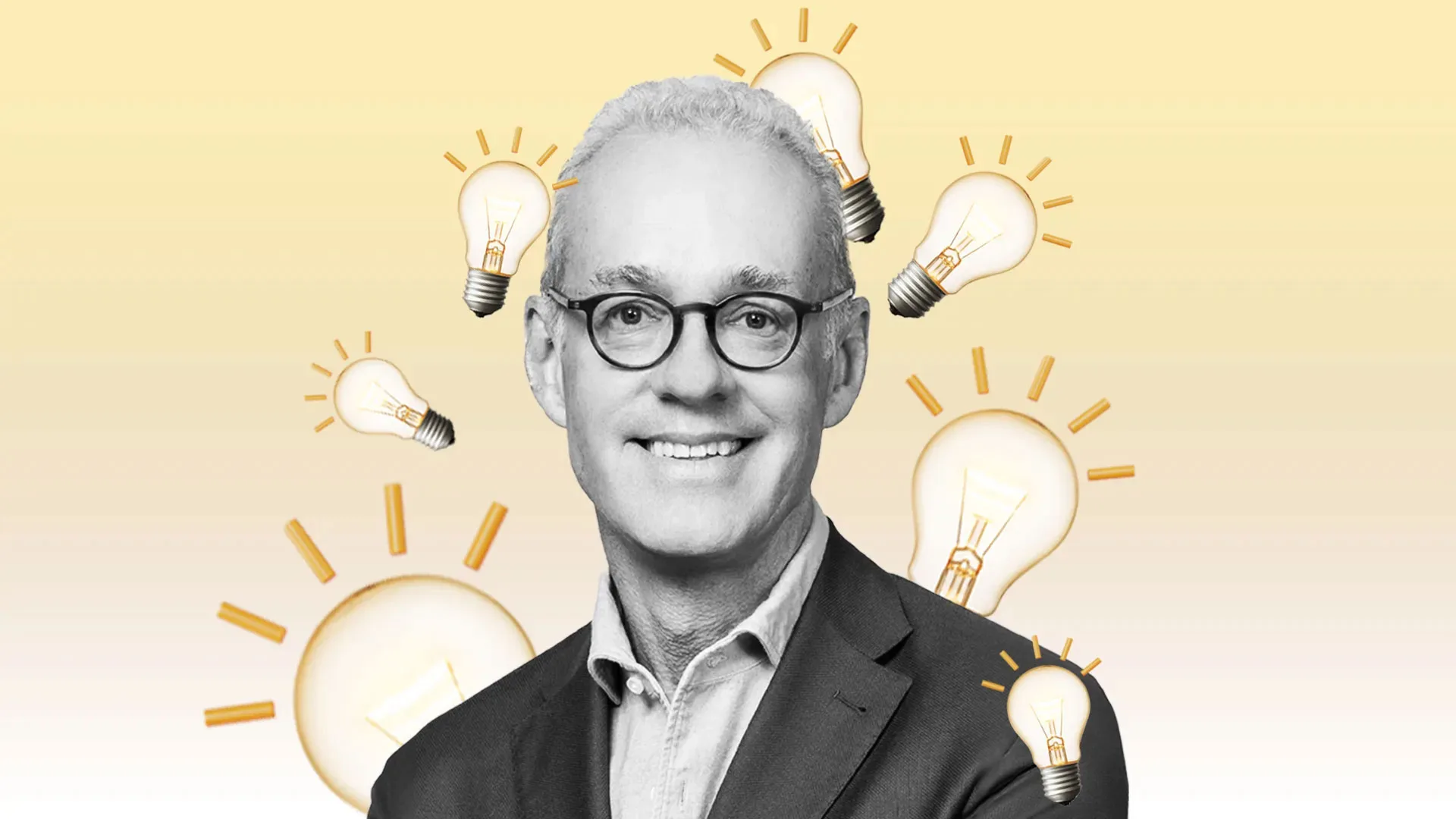
Entrepreneur Kevin Ryan is sometimes called the “Godfather” of New York tech, and for good reason. After making a name for himself by turning the digital advertising company DoubleClick from a startup into a publicly traded company—which was eventually sold to Google for $3.1 billion—Ryan went on to co-found a number of New York-based startups, including Business Insider, an online shopping company Gilt Groupe and a wedding planning website Zola.
Today, he invests in and advises dozens of startups through AlleyCorp, a New York-based early-stage investment firm he founded in 2007, which also launches its own companies. To date, the firm has invested $375 million in more than 180 startups across four sectors: healthcare, technology, robotics, and social investing. This year, AlleyCorp raised $250 million for its first fund from outside investors, having previously relied on Ryan's own capital. Ryan became one of 16 business leaders recognized in the annual review Inc. "Best in Business" for 2024.
Inc. magazine talked with him about his advice for startup founders and his vision for the venture capital landscape in 2025. Doberman.media This interview has been condensed and edited for clarity.
You've founded several startups over the course of your career. Now that you're an investor, what skill do you consider the most valuable?
One of the things I bring to the process is the ability to recognize patterns. That’s a polite way of saying I’m already old. I’ve been doing this for a very long time. When I work with a CEO—who may be a very smart person—it’s perhaps the first time he or she has hired a chief financial officer (CFO). But I’ve hired them 25 times. That’s why they turn to me. I’ve dealt with fraud—so many complex situations. All of this requires a certain amount of experience and intuition.
So, are you a professional at solving complex problems?
Literally every day, people call me with some kind of difficult situation. You’ve probably heard CEOs say that being a CEO can be very lonely. Sometimes a CEO can’t discuss a situation with their team because it involves someone on that team. However, it becomes less lonely if there’s someone who genuinely wants you to succeed, isn’t vying for your position, and has similar experience. That’s me. Sometimes I act as a coach. Sometimes I’m more like a psychologist. Or I remind the founder that a startup is a marathon—they’re still only at the third kilometer—and you can’t keep running at a sprinting pace forever.
Have you noticed a decline in the “burnout culture” among founders in recent years?
It’s hard to measure, but I agree with you. At least now it’s become a topic we can talk about. And if someone at a board meeting says, “I need to take a week off,” 20 years ago that might have sounded like, “What, are you a kid or something?” Now there’s more understanding that this is probably a sensible move.
What do you want all aspiring founders to know right from the start?
In the early stages, the most important thing to keep in mind is the alignment between the product and the market (product-market fit). It sounds obvious—after all, everyone knows it's important—but sometimes I ask, "How many hours did you spend this week searching for product-market fit?" They're all working hard, but in reality, maybe they weren't doing any of that at all. Product-market fit — That's the difference between having oxygen and not having it. Without it, you'll die.
What's so special about AlleyCorp?
We often support founders who are doing this for the first time. Everyone thinks it’s better to work with experienced people who’ve already done this many times. But in reality, newcomers are more eager, more open to suggestions and help, and more intellectually flexible. They don’t feel like they have a template to fall back on.
It has been a challenging year for venture capital. How do you assess the state of the funding ecosystem in 2025?
The truth is that companies can’t be funded indefinitely. You know how an ecosystem needs a balance between deer and wolves? There can’t be too many wolves or too many deer—their populations regulate themselves. Not every company is meant to survive, but for a long time, everyone and their mother was getting funded. I think investment will continue to flow into healthcare, since that sector still has a long way to go. I’m also interested in deep tech (deep tech). We continue to see scientific breakthroughs—whether in the discovery of new drugs, robotics, space exploration, or technologies to combat climate change.
What advice would you give to founders who want to grow their businesses in 2025?
The founder’s most important task is to build an incredible team and ensure that it works well together. When there are three people on the team, the founder does almost everything, but very quickly—if the company is successful—within a year or two, there will already be 30 or 40 people there. So, your main advantage is getting those 29 people to perform at the highest level. That is your job. It all comes down to people, because as a company grows, even if the CEO gets credit for creating a great product, the truth is that the head of product was working 60 hours a week on it. Having the right people is everything.







0 comments
Enter your email — we’ll send you a one-time code. No passwords or accounts.
Code sent to
If the email doesn't appear in your inbox within a few minutes, check your spam, junk, or promotions folder, as some email services may mistakenly place automated messages there