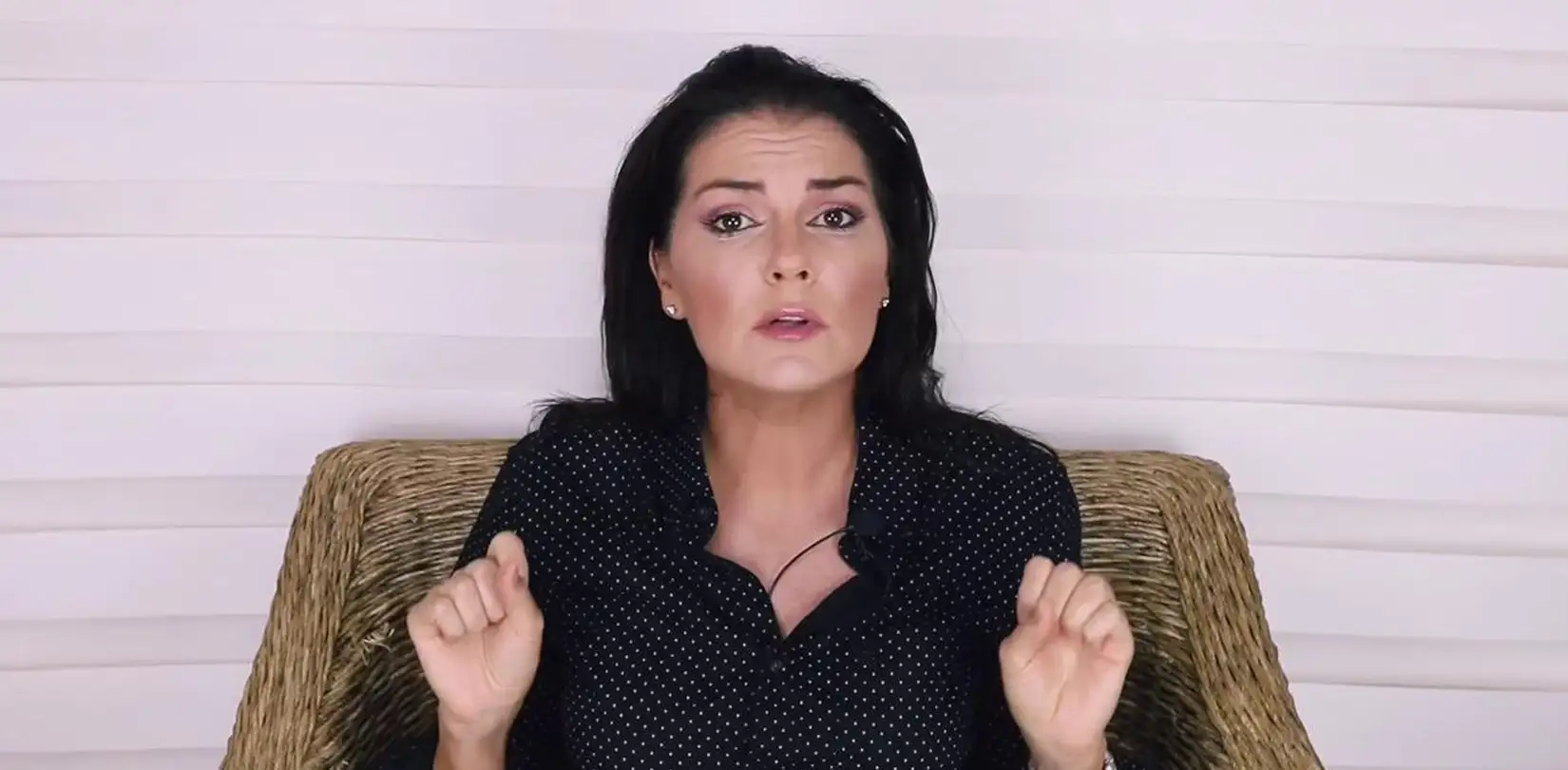

Popular psychologist Veronika Stepanova (3.16 million followers) presented a detailed analysis of the gay male community in her latest video, which focused on blogger Igor Sinyak. According to Stepanova, behind the outward glamour and “endless performance” behind which lie self-interest, a tendency to set people up, and total intolerance.
Stepanova herself candidly described the methodology behind her work: her conclusions are based on a “statistical database of stereotypes.” In plain English, this means they are based not on data, but on prejudices. Below is Doberman.media’s analysis of each claim, based on actual research.
Thesis 1. “Betrayal is the first thing that gives it away.”
Stepanov considers the main character trait of members of this community to be a tendency toward betrayal. "Betrayal is the first thing that stands out."," she asserts, adding that in this environment, it is common to "tattle" and "sue" one another. The psychologist urges people to keep their gay friends “at arm’s length,” since in a critical situation they might “set you up” or “plant something.”
Gay men are prone to betrayal and snitching, and will “let you down” when it counts. Women should keep such friends “at arm’s length.”
This isn't a psychological theory—it's labeling an entire group of people as criminals based on their sexual orientation. You might as well claim that all blondes are liars or that all accountants are greedy.
Studies suggest the exact opposite about the role of friendship in the lives of gay men. A paper published in PMC (U.S. National Library of Medicine, 2023) showed that: Support from friends is the strongest predictor of mental health and resilience among gay men — is stronger than family support or a sense of belonging to the community as a whole. People who “betray by default” do not build such support networks.
An important context that Stepanova deliberately ignores: From childhood, gay people live in an environment where they may be rejected by those closest to them—their parents, relatives, the church, and school. This gives friendship a special value as the chosen family (chosen family) — a phenomenon well documented in the sociology of LGBTQ+ communities. Such friendships are generally deeper and more intentional than casual social connections.
A tendency to cheat is a trait found in certain individuals with specific personality patterns, not a characteristic of sexual orientation. Attributing it to all gay men is discrimination, not psychology.
Thesis 2. “Gay men are very mercenary” and “they buy friendship”
A significant portion of the analysis is devoted to the financial aspects of bloggers’ lives. Stepanova explicitly calls gay men “very mercenary.” Using Igor Sinyak as an example, she describes the dynamics of interaction within the scene.
The psychologist is convinced that Sinyak “buys” the loyalty of those around him by supporting his friends and giving them expensive gifts. She believes that without his financial resources, he would be “of no use to anyone.” Stepanova interprets his constant purchases of Chanel bags and other luxury items as an attempt to replace real people with safe, inanimate objects that “won’t betray him.” She attributes a “sociopathic spirit” to the entire atmosphere surrounding such blogger circles, where even a close friend could tip off the police about a robbery.
Gay men keep those around them "on the hook" financially, make friends only for money, and spend huge sums on luxury items.
Two completely different phenomena are being conflated here: the behavior of a specific blogger and the character traits of millions of people.
As for luxury goods—yes, studies on consumer behavior show that gay men, on average, are more inclined toward brand-oriented consumption. But the reasons are entirely different from “materialism.” An academic study published in International Journal of Business Marketing and Management (2019) explains this the search for identity: Luxury brands are used as a means of self-expression and differentiation in a society that has long denied the very right of this identity to exist. This is a psychological mechanism for compensating for stigma—not greed.
Furthermore, the stereotype of “rich gay men” — the so-called DINK (double income, no kids) myth — has long been criticized by researchers as a marketing construct that does not reflect the actual economic situation of most LGBTQ+ people, especially in non-Western and less tolerant countries.
Describing one specific blogger and his circle as “typical gay men” is a representational fallacy that no conscientious psychologist would make.
Thesis 3. Relationships are “superficial” and boil down to sex and promiscuity
Stepanova notes that relationships in the gay community are “extremely superficial” and revolve around sex and promiscuity. In this regard, she contrasts them with lesbians, whose relationships are supposedly characterized by “greater depth and emotionality.”
Here's what Stepanova says: Relationships in the gay community are “extremely superficial,” unlike those between lesbians.
This is a double stereotype: it both demeans gay men and romanticizes lesbians.
Long-term studies of relationships among gay men reveal a significantly more complex picture. A longitudinal study published in PMC (2023, the University of Pittsburgh and Northwestern University), which studied middle-aged and older gay and bisexual men at several points in time, showed that: The quality of relationships—whether they are supportive or, conversely, strained—is directly linked to mental health, and this connection lasts a lifetime. It’s not just superficial—it’s a deep interdependence.
Yes, gay men tend to have more liberal views on sexuality. But “liberalism” and “superficiality” are not synonyms. Monogamy is not an indicator of the depth of a relationship.
Studies show that gay couples in open relationships often demonstrate a high level of communication and mutual trust—precisely because they have to discuss these rules and agree on them explicitly.
Thesis 4. “The sociopathic spirit” and intolerance toward “fat people”
The psychologist also points to a specific form of intolerance: while demanding tolerance for themselves, gay men often end up being extremely cruel to those around them. In particular, she claims that in this crowd, “they can’t stand fat people.”
Here's what Stepanova says: Sinyak's entire social circle is permeated by a "sociopathic spirit," and gay men are brutally intolerant of overweight people.
The issue of body culture and body shaming in the gay community is very real. It shouldn’t be downplayed. But Stepanova treats this phenomenon exactly the same way she treats others: she generalizes from the specific and takes it out of context.
Researchers studying gay communities explain this issue through Minority Stress Theory (I. Meyer, 1995/2003). Gay men grow up in a society that regularly tells them that their bodies, desires, and identities are “wrong.” Some of them, in response, develop hyper-control over their appearance as a compensatory mechanism. This traumatic response to stigma, rather than an innate personality trait. Read more about this in our article here.
Furthermore, intolerance toward physical differences is a cross-cultural issue that is equally present in heterosexual circles: in the modeling industry, sports, and corporate culture. To single out gay people as particularly “harsh” in this regard is to apply a double standard.
The word “sociopath” has a clinical meaning (antisocial personality disorder). Applying it to an entire social group constitutes a gross misuse of psychological terminology.
Thesis 5. “Excessive self-care” while neglecting one’s health
Here's what Stepanova says: Gay men spend their energy on manicures and “anal bleaching,” but ignore real health problems—a “strange form of perfectionism.”
This is the most blatantly mocking passage—and at the same time the most revealing in terms of what this “analysis” really is.
Paying attention to one’s body and appearance is not, in and of itself, a pathology. To mock personal grooming as “weird” is to reinforce traditionalist norms of masculinity, according to which a man should not care about his appearance.
At the same time, the actual state of health among gay men is the subject of serious academic research. A systematic review covering 28 studies involving 199,082 people from 10 countries (PMC, 2023) confirms that gay men do indeed have higher rates of depression, anxiety, and substance use. But the reason is— not “strange perfectionism”, but rather the chronic effects of discrimination, homophobia, and social rejection. This is called minority stress, and it is a medical concept with a robust body of evidence.
In other words: if gay men don’t take good enough care of their health—that’s a tragedy caused, in part, by videos like the one Stepanova is analyzing.
Thesis 6. “My position used to be multifaceted, but now I’m not allowed to talk about the positive.”
Here's what Stepanova says: She admits that she is forced to talk only about the negative aspects because of Russian legislation on “LGBT propaganda.”
This is the only moment when Stepanova speaks plainly—and it is precisely this moment that renders everything else meaningless.
A psychologist who knows in advance...that his analysis would be one-sided, and publicly announces this, — ceases to be a psychologist in the professional sense of the word. He becomes a propagandist with a professional background.
A psychological analysis that fails to mention the positive aspects of a phenomenon is not an analysis. It is an indictment disguised as an expert assessment.
Important: The Russian law on the “international LGBT movement” does not merely restrict speech—it creates an environment in which stigmatizing content is produced on demand and within the bounds of an approved narrative. Stepanova herself acknowledged this. Doberman.media's audience is free to draw its own conclusions from this.
Conclusion
| Stepanova's Thesis | Reality |
|---|---|
| Gay men are prone to cheating | Friendship Is a Key Resource for Mental Health in the Community (PMC, 2023) |
| Gay men are materialistic | Consumer behavior is driven by the search for identity, not greed (IJBMM, 2019) |
| The relationship is superficial | The quality of relationships is directly linked to mental health throughout one’s life (PMC, 2023) |
| Sociopathy and Cruelty Toward "Fat" People | Part of the problem of body shaming stems from the stress of being a minority, not from “the nature of gay people” |
| Neglecting one's health | Health problems are a consequence of discrimination, not “perfectionism” (systematic review, PMC, 2023) |
| A "comprehensive" analysis is not possible | The author herself admitted that her position is intentionally one-sided for legal reasons |
An analysis based on “stereotype statistics” and legally enshrined bias is not psychological research. It is a social verdict couched in expert language—precisely what scientific psychology, as a discipline, stands against.
List of Sources
[1] Meyer, I. H. (1995). Minority stress and mental health in gay men. Journal of Health and Social Behavior, 36(1), 38–56. https://doi.org/10.2307/2137286
[2] Meyer, I. H. (2003). Prejudice, social stress, and mental health in lesbian, gay, and bisexual populations: Conceptual issues and research evidence. Psychological Bulletin, 129(5), 674–697. https://doi.org/10.1037/0033-2909.129.5.674
[3] Malik, M. H., Iqbal, S., Noman, M., Sarfraz, Z., Sarfraz, A., & Mustafa, S. (2023). Mental health disparities among gay men and minorities: A systematic review. American Journal of Men’s Health, 17(3), 15579883231176646. https://doi.org/10.1177/15579883231176646 — PMC: https://pmc.ncbi.nlm.nih.gov/articles/PMC10214070/
[4] Fingerhut, A. W. (2018). The role of social support and gay identity in the stress processes of a sample of Caucasian gay men. Psychology of Sexual Orientation and Gender Diversity, 5(3), 294–302. https://doi.org/10.1037/sgd0000271 — PMC: https://pmc.ncbi.nlm.nih.gov/articles/PMC6133256/
[5] Starks, T. J., Rendina, H. J., Breslow, A. S., Parsons, J. T., & Golub, S. A. (2023). Longitudinal associations of relationship support and strain and internalized homophobia with mental health among middle-aged and older gay and bisexual men. Psychology of Sexual Orientation and Gender Diversity. https://doi.org/10.1037/sgd0000612 — PMC: https://pmc.ncbi.nlm.nih.gov/articles/PMC10200824/
[6] Petruzzella, A. (2021). Contemporary Gay Community Connections and Psychological Well-Being (Doctoral dissertation, University of Georgia). https://openscholar.uga.edu/record/4827
[7] Kwon, P. (2013). Resilience in lesbian, gay, and bisexual individuals. Personality and Social Psychology Review, 17(4), 371–383. https://doi.org/10.1177/1088868313490248
[8] Taggart, T. C., Barber, J., & Loughnan, S. (2024). “Where is my place?” A qualitative study of gay men’s experiences of social support, relationships, and community in relation to psychological well-being and distress. Journal of Homosexuality. https://doi.org/10.1080/00918369.2024.2354408
[9] Anonymous Author (2019). Gay male consumers seeking identity through luxury consumption: The self-concept. International Journal of Business Marketing and Management (IJBMM), 4(2), 1–9. https://www.ijbmm.com/paper/Fab2019/1759890604.pdf
[10] Eisend, M., & Hermann, E. (2020). Consumer responses to homosexual imagery in advertising: A meta-analysis. Journal of Marketing, 84(1), 1–15. https://doi.org/10.1080/00913367.2019.1628676







0 comments
Enter your email — we’ll send you a one-time code. No passwords or accounts.
Code sent to
If the email doesn't appear in your inbox within a few minutes, check your spam, junk, or promotions folder, as some email services may mistakenly place automated messages there