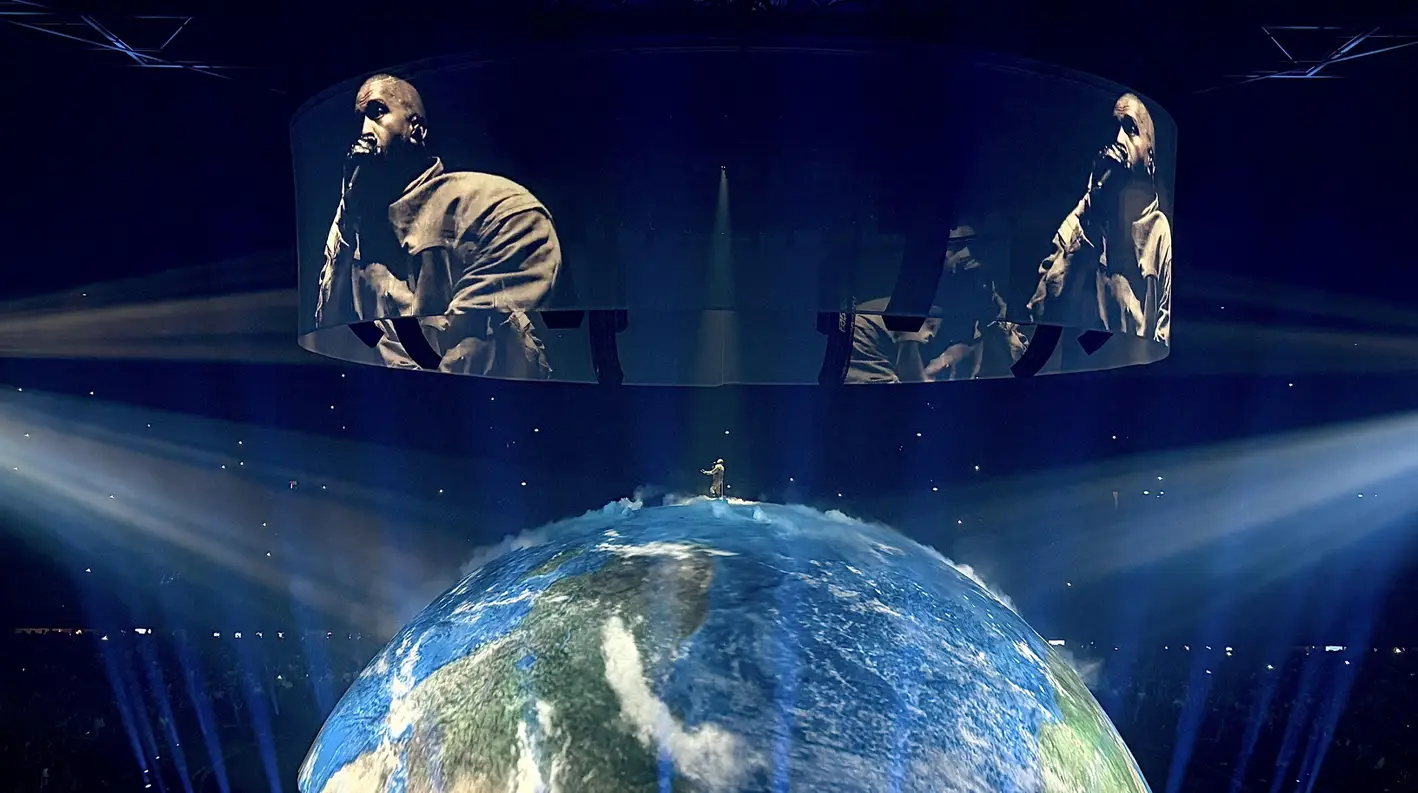
The news that Kanye West (now officially performing under the name Ye) will play two concerts at the 80,000-seat Gazprom Arena in St. Petersburg on October 10 and 11 instantly sent the Russian-language media sphere into a frenzy. While tickets priced from 9,000 to 160,000 Russian rubles (roughly €90 to €1,600) are rapidly disappearing from screens, and State Duma deputies and Orthodox activists are competing to demand that “the rapper be investigated for adherence to traditional values,” it is time to ask the main question.
How did a walking disaster whose public rhetoric over the past few years has become a toxic cocktail of conspiracy theories, antisemitism, and erratic outbursts end up coming to a country with draconian censorship and laws against “propaganda”? And most importantly, how has his attitude toward the LGBT community changed—a community whose rights Russia has now officially declared war on?
2005: When hip-hop still did not know how to apologize
To understand the scale of Ye’s transformation, we need to go back two decades. In an August 2005 interview with MTV News, he admitted that in high school he himself had been prone to making homophobic remarks—using slurs and avoiding anyone he thought was gay—but the turning point came when he discovered that his favorite cousin was gay.
West then publicly stated that hip-hop as a culture systematically discriminated against gay people and urged his fellow artists to stop, comparing it to discrimination against Black people. In the mid-2000s, when open homophobia was almost the norm in the rap industry, this was a rare and powerful statement.
“What amazes me most is that hip-hop has always positioned itself as the voice of truth. But silencing an entire group of people and dragging them through the mud is hypocrisy. I urge all rappers and the entire industry to stop this," the young musician said at the time.
At the time, it seemed like a breakthrough. In the years that followed, West consistently reinforced this image: he openly supported transgender woman Caitlyn Jenner after she came out, enlisted LGBT designers to work on his collections, and incorporated queer aesthetics into the brand's runway shows Yeezy.
A slide into the “right wing” and mental turmoil
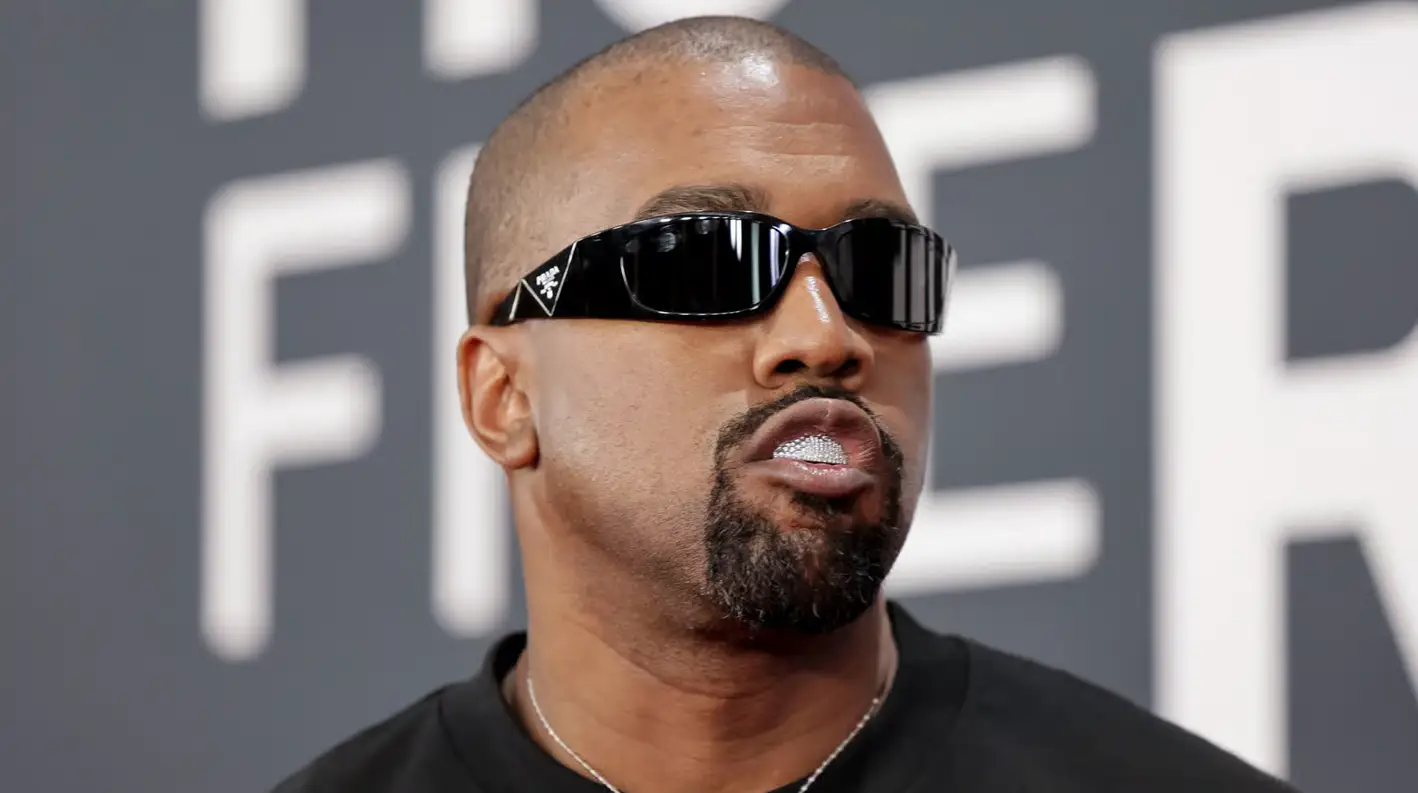
A turning point in his public persona emerged in the early 2020s, when, amid a difficult divorce, mental health crises, and a bipolar disorder diagnosis, West plunged headlong into religious fundamentalism and the far-right agenda.
A series of antisemitic remarks in late 2022 (when he openly declared that he “loved Hitler” and accused Jews of conspiracies) cost him contracts with Adidas, Balenciaga and his billion-dollar fortune. Later, in an apology letter published in The Wall Street Journal, he would attribute it to the effects of a severe traumatic brain injury sustained in a 2002 car accident.
But the apologies came alongside new performances. The most telling episode occurred in February 2025: amid dozens of far-right social media posts glorifying Nazi symbols, Ye suddenly… professed his love for members of the LGBT community and gay Jews, calling the whole affair a “social experiment.” There was no logic to these words: human rights and inclusive messages had literally been spliced into a stream of hateful rhetoric.
St. Petersburg 2026: A Clash of Worlds
And now this backstory is heading straight for Gazprom Arena. For Russian audiences—and especially for the independent Russian-speaking diaspora in the EU watching from the sidelines—Ye’s visit lays bare the system’s colossal hypocrisy.
On the one hand, Russian courts routinely hand down actual prison sentences for “extremism” and “LGBT propaganda,” ban rainbow flags, and persecute all forms of activism. On the other, an American superstar is being brought into the country with a track record of dubious remarks, antisemitic scandals, and long-standing statements in support of queer people.
The system is prepared to turn a blind eye to any past sins as long as they come wrapped in Western hype that brings in millions for the organizers from Say Agency and creates the illusion of a “breakthrough in cultural isolation.”
Today, Kanye West has no consistent position whatsoever—neither pro- nor anti-LGBT. There is only endless, monetizable chaos, where shock value replaces politics and performance fuels new sales. And the St. Petersburg concerts will serve as the perfect monument to this era: a show where tens of thousands of people will chant the songs of a man who long ago lost touch with reality, with the approving nod of a state that fights the “corrupting influence of the West” in everything except its own coffers.
Kanye West simply has no single, consistent position on gay people. The artist, who in 2005 was among the first in hip-hop to publicly condemn homophobia, found himself at the center of scandals of a very different kind nearly twenty years later—and his occasional LGBT-friendly statements in recent years have been drowned out by a torrent of far more troubling rhetoric, which he himself has variously attributed to his mental state or described as an experiment.







0 comments
Enter your email — we’ll send you a one-time code. No passwords or accounts.
Code sent to
If the email doesn't appear in your inbox within a few minutes, check your spam, junk, or promotions folder, as some email services may mistakenly place automated messages there