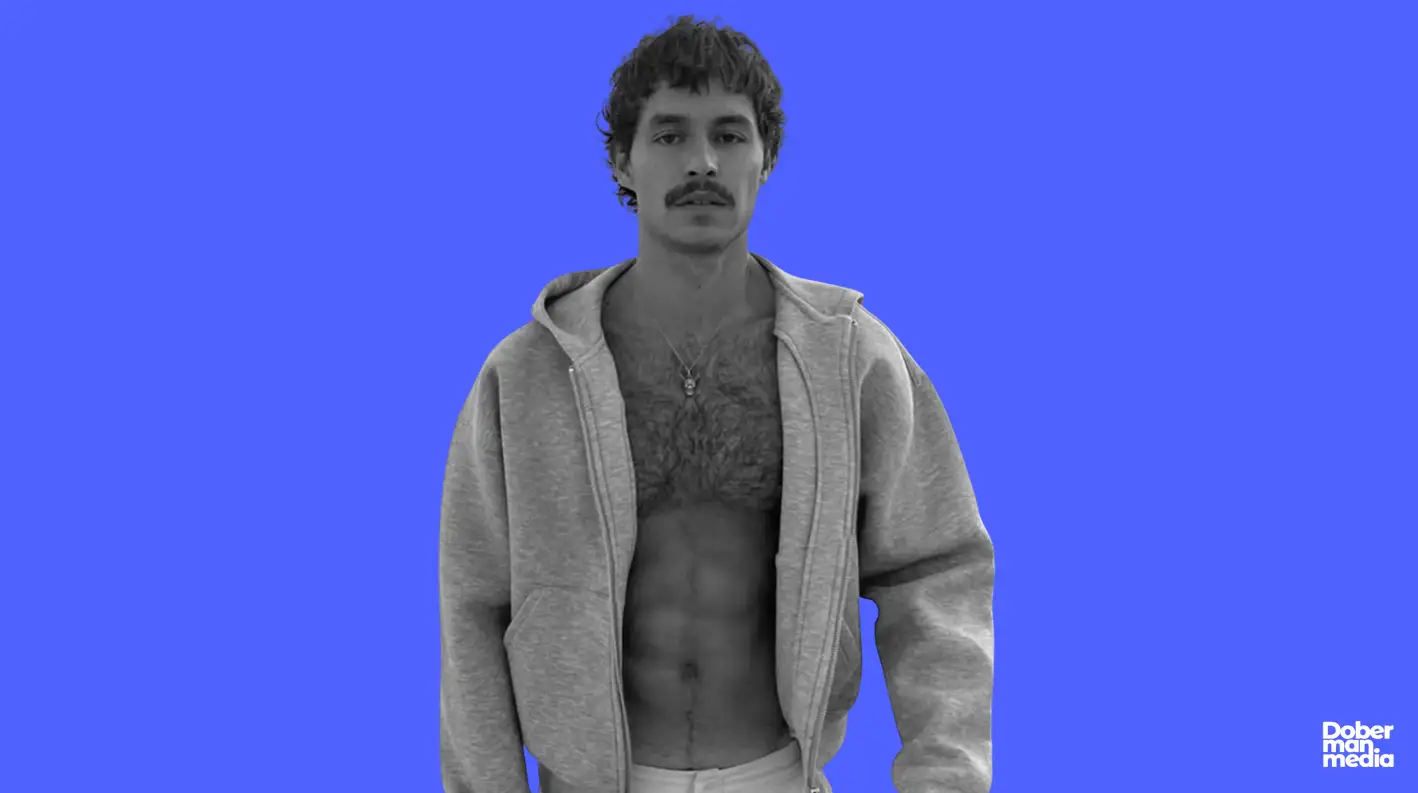
A few years ago, male grooming was moving in one direction: the less body hair, the better. Now the trend is reversing—but not completely. Total hair removal is giving way to a hybrid look: thick chest hair paired with a completely smooth, shaved, or laser-treated stomach. This is not a rejection of body grooming, but a new, more selective approach—and it has already split social media into two camps.
Table of Contents
A Conversation Starter
French actor, director, and content creator Paul Lefèvre has become a striking example of the trend. The 38-year-old Lefèvre has long built an audience around his enigmatic, stylized photographs—usually contemplative and carefully composed in terms of color and composition. But one of his recent Instagram posts drew attention not for the shot's aesthetics, but for his body: a hairy chest and completely smooth abs.
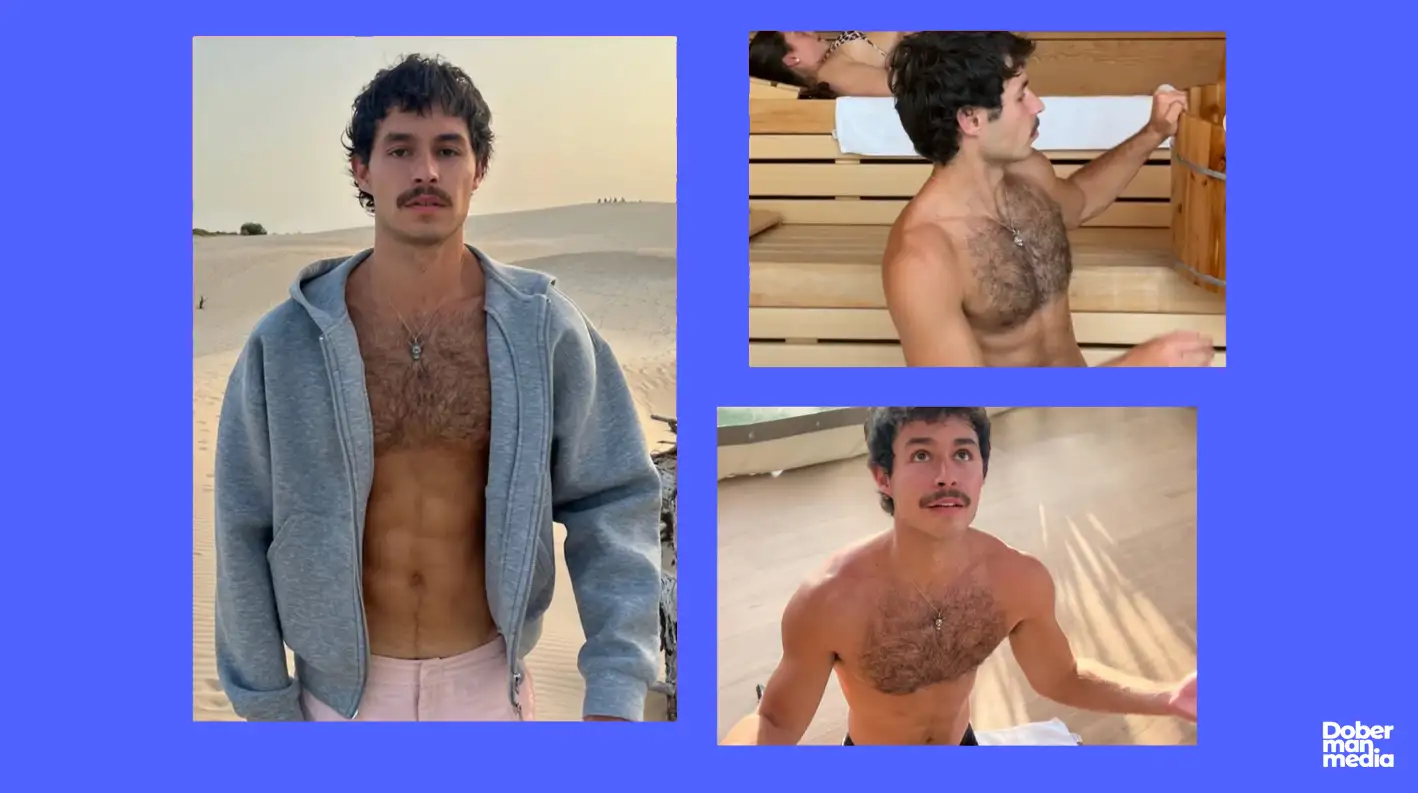
The reaction on Instagram was almost unanimously enthusiastic, with followers leaving comments expressing their admiration for the look. On X (formerly Twitter), however, the discussion was more divided: some users admitted that they liked the combination and were considering trying it themselves, while others were skeptical about pairing body hair with shaved skin.
This look is not an isolated phenomenon, but part of a broader shift: young gay men are increasingly embracing the aesthetic of the 1970s “Castro clones”—rugged and natural, with a distinctly hairy body. Lefebvre’s mustache, hairy legs, and chest fit this look perfectly.
Where the Trend Came From
The trend for complete male body hair removal in popular culture grew out of the aesthetics of the 1990s and 2000s—glossy magazines, underwear ad campaigns, and fitness influencer culture, where the ideal was a smooth, almost “polished” body without a single hair. This required constant upkeep: waxing, shaving, and later laser hair removal.
The return to “naturalness” in recent years is a reaction to several things at once. First, there is fatigue with the beauty standards industry, which demands a constant investment of time and money. Second, there is the broader retro wave: interest in 1970s aesthetics is evident not only in grooming, but also in fashion, music, and interior design. Third, body hair carries symbolic weight in queer culture—thick body hair has long been associated with a rugged “bear” aesthetic and perceived as a marker of masculinity, one that had been eclipsed for years by the glossy ideal.
Tellingly, earlier this year readers of the English-language gay magazine Queerty had already weighed in on body hair in general—and an overwhelming majority supported the idea of not fighting it, but leaving it as it is.
Why This Particular Compromise
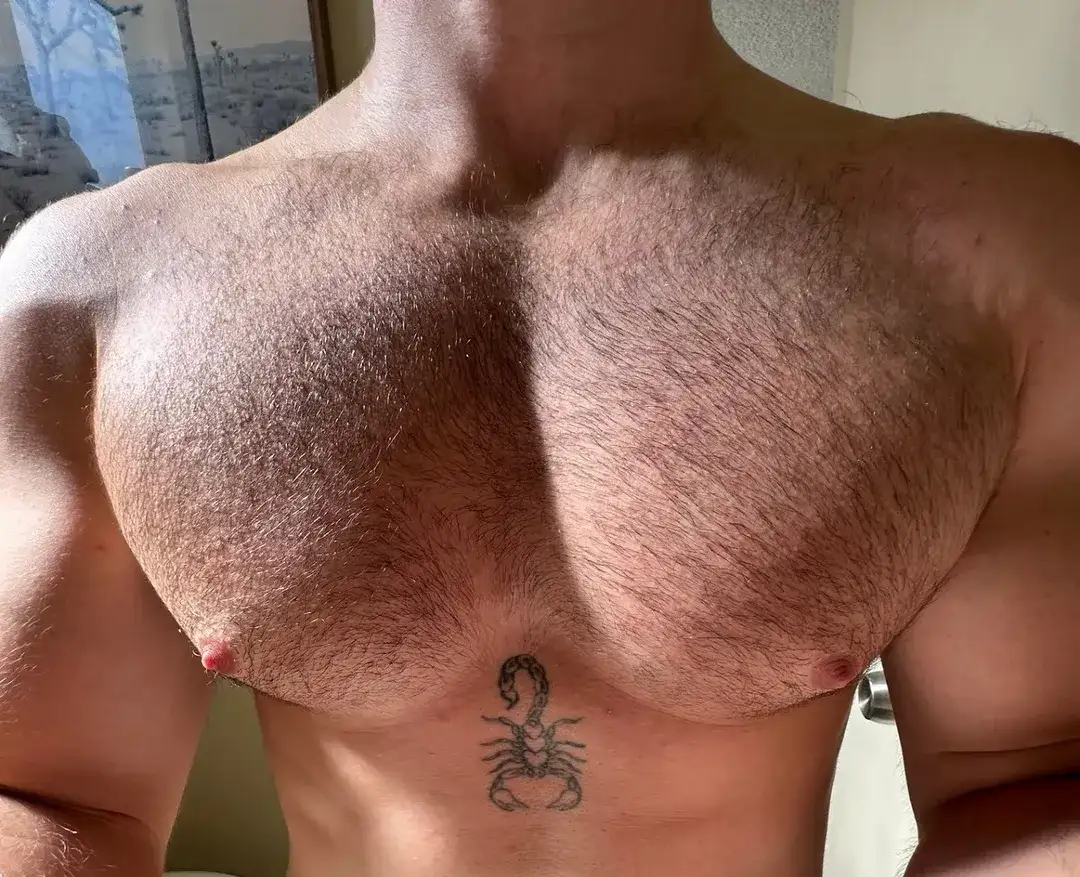
Giving up hair removal entirely is a step not everyone is willing to take: many men still view stomach hair as a source of discomfort rather than an aesthetic feature.
A combined approach—keeping the chest hair while removing the stomach hair—creates two visual effects at once. Chest hair reads as a sign of naturalness and rugged masculinity, while smooth abs suggest physical discipline, athleticism, and control. In essence, it is a visual compromise between two opposing ideals of the past thirty years: the “wild” and the “polished.”
From a practical standpoint, it is also a matter of maintenance: removing hair from just one relatively small area of the stomach is far less labor-intensive and painful than removing all the hair from the entire torso, while the results last noticeably longer than regularly shaving the whole chest.
A Contentious Area
Not everyone finds this hybrid convincing. Some people see the sharp boundary between the “hairy” and “smooth” areas of the body as visually unnatural—in other words, a trend positioned as a rejection of artificiality remains the result of deliberate grooming, just selectively applied. Indeed, the debate surrounding Lefebvre’s post on X illustrates this well: the audience was divided along precisely these lines.
A similar story recently unfolded with a Playgirl cover, where a model with a hairy chest also sparked heated debate—further proof that the issue is far from isolated and is not limited to a single influencer.
What's next?
Like any trend based on selective body grooming, this compromise is unlikely to become a universal standard—there are simply too many variables: hair type, personal preferences, and tolerance for the pain of hair removal. But it is revealing as a cultural symptom: the debate over the “right” amount of hair on a man’s body is really a debate about the broader question of what is considered attractive and “authentic” today, and what is an artificially constructed ideal.
As the beauty standards industry searches for a new balance between “naturalness” and a well-groomed appearance, stories like Lefebvre’s work better than any advertising campaign: they reveal a genuine, contentious, yet unmistakably human response to an attempt to combine the incompatible.







0 comments
Enter your email — we’ll send you a one-time code. No passwords or accounts.
Code sent to
If the email doesn't appear in your inbox within a few minutes, check your spam, junk, or promotions folder, as some email services may mistakenly place automated messages there