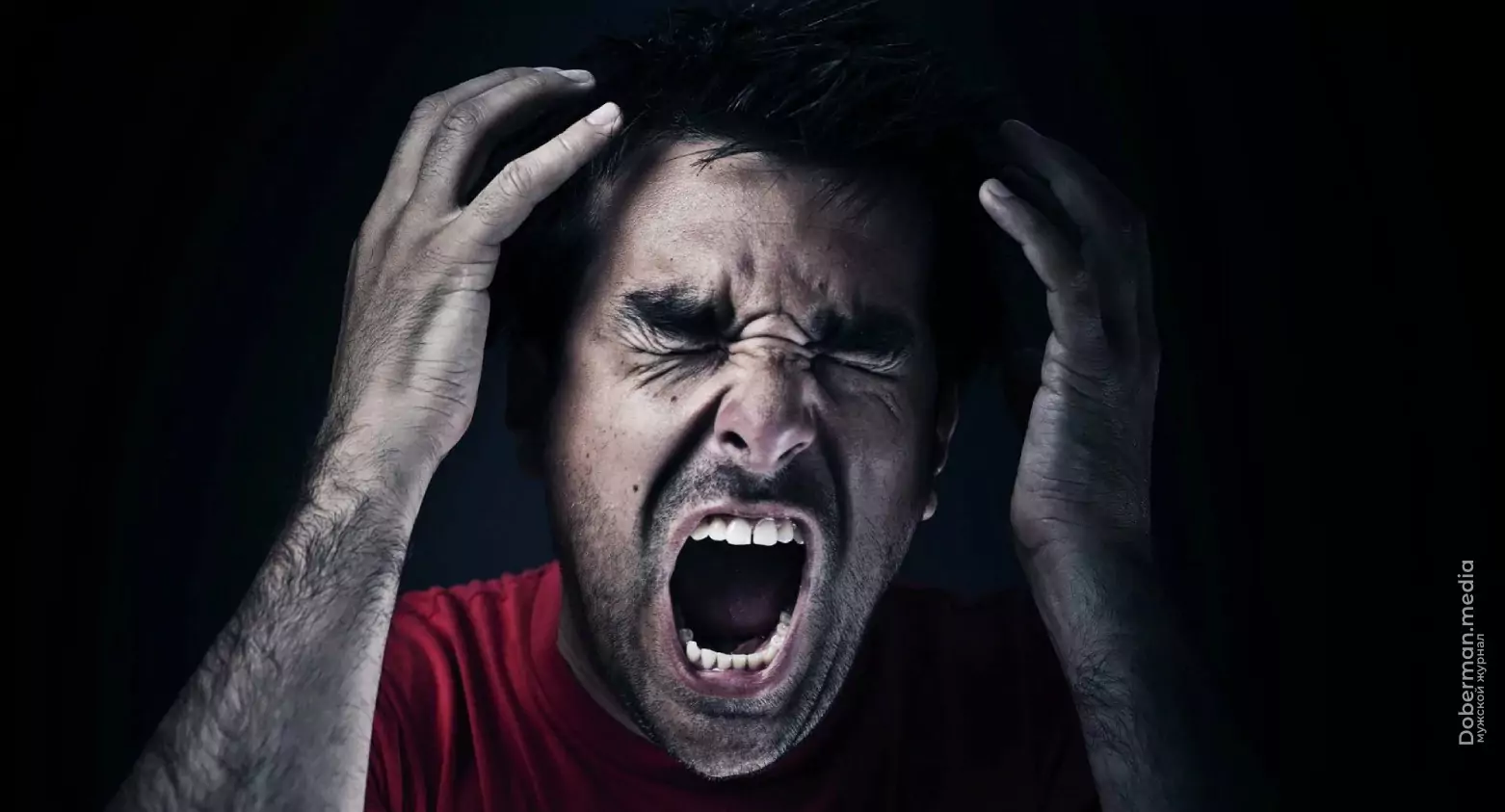

Recently, I have begun to notice that I often have obsessive thoughts and anxious states that prevent me from concentrating and working productively. Fear of war, fear of being caught by the police for taking a different political stance or for words I accidentally say in the wrong company, fear that my life might collapse not by my will, but because someone would come and destroy it. This really begins to affect my life and health. How do I deal with these negative thoughts and anxiety?
Dmitry, Vilnius
Psychologist's comment for Doberman.media
For quite a long time, we have been living in a situation of uncertainty. The world is becoming more dangerous and unpredictable. Our knowledge and understanding of what is happening is very limited. The world has changed and will never be the same. People try to protect themselves from making decisions. We understand that we cannot influence many things, and we have no support. We feel our powerlessness and helplessness, this is what a child feels in insurmountable circumstances in childhood.
"Inner Child"
There is such a thing as the "inner child". A situation of uncertainty can actualize our childhood traumatic experiences. Each of us probably has memories of not being supported, comforted, or on our side. We feel small, surrounded by dangerous circumstances and aggressive people. For many parents, anxiety for the child was a sign of love. For example, you often hear parents shouting at their children: "Don't go there", "Don't talk to that", "Don't hunch", "Don't touch". They make endless phone calls if children are 10 minutes late at school. Such anxious concern turns into constant control. The basic safety of the child with such a parent will be compromised and he will grow up anxious. Instead of a sense of his worthiness, he forms an inferiority complex. He will try to compensate for his inferiority in later life. A person can work hard, but still criticize and devalue his actions. He will try to satisfy everyone, be afraid of making mistakes or constantly procrastinate. Anxious people genuinely believe that anxiety is their helper. It protects them, motivates them to achieve goals. But an anxious person is inadaptive in life. He cannot work normally, build relationships, be effective in studies because of constant anxiety. His memory, attention, and thinking are narrowed by anxiety, and he makes many mistakes. These people are usually unhappy. Anxiety depletes and takes away a huge amount of energy. They are not in touch with their bodies and are ineffective in relationships with loved ones.
Recently, most people have been turning to mental health professionals with panic attacks, sleep disturbances, stress, and complaints of anxiety and fear. It is important to understand that anxiety and fear are the defense mechanisms of our survival. And this has the positive side of anxiety and fear, which help to mobilize, to be vigilant in situations. If our ancestors hadn't once run away quickly, hid, or defended themselves by getting into a fight, they simply wouldn't have survived. This is adaptive anxiety. Anxiety can hide any repressed emotions of a person, such as shame, guilt or resentment. Therefore, it is important that a person can recognize his feelings, name them for himself and react in time. Emotional intelligence (EI) is more important in everyday life than IQ. The skills of recognizing emotions, understanding the intentions, motivations and desires of other people, as well as your own, allow you to improve the understanding of human values, develop awareness (understanding the causes and consequences of situations) and regulate emotional states.

© instagram.com/lickmyglitch / hero of the material "The man spoke about how he survived the experience of domestic violence“
What is the difference between anxiety and fear?
Anxiety differs from fear in its objectlessness. The lack of objectivity is especially painfully endured, since a person in this state does not see a possible rational way out. This is accompanied by an unpleasant feeling of internal discomfort, confusion, and the expectation of negative events. With anxiety, the causes are usually not recognized, and the feeling of threat is not specific, but blurred. Fear is always specific and conscious. Fear usually does not last long, while anxiety can be felt for a long time. In addition to the psychological level, anxiety is accompanied by heart palpitations, shortness of breath, increased sweating, dizziness, nausea, body trembling, dry mouth, blood pressure drops, etc.
Any anxiety tends to become fear in order to be conscious. Therefore, sometimes it is enough to ask yourself the question: "What scares me about this?", "What is the worst thing for me?". Then you can understand about a person's values and be guided by them when deciding what to do. "How can I act?", "What and who can help me?". There is one more question we must ask ourselves: "What depends on me?" We sometimes neglect this and want to influence the wind, rain or thunderstorm. It depends on us how we react to something that does not depend on us. Therefore, it is important to understand your limitations and try to manage your emotional and behavioral reactions. When we cannot change the world outside, we begin to influence what is inside us.
Often people make the same mistake. When anxiety and internal discomfort are caused by various thoughts-images, many people try to drive anxiety out of the bus like a stowaway passenger, to drive obsessive thoughts away from themselves. Compensatory mechanisms begin to work. Some people start taking alcohol to anesthetize internal pain, eat their discomfort, smoke a lot, and go into workaholism. We need to start with what we can influence. This is our breath and body. They are very closely related. We breathe differently in different emotional states. When we start worrying, our breathing becomes fast and shallow. When we cry or get scared, we stop breathing altogether and freeze. Therefore, first you need to master breathing and body practices.
Breathing and body practices to cope with obsessive thoughts and anxiety
Let's start with breathing. To stabilize breathing, you need to switch to lower diaphragmatic breathing. Place one hand on your stomach and the other on your chest. Start inhaling with your belly, protruding it, as you exhale, your stomach retracts, your chest does not move. Exhalation should be longer than inhalation. Thus, the parasympathetic nervous system kicks in, and the person calms down. Any breathing technique should be performed for 3-4 minutes.
As an ambulance system, square breathing is used: inhalation for 4 counts, breath retention for 4 counts, exhalation for 4 counts, breath retention for 4 counts. Breathing technique "4-7-8": Inhale through the nose for 4 counts, hold your breath for a while (count to about 7), and then exhale for a long time through a thin tube of the mouth for 8 counts. Exhalation can be accompanied by therapeutic suggestions: I calm down, relax, let go of anxiety/fear, release tension, etc.
Emotional tension is always associated with muscle tension. In case of prolonged stress, it is necessary to master the techniques of neuromuscular relaxation, meditation, etc.
Meditation Laptop
You can use the universal meditation Noteing (from note – to notice, to note). This meditation allows you to gradually reduce stress levels by developing sensory clarity. The essence comes down to the fact that you are aware of your sensations and thoughts and name them, just list them. For example, "I think about... "(about safety", "about how to cope", ...). "I feel..." ("Cold in the left foot", "Tickle in the throat", "Tension in the neck"...). "I feel..." ("I'm scared for...", "I'm sad..."), "I give space for this." I don't drive it away." "I accept what comes to me", "I notice it". Thus, you can set aside time for practice of 15-30 minutes a day. If obsessive thoughts bother you during the day, then you can tell yourself that you will return to it and pay attention at the appointed time.
Writing Practices
If there is no panic, then you can use writing practices. For 20 minutes, we write down our thoughts and feelings with our hands on paper. Chaos has to be formulated into words and sentences. Hand motor skills are involved. It has been experimentally revealed that this should be done for 4 days in a row. It will be noticeable how the condition changes. Inner work is launched, which bears fruit. You can keep a diary. Learn to be critical of your thoughts. It is important to understand that there is a different experience, that not only a negative forecast from the current situation is possible.
Under stress, a person cannot hear his body
Under stress, a person does not hear his body, does not pay attention to it. To help yourself, you need to return to the body, "ground". You can feel the hard surface of the floor with your feet, feel your legs and arms. To understand what the body wants. If the body is tense and you need to relax, then you can take a warm bath, do a self-massage of tense areas, wrap yourself in a warm blanket. It is advisable to slow down, give yourself time to think and make a decision. You can talk about the problem with a resource person.
If a person does not have situational anxiety, but anxiety (constant anxiety), then it needs to be worked with systematically. You can consult a psychotherapist, you may need drug therapy. It is necessary to improve sleep, normalize nutrition, be in the fresh air and get the necessary physical activity.
Notice moments when you have coped with anxiety
A good strategy is to notice the moments when you have coped with anxiety and have been able to say "no" to it. Develop tolerance for uncertainty, regardless of circumstances. None of us knows what will happen tomorrow. Anything can happen. We can only control our state. When we are calm, joyful, relaxed, our perception is expanded, our thinking works in a healthy way. Then we can handle all the tasks as efficiently as possible. There is a circle of my influence. This is me, some of my loved ones, my fortune, profession, business. I have tasks. The brain works to solve this problem. World events are beyond my influence. The information I listen to can affect my life negatively. Reduce viewing of programs and news. Find out only the facts. Look for a resource to change something. To free your head and body from unrealistic fears. Let's go back to the "here and now". "How can I influence my world to make me feel better?"









0 comments
Enter your email and we will send you a one-time code. No passwords, no accounts.
Code sent to
If the email does not arrive in your inbox within a few minutes, check your Spam, Junk or Promotions folder — some mail services may wrongly place automated messages there.