

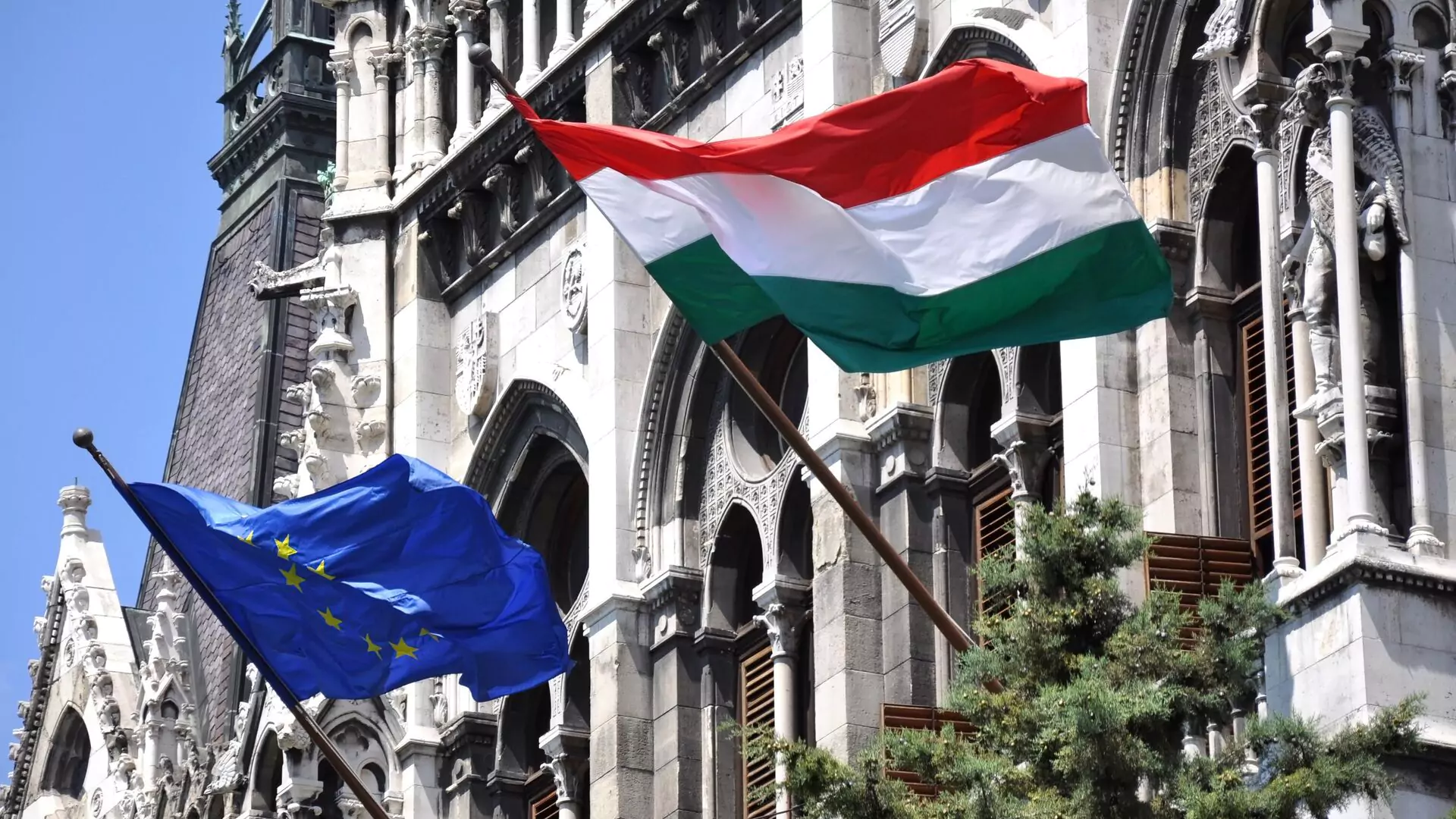
Victory of Péter Magyar in the April 2026 elections ended the 16-year rule of Viktor Orbán's Fidesz party. Having pledged to restore relations with the European Union and reinstate key rights for the LGBT+ community, the new government began dismantling the previous regime's most controversial laws.
During his time in power, Viktor Orbán positioned himself as a defender of traditional Christian values against Western liberalism. Under his leadership, laws were passed that ended legal gender recognition in official documents, blocked same-sex couples from adopting children, and prohibited the distribution to minors of materials depicting or promoting homosexuality and gender transition.
Adoption reform: abolishing the ministerial veto
The new cabinet's first step was to amend the adoption rules introduced by the Orbán government in late 2020. Previously, same-sex couples could adopt children if one partner applied as a single person. However, the 2020 law required all single applicants to obtain the personal approval of the minister for family affairs, effectively barring LGBT+ people from adopting.
Prime Minister Péter Magyar announced an overhaul of this system: decisions on eligibility to adopt should be made not by politicians or ministers, but by independent professionals in the field of children's rights, guided solely by the best interests of the child.
At the same time, the reform removes the political barrier for single applicants, but does not in itself establish joint adoption for same-sex couples. Nevertheless, according to human rights activists, several applications from same-sex couples have already been approved since August 2026.

Bill T/680: alignment with the ECHR and EU requirements
Following the adoption reform, Magyar's government introduced a sweeping bill in parliament T/680, rewriting key provisions of the 2021 Child Protection Act.
From the key legislation governing education, the media, advertising, and child protection all language prohibiting the “promotion” or “portrayal” of homosexuality and gender reassignment is removed. The ban is replaced by a general harm criterion aimed at preventing children's access to pornography, sexual violence, exploitation, manipulation, and harassment.
- Television programs and media content will no longer be labeled “18+” solely because they contain LGBT themes.
- In schools, the ban on mentioning homosexuality is being replaced by updated general child protection rules.
- The legal basis for the so-called “Pride ban” is being repealed—the police have already authorized the Budapest Pride March.
The bill directly reflects the ruling of the Court of Justice of the European Union (CJEU) issued in April, which found Orbán’s 2021 law to be in breach of fundamental human rights and the EU’s core values (Article 2 of the Treaty on European Union). The CJEU stated that Hungary’s legislation unlawfully stigmatized same-sex relationships and associated them with pedophilia.

Financial Incentives and the Limits of Reform
Bringing Hungarian laws into line with Brussels’ standards has a clear economic rationale. In May, Péter Magyar reached an agreement with the European Commission to unfreeze €16.4 billion, but about €600 million remained frozen specifically because of LGBT rights violations. Repealing the controversial provisions will allow Hungary to receive at least €500 million, earmarked for education.
Despite the concessions, Magyar's government does not intend to undertake a radical progressive overhaul:
- Hungary's Constitution continues to define marriage exclusively as a union between a man and a woman. Same-sex marriage remains illegal, although the country recognizes civil unions.
- It keeps the “book packaging” rule in force, under which children's literature with LGBT themes must be sold in sealed packaging and no closer than 200 meters from schools and churches.
Crisis in the Child Protection System and Politicians' Response
The dismantling of the rules of the Orbán era is taking place against the backdrop of a deep crisis in the state childcare system. Fidesz's reputation as a defender of family values was undermined in 2024 after a scandal involving the pardon of the deputy director of a children's home in Bicske, who had covered up the sexual abuse of residents. The scandal led to the resignation of President Katalin Novák and fueled the rise in Péter Magyar's popularity.
An inspection report published by Magyar's government revealed the catastrophic state of 18 public institutions:
- Nearly 130,000 children in Hungary are classified as at risk.
- 23,000 children live in state-run residential institutions, 800 have run away, and 358 healthy infants remain in hospitals for months due to a shortage of places in shelters.
- Overcrowding, staff shortages, and cases of abuse have been documented.
The government launched an emergency program worth 9.5 billion forints to create new places and crisis centers. However, the conservative opposition responded to the reforms with harsh criticism: Fidesz parliamentary group leader János Bóka accused the prime minister of exploiting the issue of children for political purposes, KDNP representative Bence Rétvári called Magyar a “gender activist,” and Our Homeland Movement leader László Toroczkai declared his categorical opposition to same-sex couples adopting children.
Public opinion and NGO demands
Human rights organizations (Amnesty International Hungary, the Háttér Society, Labrisz, and the Rainbow Families Foundation) see Magyar's reform as merely a first step. The LGBT Alliance has put forward a package of 12 demands, including full access to same-sex marriage, joint adoption, IVF procedures, and legal gender recognition.
Public opinion in Hungary shows a readiness for change. According to a study by the Medián polling center:
- 68% опрошенных support the right of same-sex couples to marry and adopt children.
- 71% респондентов support access to assisted reproductive technologies for same-sex couples.
- 57% граждан support lifting the restrictions imposed during the Orbán era.
Péter Magyar's Tisza Party continues to hold a commanding lead in the polls, garnering 47% голосов против 21% у «Фидес». Ближайшие месяцы покажут, сможет ли новое правительство удержать баланс между требованиями Европейского союза, давлением правозащитников и ожесточенным сопротивлением консервативных сил.





0 comments
Enter your email — we’ll send you a one-time code. No passwords or accounts.
Code sent to
If the email doesn't appear in your inbox within a few minutes, check your spam, junk, or promotions folder, as some email services may mistakenly place automated messages there