
This year, I decided to challenge myself and dress boldly for Prides. Different images: male and female. After posting photos and videos from the Prides in Sitges, Madrid and Barcelona, I received different comments in Spanish.
Most of the comments were negative and related to my appearance: "Immoral!", "Be ashamed!", "This is too much"… But one of the harshest comments I received came from my ex-Spanish-speaking boyfriend, who is gay himself.
He wrote that he did not understand why I decided to wear a female image in Barcelona. In his opinion, such things only provoke others, and modern Prides have long ceased to be a struggle for rights and have turned into noisy events with naked people, alcohol, drugs and sex on the street. At the end, he added a phrase
"If you were less visible, there would be fewer such conflicts."
To be honest, I did not argue for a long time then. Firstly, everyone has the right to their own opinion. Secondly, some of his criticisms can really be discussed. If someone disturbs public order, uses drugs, or has sex in a public place, it has nothing to do with the fight for equal rights. Such things can be condemned regardless of whether we are talking about Pride, a football festival or any other mass event.
At the time, I thought it was just a debate about what a modern Pride should be. But a few days later, an event happened that made me remember this conversation again.
My acquaintance, whose story I published in the previous article, attacked in the Barcelona metro the night after Pride.
That's when I remembered my ex's words again.
If we remove emotions, a simple question arises: what exactly was a provocation in this situation?
There was no revealing costume, no alcohol, no noisy Pride column. There was not even Pride itself - it was already over. There was a man who was driving home with a rainbow accessory. And this was enough to become an object of aggression.
That is why the explanation that is heard every year after Prides seems dangerous to me: "do not provoke". Because very quickly it turns out that different people understand completely different things by the word "provocation". At first, they say that there is no need to arrange too noisy processions. Then, that you shouldn't wear clothes of a different gender. Then, that it is better to remove the rainbow symbolism. Then, that you should not hold hands on the street. At some point, it's no longer about the rules of behavior in society, but about how inconspicuous an LGBT person should be in order not to irritate someone.
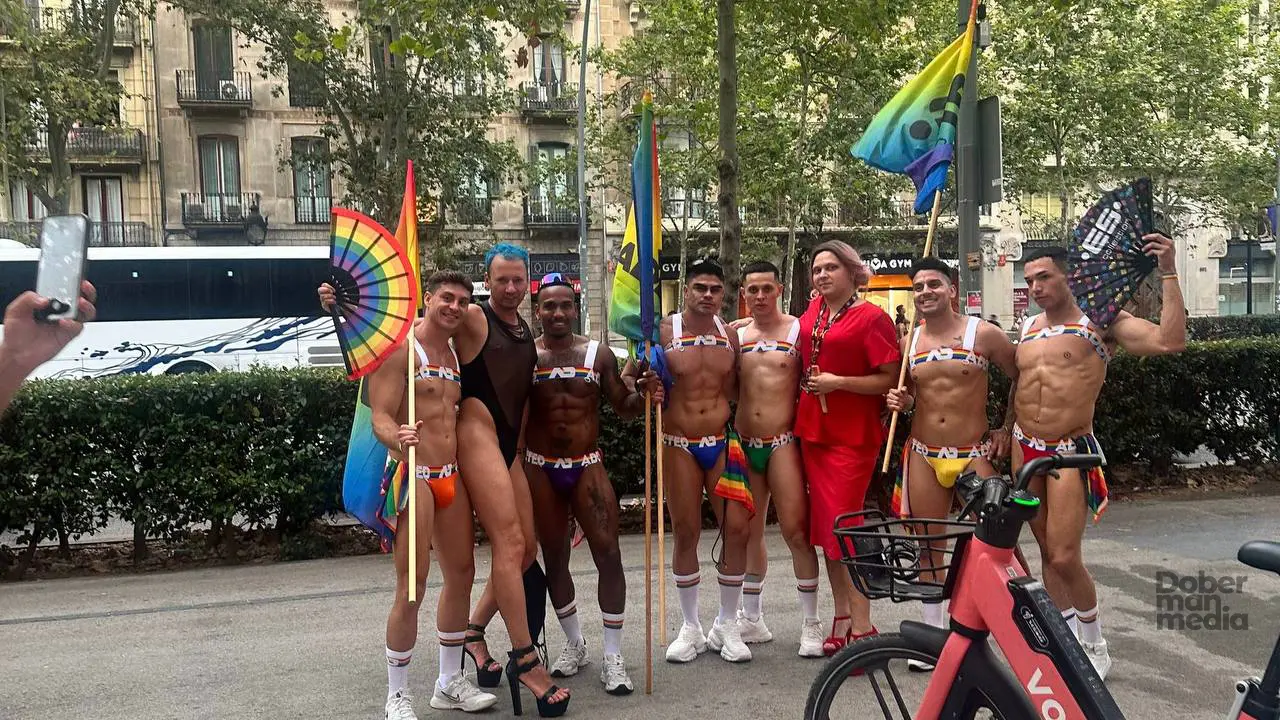
It seems to me that there is a very important border here. Freedom of expression does not mean the right to break the law or inconvenience others. But someone else's irritation cannot become an excuse for insults or violence. If a person calmly walks down the street, wears rainbow symbols, or chooses an image that does not harm anyone, the responsibility for possible aggression does not lie with him.
That's why I don't think Prides are the problem. On the contrary, it seems to me that Pride makes visible what exists without it. It's just that on other days, many such stories remain between the victim, several witnesses and the police report. We rarely learn about them, because the victims are not famous people, but the most ordinary ones. Perhaps this is why some people think that the problem is no longer there.






0 comments
Enter your email — we’ll send you a one-time code. No passwords or accounts.
Code sent to
If the email doesn't appear in your inbox within a few minutes, check your spam, junk, or promotions folder, as some email services may mistakenly place automated messages there