Every year after Pride, the same question is asked: "Why is it needed at all? After all, no one has been oppressing LGBT people here for a long time."
When famous people become victims of homophobic attacks, many media outlets write about it. But much more often, such stories happen to ordinary people — those whose names will never make the headlines.
That is why I decided to publish this conversation.
Not because my interlocutor is a public figure. Because his story shows that even in one of the most LGBT-friendly countries in Europe, homophobic aggression has not disappeared.
Moreover, most of these cases we will most likely never know at all. Not everyone goes to the police, not everyone talks about what happened publicly, and some incidents are not even officially classified as hate crimes.
- What happened that evening (Barcelona, night of July 18-19)?
"I was returning home after Pride. He has already changed into ordinary clothes. The only thing I had left was a rainbow lanyard with LGBT symbols on the keys. On the subway platform, I noticed a man and a woman near a guy with a backpack. It seemed to me that they were trying to get something out of his open pocket. I decided to come closer to see if a theft was happening. But as soon as they noticed me, all their attention turned to me.
— What happened next?
"The man started shouting: "maricón", approached me and hit me several times with something he was holding in his hands. I did not respond with aggression. I just went to the escalator, said that I would call the police, and hoped that one of the metro employees would intervene. But no one approached.
"Did you manage to call the police?"
— Almost not. The phone was discharged. Fortunately, there was a young guy nearby who agreed to help. He called the police, but while he was talking to the operator, the attackers had already managed to leave by train. I was advised to contact the nearest police station and write a statement.
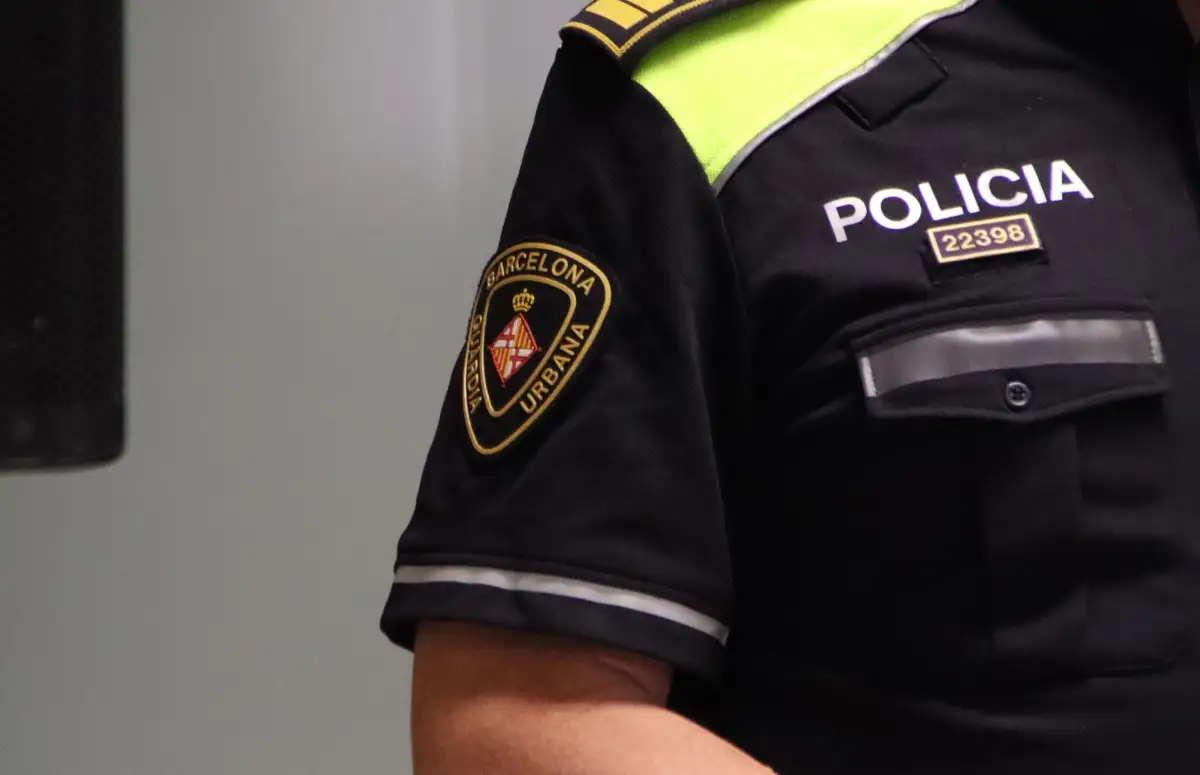
- What happened to the police?
"The application itself was accepted quickly. But one question surprised me. The policeman asked:
"Are you sure that it was homophobic aggression? Maybe he just insulted you because you prevented him from stealing?"
I replied that the only word with which I had been insulted was maricón*.
* Word maricón In Spanish, it is a well-known homophobic slur. In terms of meaning, it can be compared to English faggot or Russian derogatory words about gays. Despite the fact that part of the LGBT community is trying to reinterpret this word, in such situations it is perceived as an insult. This is well known both to society and to the state structures of Spain
I also said that I could not know what was going on in the attacker's head. But the fact remains: the only insult that sounded against me was precisely the word denoting gay in a derogatory form.
As a result, the statement contained wording that it was impossible to state unequivocally whether the motive was related to the alleged theft or to sexual orientation.
Now I am going to consult with an organization that helps victims of LGBT phobia. If lawyers believe that this wording may affect the investigation, I will seek clarification of it.
The story of my interlocutor is no exception.
Last year, after Pride in Spain, people I knew were also homophobic attacked. They went to the police, the case went to court. However, by that time, the suspect had already left the country, and it was not possible to bring him to justice.
Of course, such cases do not only happen after Pride. They happen on ordinary days as well. But it is during Pride that the problem becomes especially noticeable. As thousands of people take to the streets, so do those who still feel it is permissible to insult, humiliate or attack because of sexual orientation or even rainbow symbolism.
Therefore, the question "why do we need Pride?" is still not theoretical for many.
This is a matter of safety.
And one more thought that seemed important to me after this conversation.
If, even after the direct use of homophobic slurs, the police officer asks the victim a question: "Are you sure it was homophobia?", then a natural question arises - how many such cases generally fall into the official statistics as hate crimes?
I'm not saying that the Spanish statistics are wrong. But such stories show that the line between "ordinary conflict" and "homophobic aggression" in practice is sometimes the subject of assessment by a particular police officer.
This means that some of these cases may well never fall into the category of hate crimes.
That is why it is so important to talk not only about high-profile stories involving famous people, but also about attacks on the most ordinary people. Because it is from such seemingly "inconspicuous" stories that the real picture of how safe it is to be an open LGBT person today is formed.
✦ This article is published as written by the author. The opinions, assessments, and conclusions expressed in the text are those of the author and may not reflect the position of the Doberman.media editorial board. The editorial board is not responsible for the author’s interpretations, statements, or conclusions.



0 comments
Enter your email and we will send you a one-time code. No passwords, no accounts.
Code sent to
If the email does not arrive in your inbox within a few minutes, check your Spam, Junk or Promotions folder — some mail services may wrongly place automated messages there.