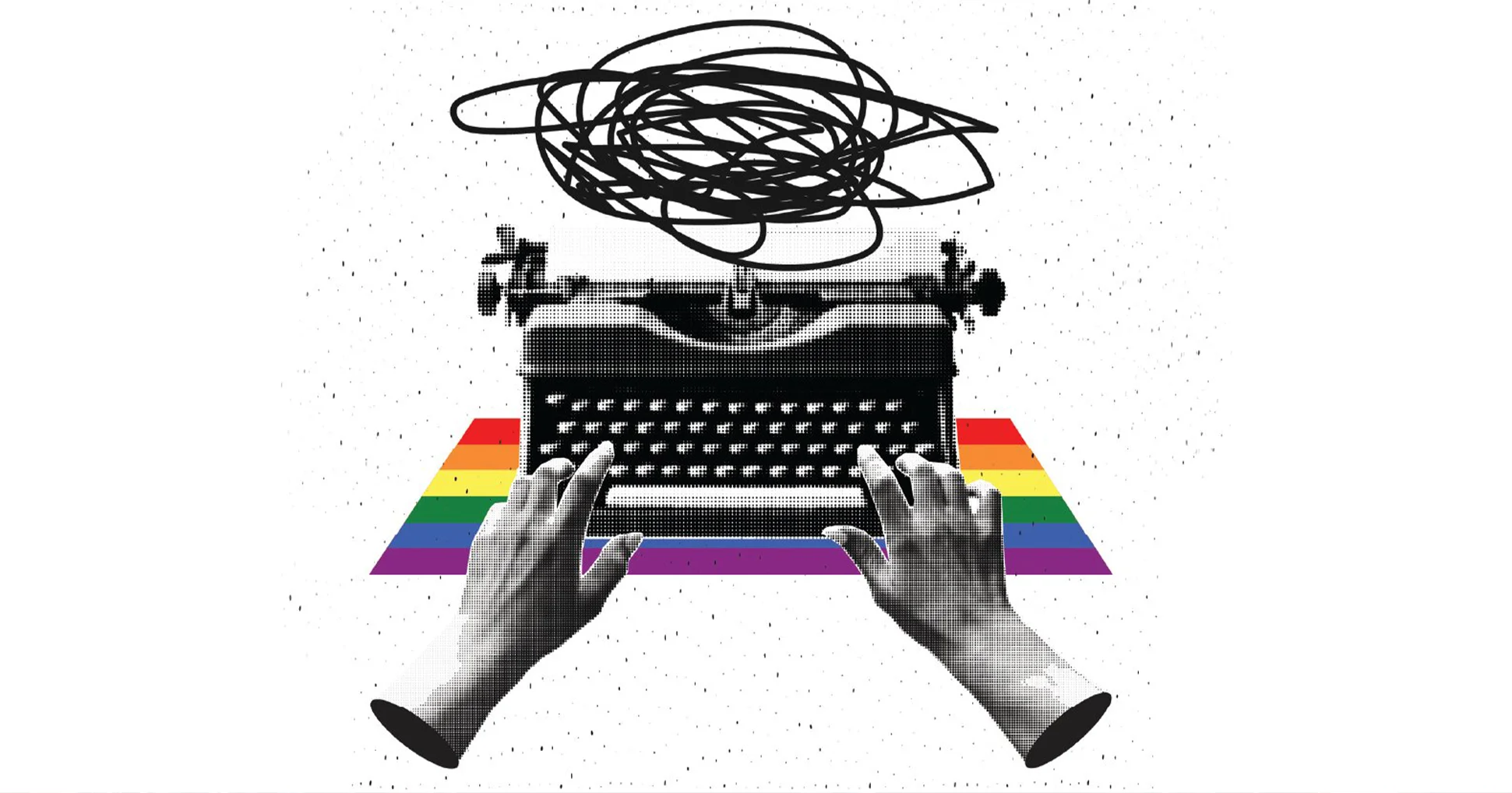

It seems that the times when LGBTQ+ media grew steadily, hired new employees and launched ambitious projects are behind us. Today, there is more and more news about layoffs, closures of editorial offices and journalists who go on their own.
For the queer community, this is not just a media crisis. This is a crisis of visibility. Because when journalists disappear, so do the people who tell our stories.
Editorial offices lay off people
At the beginning of 2026, a new wave of layoffs swept through the American media industry. LGBTQ+ publications have also come under attack.
Equalpride, which owns magazines The Advocate and Out, laid off some of the staff and editors. PinkNews, which calls itself the largest LGBTQ+ media brand in the world, has announced the transition to a model with virtually no full-time reporters. Instead of in-house investigative journalism and reporting, aggregated content, press releases, and automated production will play an increasingly important role.
The problems affected not only the queer press. Major American media outlets are also cutting staff, but for niche LGBTQ+ newsrooms, the consequences are much more painful. When the team is already small, the dismissal of several people can mean the loss of an entire line of work.
Why does this happen?
There are several reasons at once.
First, the political climate in the world in general and in the United States in particular is becoming increasingly hostile towards LGBTQ+ people. This is especially true of the transgender community, which has found itself at the center of political attacks and culture wars.
Secondly, many companies have become more cautious about supporting queer projects. Businesses are increasingly avoiding topics that can cause a negative reaction from a conservative audience. As a result, advertising budgets go to more "safe" projects.
Thirdly, the media industry itself is going through a difficult period. Social networks select audiences, search algorithms change, and Artificial intelligence is forcing media owners to look for ways to produce more content with less.
The price of the crisis
For many queer journalists, full-time work becomes a luxury.
Some authors have experienced two or three layoffs in a row in a few years. When applying for a new job, they are increasingly interested not in salary or bonuses, but in how many months the editorial office will be able to exist at all.
But it's not just about money.
Many journalists admit that it was their work in queer media that allowed them not to hide themselves, openly talk about their identity and deal with topics that rarely get attention in major publications. When such newsrooms disappear, so does the space where queer people can talk about themselves in their own words.
Substack instead of revision
Against the backdrop of the crisis, many journalists stop counting on large media and begin to build their own platforms.
Someone runs campaigns on Substack (платформа Substack для рассылок и блогов). Someone makes podcasts. Someone develops YouTube channels and personal blogs.
The logic is simple: if the editorial office can be sold, closed or reduced at any time, then your own audience stays with you.
More and more authors rely not on the employer's brand, but on their own name.
And what is happening to Russian-language queer media?
This crisis is not just about the United States.
Russian-language LGBTQ+ media are in an even more difficult situation. After the outbreak of a full-scale war, many independent newsrooms lost advertisers, grants became less affordable, and audiences were scattered across dozens of countries.
The gay magazine Doberman.media also exists in these conditions. The project does not have stable funding, and the work of the editorial office is largely based on the enthusiasm and personal resources of the team.
Theoretically, the way out could be Subscription model, which helped many independent media in the West survive. But in the Russian-speaking environment, it practically does not work. People from post-Soviet countries are used to receiving content for free, and the culture of regular support for independent media remains extremely weak.
The situation is aggravated by the fact that a significant part of the audience itself experiences emigration, economic instability or loss of income. Even readers who value independent journalism are often reluctant to sign up for a monthly subscription to multiple projects at once.
As a result, many Russian-language queer media find themselves in a kind of trap. Advertising brings almost no money, subscriptions do not work in sufficient volume, and grant funding is rarely long-term. At the same time, the need for such media does not disappear. On the contrary: in the face of growing homophobia, censorship and political pressure, independent platforms are becoming even more important for the community.
That is why the question of the survival of queer media today concerns not only journalists. It concerns the entire community. Because when another independent editorial office disappears, another voice that told our stories disappears.
What can disappear with the media
There is another problem that is much less often talked about.
When a site is closed, thousands of articles, interviews, reports, and investigations can disappear. Materials that recorded the history of the community, documented discrimination, told about the struggle for rights and preserved the memory of people who are no longer there.
For the LGBTQ+ community, this is especially painful. A significant part of our history has already been lost or deliberately erased from public memory.
Therefore, many journalists today try to publish materials on several sites at once in order to preserve them even if the editorial office is closed.
"We must be louder"
Despite the crisis, many journalists do not see what is happening as the end of queer media.
The LGBTQ+ press has always existed in spite of the circumstances. She endured censorship, political pressure, the HIV epidemic, and a lack of funding. Formats, platforms, and generations of creators have changed, but the need to tell their own stories has not disappeared.
That is why many people say: the stronger the pressure, the more important it is not to be silenced.
Perhaps the future of queer media will look different than before. Less centralized, less corporate, and more independent. But as long as there are people willing to tell their stories, queer journalism is here to stay.







0 comments
Enter your email — we’ll send you a one-time code. No passwords or accounts.
Code sent to
If the email doesn't appear in your inbox within a few minutes, check your spam, junk, or promotions folder, as some email services may mistakenly place automated messages there