Reuters Reveals Banksy's Identity: From Robin Gunningham to David Jones
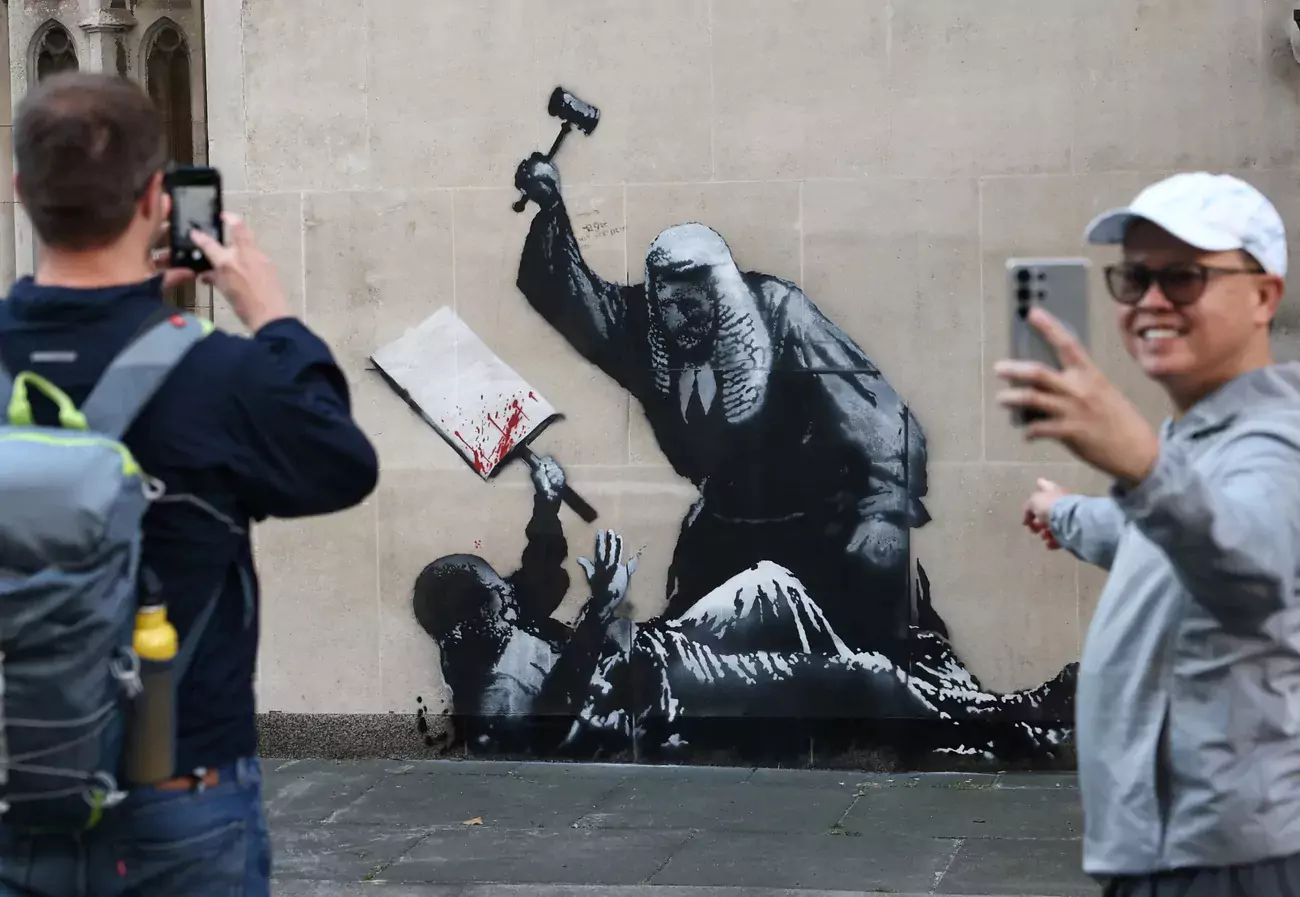
On March 13, 2026, the international news agency Reuters published a major investigation titled “In Search of Banksy.” After many years of work, journalists Simon Gardner, James Pearson, and Blake Morrison announced that they had uncovered the true identity of the most enigmatic street artist of our time—a man who, for more than a quarter of a century, has built his career and brand around complete anonymity.
According to Reuters’ findings, Banksy is Robin Gunningham, born around 1973–1974 in Bristol (United Kingdom). This name has already surfaced in the press: in 2008, the British newspaper The Mail on Sunday was the first to “expose” him as Banksy based on testimony from friends, school records, and other circumstantial evidence. At that time, according to Reuters, Gunningham took a radical step—he officially changed his name to David Jones. The choice was no accident: it is one of the most common male names in the UK (according to 2017 data, there are about 6,000 people with that name), which makes it as difficult as possible to find him in public databases, registries, and digital traces.
Key evidence from the investigation
Reuters journalists drew on a combination of public and archival sources, including:
• An arrest in New York in 2000 is one of the most compelling pieces of evidence. During Fashion Week, police detained a man for spray-painting a Marc Jacobs billboard on the roof of the building at 675 Hudson Street. The detainee signed a handwritten confession to disorderly conduct under the name Robin Gunningham. His name is mentioned repeatedly in police and court reports related to this case. Reuters emphasizes that this document makes his identification “beyond dispute”—beyond reasonable doubt.
• Works in Ukraine in 2022 — Banksy himself confirmed his authorship of several murals in war-torn areas (specifically, in the village of Gorenka near Kyiv). Reuters visited these locations, interviewed local residents, and showed them photos of the alleged artists (including Hanningham, Robert Del Najo of Massive Attack, and Thierry Getta/Mr. Brainwash). Many identified Gunningham specifically. In addition, the name David Jones already appears in documents related to the trip to Ukraine.
• Testimony from people close to him—including his former manager and photographer Steve Lazarides, who, according to the investigation, helped him legally change his name after 2008.
• Refutation of other theories — the popular theory that Banksy is Robert Del Naja (3D) of Massive Attack has been dismissed. Reuters considers him merely a co-creator or assistant on certain projects, but not the lead artist.
Why Anonymity Is Part of Art
Banksy has never officially confirmed his identity, and his representatives (including his lawyer) have repeatedly spoken out against such investigations. Anonymity is not merely a defense against the authorities and accusations of vandalism, but a fundamental element of the brand: it turns every work into an event and the artist into a myth. Reuters acknowledges that an exposé could damage this myth, but insists that its goal is not to destroy the legend, but to show how the person behind the pseudonym manipulated his own identity to remain invisible in the age of digital traces.
The reaction of the world and Banksy himself
So far, Banksy (or David Jones) has remained silent—no new Instagram post, no statement. The community is divided: some call the investigation a sensation and a triumph of journalism, while others see it as an invasion of privacy and an attempt to profit from someone else’s secret. People are already joking on social media: “Now every other David Jones in Britain is the number one suspect.”
The question remains: Will this change anything in Banksy’s world? Most likely not. Just as before, his new works will appear suddenly, full of satire and unsigned—and that’s exactly what makes them Banksy’s, rather than just drawings by some Robin or David.
Source: Reuters special report “In Search of "of Banksy" (March 13, 2026).





0 comments
Enter your email — we’ll send you a one-time code. No passwords or accounts.
Code sent to
If the email doesn't appear in your inbox within a few minutes, check your spam, junk, or promotions folder, as some email services may mistakenly place automated messages there