
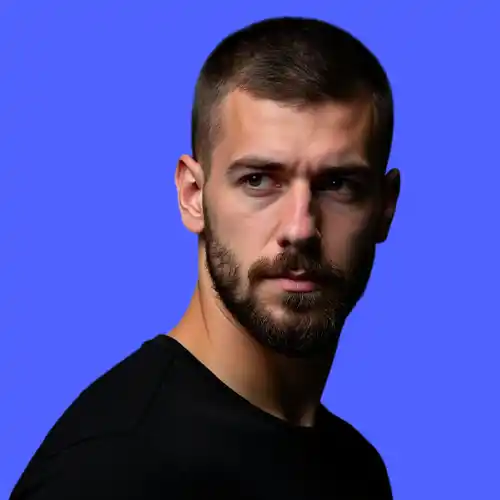
It so happened that the term "queer" is most often perceived in relation to gays and lesbians. Today, Doberman.media magazine tells the story of Polly, a man with a unique personality in whom opposites live.
Polly's story reminds everyone that a person is something more than just sex, gender, age, skin color... A person, first of all, is a personality, a soul, a philosophy, a way of life. Something that is not repeated in anyone and should not be repeated. Non-binary people are often overlooked, which makes them feel even more misunderstood.
Doberman.media continues to write about people who have faced misunderstanding, discrimination, rejection or other forms of social rejection.
Today we are writing about Non-binary identity (non-binar) — A general term for all those who reject the idea of dividing the sexes into male and female, since the concept of gender is much broader. (Not to be confused with transgender people, who feel they belong to a different gender than the one assigned to them at birth.)
Polly is from the Belarusian Polesye, she is older than people usually assume, because between an adult and a teenager he decided not to choose one or the other. As well as between male and female identities. Polly draws, dances, makes up stories in her head... Can hardly count in his head: dyscalculia. Perhaps that is why he does not consider himself someone in particular. Polly has not drunk alcohol in five years, never smoked cigarettes, and has been carrying a pocket dinosaur on wheels with her for the last year.
— Which pronoun do you feel comfortable addressing? In relation to non-binary people, many people are confused about which pronouns to use, hence there may be misunderstandings. Even among the queer community, this is common. I want to understand this better.
At the moment, my comfortable pronoun "he" would probably be appropriate as "they", but it's not very common in my environment yet. Interlocutors sometimes complain about the complexity, get confused, and if they also have to rebuild all lexical constructions in a new manner – "Where have you been:and on the weekend, how do you feel?" "It's a real disaster. In the queer environment and any other progressive environment, using a pronoun other than the one they themselves indicated in relation to persons is considered incorrect and is called "misgendering/misgendering”.
I think everyone can apply the internal rule here: "Will my ass fall off if I say how a person is comfortable?"
I think everyone can apply the internal rule here: "Will my ass fall off if I say how a person is comfortable?"
Absolutely always, the most advantageous social strategy seems to me to be to ask clarifying questions and ask again, if it is not very clear how to address a person. When social situations began to occur in my life more and more often, where new acquaintances themselves clarified my preferred pronoun, I realized that I was moving through life with whomever I needed. And when old acquaintances began to apologize for unintentional misgendering earlier, I realized that I was moving where I needed to go with the right guys. I don't get annoyed when I'm sure that a person is misgendering me out of ignorance or inattention, The sad irony is that most often those who apologize are those whom I would be ready to forgive and not like that. It can be very touching and like a transition to a new level of trust, when people say that it is difficult for them to get used to it, but they try very hard, because it is important to me, so they apologize in advance for possible mistakes. But when Persons, especially those who follow me non-stop on social networks, ignore the "rules" I obviously indicated in communication, this infuriates me. It looks like "yes, I hear you say that your name is Sasha, but I believe that you look like Zhenya, that's why I'll call you that." I think everyone can apply the internal rule here: "Will my ass fall off if I say how a person feels comfortable?". If it permanently falls off and feels unbearably difficult, perhaps this is also a question of the level of intelligence, including emotional intelligence.


— You can remember how your self-determination began as a non-binary? At what age did you start to feel this way? Can you remember something that you associate with that period of your life? What feelings accompanied you?
For the first time, more or less formed thoughts in this direction appeared at the age of 13, although we can say that the prerequisites were there even earlier. It's common for millennials to be nostalgic for 2007, and that's when I started to feel like I couldn't be able to do a lot of things that were dictated from the outside. I don't feel nostalgia, thank you for being alive. At that time, being a queer teenager in a small Belarusian town was creepy, anxious, embarrassing, paranoid. I was accompanied by thoughts that something was wrong with me, that I was crazy. It is necessary to understand: the maximum that could then be in my information field on the "agenda" was stereotyped stupid or humiliatingly sexualized images of gays and lesbians from mass culture. There was no queer or sexual education, feminism as a swear word, the term "non-binary" itself was not in sight. Friends (cis-hetero guys, as far as I know) were beaten by gopniks for too long hair, glasses, sneakers, badges. In general, the level of homophobia was terrible. And the period itself is terrible. Creativity, books and a company of friends with similar interests saved me. Some, by the way, even then addressed me as "him", even if more in the format of a game. And my nickname was the Cat Rag.
— How did your acceptance of yourself go, if we take the intrapersonal one aspect? What helped and what slowed down this process? What do you want to say to non-binary, queer people in general who are inAt this moment, are the stages of self-acceptance going through?
At the initial stage, the lack of necessary information slowed me down. I didn't know what a panic attack was, and I thought I would go crazy from terrible seizures. Everyone around you confidently says who you are, and what you should be, what to want, whom to love. An internal wave of protest against the total discrepancy between this and your feelings could not find an outlet. It broke me. For a long time. Because you just don't know that there can be a different view of reality, that all your feelings are correct and valuable in themselves. I am very happy to see that modern teenagers have access to information, I hope there will be fewer and fewer broken people like me thanks to this. As I have already indicated, the desire to search, process and analyze new information comes from my parents. This is a very important aspect, but not unique in its kind, I think anyone can develop it in themselves. It helps you not to get stuck in something that doesn't suit you. The same applies to the environment: it is important not to agree to a disrespectful unaccepting attitude, not to give up looking for your own.
It is very important to trust your feelings, and not rush to call the incomprehensible in yourself and others abnormal – perhaps after a while you will find out that this incomprehensible has a name, justification, reason, and a huge number of people go through similar experiences, and you do not have to be alone in this. I would also advise you to beware of persons who confidently tell you about how the world, a person and society work, especially if you did not ask, especially if a person who is different from your gender and orientation, but does not consider your experience valid and important.
— How did your loved ones react to your non-binary? Did this affect the Your relationship?
Of the family, my sister always knew the most about me, I don't know where I would be without this golden supportive person. On her part, I met only acceptance and understanding. As for parents, everything is a little more complicated, but returning to the question of the level of intelligence, I think it is the combination of their sincere care for me as a child and their coolest creative minds that makes them very understanding. There were sharp corners and some moments with homophobia, it was hard. But when, after a while, your parent sincerely admits that he regrets his statements and tries to rethink many things, this is a feeling of some kind of common victory and teamwork. The feeling that we are learning from each other. I definitely want to adopt their role model of a person for whom intellectual development never stops, a person who can admit his delusions and change his views. To answer the question directly, I did not have a specific conversation with my parents about my non-binary status. I don't need specific words to feel their support and acceptance.
Sometimes these are such peculiar manifestations - for example, when they stop giving you decorative cosmetics, and instead offer to give you chic vintage "men's" (clothes have no gender, in fact) shirts and suits with the words that this suits you, or when everyone is delighted with your new short haircut. They do not treat with questions about marriage and children. They do not devalue your interests and do not teach you how to live. As a result, it feels more that our relationship, and for the better, was influenced, for example, by my complete rejection of alcohol, or by moving to another city on my own, or now emigration. I am an adult and I really appreciate the support of my family, but I do not feel the need for their validation of my identity. I don't need to prove to them that I have blue eyes and a height of 174, this is already my inherent data.
— How did you experience your unusualness/difference, living in society, in which is a taboo topic?
In life, I am accompanied by a feeling of indignation when someone wants to define me or someone as a person only through gender and/or orientation – which I have been more and more bold to declare over time, in the formulation of "bisexuality". It's like when someone in the company derogatorily uses the p-word, and you answer "I'm just one of them, do you have any questions for me?".
As if I could no longer remain silent, becoming stronger and more aggressive, I wanted to speak on behalf of that teenager who was bullied and beaten for being different, including for being wary of boys and for falling in love with girls.
And in general, I am not able to react to what is happening in society. I got to the roots of this feeling just in time for 2020, when everything detonated: fatigue from trying to pretend to be a cis woman, indignation at the behavior of men around me, anguish from a series of failed romantic relationships, a lot of new articles from horizontal activists, first on the topic of neurodifference, then dysphoria, gender dysphoria, fluid identity. Then I began to be "dissected".
The process took place in parallel with the protests and the whole storm of emotions about this. For the first time I so consciously and fiercely hated the attempts of anyone, privileged by the presence of power, to forcibly silence others. I realized that it is vital to search for my truth and broadcast it. The remnants of my own deep convictions, laid down by a patriarchal society, annihilated from the heroism and dedication of the Belarusian: ok, namely women and queer people. I looked at my incredible friends coming out with stunning make-ups on their faces, in a hitch, towards batons and stun guns, and I realized that from now on I would listen only to such persons in discussions about life, society and social roles. In the spring of 2021, I began to actively train and go to the horizontal bars. I realized that now I can do anything, I can do anything I want. In the autumn of the same year, I began a romantic relationship with a wonderful person, who by that time was charged to the brim with feminist and queer activism, even ultra-feminism in her own formulation. It was the first time I had experienced such a level of acceptance of my identity, solidarity in my views in a romantic relationship. And, fortunately, I live to this day. Now I don't understand how it was possible for so many years to settle for less, hush up and tolerate all this palette of patriarchal cis-hetero relationships.
At a certain point, the affiliate announced that now she also self-identifies as a non-binary person – it was more than comfortable and even logical for me, and also incredibly valuable – to be present at such an important transformation of a loved one. After a while, I suggested that we address her as "her", now I don't remember how it could be otherwise.
— Now you live in Europe. How has your life changed after moving from Belarus? In addition to the positive side, was there a downside to emigration? How did you survive it? What helped you?
So far, I am adapting to the new conditions, and it is difficult. Not as critically difficult as it could be – thanks to the support of family, friends and a partner who emigrated before me and helped to draw up and implement a plan for moving. At the same time, I now feel liberated on many levels at once – I can realize my need to speak out and express my position. The art block disappears, and the feeling of security comes more and more.
Soon after arriving in Warsaw, I gave myself shock therapy – I went to a demonstration of the Belarusian diaspora dedicated to the protests, with LGBTQ+ flag on the whole back. I was the only one in this crowd with white-red-red, it was extremely ambiguous in feelings, and it also took half an hour to stop at least a little from the escort of the demonstration by the police (this is a common thing here). He caught sidelong glances at himself then, was morally prepared for manifestations of aggression, knowing about the homophobic sentiments of Belarusian nationalists. But the words of Nasta Bazar about the huge white-red-white flag at Warsaw Pride in 2023 sounded in my head - "this is our flag too!". I also brought my flag to the demonstration, which is also pro / for me. The presence of anarchists: ok, with all their black and experience of communicating with the "right", morally supported at that time, of course.
The move, obviously, had a tangible impact not only on a partial change in the social environment, but also on the content of communication. The part of the diaspora in which I have been "stewing" in recent months – people with similar views to mine – I began not only to forget that it is necessary to hide and pretend to be someone else, but also that it is necessary to explain to someone the queer feminist base – my émigré friends will give the base to anyone right away.
I am already following the development of the proposed new constitution by the democratic forces, because we vitally need a progressive legislative framework, the implementation of which will have to be called for a long time.
I am already following the development of the proposed new constitution by the democratic forces, because we vitally need a progressive legislative framework, the implementation of which will have to be called for a long time.
Regularly attending various demonstrations and protests in Warsaw continues to be very therapeutic. Local activists show gratitude and joy when they find out that I am a Belarusian, it is doubly therapeutic that they are very well informed about the situation in Belarus – sometimes better than some Belarusians.
Also, getting a non-formal education helped me a lot, in less than a year I managed to take a course on LGBTQ+ and inclusion from the New Regions initiative and an initial course on human rights from the Geta Base initiative. The latter influenced me especially strongly, on the perception of myself, society, state systems, and the experience of emigration.
— What do you think Belarus needs for LGBTQ+ people to be there Did you live comfortably, on a par with hetero-normative people?
Here I can speak confidently thanks to the same experience of education in the field of human rights. Respect for the principles of equality, security and respect for the individual must be a priority. Understanding that the state is a large team of specialists hired to perform specific functions, nothing more, and abuse of authority is unacceptable. It is necessary to be able to address a request and demand not just a formal response to it, but specific actions. The inadmissibility of physical and psychological violence on the part of "law enforcement" agencies, the inadmissibility of discrimination, hate speech and enmity in any media – and a confident argument that this is not "censorship of the new ethics", but demands for respect for basic human rights. (See the paragraph at the beginning - will the ass of the next editor fall off because of the call to use gender gaps and feminine gender markings). I am already following the development of the proposed new constitution by the democratic forces, because we vitally need a progressive legislative framework, the implementation of which will have to be called for a long time. I think we will be able to provide comfort for ourselves, but it will be necessary to demand and achieve safety and support.
— How can you compare being treated as a non-binary person with On the part of state bodies in Poland?
"despite the fact that Mrs. has indicated her LGBTQ+ affiliation as an additional reason, given the current situation in Belarus, we consider this to be a valid and sufficient reason to grant her complementary international protection in Poland."
"despite the fact that Mrs. has indicated her LGBTQ+ affiliation as an additional reason, given the current situation in Belarus, we consider this to be a valid and sufficient reason to grant her complementary international protection in Poland."
So far, my communications in this area have not been very extensive, and I have not reported more personal information than indicated in my documents. With one extremely significant and important exception. I applied for international protection in Poland, for which I had to provide evidence of persecution or security threat in my country of citizenship. Among other things, but rather as an additional and secondary reason, I listed my "LGBTQ+ affiliation" and self-identification as a non-binary person. I was very worried whether it was worth writing about it at all, whether it would put me in an even more vulnerable position - at that time, the voices of numerous "experts" were still buzzing loudly in my head that Poland is a very conservative and homophobic country, and it is better for the polls not to be an eyesore to "all their own". Coincidentally, in Belarus, during the submission of my documents and evidence, absurd homophobic bills were being promoted at full speed. And imagine my state when, 4 months later, I received a decision (official response), where it was written something like "despite the fact that Mrs. has indicated her LGBTQ+ affiliation as an additional reason, given the current situation in Belarus, we consider this to be a valid and sufficient reason to grant her complementary international protection in Poland." I expected anything from life, but not the official recognition of my queer status by the state bodies of another country. I didn't even know that this could happen.
— Many Belarusians consider Poland as a country for emigration, There are many reasons for this. I would like to know your opinion: is Poland suitable for emigration if you are a representative of the queer community?
I think if we are talking about emergency measures and limited resources, this is a good option, because in the situation with queer people in Belarus, we are dealing with a threat to freedom, health and possibly even life. The Polish authorities are aware of the situation in Belarus and can probably count on basic physical security here. The rest still looks doubtful, here we observe political and civil struggle, strong pressure and resistance on both sides in real time. For me personally, the issue of legalizing abortion is critical, as it will be critical for many people of the vulnerable obstetric sex in this regard, and so far part of the Polish government is behaving impartially in this matter. On the other hand, there is a gradual shift in the issue of same-sex marriage. I also know examples of successful trans transitions of acquaintances – however, also not without uncomfortable social moments. As for socialization, it's a matter of being able to live in a large city, where you are more likely to find your environment. By the way, good news for those who do not know Polish, but at least have an average command of English - you already have a great bonus from the start.
In the end, I want to say to the readers metroboy.pro: your experience and feelings are extremely important, you are right if you feel this way, and if you do not have the opportunity to freely declare this now and the opposite is imposed from all sides, please hold on to your inner truth, and no one will be able to take it away from you. And, perhaps, someday, on a warm summer evening, you will find yourself on the street of your city in a joyful crowd with flags of your colors.



0 comments
Enter your email — we’ll send you a one-time code. No passwords or accounts.
Code sent to
If the email doesn't appear in your inbox within a few minutes, check your spam, junk, or promotions folder, as some email services may mistakenly place automated messages there