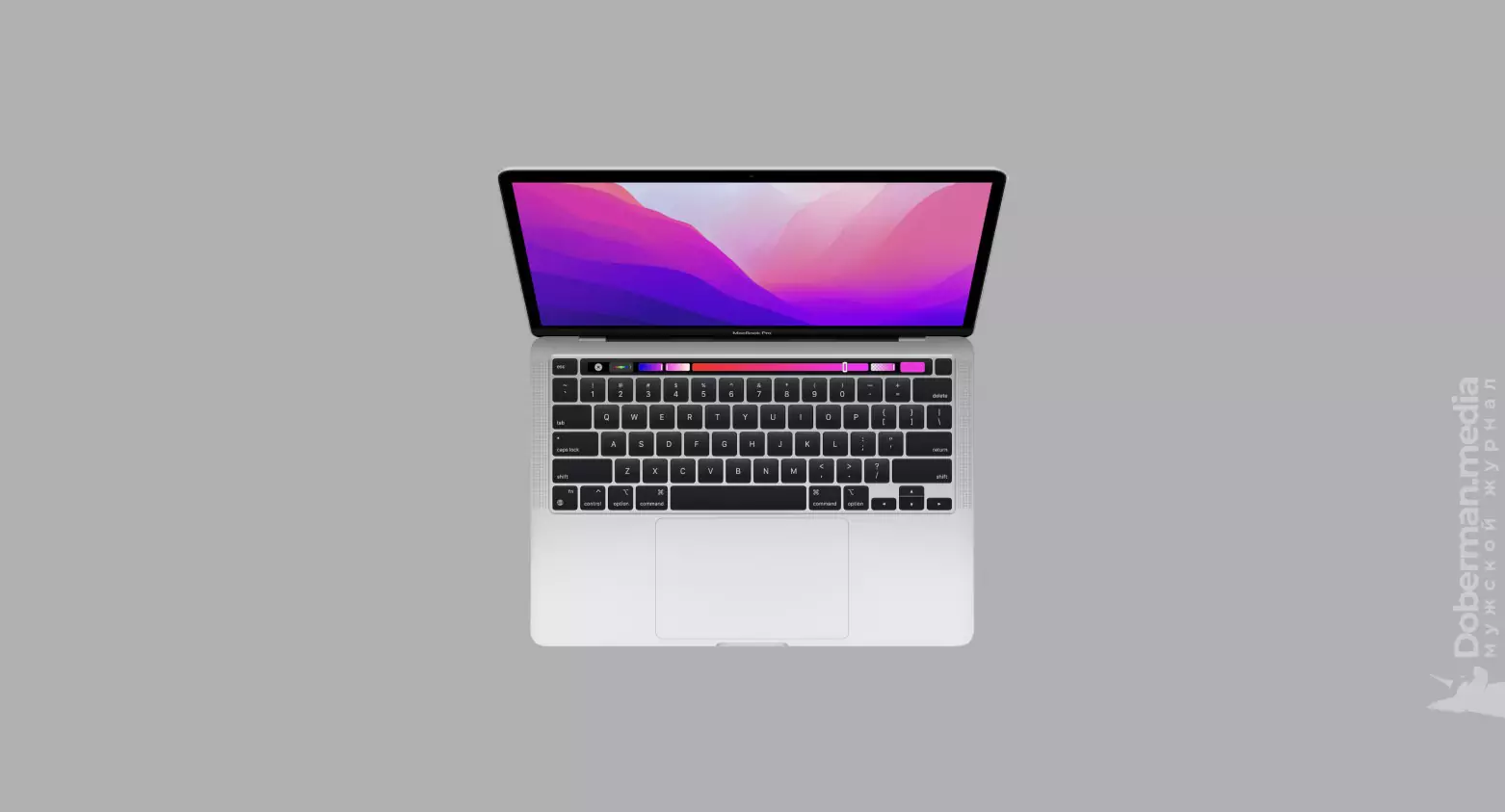

Probably the most pointless announcement is the new MacBook Pro with M4, M4 Pro and M4 Max chips Reviews. How they got the new MacBooks is still unknown.
Apple's new MacBook Pro with M4 is here and can be pre-ordered from Thursday, October 31, 2024. It will appear in stores Apple and at major retailers from Friday, November 8, 2024.
Prices for the new MacBook Pro with M4 start at 1,599 USD (1470 EUR) for the 14-inch version with a 10-core CPU, 10-core GPU, 16GB of unified memory, and 512GB of SSD storage. At the same time, the larger 16-inch MacBook Pro comes with the M4 Pro chip by default and starts at 2,499 USD (2295 EUR).
Related story:
Mac Week. Apple is back on stage with new products: a green Mac Mini, a stylish iMac, and a powerful MacBook Pro
The most expensive, fully-equipped MacBook Pro model is the 16-inch M4 Max with a 16-core CPU, a 40-core GPU, 48GB of unified memory, and 1TB of SSD storage. It is possible to add a nano-textured display (about 137 euros), increase the memory to 128 GB (about 900 euros) and expand the internal storage to 8 TB SSD (about 1,980 euros). The total price of the device is approximately 6,920 euros. Impressive!
Most importantly, the new price makes the base 14-inch MacBook Pro model 120 euros cheaper compared to the M3 model at the time of its release. That's impressive considering the device now packs more power, Apple Intelligence support, Thunderbolt 5, a nano-textured display option, a 12MP camera with Center Stage, and up to 24 hours of battery life.
How much does the new MacBook Pro cost?
Available in Space Black and Silver, the new 14-inch MacBook Pro costs between €1,520 and €3,040 before upgrades, while the 16-inch variant will cost between €2,370 and €3,850. This makes the starting price of the new MacBook with M4 120 euros cheaper.
Prices for the MacBook Pro 14-inch with M4:
- M4 14-inch MacBook Pro with 10-core CPU, 10-core GPU, 16GB unified memory, 512GB SSD – starting at €1,520
- M4 14-inch MacBook Pro with 10-core CPU, 10-core GPU, 16GB unified memory, 1TB SSD – starting at €1,700
- M4 14-inch MacBook Pro with 10-core CPU, 10-core GPU, 24GB unified memory, 1TB SSD – starting at €1,880
Prices for the 14-inch MacBook Pro with M4 Pro:
- M4 Pro 14-inch MacBook Pro with 12-core CPU, 16-core GPU, 24GB unified memory, 512GB SSD – starting at €2,000
- M4 Pro 14-inch MacBook Pro with 14-core CPU, 20-core GPU, 24GB unified memory, 1TB SSD – starting at €2,430
MacBook Pro 14-inch with M4 Max prices:
- M4 Max 14-inch MacBook Pro with 14-core CPU, 32-core GPU, 36GB unified memory, 1TB SSD – from €3,040
Prices for the 16-inch MacBook Pro with M4 Pro:
- M4 Pro 16-inch MacBook Pro with 14-core CPU, 20-core GPU, 24GB unified memory, 512GB SSD – starting at €2,370
- M4 Pro 16-inch MacBook Pro with 14-core CPU, 20-core GPU, 48GB unified memory, 512GB SSD – starting at €2,730
16-inch MacBook Pro with M4 Max prices:
- M4 Max 16-inch MacBook Pro with 14-core CPU, 32-core GPU, 36GB unified memory, 1TB SSD – from €3,380
- M4 Max 16-inch MacBook Pro with 16-core CPU, 40-core GPU, 48GB unified memory, 1TB SSD – from €3,850
Interestingly, Apple has also doubled the standard storage capacity of the MacBook Air with M2 and M3 chips, while keeping the initial price at the same level. Now 16 GB of storage is available in the basic version, and the starting price remains the same at 600 euros, which makes this an excellent value for money option for those who want to get to know the possibilities of Apple Intelligence.
How much faster is MacBook Pro with M4?
The company claims that with the M4, the MacBook Pro is 1.8 times faster compared to the 13-inch MacBook Pro with the M1 when processing gigapixel photos. What's more, performing complex tasks like rendering scenes in Blender is 3.4x faster, which is a significant improvement.
For those who work with video, the MacBook Pro with the M4 is up to 9.8x faster when detecting a scene in Adobe Premiere Pro. However, compared to the 13-inch MacBook Pro with the Core i7, the difference is even more noticeable — with up to 1.7x the performance increased compared to the MacBook Pro on the M1.
The MacBook Pro with the M4 Pro chip is the choice for those who need more performance. Its minimum configuration has a 14-core processor with ten performance and four energy-efficient cores, as well as up to a 20-core GPU, which is twice as powerful as the standard M4. In addition, the company claims that the MacBook Pro with the M4 Pro has 75% more memory bandwidth compared to the previous generation and is up to 3 times faster than the models with the M1 Pro.
The MacBook Pro with the M4 Max chip is the choice for maximum performance. However, it will really come in handy for those who work with programs such as Maxon Redshift, Xcode, and Topaz Video AI. With up to a 16-core CPU, up to a 40-core GPU, combined memory bandwidth of over half a terabyte per second, and a neural engine that's 3x faster than the M1 Max, the benchmarking results are impressive. In Topaz AI, the video processing speed on the M4 Max is 30.8 times faster compared to the MacBook Pro on the Intel Core i9, which is almost five years old. If you're planning an upgrade from the M1 Max, the metrics show that the device is up to 1.6x faster than the 16-inch MacBook Pro with the M1 Max when using Topaz AI.
Especially impressive is the M4 Max media engine, which is equipped with two ProRes accelerators. They are claimed to do a great job of editing 4K video at 120fps shot on the new iPhone 16 Pro and edited in Final Cut Pro.
For maximum performance, it's best to choose a MacBook Pro with M4 Max, especially for running programs like Maxon Redshift, Xcode, and Topaz Video AI.
Brighter screen, new camera and more ports
Previously, the MacBook Pro screen with the M3 chip showed SDR content at up to 600 nits of brightness. Now, an updated screen with a nano-texture option (which reduces glare and reflections) allows SDR content to reach up to 1000 nits of brightness, despite using the same Liquid XDR display. Such an update is especially convenient for working outdoors or near windows. Peak brightness for HDR remains at 1600 nits, which is still quite impressive by industry standards (for example, the recently tested Dell XPS 13 Snapdragon X Elite only reaches 500 nits).
A new 12-megapixel Center Stage camera is also installed, which is an improvement over the MacBook's previous 1080p camera with the M3 chip. The "Center Stage" function keeps you in the center of the frame using digital zoom even if you are moving, and also supports "Desk View" mode. It is complemented by studio-quality microphones for video calls and a six-speaker audio system with spatial audio and Dolby Atmos, which makes watching movies after work especially enjoyable.
Thunderbolt 5 is available for the first time in the MacBook Pro with the M4 Pro chip. The device has three Thunderbolt 5 ports, and each of them more than doubles the data transfer speed, reaching 120 Gbps.
Of course, all new MacBook Pros also have an HDMI port that supports up to 8K resolution, adding an SDXC card slot, a MagSafe 3 charging port, a headphone jack, and Wi-Fi 6E and Bluetooth 5.3 support.
Finally, Apple's Intelligence system is also integrated into the MacBook Pro with the M4, adding features like system writing tools, more advanced Siri, Image Playground, Genmoji, and more. If you want to know more about the capabilities of Apple AI, we already have a detailed guide on everything related to this software.
The new MacBook Pro is available for pre-order starting today, Thursday, October 31, 2024, and will be available in Apple stores and major retailers starting Friday, November 8, 2024. The full range can be found on the brand's website, link below.








0 comments
Enter your email — we’ll send you a one-time code. No passwords or accounts.
Code sent to
If the email doesn't appear in your inbox within a few minutes, check your spam, junk, or promotions folder, as some email services may mistakenly place automated messages there