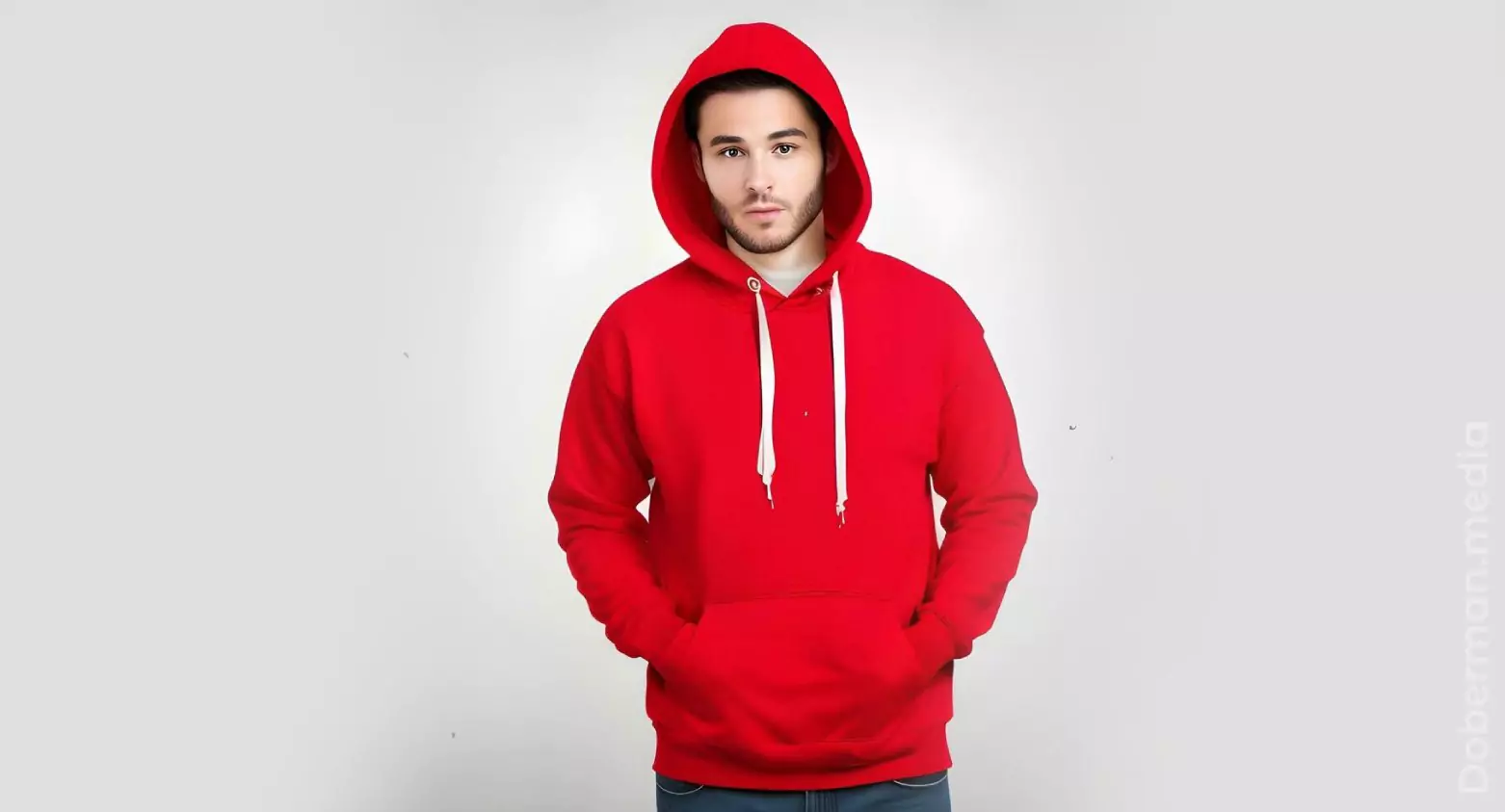
Sweatshirts and hoodies have long been in any men's closet, but often the search for the perfect model becomes a real challenge. We've put together a few basic rules to help you choose the perfect hoodie or hoodie.
What is the difference between a sweatshirt (sweatshirt) and a hoodie?
A hoodie and a sweatshirt are similar, but have some differences:
- Hood: One of the main distinguishing features of a hoodie is the presence of a hood, which the sweatshirt does not have.
- Material: A hoodie can be made of a thinner and lighter fabric than a hoodie, making it more suitable for warm weather. Sweatshirts, on the other hand, tend to be warmer and thicker than hoodies.
- Style: Hoodies often have pockets on the front and a zipper that the hoodie does not have.
- Origin: The hoodie comes from sportswear and is often used for sports or outdoor activities. Sweatshirts, on the other hand, are often associated with street fashion and everyday wear.
Despite these differences, hoodies and hoodies are often used as substitutes for each other.
| Characteristics | Sweatshirt | Hoodie |
|---|---|---|
| Clasp | Usually there is a zipper (full or 1/2 at the front), but it may not be | No zipper, worn over the head |
| Pockets | Side pockets (sewn-in or patched) | Kangaroo pocket on the stomach (chest) |
| Hood | With or without a hood | There is always one. In fact, this is a type of sweatshirt, it has a hood |
| Style and usage | More athletic, convenient for training; often with geometric prints or lettering | Outdoor, casual; Can be with bright prints |
| Origin | Originally for sports (from the English "sweatshirt") | From street fashion (from the English "hoodie") |
In short:
Every hoodie is a hoodie, but not every hoodie is a hoodie


How should a sweatshirt or hoodie fit on the figure?
A hoodie or hoodie is a loose fit and it doesn't have clear size standards, so it's common for girls to borrow hoodies from their boyfriends, and guys swap with friends. A lot depends on preferences - whether you want the thing to be exactly the size and slightly emphasize the figure (but not "sticky") or, on the contrary, fit more loosely.
How a classic sweatshirt or hoodie should fit:
- The shoulder seam of a classic fit sweatshirt should be exactly in place, that is, it should end where the shoulder is from the horizontal plane to the vertical plane;
- The length should be up to the hips. Models a few centimeters longer will look ridiculous. The sleeve should cover the wrist when bending the arm;
- In the abdomen, the sweatshirt should move away from the body by literally 2 centimeters;
- To make sure the product is the correct size in the chest (особенно это касается тех, кто ходит в зал и имеет хорошие грудные мышцы), put your hands behind your back. If the fabric fits snugly around the chest but does not restrict movement, it is suitable;
How to choose an oversized sweatshirt or hoodie:
- The shoulder seam for an oversize sweatshirt is offset 4-5 centimeters down from the highest part of the shoulder. But you should not choose a sweatshirt where the seam is too low so that the thing does not hang;
- The length should be 3-10 centimeters below the hip line. It is better to abandon even longer models so as not to buy a dress instead of an oversized sweatshirt;
- In the abdominal area, the sweatshirt should recede so that another long-sleeved sweater can be worn under it;
- A sweatshirt in the chest should not fit tightly and perfectly. If you can hug your arms around your chest under your hoodie and you still have space to spare, then you're on the right track.
Despite the loose fit, remember that an overly voluminous sweatshirt or hoodie can visually add weight.
Determining your clothing size
To choose the right sweatshirt, measure:
– Chest circumference. Measure with the most protruding chats, keeping a centimeter parallel to the floor;
- Waist circumference - along the narrowest part of the body, usually right under the ribs;
- Hip circumference - protruding parts, tape parallel to the floor;
– Sleeve length. Sleeve length is measured from the back of the highest point of the shoulder to the wrist bone;
– Product length. When choosing the length of the sweatshirt, measure the distance from the point where the shoulder and neck connect around the hip line.


How to try on a sweatshirt correctly?
Even with the right size, it is important not to forget about a few things that make further wearing comfortable:
- When measuring parameters, we advise adding 2-3 cm to the figure to obtain a version that does not restrict movement;
- Don't forget to put on a sweatshirt or hoodie and move around. It is important to make sure that you can comfortably raise or lower your arms, turn, bend, nothing restricts your movements;
- It is important that the elastic bands (if any) and the neck are not clamped and are moderately loose;
- Put on the hood and make sure it doesn't fall over your eyes or prevent you from turning your head;
Make sure that the inner seams and lining material do not disturb or irritate the skin, otherwise it will be uncomfortable to wear this item;
Hoodie or hoodie material
Pay attention to the material from which the product is made. Cotton is a popular choice because it is comfortable and easy to clean. Synthetic materials are also possible, which can be more durable and retain their shape better. Feel the fabric itself, and if the pattern seems unpleasant or causes itching, then there may be fibers in the product that cause allergies. In this case, it is better to refuse to buy. The fabric should be pleasant to the touch and not cause any discomfort.
What material to choose a hoodie or sweatshirt from?
Fleece is a warm and comfortable material. Fleece is a synthetic knitted fabric made of polyester for the manufacture of warm clothes. Choose a sweatshirt made of cotton and with a small amount of fleece (from 5 to 20%). Fleece is characterized by hygroscopicity, perfectly breathable, it is durable, elastic, wear-resistant; The fabric is durable and easy to care for. Clothes are easy to wash, dry quickly, retain their softness and color saturation for a long service life;
Futer is a cotton-based fabric, which, due to the peculiarities of the production technology, has a soft pile on the wrong side, and a smooth structure on the front side. The composition includes, as we have already said, cotton, and viscose, lycra and/or polyester are added to it. The main advantages are elasticity, comfort and external attractiveness. Suitable for indoor wearing;
Welsoft – the densest knitwear. In fact, this is pure synthetics - a type of microfiber, which is based on synthetic microfibers of polyester or polyamide. A product made of this fabric is good for walking on the street, as it is difficult to freeze in it. But being indoors is not the best option.
What else should you pay attention to when choosing a sweatshirt or hoodie?
Seams. Another aspect that needs attention is the quality of the seams. They should be level, without distortion or gaps. When choosing a sweatshirt, turn it inside out and check if everything is done neatly.
Coloring. An important point is the quality of coloring. Try rubbing a piece of cloth. The long-lasting dye leaves no residue, and if the dye remains on the skin, do not hesitate to refuse to buy. In the future, such a thing will quickly lose its brightness and saturation.
Fittings. Locks, fasteners, and buttons, if any, should also be of high quality. If the lock doesn't initially work well, it will cause even more problems in the future. Make sure there are no signs of rust or parts with peel paint. If you don't check the hardware right away, you'll have to replace it in the future.
Color rules. What color to choose a sweatshirt or hoodie?
The main rule is to listen to personal feelings and preferences. Do you want an option for any occasion? Choose sweatshirts in black and gray. If you like a bright sweatshirt, do not hesitate to buy a model of memorable colors. Your appearance also plays an important role:
Brown skin and brown, blonde or red hair are a reason to choose not too saturated, warm shades: olive, warm gray, burgundy. But you need to abandon cold colors.
If your skin contrasts sharply with your hair, for example, with dark hair and pale skin, then choose cool, clean and saturated shades: white, black, dark blue, red. But it is better not to wear muted orange, brown and beige;
Owners of fair skin, hair, eyes, and perhaps even freckles should look at delicate, soft colors: beige, peach, coral. It is better to abandon contrasting black, white and red;
If you have blonde or brown hair and cool eyes, your color type tells you to wear cool and muted colors: light blue, lavender, purple. No bright colors – just tranquility;






0 comments
Enter your email — we’ll send you a one-time code. No passwords or accounts.
Code sent to
If the email doesn't appear in your inbox within a few minutes, check your spam, junk, or promotions folder, as some email services may mistakenly place automated messages there