

How an interest in men’s grooming turned into the dangerous cult of “looksmaxxing”—and why young men willingly mutilate themselves for attention from women or other men.
For a long time, society believed that “a man only needs to be slightly better-looking than a monkey,” and that charisma, humor, and self-confidence could easily make up for any physical shortcomings. But in recent years, this unspoken consensus has fallen apart. Gen Z has become obsessed with “looksmaxxing” (looksmaxing)—the process of ruthlessly maximizing and improving one’s appearance.
Inspired by the flawless jawline of Patrick Bateman—the protagonist of American Psycho, originally conceived as a satire of consumer society—young men today devise elaborate, multi-step grooming routines and make extreme physical sacrifices. For many of them, facial care has become an obsession bordering on mental illness and self-harm.
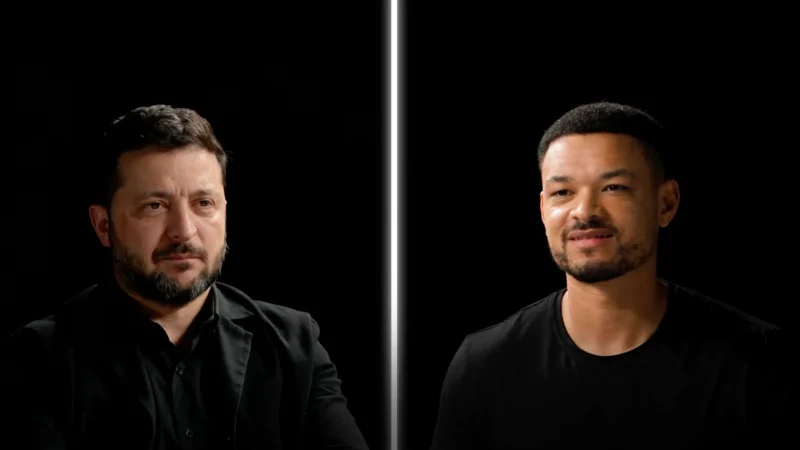
Blogger Ilya Varlamov has released an extensive video exposé on the subculture of “looksmaxxers”—young men who starve themselves, hit themselves in the face with hammers, and break their legs in pursuit of the perfect appearance. As part of his investigation, Varlamov was assessed by Russia’s leading looksmaxxer, Yegor Nastoyashchy, who called the blogger’s curly mane “seriously OP,” but criticized his puffiness and advised him to start building up his neck immediately.
Table of Contents
From ordinary healthy living to “bonesmashing”: How young men are trying to reshape their facial bones without surgeons
Proponents of looksmaxxing divide their methods into “soft” (softmaxing) and “hard” (hardmaxing). Soft methods are essentially a reinvention of a basic healthy lifestyle: hygiene, quality sleep, exercise, and skincare. This also includes “mewing” (mewing) — a technique popular on social media that involves constantly pressing the tongue against the roof of the mouth. Its creators, British orthodontists John and Mike Mew, claimed that this puts pressure on the jaw and widens the face, creating a more masculine chin. There is no scientific evidence that mewing works, and in 2024 Mike Mew was stripped of his medical license after his methods were deemed a threat to patients’ health.
However, soft methods quickly cease to satisfy those unhappy with their faces. In pursuit of the ideal proportions of a “GigaChad,” guys turn to hard practices:
- Bone smashing: Perhaps the most frightening DIY procedure, bone smashing involves men literally striking their cheekbones and jaws with heavy objects, including hammers and sports trophies. Looksmaxxers cite the 19th-century Wolff’s law, which states that bones adapt to stress. They believe that microfractures will cause bone tissue to regenerate and grow wider. Surgeons warn that this practice is completely useless for reshaping bones but is guaranteed to cause severe swelling, fractures, scarring, concussions, and neurological complications.
- DIY surgery: To make their gaze look more “rugged” and deep-set, some looksmaxxers take ordinary blades and cut the corners of their own eyes without anesthesia or sterile conditions, attempting to alter the so-called canthal tilt.
- Extreme spasms: To build up their chewing muscles, guys spend hours chewing tough towels, wearing away their tooth enamel and developing temporomandibular joint dysfunction.
“Skeleton City” and leg lengthening: Why height and weight have become the main triggers of male body dysmorphia
Another alarming trend has been dubbed “Skeleton City” (Skeleton City). This is an extreme form of weight loss in which guys strive to look emaciated. Popular bloggers in the community slim down to 50–55 kilograms despite being over 180 centimeters tall. To achieve “hollow cheeks” and make the bones of their skulls visible, they inject powerful drugs such as retatrutide (a next-generation analogue of Ozempic) without medical supervision or a doctor's prescription. Experts emphasize that this is a classic eating disorder (ED) and male anorexia, which damages the gastrointestinal tract.
Those whom nature has not blessed with height resort to one of the world's most painful and expensive procedures—surgical limb lengthening using the Ilizarov apparatus.
Because women on dating apps have developed a strict filter (“if you're under 185 cm, swipe left”), men are going under the plastic surgeon's knife. The bones in both legs are broken, metal pins are inserted, and patients must turn screws every day, separating the broken bones by one millimeter per day. Rehabilitation can take up to two years, with patients in constant pain.
There are known cases of men working two jobs for years to save the $170,000 needed for such an operation. One man featured in such stories, Moses Gibson from Minnesota, grew from 165 to 177 centimeters and claims that only afterward did women begin interacting with him normally.
What do incels and the “black pill” have to do with it?
The roots of radical looksmaxxing lie in online incel communities—men who are unable to find a sexual or romantic partner despite wanting one. This community is dominated by the ideology of the “black pill” (blackpill). Its adherents claim that human relationships are determined solely by the genetic lottery and physical appearance. Incels dismiss any assurances that women value personality, humor, or kindness as hypocrisy.
This creates a profound psychological conflict. These guys harbor deep resentment toward women because they receive no attention from them, yet at the same time desperately crave their love. This ambivalence sends them on an emotional roller coaster. They may hate women and feminism, while starving themselves every day and disfiguring their faces with hammers in the hope of becoming attractive to the very people they hate.
Sociobiologists note that incels build their identity around being “victims of genetics.” Paradoxically, if a member of the community enters into a successful relationship, the others do not congratulate him. Their peer’s success is perceived as a direct threat to their own moral status as victims who “understand life better than ordinary people.” Studies show that these closed groups have a disproportionately high percentage of people with depression, autism spectrum disorders, and an increased tendency toward sadism.
Does “beauty privilege” really exist?
Science confirms that the phenomenon of beauty privilege (beauty privileges) does indeed exist. As early as the beginning of the 20th century, psychologists described the “halo effect” (halo effect), whereby attractive people are automatically assumed to possess greater intelligence, kindness, honesty, and professionalism. On average, attractive people really do find it easier to get a job, and they earn slightly more.
However, as sociologists and biologists point out, attractiveness is merely an initial filter when meeting someone. The cult of perfect bodies and chiseled jawlines is greatly amplified by social media algorithms. In the long run, people choose partners based on scent, voice, charisma, facial expressions, and communication skills. A beautiful face cannot make up for immaturity, toxicity, and an inability to communicate.
Moreover, chasing an unattainable ideal often points to body dysmorphic disorder — a mental disorder in which a person perceives minor aesthetic features of their body as catastrophic flaws. Plastic surgeons emphasize that operating on a patient with body dysmorphic disorder will not make them happier. Once one “flaw” is removed, they will immediately find another and continue blaming personal failures on the shape of their nose or the height of their cheekbones.
Ultimately, experts and doctors agree on one thing: old age and age-related changes will inevitably affect everyone. A person’s true worth and the strength of their relationships are determined not by Patrick Bateman’s jawline, but by what is inside their skull. Cultivating knowledge and addressing mental health are far more effective than trying to sculpt yourself into an internet idol with a hammer and starvation.
Watch the video. Looksmaxxers and bimbos: how far will they go for beauty? | Interview: Egor Nastoyashchy, Nasty Bestie
varlamov







0 comments
Enter your email and we will send you a one-time code. No passwords, no accounts.
Code sent to
If the email does not arrive in your inbox within a few minutes, check your Spam, Junk or Promotions folder — some mail services may wrongly place automated messages there.