
In Vietnam, specialists at Ho Chi Minh City Dermatology Hospital have launched a series of medical consultations aimed at addressing the specific health problems of transgender people. By words doctors, the combination of hormonal therapy, the use of binders and social barriers leads to the fact that many patients find themselves in the doctor's chair with advanced complications.
We tell you what risks the transition poses to the skin and hair and what experts advise.
What is the main problem?
According to Dr. Phan Min Doan, many members of the community pay great attention to appearance, but due to social prejudice and personal shyness They are afraid to go to official clinics. As a result, people are left without access to proven medical knowledge and end up in the hands of amateurs or self-medicate.
Testosterone: Acne that doesn't require withdrawal
For trans masculine people (FtM), the main problem in the first one to two years of testosterone supplementation is explosive appearance of acne.
- Where do rashes appear: Most often, these are the lower third of the face, chest, shoulders and lower back.
- What it looks like: Due to hormonal changes, acne often takes on severe forms - cystic or pustular rashes.
- What to do: Doctors emphasize that this is a natural physiological reaction of the body. It is not necessary to stop taking hormonesto heal the skin. Standard methods cope with this: ointments, light therapy and chemical peels under the supervision of a doctor.
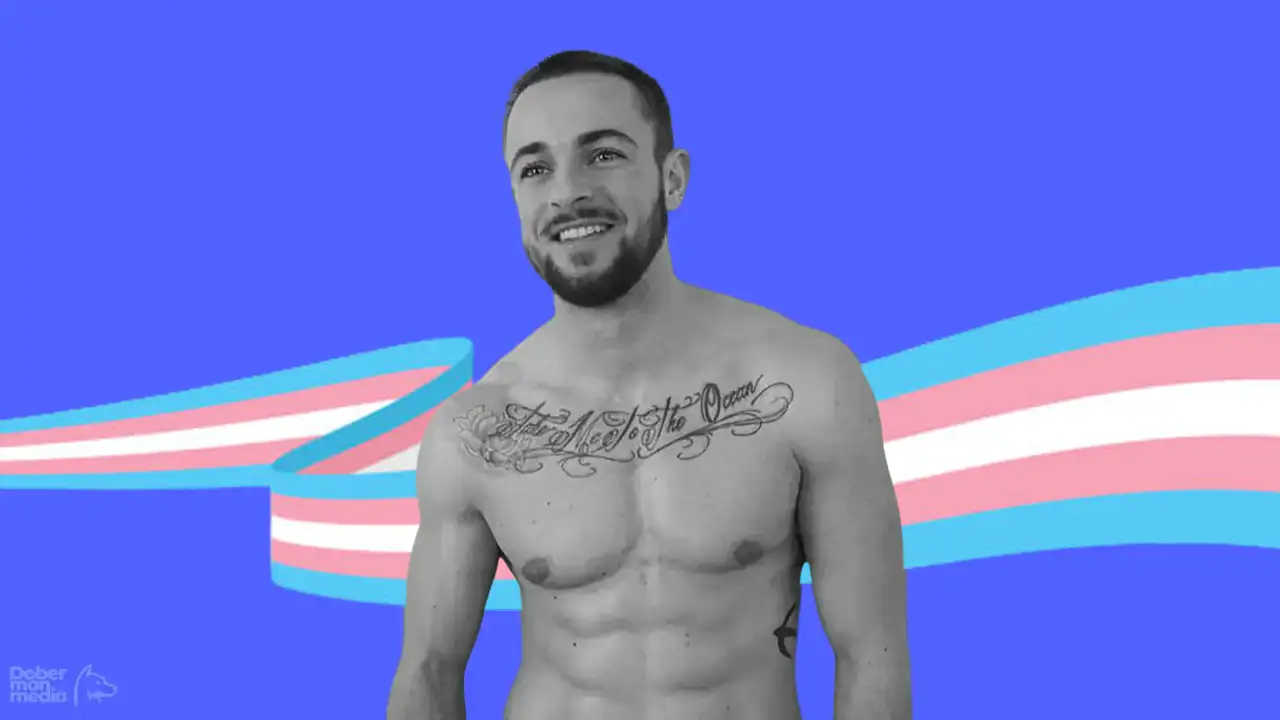
Benjamin (Ben) Meltzer (Benjamin Melzer) is a well-known German fitness model, blogger and activist. He went down in history as the first transgender man in Europe to appear on the cover of a magazine Men’s Health (in April 2016).
Critical mistake: drugs for baldness
Facial and body hair growth is an expected effect of testosterone, but it can also trigger male pattern hair loss on the scalp.
- Danger: Dr. Doan Categorically Warns: Trans Men Do not take finasteride or dutasteride on your own (popular baldness medications for cisgender men). These drugs can completely neutralize the effect of hormonal therapy.
- Alternative petrol station: To restore hair follicles, it is better to use injections of PRP (platelet-rich plasma) or light therapy.
Estrogen: sensitivity and "sunspots"
In trans-feminine (MtF) people, taking estrogen changes the structure of the skin, making it softer, but at the same time extremely vulnerable.
- Photosensitivity: Increased estrogen levels make the skin defenseless against ultraviolet radiation. This often leads to the appearance of melasma (age spots) and irritation at the slightest change in the weather.
- Solution: The mandatory use of sunscreen is becoming not just a cosmetic recommendation, but a medical necessity.
Binds and "underground" plastic: hidden threats
Problems are caused not only by medications, but also by everyday practices aimed at changing the silhouette of the body.
- The eight-hour rule: Wearing breast bandages (binders) for more than 8 hours a day leads to serious consequences: contact dermatitis, hives and fungal infections.
- Risks of aesthetic procedures: In pursuit of feminization or masculinization of the face, people often turn to unlicensed clinics. Consequences include eye asymmetry after an unsuccessful eyelid plastic surgery and Facial distorted features due to incorrectly injected fillers.
- Sexual health: Constant change of brands of lubricants, condoms or the use of poppers also often provokes allergic dermatitis in sensitive areas.
Benjamin Meltzer was born in Germany in 1987 and was given the name Yvonne at birth. Since childhood, I felt out of my body. He began his gender reassignment procedure at the age of 23. He has undergone many surgeries and hormone therapy. He won a readers' contest and was featured on the cover of the German edition Men’s Health. This event was an important milestone for the visibility of trans people in the European media industry.
Skin as a mirror of stress
A specific factor for the LGBT community is dermatological diseases caused by psychological pressure. Constant stress and life difficulties provoke outbreaks of psoriasis, seborrheic dermatitis (usually in the area of the wings of the nose) and neurotic scratching of the skin (excoriation).
What do doctors advise?
- Determine your skin type. This is the basis for choosing basic care: cleansing, moisturizing and protecting.
- Look for safe spaces. Programs like the one launched in Ho Chi Minh City are designed to create an environment where trans people can openly discuss issues without fear of judgment.
- Do not self-medicate. Any intervention – from correcting hair loss to fighting acne – should be coordinated with an endocrinologist and dermatologist so as not to disrupt the hormonal transition.







0 comments
Enter your email — we’ll send you a one-time code. No passwords or accounts.
Code sent to
If the email doesn't appear in your inbox within a few minutes, check your spam, junk, or promotions folder, as some email services may mistakenly place automated messages there