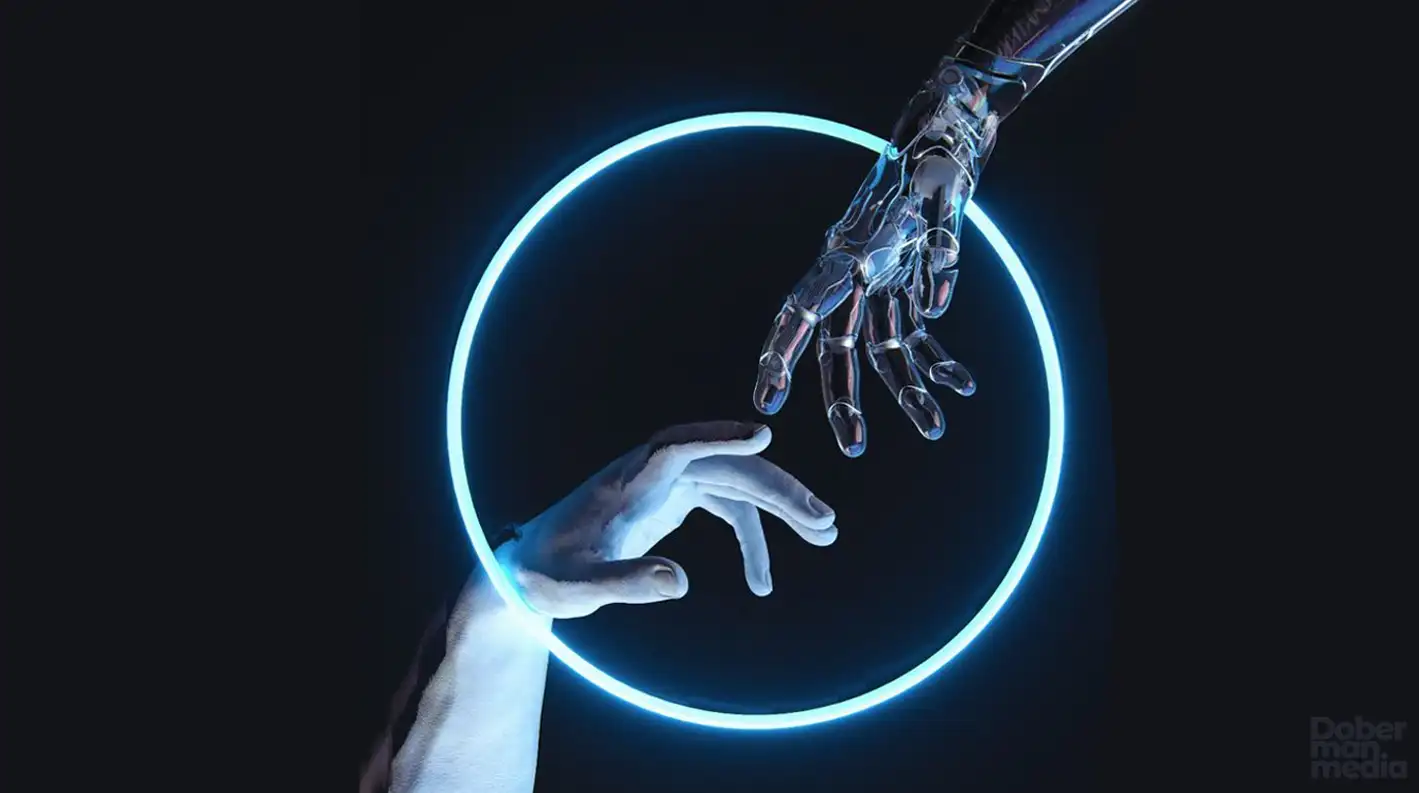

Every conversation about artificial intelligence sooner or later comes to the same thing.
You need to mark. It is necessary to limit. It is necessary to warn the consumer. It is necessary to prohibit making money on content created by a machine.
And someone will definitely say that AI is not able to create anything real, because it does not have a soul, feelings, life experience and a diploma from a music school.
The interesting thing here is not even whether these people are right or not. Another thing is interesting:
Who is really afraid of artificial intelligence – and what exactly is it afraid of losing?
Behind the talk of art, honesty, and cultural value, there is often a conversation about money, status, and the right to decide who is the real author.
An ordinary listener is not obliged to defend the profession of a musician
Let's start with the unpleasant. Most people are completely uninterested in how much time the author spent on creating a song.
A listener does not open a music service with the thought: I hope that at least twelve live musicians, a sound engineer with a specialized education and an author who suffered on the lyrics for three months worked on this composition.
He turns on the song and either listens to it further or switches it up. The consumer almost never pays for the amount of labor invested. He pays for the result, emotion, convenience, recognition or his own pleasure.
The film does not automatically become better because it has been filmed for five years. The picture does not have to be liked more, because the artist painted it by hand. A bad song recorded by a live orchestra doesn't turn into a good song just because it was expensive to produce.
But with AI, a new moral logic suddenly emerges:
If it was too easy for you, you don't deserve the same result.
And this is not really a conversation about quality.
This is a conversation about justice.
It's not the machine that annoys us. We are annoyed by someone else's lightness
Imagine a musician who spent ten years learning to play instruments, studying harmony, working in studios, buying equipment, and gradually building an audience.
And next to him there is a person who opened the music generator in the evening, wrote a few sentences, chose the best option and a week later received hundreds of thousands of listens.
Naturally, a professional musician can feel unfair.
He spent years. Another person spent the evening.
Why can the result be the same?
But the market has never promised to reward people in proportion to their efforts.
You can write a novel for ten years that no one will read. You can come up with a meme in fifteen minutes that will be seen by millions. You can be a brilliant vocalist without listeners and a mediocre performer with a huge audience.
Attention has never been distributed fairly.
AI has simply made this injustice particularly prominent.
Previously, a person could at least reassure himself that a competitor had also invested some work: he signed up in the studio, learned to sing, hired designers, paid for editing.
Now even this consolation may not remain.
And perhaps part of the hatred of AI is not due to the poor quality of content, but to the fact that it breaks the usual link between effort and outcome.
We want to believe that the more difficult it is for a person to create a work, the more he deserves success.
But the public never signed such a contract.
For the first time, creative professions felt what others had felt for a long time
Automation has been replacing humans for many years.
The machines reduced the number of workers. Self-checkouts reduced the need for cashiers. Banking applications replaced part of the work of branch employees. Online stores changed the profession of a salesperson. Document management systems reduced the number of manual operations.
Society used to call it progress.
People who lost their jobs were offered to retrain, adapt and look for new opportunities.
But now automation has come to a place where people are used to considering themselves irreplaceable.
To the artists.
Musicians.
Designers.
Translators.
Copywriters.
Photographers.
Actors.
Programmers.
And it turned out that creative professions react to a threat in about the same way as any other workers.
This does not make them hypocrites. Their fear is very real.
When a person has invested years in a profession, it is difficult to calmly watch how part of his skills turns into a button inside the application.
But then it is worth honestly naming what is happening.
This is not only a struggle for real art.
It is also a struggle for jobs, for the cost of services and for the preservation of professional status.

Why doesn't anyone demand that cheap human creativity be labeled?
Suppose a person wrote a very bad song himself. No AI. With banal lyrics, primitive music and terrible vocals. Is it necessary to mark it with a warning:
Was this content created by a person who does not have sufficient talent and professional skills?
No. The consumer is invited to decide for himself whether he likes it or not.
But if the song is created with the help of AI, some believe that the listener must receive a warning before listening. Why?
Because labeling here is often needed not only for transparency. It becomes a way to reduce the value of the work in advance.
For many, the inscription "created with the help of AI" does not mean neutral information, but a sign:
This is not real. Treat it worse.
It turns out to be a curious situation.
A person can create a mediocre product and compete freely in the market. But a good product created with new technology must first explain the origin and justify itself.
And here the question arises: are we labeling the mode of production or are we creating a new cultural hierarchy?
Consumers do fear AI — but not always for the reason the authors say
It would be wrong to say that AI scares only professionals.
The average consumer also has reasons to be alarmed.
People are afraid of losing the ability to understand what is in front of them.
Is the photo real?
Did this person exist?
Did the politician say these words?
Is the voice real?
Did the event happen or was it invented?
The requirement of transparency is quite justified here.
When synthetic content is presented as documentary evidence, a human statement, or a real event, it is no longer about aesthetics. We are talking about deception.
But a song that no one passes off as a documentary recording of a real person is a different situation.
The painted cover does not have to be a photo of an existing event.
A fictional character does not have to exist.
A synthesizer doesn't have to sound like a real instrument.
Therefore, two different requirements should not be confused:
I want to know if they are trying to deceive me.
and:
I want to know if AI has been used at any stage of production.
The first is related to trust.
The second is often related to a personal attitude to technology.

Who else is afraid of AI? Intermediaries
There is another group that is talked about much less often.
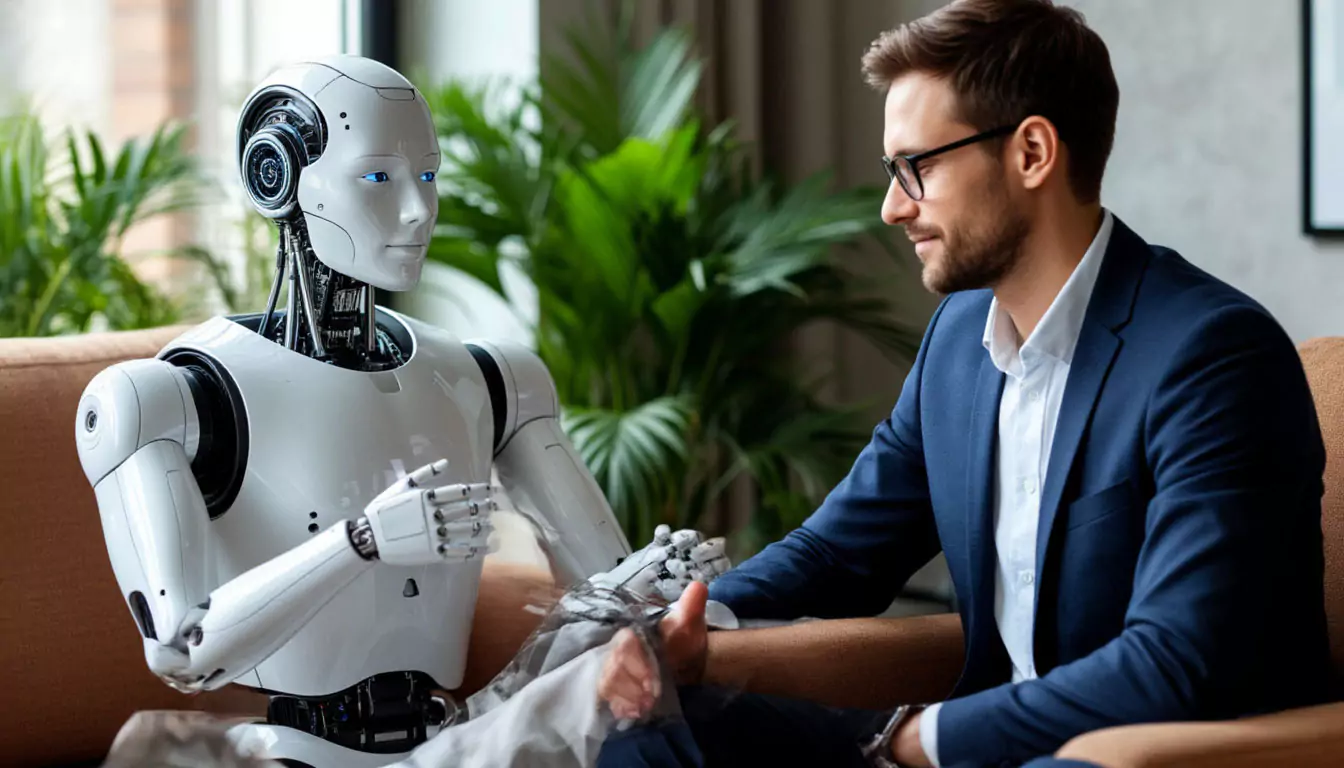
AI doesn't just threaten individual artists. It threatens the entire system of intermediaries that has developed around the production of content.
Previously, to create a song, you might need a lyricist, a composer, an arranger, a vocalist, a studio, a sound engineer, a cover designer, and a promotion specialist.
Now, one person is theoretically able to do a significant part of this work on his own.
Of course, the result will not necessarily be good. But the entry threshold itself is sharply reduced.
A person without a large budget can test an idea, record a demo, create a visual concept, translate text, prepare promotional materials, and release a product.
For a beginner, this is liberation.
It is a threat to the existing industry.
Because if a person is able to do more on their own, they are less dependent on those who used to control access to production.
And this is where the debate about AI becomes not just a debate about culture.
It becomes a dispute about who has the right to create a cultural product.
Only a professional?
Only a person with an education?
Only someone who is able to pay the studio?
Or anyone who has an idea and the tools to implement it?
Democratization almost always looks like devaluation
When manufacturing becomes more affordable, professionals often perceive this as a drop in standards.
This happened not only with AI.
Cheap cameras made it possible to take pictures of millions of people, but increased the number of bad photos.
Social media has allowed everyone to publish texts, but it hasn't turned every user into a journalist.
Home studios made it possible to record music without a major label, but they didn't make all that music good.
Availability always produces more garbage.
But it also allows people to appear who previously would not have gained access to the industry at all.
Therefore, the phrase "now everyone can do it" can sound like both an accusation and an achievement.
It all depends on whether the person used to be inside the closed system or behind its doors.
Should AI content be monetized in the same way?
This is where the most uncomfortable question begins.
Let's say two songs received the same number of streams.
The first one was recorded by live musicians.
The second one was almost completely generated by a neural network.
Should authors receive the same money?
Intuitively, many will say: no.
The first song required more human labor.
But what exactly does a music platform pay for?
For the number of musicians?
For the cost of production?
For hours of operation?
Or for the attention of the listener?
If the system pays money for listening, then formally both works brought the platform the same user action.
The listener chose a composition. He listened to it. Perhaps you watched an ad or paid for a subscription.
From this point of view, it is strange to reduce the payment only because of the method of production.
The platform does not pay the photographer more for using a film camera instead of a digital one. She doesn't pay the musician more for live drums instead of an electronic setup. It does not find out how much time the author spent on the text.
But there is another side.
If generation allows one person to produce thousands of songs, the sites can be filled with a huge amount of automatic content created solely for the sake of capturing algorithms and payouts.
It's no longer a question of whether a single AI song deserves money.
It's a question of industrial production of content without a real creative solution.
But it's not the AI itself that needs to be fought here.
It is necessary to fight spam, manipulation of algorithms, artificial eavesdropping, copying of other people's voices and the use of materials without the consent of the copyright holders.
Bad behavior does not become good just because a person has committed it.
And an honest author's project does not become a fraud just because a neural network was used in it.

The same monetization does not mean the same cultural value
Money and recognition are not the same thing.
A work can be commercially sold, but not considered significant art.
It can be created in the most complex way and no one likes it.
It may be technically primitive, but it can get into the public mood and become important.
Monetization is not a state prize for the volume of human labor.
This is an economic exchange.
If a person is willing to pay for a product or give attention to it, the product gains commercial value.
This does not mean that everything created by AI is automatically worthy of respect.
But it also doesn't follow that AI content should make less money just because someone doesn't like the way it is produced.
Otherwise, we will have to create a table of moral coefficients.
Live orchestra – full payment.
Electronic tools are a little smaller.
Auto-tune is even less.
Ready-made samples are a penalty.
AI mastering - additional reduction.
Full generation is almost nothing.
But who will determine these coefficients?
And why should the mode of production be more important than whether the public has chosen the result?
Where should the border be then?
Not between the "human" and the "artificial".
This border practically does not work anymore.
Modern content can include human idea, machine generation, manual editing, automatic processing, live vocals, synthetic instruments, and subsequent professional refinement.
Trying to divide everything into two categories—"real" and "AI"—is too primitive.
A more reasonable line is between fair and deceptive use.
A fictitious voice is one thing.
Copied without permission, the voice of a particular artist is different.
An illustration has been created — one thing.
A fabricated image of a real event is another.
The author released a song that he worked on with AI — one thing.
The automatic system uploaded ten thousand songs for the sake of manipulating payouts - another.
It is not the technology that determines the violation.
It is determined by intention, consent, copyright and method of distribution.
So who is still afraid of AI?
Creatives are afraid of losing their jobs and the value of their skills.
Professional communities are afraid of losing the right to determine who is considered the real author.
Intermediaries are afraid that production will become available without them.
Consumers are afraid of losing trust in images, voices, and information.
Beginner authors, on the contrary, are afraid that they will be banned from using the only available tool.
And the big platforms are probably the least afraid of AI itself. They are only afraid that the flow of cheap content will become impossible to control, and public irritation will have to be somehow regulated.
Therefore, the dispute about artificial intelligence is not a dispute between man and machine.
This is a conflict between different groups of people.
Some got a new way to create.
Others felt that their former advantages were fading.
Still others demand guarantees that they will not be deceived.
And almost every side is trying to present its own interest as a struggle for culture, honesty and the future of mankind.
And yet: is it necessary to warn about AI?
Transparency is needed where the lack of information can mislead a person.
But transparency should not turn into a mandatory stigma, the task of which is to inform the public in advance that a work is considered less valuable.
The consumer has the right to know that he is looking at a synthetic image of a real event or an imitation of the voice of an existing person.
But does he have the right to demand a full production report on each song, poster, photo and lyrics?
Then this principle should be applied consistently.
You need to specify the use of auto-tune, stock materials, ready-made music loops, literary editors, ghostwriters, retouching, digital doubles, and dozens of other technologies.
Why should AI be the only tool that an author must publicly profess to use?
Instead of a conclusion
Perhaps AI will indeed create a huge amount of meaningless, monotonous and cheap content.
But even without it, people did a great job of producing meaningless, monotonous and cheap content.
AI did not come up with bad music, banal texts, soulless advertising and copying other people's ideas.
He just made their production faster.
At the same time, it made it faster and more affordable to produce something new for those who previously could not afford a studio, a team or professional equipment.
Therefore, the main question is not whether AI is capable of creating art.
And it's not even about whether every result of his work should be labeled.
The main question sounds different:
Are we ready to evaluate a work by what it gives to a person, or do we still need to know how difficult it was for the author to create it?
And one more:
When we demand that AI be restricted, are we really protecting the consumer—or are we trying to protect a familiar system in which the right to create and earn belonged to a limited number of people?
Perhaps that's why artificial intelligence is causing such rage.
He doesn't just create pictures, texts, and music.
He questions the old system of distributing status, money, and the right to be called an author.





0 comments
Enter your email — we’ll send you a one-time code. No passwords or accounts.
Code sent to
If the email doesn't appear in your inbox within a few minutes, check your spam, junk, or promotions folder, as some email services may mistakenly place automated messages there