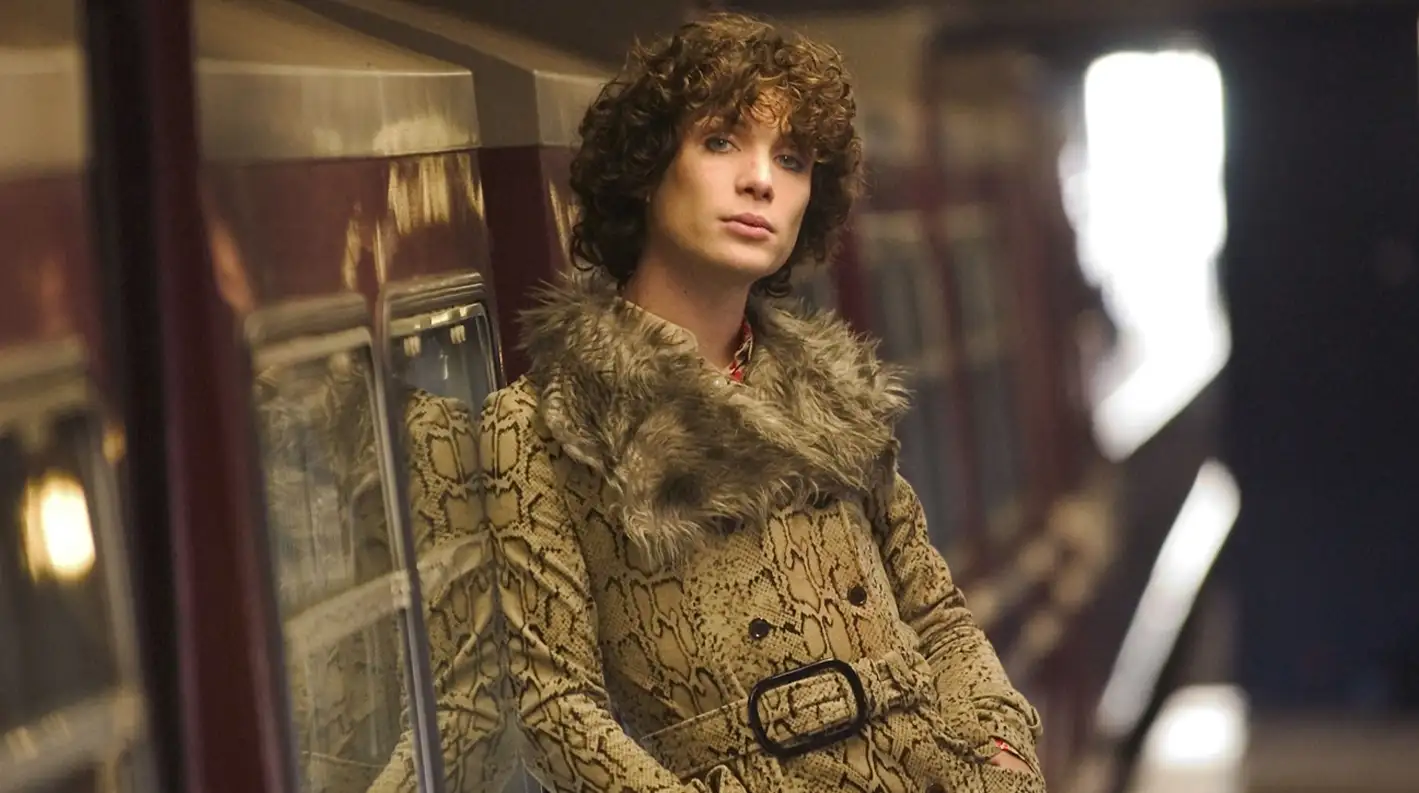

There are films about love. There are films about war. And there are films that tell about what it's like to spend your life looking for a place where they won't try to change you. Breakfast on Pluto (2005) directed by Neil Jordan became such a film.
At first glance, it seems that this is an eccentric story with bright costumes, music of the 1970s and a kind of humor. But behind this colorful shell lies one of the most poignant stories about queer identity, loneliness, and the power of human dignity.
The main character of the film is Kitten Braden, brilliantly played by Cillian Murphy. Born in a small Irish town, she has felt different from others since childhood. The world demands that she live up to other people's expectations, but Kitten never agrees to give up her own identity. Even when it makes her life much harder.
It is important to understand the historical context. The action takes place in Ireland and Great Britain in the 1970s, a time when society was extremely conservative, and people who violated the usual gender norms faced constant humiliation, violence and social isolation. For many LGBTQ+ people, existence itself was a daily act of resistance.
However, "Breakfast at Pluto" almost does not turn into a film about suffering. On the contrary, Kitten responds to the cruelty of the world with surprising gentleness. She does not become cynical and does not begin to hate people. Instead, she creates her own reality, filled with fantasy, music, fashion, and hope.
This feature makes the film unique. In many stories, queer characters are forced to constantly fight, prove their right to exist, or die for the sake of dramatic effect. Kitten, on the other hand, resists in a different way. Her main weapon is the ability to remain herself no matter what.
As the plot develops, the viewer understands that the heroine's external journey is only a reflection of her inner search. She goes to find her birth mother, but in reality, she is looking for much more: a sense of belonging, security, and a person who can tell her the simple words: "You've always been worthy of love."
What makes the film especially strong is the lack of dividing the world into absolutely good and absolutely bad people. There is indifference, fear, prejudice, accidental kindness, and human weakness. That is why the story feels so alive. Life is rarely black and white.
Visually, the film also deserves special attention. Bright dresses, makeup, glam rock music and a fairytale atmosphere create the feeling that Kitten really lives on a slightly different planet - on his own Pluto. This is not an attempt to escape from reality, but a way to maintain inner freedom when the outside world turns out to be too cruel.
Cillian Murphy's acting is still considered one of the most unusual in his career. He does not turn the heroine into a caricature and does not play her as an object of pity. On the screen, we see a man with great inner dignity, fragility, humor and incredible vitality.
For the modern queer community, Breakfast at Pluto remains an important film also because it reminds us that the path to acceptance begins not only with changes in laws, but also with society's readiness to see each person as an individual, not a stereotype.
Today, when conversations about gender identity have become much more open, Kitten's story is perceived as especially relevant. Many young LGBTQ+ people still go through a lack of understanding of family, a search for a safe space, and a desire to be accepted without conditions. The film shows that these feelings are not new – they existed long before the advent of social media and modern discussions about human rights.
But, perhaps, the main idea of the picture is much broader than the queer theme. It is about the fact that the dignity of a person cannot be taken away until he renounces himself. Kitten endures betrayal, loneliness, ridicule, and danger, but never lets the world define who she should be.
Breakfast at Pluto is not just a queer movie. This is a story about the freedom to be yourself. About the ability to maintain tenderness where others choose cruelty. And about the fact that sometimes the bravest act is not to fight the world, but to refuse to allow the world to change your soul.







0 comments
Enter your email — we’ll send you a one-time code. No passwords or accounts.
Code sent to
If the email doesn't appear in your inbox within a few minutes, check your spam, junk, or promotions folder, as some email services may mistakenly place automated messages there