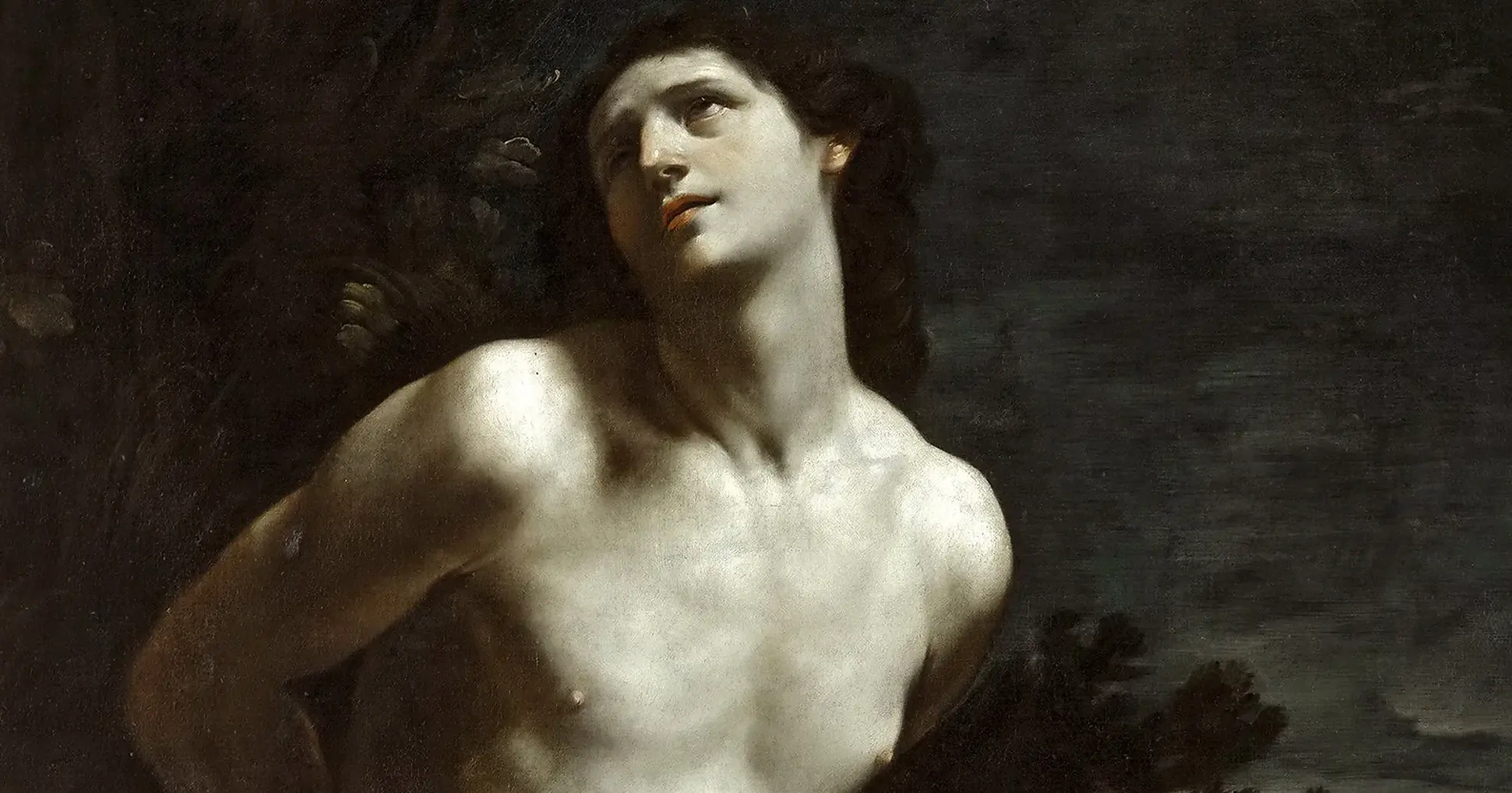

Usually, when we talk about "gay icons," Madonna, Cher, or Judy Garland come to mind. However, long before the advent of pop culture, the queer community had another symbol: an arrow-pierced Roman legionnaire. We tell you how a Christian saint of the third century turned into an object of desire, a secret cipher for intellectuals of the XIX century and a symbol of the fight against the AIDS epidemic.
Who is Saint Sebastian?
Sebastian was a Roman soldier who secretly practiced Christianity during the reign of Emperor Diocletian. When his faith was discovered, the emperor ordered him to be tied to a tree and shot with bows. According to legend, he survived, was nursed by St. Irene, but later appeared before the emperor again, accusing him of paganism, after which he was beaten to death.
Why did it become associated with queer culture?
The transformation of the image began in the Renaissance (XIV-XVII centuries). Whereas martyrs had previously been depicted as emaciated old men, Renaissance artists such as Guido Reni, El Greco, and Botticelli began to paint Sebastian as a handsome, almost naked young man with an athletic build.
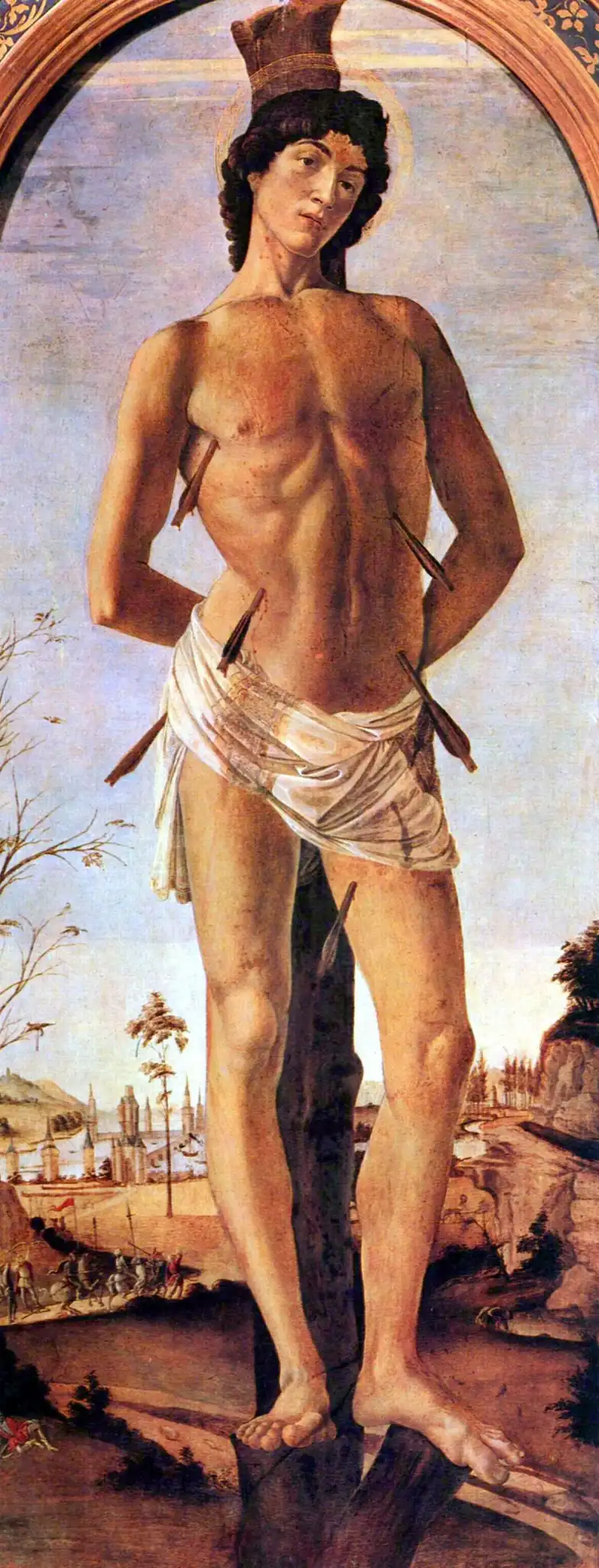
Art critics identify several reasons for such popularity:
Arrows piercing the body are often interpreted as a phallic symbol or metaphor for "penetration."
In many paintings, the face of the saint expresses not only pain, but also a kind of sexual bliss. Art historians even draw parallels between these images and modern BDSM practices.
Like Michelangelo's David, Sebastian's depictions have become a legitimate way for artists and viewers to express male desire in the face of strict censorship.
How did it become a "secret cipher"?
By the end of the 19th century, the cult of St. Sebastian had reached its peak among intellectuals. For educated men of the time, invoking a saint was a way of asserting their identity, understandable only to "their own."
Oscar Wilde, after being released from prison and going into exile, adopted the pseudonym Sebastian Melmoth as a tribute to the saint. Writer Marc-André Rafalovich, who was trying to reconcile his faith and orientation, chose the name Brother Sebastian when he joined the Catholic order. Japanese writer Yukio Mishima confessed that the painting of St. Sebastian caused his first sexual awakening; Later, he even posed for the famous series of photographs, reproducing the pose of a martyr.
Sebastian in the XX and XXI centuries: from cinema to Britney Spears
In the modern era, the image of the saint has finally come out of the shadows:
In 1976, director and activist Derek Jarman made the film Sebastian, which became revolutionary due to its open depiction of male nudity and homosexual desire.
In the 1980s, the saint became the patron saint of people living with HIV. As he was seen as a protector against the plague in the Middle Ages (due to his ability to "heal wounds"), artists like Keith Haring used his image as a symbol of resilience in the face of a new "plague."
In 2022, artist Gray Wilebinsky created an installation dedicated to Britney Spears, where he drew a parallel between Sebastian's arrows and the aggressive press attention that haunted the singer.
Today, St. Sebastian remains a "bottomless source of creative inspiration." His image has evolved from a religious martyr to a complex symbol in which beauty, isolation, suffering and pride are intertwined.








0 comments
Enter your email — we’ll send you a one-time code. No passwords or accounts.
Code sent to
If the email doesn't appear in your inbox within a few minutes, check your spam, junk, or promotions folder, as some email services may mistakenly place automated messages there