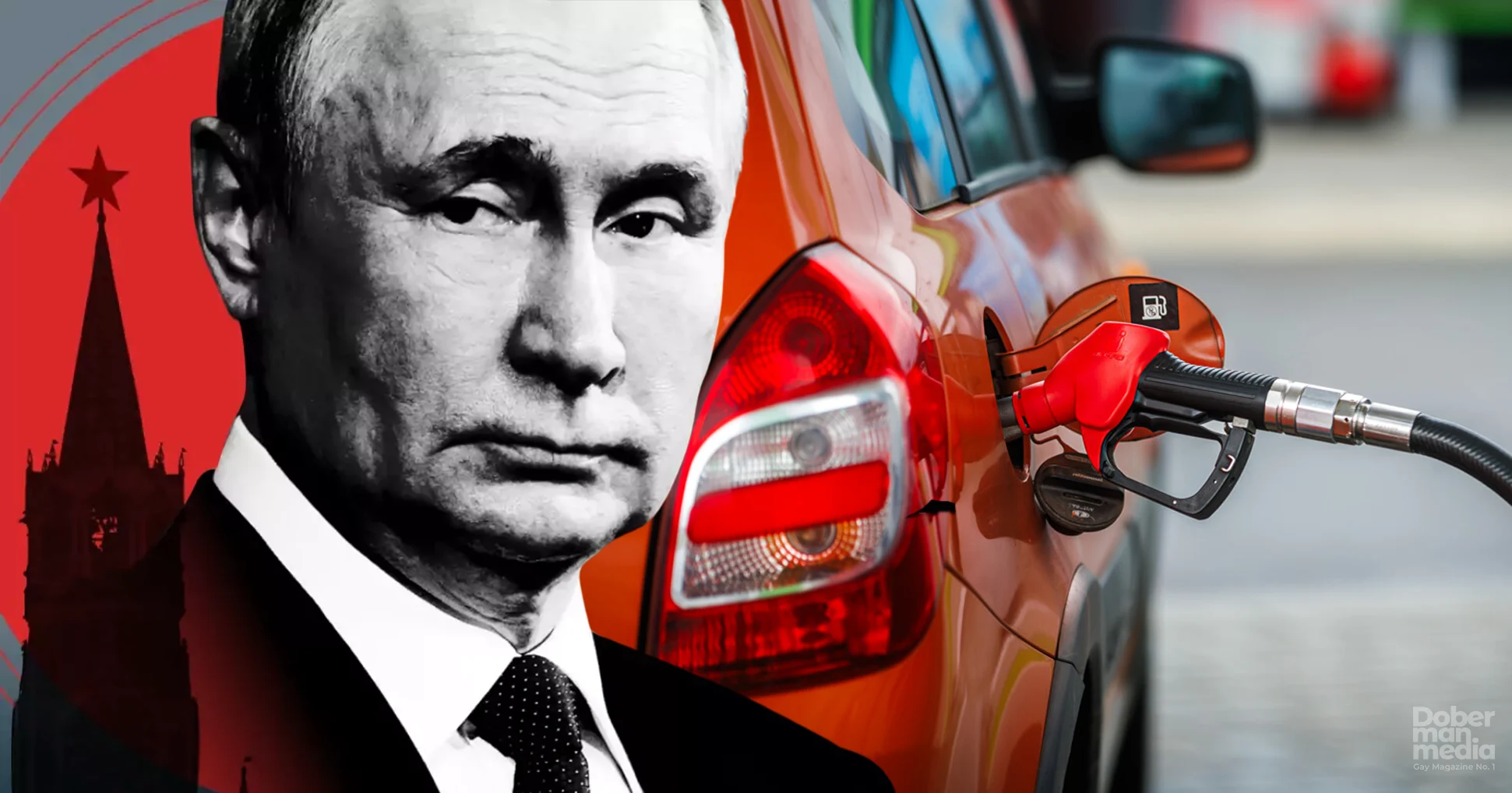

On the morning of June 21, Sergey Aksyonov announced that the sale of fuel had been stopped at all gas stations in Crimea - in cash, by card, by coupons. Gasoline is now only for public services. For ordinary drivers, nothing. This is the second fuel crisis on the peninsula in nine months: last fall, they also stood in queues, also introduced coupons, also asked not to fill up canisters.
The authorities explain what is happening by Ukrainian drone strikes on fuel trucks and logistics routes. This is true, but incomplete. Drones hit the infrastructure, which has been degraded for years without them. By the time the EU banned the supply of equipment and catalysts for Russian refineries in 2022, the industry's dependence on imported reagents for certain items exceeded 90%. Western companies - Shell, BP, ExxonMobil - left Russia along with technologies, service contracts and engineers. Russian oil refining by 2026, according to the Argus agency, has rolled back to the level of 2010.
These are not the consequences of the war. This is its condition - created long before February 2022.
In 2013, Putin signed a law banning "gay propaganda." Russian officials explained this by the protection of children and traditional values. In fact, the law was part of a larger U-turn: Russia officially declared itself a civilizational alternative to the liberal West. Gays, foreign agents, independent media and Western capital were placed on the same list – all this was "alien", all this was subject to ousting.
It was a political choice. He turned out to have a specific price - and they are now paying it at Crimean gas stations.
Shell, BP and ExxonMobil left Russia not because they don't like money. They left because a state that imprisons people behind a rainbow flag and declares international human rights organizations "undesirable" ceased to be a predictable partner even before the war. The war has only recorded what Putin has been building for twenty years: a country closed to anything he saw as a threat. Together with gays and journalists, engineers, technologies and investments were pushed out of the perimeter.
EU sanctions have banned the supply of technology for refineries, oil refining equipment and catalysts to Russia. The program for the modernization of Russian factories had to be postponed until at least 2028 — Because it was originally built on imported equipment. The dependence of Russian oil refining on imported chemical reagents at the time of the imposition of sanctions was: for antifoaming agents — 80%, corrosion inhibitors — more than 90%, for converters — over 95%.
In mid-2025, the head of the Ministry of Energy, Tsivilev, admitted publicly: it became difficult to repair refineries due to sanctions. This is a confession from an official who has been talking about "import substitution" and technological sovereignty for years. Rosneft, the country's largest oil company, has declining production and revenues, a technological lag that prevents the development of existing fields, and the most promising project, Vostok Oil, is not moving forward.
Crimea in this story is an ideal model in miniature. The peninsula was annexed in 2014 and immediately cut off from normal market logistics. Aksyonov himself explained the fuel problems by the "lack of vertically integrated oil companies" in the region. In other words: there is no market. There is no infrastructure. There is no competition. There is the state, coupons and queues.
If the crisis continues, local economists estimate that food prices could rise by 30 to 100 percent. Taxi fares have already doubled. The Ministry of Energy has launched an online navigator with data on the availability of gasoline - as in the city, where products are on cards.
A state that persecutes gays, shuts down foreign companies and imprisons journalists has found that it can't refine oil without Western catalysts. This is not an irony of history. This is its mechanics. When you build a wall between yourself and "alien values," it's not just human rights that remain on the other side of the wall, but also technology, investment, and engineers.
According to Novaya Gazeta-Europe, almost a third of the country's refinery capacity is now operating with restrictions. The shortage is not limited to Crimea - residents of the Kursk and Belgorod regions complain about the lack of fuel, in Moscow, the Moscow region and St. Petersburg, restrictions on sales are introduced.
Russia is the third largest country in the world in terms of oil refining capacity. It's oil-rich, chasing gays, and queuing up for gas. That's how traditional values work.
Editor's note: Doberman.media adheres to the position of international law and uses the definition of the status of Crimea in accordance with the resolutions of the UN General Assembly. Crimea is the territory of Ukraine, temporarily occupied by the Russian Federation. The mention of Russian authorities and administrative structures in the material does not mean recognition of Russian sovereignty over the peninsula.





0 comments
Enter your email — we’ll send you a one-time code. No passwords or accounts.
Code sent to
If the email doesn't appear in your inbox within a few minutes, check your spam, junk, or promotions folder, as some email services may mistakenly place automated messages there