
Sometimes the most accurate articles aren’t written by our editorial staff, but by you. This article was submitted by one of our readers. We’re publishing it with almost no edits—we just ran it through AI to catch a few minor errors. The author didn’t want to give their name and asked us not to use a pseudonym—so that this piece could speak for anyone who’s found themselves in this situation. If you also have a story you'd like to share, please send it viathis form — anonymously or not.
I'm thirty-nine years old, and I still turn off the lights when I'm having sex.
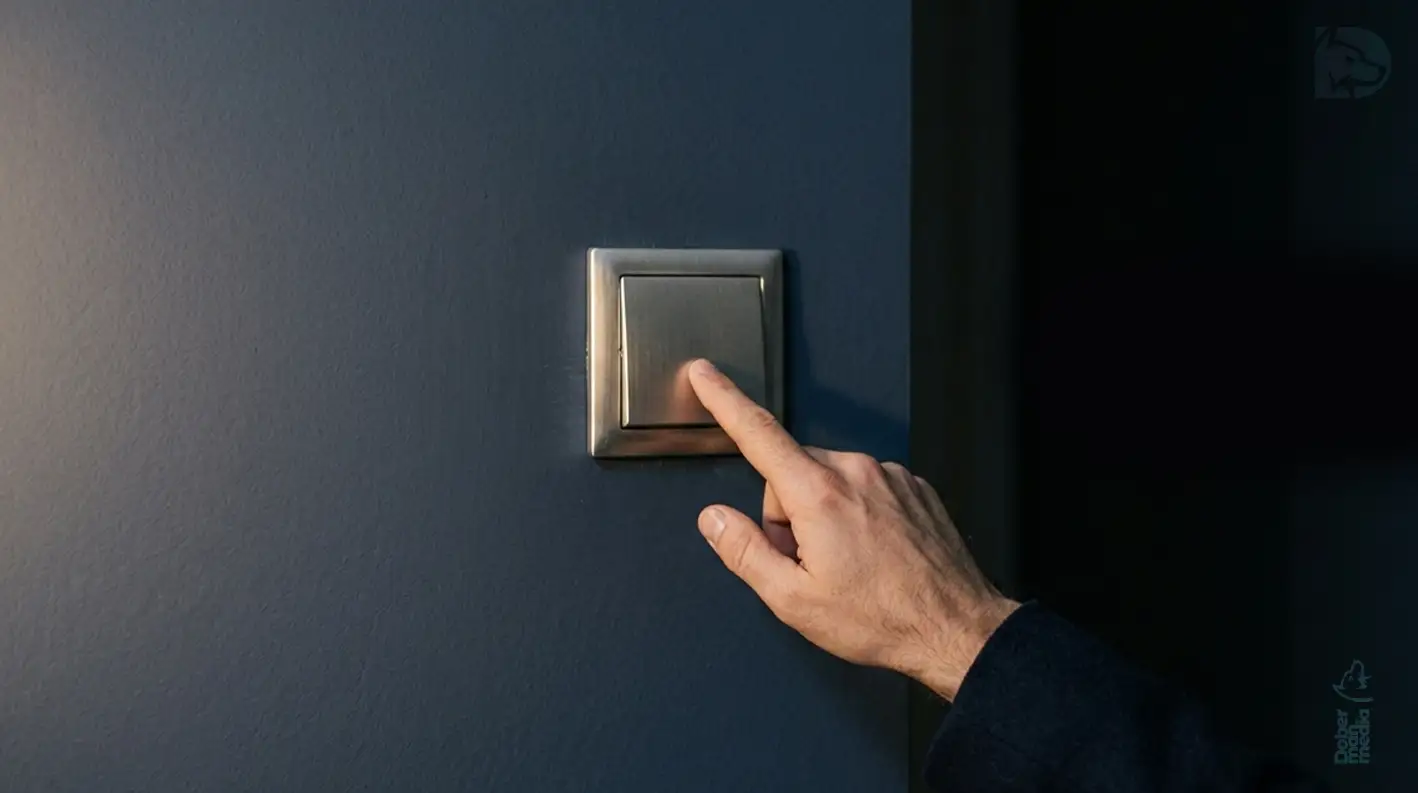
Not always. Not with everyone. But when someone new comes along—someone whose body I haven’t yet memorized, someone who hasn’t yet seen me standing at full height in daylight—I reach for the light switch almost automatically. The gesture is so habitual that for a long time I didn’t even realize I was doing it at all. Until one man stopped my hand and asked, “Why?”
I couldn't come up with an answer. I said something about the atmosphere. He didn't believe me. Neither did I.
Body shame in sex isn’t about appearance. Or rather, it’s not just about that. It’s about the disconnect between how you want to appear desirable and how you feel on the inside. And based on my personal observations, this gap is particularly wide among gay men. That’s because we grew up in a culture where our bodies were either invisible or the subject of ridicule. And then we entered a community where the body became the main currency.
Gay culture has a way of both liberating and caging people. On the one hand, there are Pride parades, acceptance, and the idea that “every body is beautiful.” On the other—Grindr with filters by body type, profiles with requirements like “athletic only,” and comments under photos that make you read them and wonder: I wonder if they think the same thing about me?
I thought so. I still think so.
The first time I truly realized that I didn't like my body in bed, I was twenty-two. I was lying next to a man I liked, and instead of feeling good, I was thinking about my stomach. About how it looked from the side. About whether I was sweating too much. About where to put my hands so my shoulders would look broader.

The sex wasn't bad. But I was barely there. I watched myself from the sidelines—like a stern director dissatisfied with an actor.
It’s called “spectating”—a term from sexology that describes a state in which a person mentally steps outside their own body during sex and begins to observe themselves from the outside. Researcher William Masters coined the term back in the 1960s, but I didn’t learn the word until I was about thirty. Before that, I thought I was just a little anxious. Or not relaxed enough. Or not handsome enough.
It turns out I'm not alone. It turns out this is a very common thing, especially among men who grew up constantly feeling that their bodies weren't quite what they should be.
We gay men experience a particular kind of body shame that is rarely called by its name.
It’s not just a matter of “I don’t like my body.” It’s something more complex, related to how we’ve come to perceive our bodies in the first place. Most of us grew up in families where no one talked about homosexuality as something normal. We didn’t see ourselves in movies, in books, or in adults’ conversations—or if we did, it was in the form of caricatures, tragedies, or warnings. From the very beginning, our bodies were associated with something forbidden, shameful, and secret.
And then, when we finally went out into the world and found our own kind—it turned out that there was a hierarchy there, too. Bodies are divided into “right” and “wrong.” There are body types with names like “bear,” “tink,” “otter,” and “muscle-merry.” There are profiles with notes like “no photo, no reply” and “only slim.” There are group chats where men discuss other people’s photos as if they were exhibits rather than human beings.
I used to do that myself. I'm embarrassed to admit it, but it's true. Getting older adds another layer to it.
I’m thirty-nine. By the standards of many gay apps, I’m a “retiree.” I remember the moment when I first listed my real age on my profile and received noticeably fewer messages than before. It was upsetting not because I wanted to have sex with strangers (though that was part of it, too). It was upsetting because it confirmed what I’d already begun to suspect: my body is losing its value.
That sounds harsh. But that's exactly how it felt.
The aging body is a unique topic in gay culture. Heterosexual men grow older under the protection of a whole set of narratives: “mature man,” “gray hair at the temples,” “experience makes you attractive.” We have these narratives too—but they work selectively. For some types of men—yes. For others—the expiration date passes before you even have time to figure anything out.
I started noticing wrinkles around my eyes and thinking about them during sex. I started comparing myself to younger people. I started avoiding certain positions—not because they were physically uncomfortable, but because, it seemed to me, they made it especially obvious that I wasn’t twenty-five anymore.
All of this is in my head during sex, instead of just being where I am.
I’ve talked about this with several men—friends, ex-partners, and random people I’ve struck up conversations with in bars, who, for some reason, started speaking honestly after their second drink. And almost every time, the same thing came up: everyone has something. Stomach. Back hair. Scar. Penis—too small, too big, the wrong shape. Chest. Skin. Height.
No one goes to bed with a clear head. Everyone carries some kind of burden.
But we don’t talk about it. Not before, not during, not after. Because admitting that you don’t love your body means showing weakness. And gay men, raised in a culture where they’ve always had to constantly prove that they’re “normal,” have learned to hide anything that could be used against them.
Silence is armor. But it’s uncomfortable to wear, and it gets in the way the most in bed.
I don't know exactly when I started to change. There wasn't a single moment, a single conversation, or a single book that set everything right. It was more like an accumulation of small shifts.

One partner, with whom I’d been together for almost two years, once told me that he liked touching my stomach. Not as a compliment, not as an attempt to comfort me—he just said it because it was true. I didn’t believe him at first. But he kept saying it in different ways long enough for something inside me to start shifting.
The therapy helped—not in the sense that I suddenly came to love my body, but in that I began to understand where that voice comes from, the one that comments on me in bed. Whose voice it really is. And to what extent it has anything to do with me at all.
I stopped turning off the lights. Not right away. At first, I just left them dimmed. Then I left them on as usual. One day—that morning light, the most merciless kind, when the sun shines through the curtains and there’s nowhere to hide—nothing terrible happened.
I’m not going to end this piece with a call to “love yourself.” First, because that’s easier said than done. Second, because I’m still working on it myself.
But here's what I'll say. A body you don't love in bed isn't a death sentence. This is a story. A story about how you were taught to see yourself. And stories can be rewritten—slowly, awkwardly, with setbacks and relapses, but they can be rewritten nonetheless.
Turning off the lights isn't about the atmosphere. I know that. And you probably know it about yourself, too—exactly what you're hiding and from whom.
Sometimes it’s enough just to say it out loud. It doesn’t have to be to your partner. You can just say it to yourself, in the dark, before reaching for the light switch. And then, maybe, you won’t reach for it.








0 comments
Enter your email — we’ll send you a one-time code. No passwords or accounts.
Code sent to
If the email doesn't appear in your inbox within a few minutes, check your spam, junk, or promotions folder, as some email services may mistakenly place automated messages there