

2005. In the auditorium at the Venice Film Festival, there is a silence like the calm before the storm. On the screen are two cowboys who were supposed to have it all: jobs, women, framed family photos. But instead, they find each other. Not in a club, not against the backdrop of New York City lights, but in the mountains, where even the echo is too shy to shout. Ang Lee directs a film that looks like a classic American saga about men in hats. Only it’s not a saga—it’s a crack. And all of Hollywood falls into that crack.
"The Humpbacked Mountain" It wins an award in Venice, breaks the box office, and is in the running for an Oscar—but doesn’t win it. At that time, the Academy of Motion Picture Arts and Sciences consisted of 6,000 older white men, many of whom hadn’t even seen the film but already knew that “this kind of movie isn’t for us.” *Crash* won—a film that today is remembered, at best, as a joke.
Shepherds of Hearts in the World of Livestock
Ennis Del Mar and Jack Twist, played by Heath Ledger and Jake Gyllenhaal, are not residents of the bohemian neighborhoods of New York or San Francisco. They are cowboys whose hands are calloused from ropes and reins, whose lives flowed to the rhythm of cattle drives along sun-scorched trails in the 1960s. Their love was born not in the bright lights of the metropolis, but in the twilight of a tent, amid the rustling of the wind and the crackling of a campfire. It was a love that did not shout about itself, but smoldered like embers beneath the ashes of social taboos.
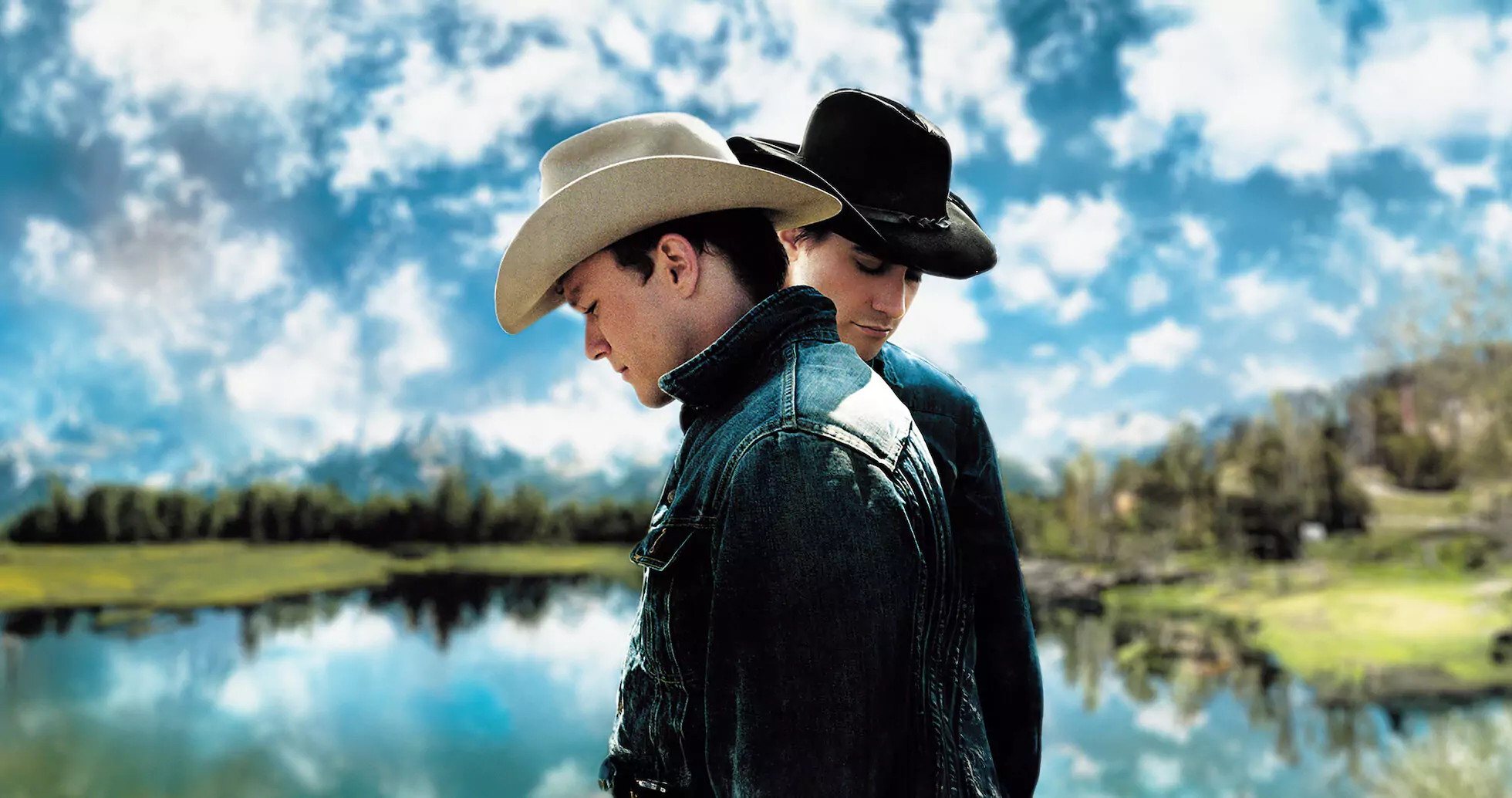
The film, made on a modest budget of $14 million, was a huge success. It grossed 84 million in the United States and another 95 million abroad, overcoming censorship barriers in China and Arab countries. The Venice Film Festival awarded it the “Golden Lion,” and the Oscars awarded it three statuettes, although the top prize for Best Picture eluded it, going instead to *Crash*. But in the hearts of viewers, *The Mountain* remains unrivaled.
The Path to the Screen: From Doubt to Revelation
The story began with a short story by Annie Proulx in *The New Yorker* in 1997. The screenplay by Diana Ossana and Larry McMurtry spent two years making the rounds in Hollywood, drawing ridicule rather than interest. Cowboys in love with each other? It sounded like a challenge, almost a provocation. Gus Van Sant, a master of queer cinema, wanted to take on the project, but the stars—Brad Pitt, Matt Damon, and Leonardo DiCaprio—turned down the roles one after another. Even Pedro Almodóvar, whose name shone brightly in the world of queer storytelling, backed out. Only Ang Lee, whose soul still held echoes of the success of *Crouching Tiger, Hidden Dragon*, saw something more in this script—not just a story, but a cry for the freedom to be oneself.
In 2004, upon returning to the project, Lee cast Ledger and Gyllenhaal. Their youth—25 and 23 years old—was paired with a depth that left audiences breathless. Hitt, whose Ennis was the embodiment of restrained strength, spoke with his eyes and gestures, conveying the storm raging within through sparse words. Jake, who played Jack, radiated vulnerability and a dream of the impossible. Their chemistry, according to Lee, was “alchemy” that turned the story into gold.
Hollywood flinched, but the world remained unmoved
“Brokeback Mountain” changed the game. Before it, queer characters in mainstream cinema were a rarity, often reduced to caricatures—like the affected male friends of female protagonists in romantic comedies. Ang Lee portrayed the love between two men not as something exotic, but as a universal drama—about heart-wrenching passion and a world that stifles it. The film served as a bridge that brought queer stories into the spotlight, inspiring *Moonlight* and other films where love knows no gender boundaries.
But the triumph on screen did not translate into a triumph in reality. In 2005, during the Bush Jr. era, same-sex marriage was legal only in Massachusetts. Conservative voices drowned out calls for equality. Even in Hollywood, where *Brokeback Mountain* received standing ovations, many Academy members refused to watch it. Clint Eastwood, Tony Curtis, and other film veterans openly expressed skepticism. The Oscar for Best Picture went to *Crash*—a choice that today seems like a historical mistake.
An Echo That Never Fades
"Brokeback Mountain" remains timeless. Its scenes—mountain landscapes, gazes full of longing, and silence that speaks louder than words—have lost none of their power. It showed that love between men can be just as deep, painful, and beautiful as any other. Heath Ledger, whose life was cut short far too soon, became a symbol of this struggle, refusing to tolerate homophobic jokes and calling those who rejected the film “immature.”
But 20 years later, the world still hasn’t lived up to the hopes that were kindled in 2005. In the U.S., despite the legalization of same-sex marriage, conservative laws are gaining ground once again. In Russia, censorship is erasing traces of queer stories; even on “Kinopoisk,” the description of *The Mountain* has been stripped of all hints of the characters’ love. All over the world, people are hiding their true selves, fearing condemnation, losing their jobs, or losing their freedom.
“Brokeback Mountain” is more than just a movie. It’s a mirror that reflects our fears, hopes, and injustices. It teaches us that love is always a struggle, but it’s also a reward. And while its characters continue to look at each other across the screen, we are still waiting for a future where their story will simply be a love story, rather than a protest.








0 comments
Enter your email — we’ll send you a one-time code. No passwords or accounts.
Code sent to
If the email doesn't appear in your inbox within a few minutes, check your spam, junk, or promotions folder, as some email services may mistakenly place automated messages there