

In Russia and Belarus, being LGBTQ+ isn’t just hard—it’s dangerous. From bans on flags to prison sentences for kissing on stage—laws and practices make the very existence of queer people legally impossible. What used to be discrimination has now become state policy: labeled as “extremism,” accompanied by threats of criminal prosecution, and a complete purge of public spaces. You can’t speak out, you can’t stay silent, and you can’t live the way you want to. We’ve compiled a list of 10 legal mechanisms that effectively erase the LGBTQ+ community from life in these countries. With examples. And with consequences.
1. Law Banning “LGBT Propaganda” (Russia, 2013, 2022)
It began as a ban on any information about “non-traditional” relationships for minors (Article 6.21 of the Code of Administrative Offenses of the Russian Federation, 2013). Since 2022, the ban has been expanded to cover the entire audience, and any mention of LGBT people is considered “propaganda.” This has led to widespread fines: key provisions include fines of up to 400,000 ₽ for individuals and up to 10 million ₽ for legal entities / Meduza / CNN.
2. Expanding the definition of “propaganda” to include all media and content
Now, any neutral references—book covers, movies, even streaming services—are classified as “propaganda.” In 2024 and 2025, dozens of large fines were imposed on media outlets, bookstores, and clubs for displaying LGBT imagery / hrw.org / hrw.org / Wikipedia.
3. Designation of the “international LGBT movement” as an extremist organization (Russia, November 2023)
The Supreme Court of the Russian Federation has designated a nonexistent organization as extremist. This automatically makes participation in or expression of solidarity with the LGBT community a criminal offense: up to 10 years in prison, freezing of bank accounts, and a ban on public activities / hrw.org / hrw.org.
4. Criminal penalties for repeat offenses—up to 4 years in prison
Repeatedly “displaying” the flag or posting an image of it is punishable under Article 282.4 of the Criminal Code—4 years of imprisonment. In 2024–25, there were already actual convictions and sentences of forced labor, and social media accounts were banned. / hrw.org / hrw.org.
5. Persecution of gay clubs and queer events
In Orenburg, a club owner and employees were arrested on charges of organizing extremist activities in connection with drag shows and LGBT-themed parties. They could face up to 10 years in prison / theconversation.com / hrw.org.
6. Fines for Large Companies for LGBT Content (Russia)
Apple was fined 6 million rubles for violating the “propaganda” law—removing apps with LGBT content. Other platforms (Wattpad, streaming services) were fined for failing to censor content / Them / hrw.org.
7. New Law on Censorship of Online Searches (Russia, 2025)
As of July 17, 2025, a law has been enacted under which searching for the term “LGBT movement”—even at home—can result in a fine of about $65. Advertising VPNs has become a criminal offense (with fines of up to $12,800 for companies). Searches for “extremism” have become a pretext for surveillance and punishment. The Washington Post / The Times of India.
8. Classification of Homosexuality as Pornography (Belarus, 2024)
In Belarus, the Ministry of Culture has included “homosexuality, lesbian love, and transgenderism” in its definition of pornography. Publicly displaying pornography is punishable by up to 4 years in prison. Formally, it is classified alongside pederasty and bestiality / hrw.org / Outright International.
9. Administrative Liability for “Propaganda of Non-Traditional Relationships” (Belarus, February 2024)
The Belarusian Prosecutor General's Office has drafted a bill concerning "propaganda of non-traditional families," gender transition, and choosing not to have children. All of these are equated with propaganda of pedophilia. Radio Free Europe / Radio Liberty.
10. Ban on the registration of LGBT organizations; labeling them as extremist (Belarus, 2024)
LGBT organizations in Belarus are unable to obtain legal status. In the spring of 2024, a court ruled that TG House’s content was extremist—a blow to the entire human rights sector. Ordinary activists, even online, are afraid to come out into the open / Outright International.
💥 Examples of specific cases
- The Incident in Tula (January 2025): Police fined people at a club for “looking too gay” during a raid. The charge: “attempting to draw attention to non-traditional sexual orientation” (yes, that’s a law in Russia) / Reddit.
- Books and Publishers (May 2025): Employees of the largest publishing house, “Eksmo,” have been arrested for including LGBT content in children’s literature. Meduza described this action as part of a widespread purge in the publishing industry /Wikipedia / Meduza.
- The Moscow and Volgograd Cases (2024): A transgender female worker from Tajikistan was deported for a post she made online; a drag show bar was fined 450,000 ₽ for promoting and encouraging hugs between gay couples. A publishing house in Nizhny Novgorod was fined 500,000 ₽ for a novel depicting same-sex relationships / hrw.org.
What does this mean, all things considered?
- The complete civil-legal nominal criminalization of LGBT people through the concepts of “propaganda” and “extremism.”
- Human rights groups are unable to operate legally—they are immediately labeled as “extremist” or “propaganda.”
- The de facto exclusion of LGBT people from the public sphere: neither the media, nor culture, nor education can formally mention LGBT+ without risk.
- Cyber-surveillance: Even search queries are punished, VPN ads are banned, and accounts are monitored.
Conclusion
Broadly speaking, there is a whole set of interrelated laws and regulations aimed at:
- a ban on any depiction of LGBT themes,
- the designation of LGBT symbols as extremist,
- extensive control over the internet and the media,
- the imposition of criminal penalties for identity and expression.
LGBTQ+ life in Russia and Belarus is virtually nonexistent: it is often suppressed by a repressive regime based on fear of what they themselves perceive as “non-traditional.” Expressions of identity come at a very high cost.
Why are they fighting LGBT and feminism in Russia and Belarus?
At first glance, the active crackdown on the LGBT community and feminism in Russia and Belarus may seem to be the result of cultural and religious factors; however, in reality, it is part of a broader strategy to impose uniformity.
Uniformity as a means of management
Let's consider why uniformity is becoming an important tool of control for the authorities of these countries and how the fight against LGBT and feminism fits into this strategy.
The imposition of uniformity allows the state to better control society. When people hold the same views and values, they are easier to control and manipulate. In Russia and Belarus, the authorities are striving to create a monolithic society where all citizens share the same traditional values and reject any form of dissent. LGBT and feminist movements that promote diversity and minority rights pose a threat to this uniformity.
Political expediency
The political elites of Russia and Belarus use the fight against LGBT people and feminism as a tool to strengthen their position. Supporting traditional values and instilling uniformity helps the authorities to rally society around the idea of protecting national identity. This distracts the attention of the population from internal problems such as corruption, economic hardship and political repression.
Advocacy and control of information
State media play a key role in promoting uniformity. Propaganda actively forms a negative image of LGBT people and feminists, presenting them as enemies of traditional values and a threat to society. Such an information policy creates conditions for broad public condemnation and rejection of any form of dissent.
Legal restrictions
Laws that restrict the rights of LGBT communities and feminist movements serve as a tool to promote uniformity. In Russia, a law has been adopted banning "propaganda of non-traditional sexual relations among minors", and in Belarus, repressive measures against activists are being intensified. These laws are aimed at suppressing all manifestations of diversity and preserving a homogeneous social order.
The Role of Religious Institutions
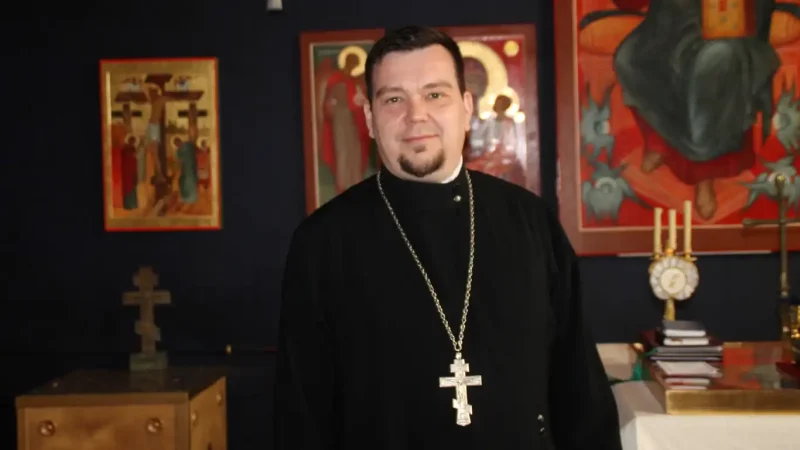
Faith-based organizations support uniformity by actively opposing LGBT and feminism. In Russia, the Orthodox Church, and in Belarus the Catholic Church, play a significant role in shaping public opinion. These structures support conservative views, which helps the authorities to strengthen their power and maintain a single ideology.
Social stability through uniformity
It is easier for the authorities to maintain social stability in conditions of uniformity. Any manifestations of diversity are perceived as potential sources of conflict and destabilization. By suppressing LGBT and feminist movements, the state seeks to minimize risks and maintain control over society.
The fight against LGBT people and feminism in Russia and Belarus is not just a consequence of cultural and religious traditions, but also part of a broader strategy to impose uniformity. States use this strategy as a tool to strengthen their control and maintain social stability. It is important to understand that the imposition of uniformity has serious consequences for the rights and freedoms of citizens, and requires close attention both within countries and by the international community.







0 comments
Enter your email — we’ll send you a one-time code. No passwords or accounts.
Code sent to
If the email doesn't appear in your inbox within a few minutes, check your spam, junk, or promotions folder, as some email services may mistakenly place automated messages there