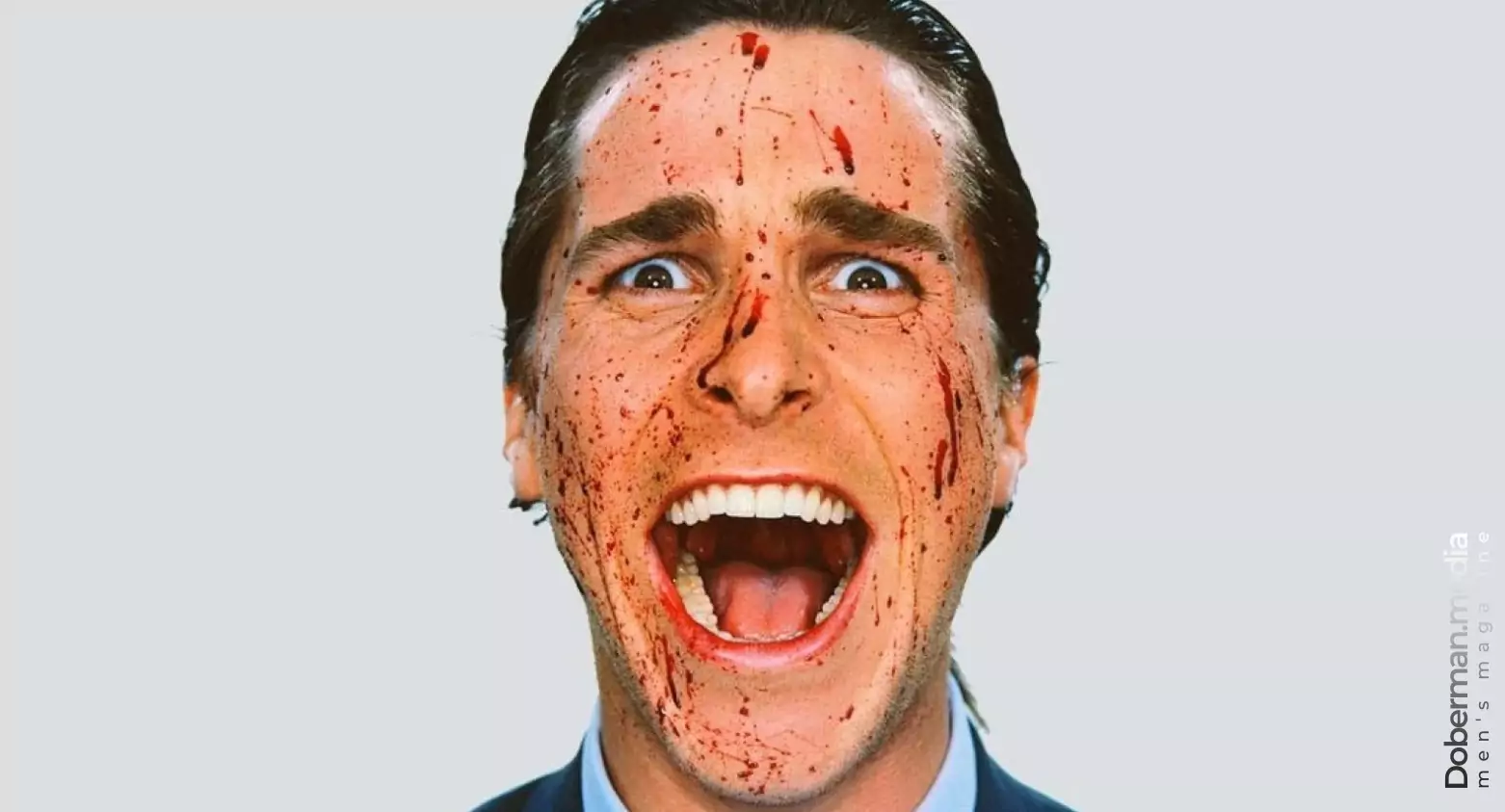
The portrayal of psychopaths in the film industry leads us to believe that classical music is their soundtrack. One need only recall the musical tastes of Hannibal Lecter, Alex—the protagonist of *A Clockwork Orange* (whose favorite piece was Beethoven’s “Ninth Symphony”) or the Joker’s dance in the bathroom to the sounds of the cello played by Icelandic musician Hildur Guðnadóttir. However, in the real world, this is not the case.
Psychopaths Among Us
A study conducted by Professor By Pascal Valish, points out that psychopaths aren't just murderers roaming the streets with an axe. Psychopaths could very well be your coworkers and look like ordinary people.
People with psychopathic personalities have certain ways of perceiving reality and a lack of empathy. Psychopaths most often prioritize their own needs over those of others. They do not adhere to social and moral norms if doing so interferes with achieving their goals. Furthermore, they may cause harm to others without feeling any guilt.
The Guardian published a study conducted by psychologists at New York University. It showed that people with mental disorders share certain musical preferences. These results are preliminary, and the researchers plan to conduct a larger study to establish more precise correlations between musical tastes and mental disorders.
As part of the study, nearly 200 clinical psychopaths were surveyed; they were played songs from a wide variety of genres and by various artists, and each participant was retested for psychopathy.
Music That Psychopaths Like
iIt should be noted that, according to Research...were driven by individual tracks rather than genres as a whole. The report did not include any duplicate tracks by the same artist, suggesting that preferences were linked more to specific musical characteristics of the tracks than to particular artists. “Psychopaths are more drawn to specific songs than to artists. It’s the specific sound that interests them. The lyrics, as a rule, ‘get lost.’”, – the scientists conclude.
The song that people with mental health issues liked the most was Eminem's "Lose Yourself" about the difficult journey to the pinnacle of the music world.
Also among the songs that mentally ill people liked was the song "No Diggity" by Blackstreet (rough translation: "No Way"), which is about the relationships between tough guys and wild beauties.
Oxford psychologist Kevin Dutton: “People with psychopathic tendencies tend to prefer rap and heavy metal”
Another study by Oxford psychologist Kevin Dutton suggests that people with psychopathic traits prefer certain genres of music. Based on an online survey of three million people, he found that people with psychopathic tendencies most enjoy listening to rap, followed by heavy metal. They are much less likely to enjoy classical music or jazz.
However, as with the New York University study, it cannot be said that all people with psychopathic traits have the same musical tastes. Furthermore, it should be noted that the results of surveys and studies are not always clear-cut and can be interpreted in different ways.
Music That Psychopaths DON'T Like
Also, scientists managed to Identify the tracks that people with mental health issues didn't like at all.
Among the songs that could be described as "psychopaths' least favorite songs" was "My Sharona" by The Knack. This is a story about Sharon, a sexy girl who literally drives the author crazy.
The music rejected by the participants also included a popular song "Titanium" by Sia. This song is told from the perspective of a strong, self-assured young woman who calls herself a “titan.”
The results of this study are preliminary, and further research is needed to draw more precise conclusions about the link between musical preferences and mental disorders.
- Psychopathy is a genetically determined variation in brain structure that results in differences in the brain’s “chemistry.” A person is born a psychopath, and this manifests itself in several different ways.
- Psychopaths lack certain emotions (attachment, depression, anxiety, fear, love, sadness, self-esteem, empathy, jealousy, resentment, stress, trust, hatred, remorse). The rest of the emotional spectrum is accessible to them only in very weak forms. This is not what distinguishes one psychopath from another, as it is a fundamental characteristic of psychopathy itself.
- Psychopaths have a mutated oxytocin receptor. As a result, oxytocin in the body does not bind to this mutated receptor at all. This deprives them of certain key emotional elements. “Chemical” love, attachment, and trust are completely beyond the reach of psychopaths.
Can music improve mental health?
Yes. Music therapy can help people with mental disorders, but several conditions must be met for it to be effective:
- Choosing the Right Music. Not all musical pieces are suitable for therapeutic purposes. It is important to take into account the patient’s individual characteristics, emotional state, and mood. Slow melodies—either instrumental or with positive lyrics—are best suited for this purpose.
- Duration and frequency of listening. Music therapy should be conducted regularly, at least once a week, and last at least 30 minutes.
- Involvement of a qualified professional. For music therapy to be effective, it is necessary to consult a qualified professional who can select the appropriate music and conduct the session.
- Having the right equipment. For music therapy, it is essential to have high-quality equipment that reproduces sound without distortion or noise.
When done correctly, music therapy can improve a patient's quality of life, reduce anxiety and depression, lower stress levels, and improve mood.
When men are stressed, they shouldn't listen to music that makes them feel even more miserable
Don't listen to music that exaggerates your negative emotions. For example, according to research, many men tend to listen to music when they're stressed that makes them feel even more miserable. Women, on the other hand, tend to listen to music that distracts them from sad thoughts or helps them vent those feelings and numb them. Music Therapy Specialists recommend add music that reflects a wide variety of moods to a playlist, so as not to get stuck on a single emotion.
Remember that music therapy is a clinically proven method for treating mental disorders. Therefore, when approached correctly, listening to music can truly improve a person’s well-being and relieve them of depression, anxiety, and sadness.







0 comments
Enter your email — we’ll send you a one-time code. No passwords or accounts.
Code sent to
If the email doesn't appear in your inbox within a few minutes, check your spam, junk, or promotions folder, as some email services may mistakenly place automated messages there