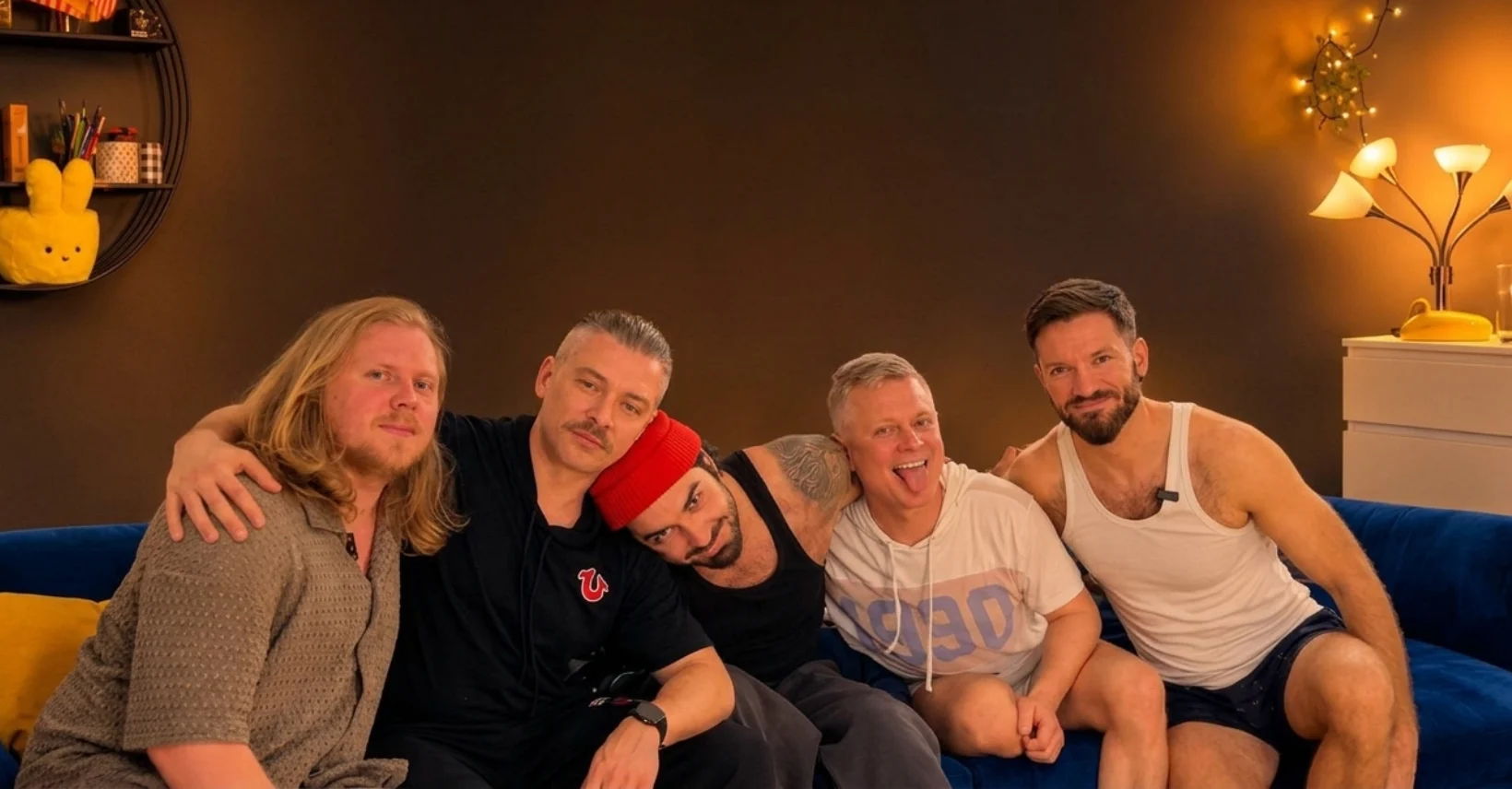

Russian-speaking gay men living in New York gathered in the latest episode of the Gay Talk podcast to discuss the causes of loneliness, the commercialization of dating services, and the difficulties of building relationships.
The podcast guests — Dima, Lev, Ilya, Stas, and host Oleg — spoke candidly about how past experiences, social context, and social media algorithms affect the ability to find emotional closeness.
A significant part of the discussion was devoted to dating apps, especially Grindr, Hinge, and Sniffies. The participants noted that apps are monetizing people’s basic need for conversation more and more aggressively. To view the map or use additional features, developers charge from a few dollars a day up to $170–200 for a subscription.
At the same time, the participants admit that apps remain almost the only social bridge for those who have just moved or are staying at home. In Dima’s view, dating apps help you enter a new social environment and make initial contacts, although over time you often have to take a “detox” from them.
“It’s not enough to leave the country — you have to leave mentally”
Another important topic was the psychological imprint of life in conservative countries or the provinces. Even after moving to the U.S., many continue to unconsciously follow habitual patterns of secrecy.
"It's not enough to leave Russia — you also have to leave mentally for a new place", one of the speakers said, framing the issue.
Participants admitted that even after many years of living openly, a simple question from a coworker at work (“How’s your boyfriend?”) can cause an immediate mental block and awkwardness. The habit of hiding one’s personal life eats away at a person from the inside, and getting rid of it completely turns out to be extremely difficult.
Different relationship models: city vs. province
During the discussion, the speakers compared the experiences of men from small towns and residents of major cities like Moscow or New York.
- Guys from the provinces, according to the participants, often follow a more traditional approach: “one land, one home, one family.” They are harder to “break in,” but if a connection is made, they are inclined toward more lasting relationships.
- Residents of megacities, on the contrary, are immersed in the rhythm of the big city with endless choice. In such an environment, building traditional monogamous relationships becomes harder: many warn in advance that they are not ready for monogamy or frequent meetings.
The main paradox: an abundance of contacts without closeness
The main takeaway from the discussion is that an abundance of available contacts, parties, and apps does not eliminate the basic feeling of isolation.
“We’re all pretty deeply lonely, and the sooner each of us realizes that, probably the easier it will be. You can feel lonely even if you’re in a relationship.”.
Speakers emphasized that the search for communication, understanding, and shared interests is a biological human need. However, the constant replacement of emotional closeness with quick meetings only delays solving the fundamental problem of loneliness.







0 comments
Enter your email and we will send you a one-time code. No passwords, no accounts.
Code sent to
If the email does not arrive in your inbox within a few minutes, check your Spam, Junk or Promotions folder — some mail services may wrongly place automated messages there.