
For five decades, photographer Sunil Gupta has documented the lives of gay communities in New York, London and Delhi. Now MoMA is acquiring his work—here are the stories behind his most important images.
Photographer Sunil Gupta has spent five decades documenting and portraying the lives of queer communities around the world. Born in India and raised in Canada, he moved to the UK in 1978 after studying in New York for two years. By turns tender and candid, Gupta’s work explores the boundaries between fiction and reality, public space and private moments of intimacy. His art tells stories of love and human relationships against a backdrop of shifting politics and society.
However, photographing queer life was not without serious risk. One of his exhibitions in India was shut down by the government, while in his early years in the UK, curators would literally back away when he appeared with his colleague Tessa Boffin. Gupta recalls that their open sexuality and leather clothing intimidated those around them, but they resolutely refused to be ashamed.
“The exhibition curators would run away from us when we entered the room—two gay men in leather were too much for them! But we were quite open about our sexuality; we weren’t ashamed of it.”
Ahead of the major retrospective “Life with a Camera, 1970 – Now” at Kettle’s Yard in Cambridge, Sunil Gupta discussed ten landmark images from across his career.
1. 43 Christopher Street (1976)
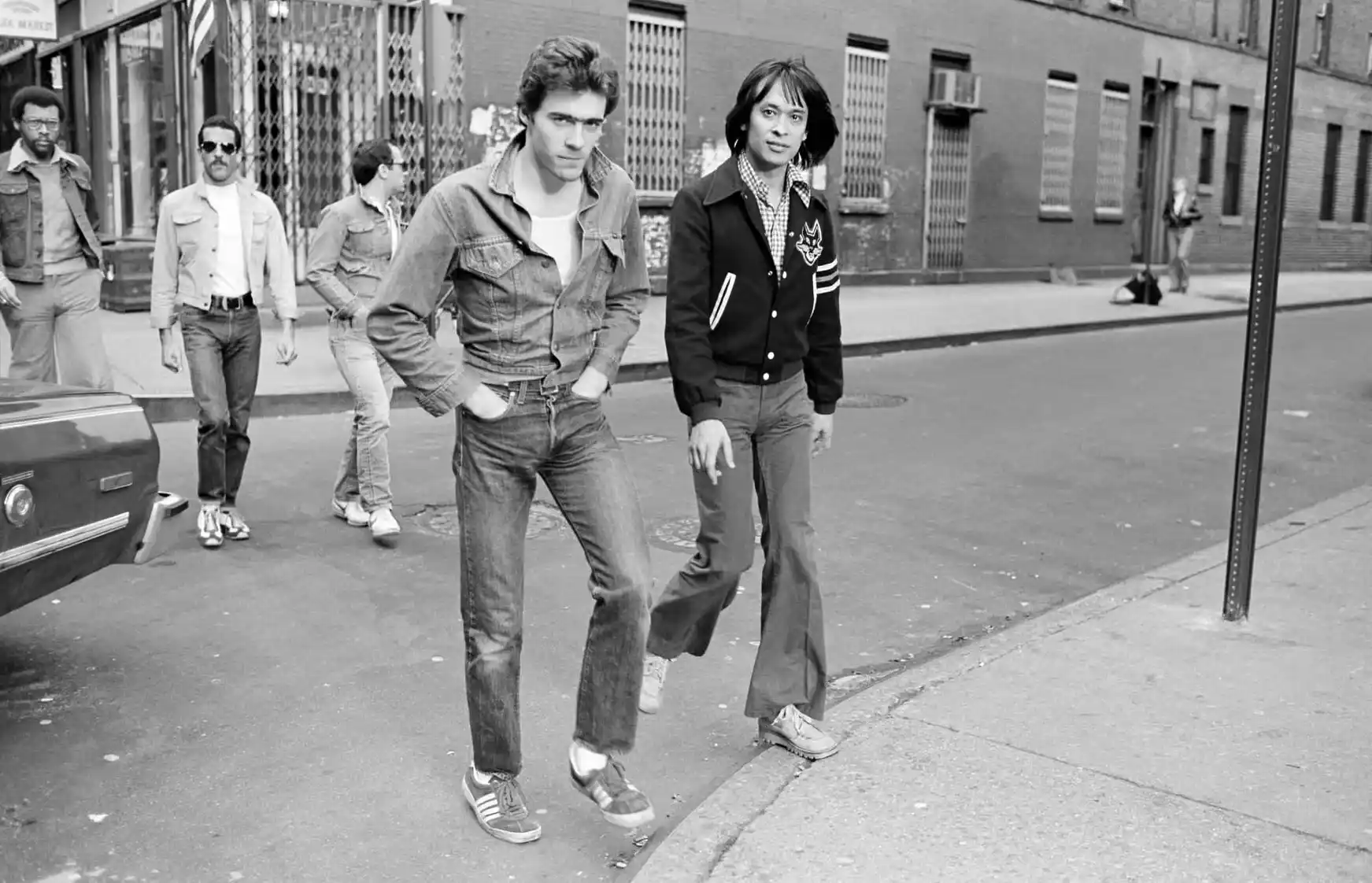
“No 43 from Christopher Street”
Photograph: © Sunil Gupta. All Rights Reserved, DACS 2025.
The photograph “No 43 from Christopher Street” was taken in New York and became virtually the only one in the series to feature a person of color in the foreground.
At the time, seeing people of Asian descent on Christopher Street was extremely rare, and the 23-year-old Gupta recognized himself in the man on the right.
In the foreground are two men whose distinctive clothing and hairstyles help them fit into the spirit of the place and find companionship. In the background, the usual street crowd drifts by, while a solitary figure can be seen in the distance, conveying the precariousness and loneliness of street “cruising.”
2. Towards an Indian Gay Image (1983)
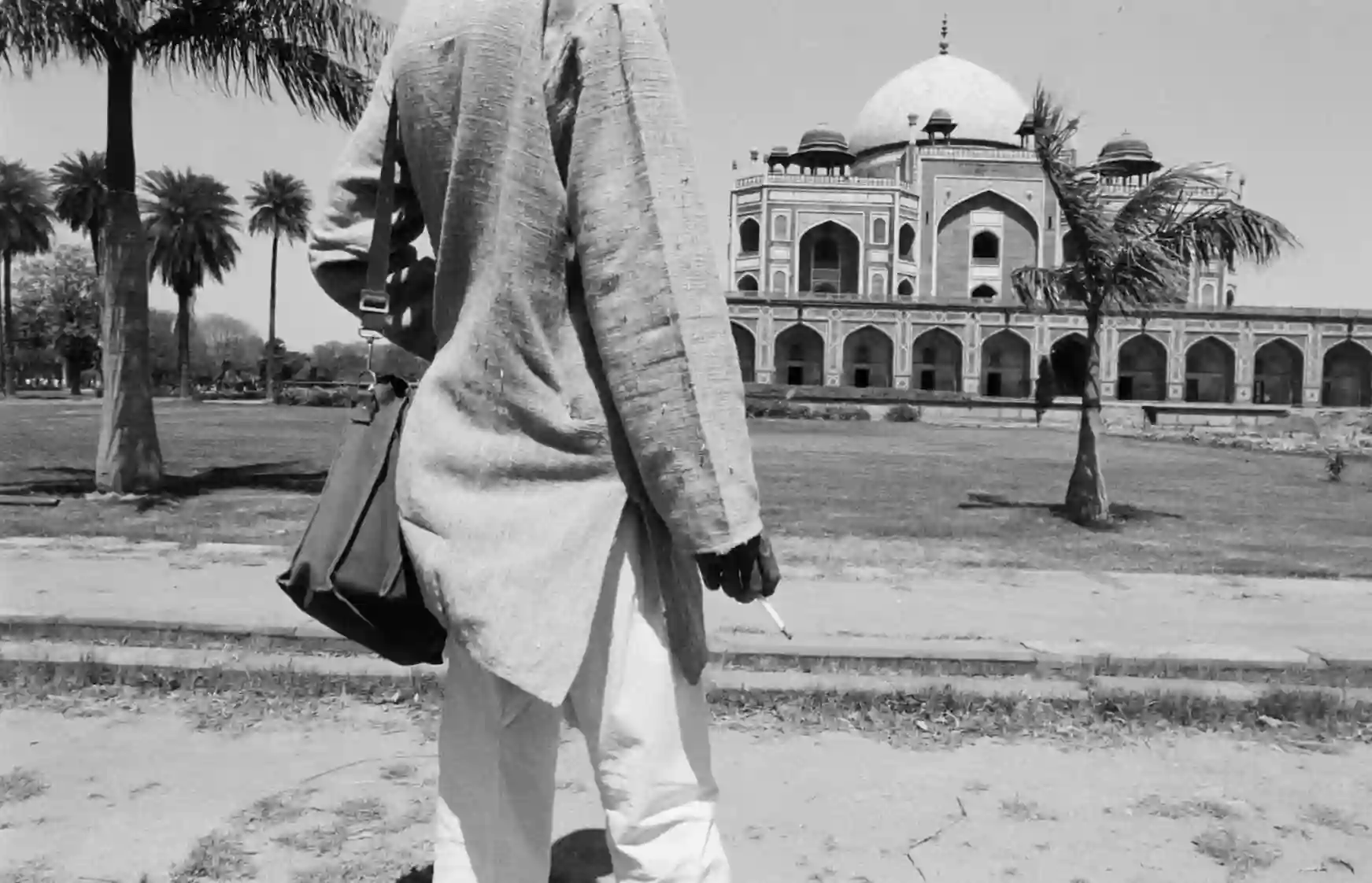
Photograph: Sunil Gupta/© Sunil Gupta. All Rights Reserved, DACS 2026
Returning to Delhi for the first time since leaving, Gupta took a career-defining photograph near Humayun’s Tomb. The photographer grew up near this architectural monument, which is why the tomb regularly appears in his work.
In India in the early 1980s, homosexuality was shrouded in complete silence. No one was willing to be photographed openly, and even people seeking sex in public places did not talk about it or have the language to discuss their identity. Gupta began photographing men without showing their faces, but the project did not develop until he created the image by the tomb.
The photograph became part of his graduate project at the Royal College of Art (RCA). After graduating, Gupta pitched the story to the newspaper The Guardian, which published it together with the photograph, marking his first appearance in the press.
3. “Pretended” Family Relationships (1985–1988)
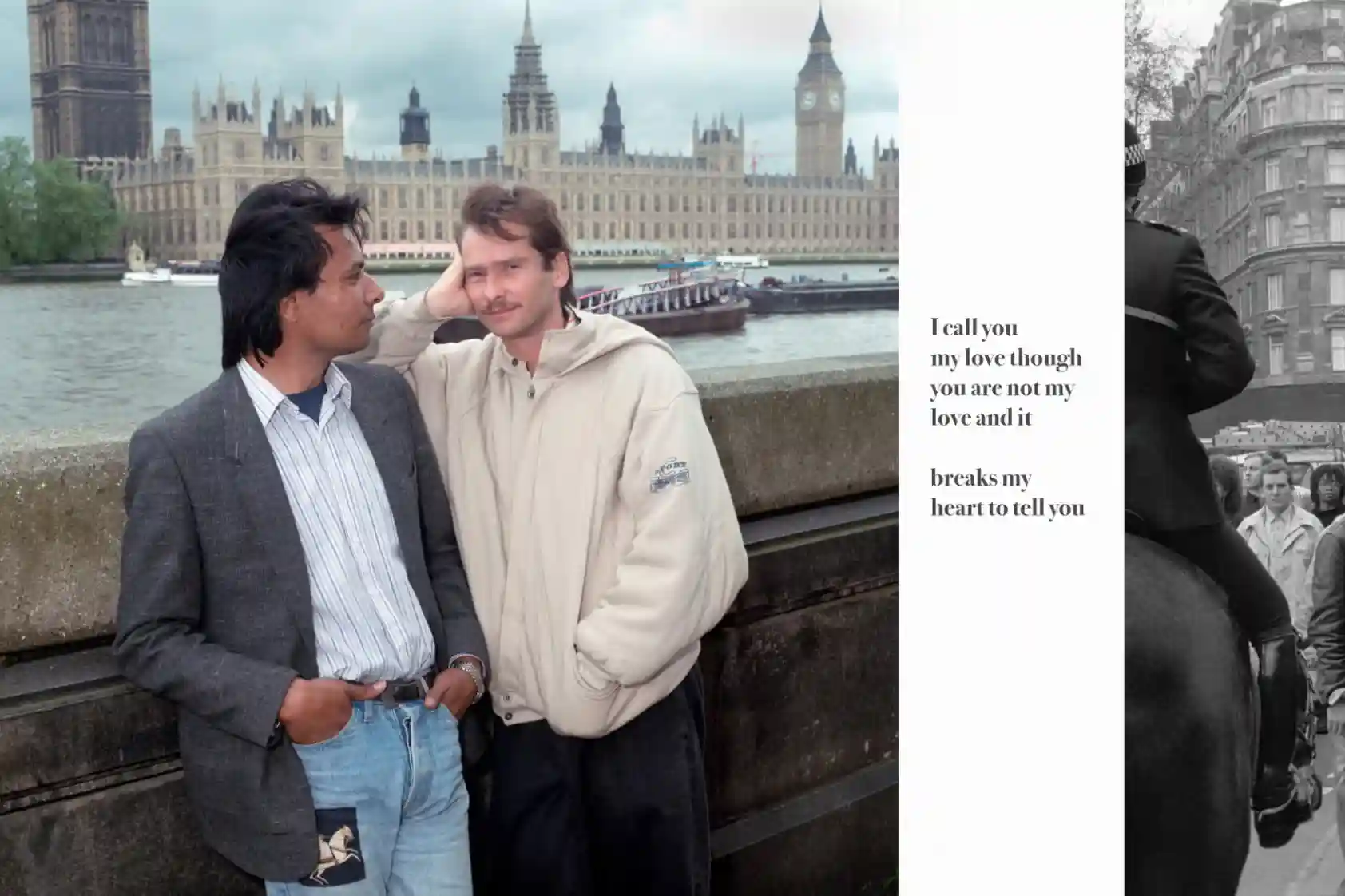
“Section 28”
Photograph: © Sunil Gupta. All Rights Reserved, DACS 2025
This project was a response to “Section 28” — a 1988 law passed by Margaret Thatcher’s government that prohibited local authorities and schools from “promoting homosexuality.”
In the late 1980s, Gupta lived in Brixton, London, with his white partner, surrounded by many interracial couples. However, it proved impossible to find Black or Asian models willing to pose openly for a queer project because they feared coming out. Gupta ultimately asked people he knew to play the role of “pretend” couples.
4. Love and Light (2005)
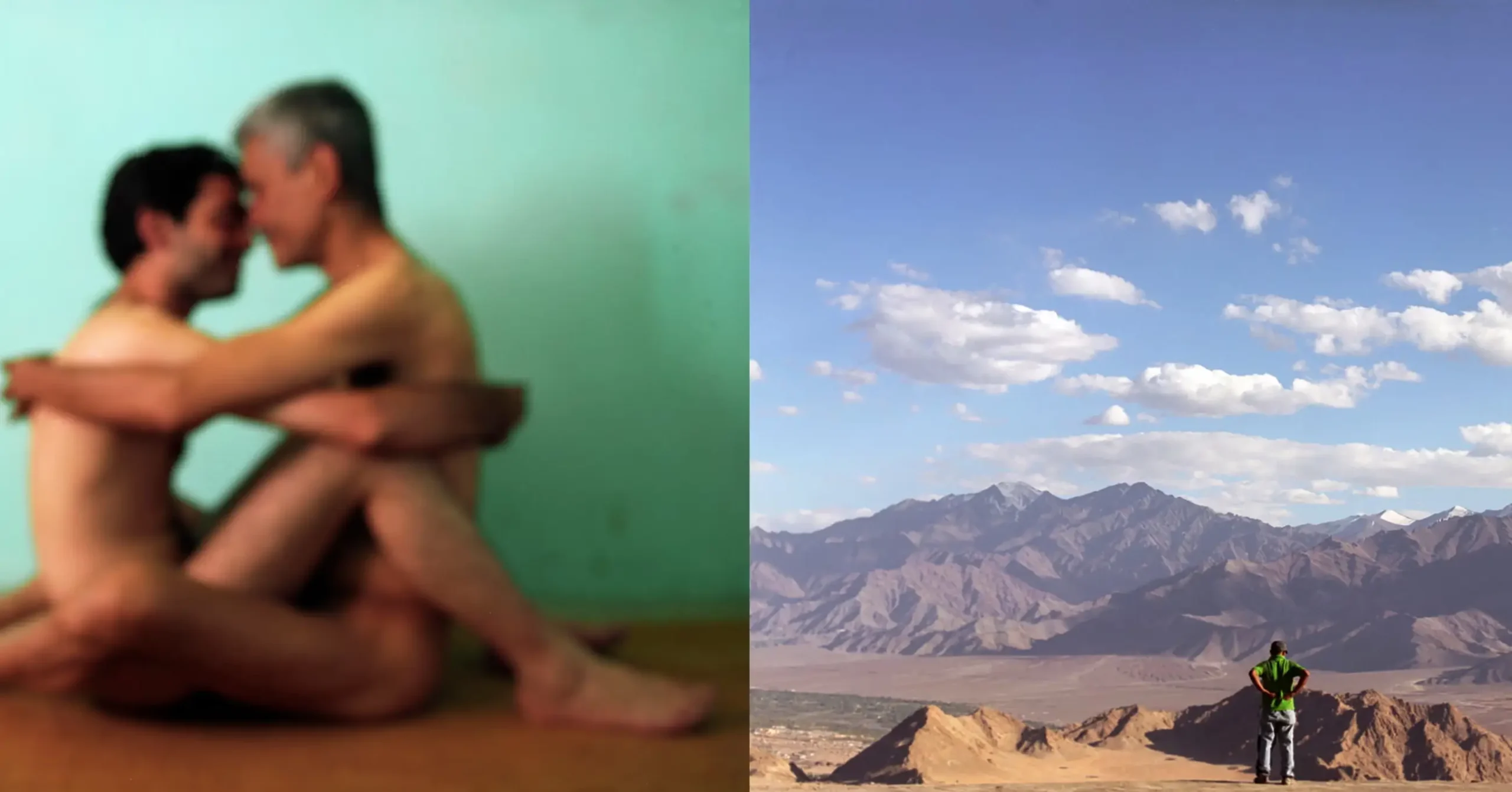
Photograph: Sunil Gupta/© Sunil Gupta. All Rights Reserved, DACS 2026
The series “Love and Light” marked Gupta’s return to India in 2005. In the city of Leh, he met a theater and film practitioner who was also a spiritual guru. They began an intense affair, but by the time Gupta arrived with his suitcases, his partner had lost interest in him.
The original plan to shoot a series of joint portraits at locations across India evolved into a series of self-portraits by Gupta himself. At the end of this trip, while attending an HIV conference in Delhi, the photographer, who had appeared onstage as an HIV-positive person, met his future husband, social worker Charan Singh.
5. Sun City
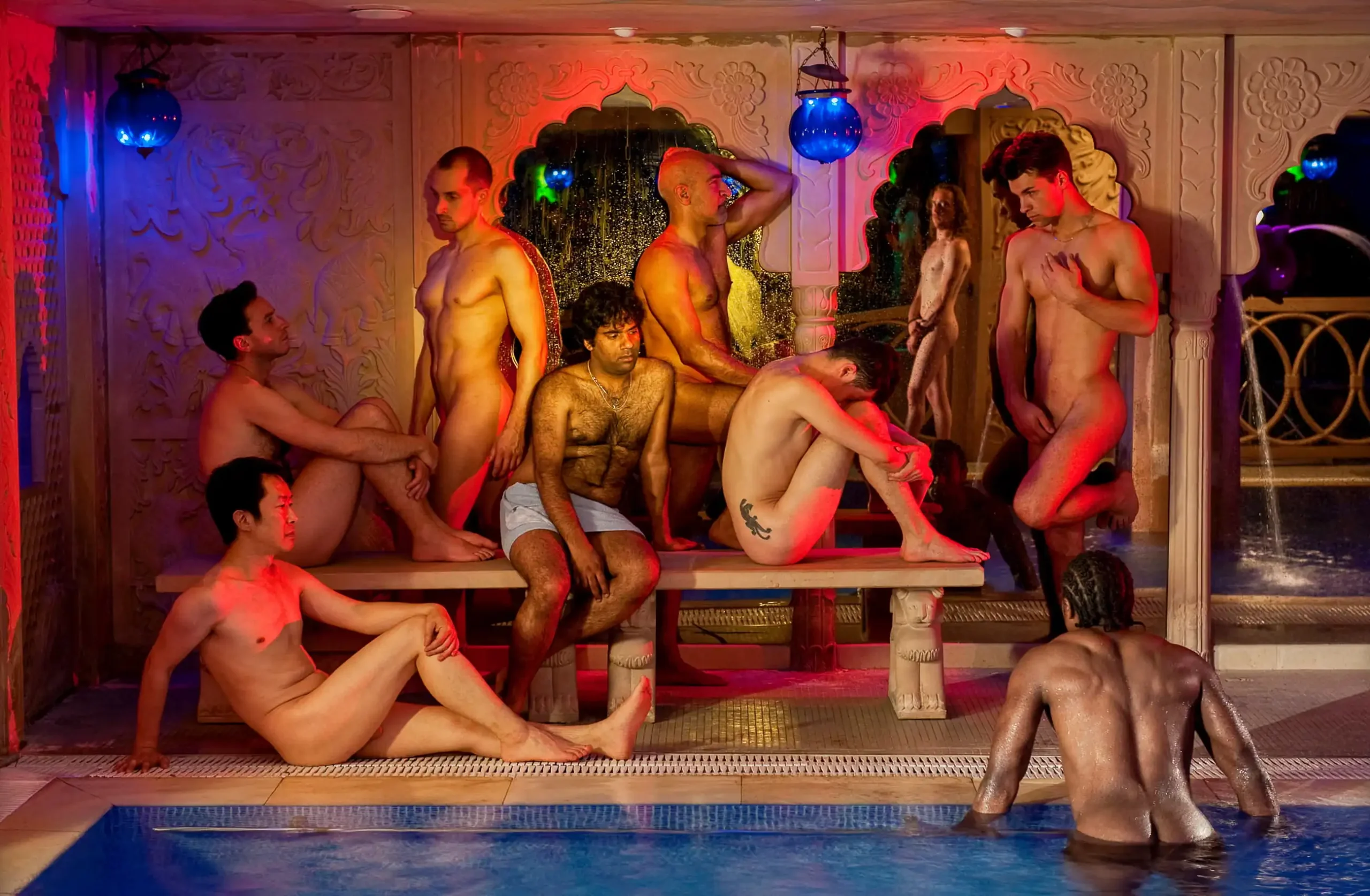
“Sun City”
‘Based on a scene from La Jetée’ … Sunil Gupta, from Sun City (2010). Photograph: Sunil Gupta/© Sunil Gupta. All Rights Reserved, DACS 2025.
Composition of the work “Sun City” is inspired by a scene from Chris Marker’s cult film “La Jetée” (La Jetée).
The image brings together histories of gay photography that Gupta explored independently outside formal curricula. The subjects’ poses reference iconic photographs by Robert Mapplethorpe, George Platt Lynes, and Wilhelm von Gloeden, as well as works of French Romanticism.
6. Homelands (Homelands)
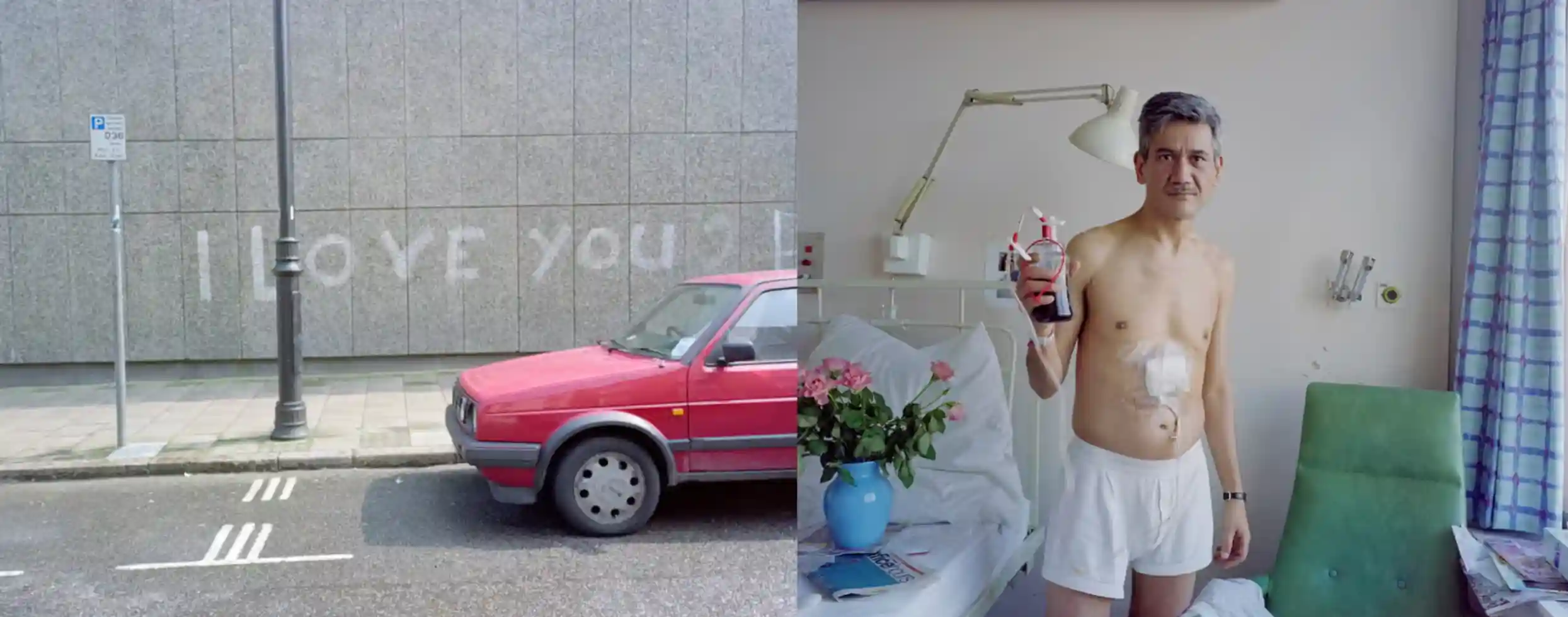
Photograph: Sunil Gupta / © Sunil Gupta. All rights reserved, DACS 2026.
The series emerged during a period of profound personal crisis, as Gupta approached 50, was diagnosed with HIV, and experienced a downturn in his career and social life.
After receiving a three-year research fellowship in Southampton, the photographer created a project exploring his experience of living with HIV and his connection to the surrounding landscape. The images were taken in London: one at St Thomas' Hospital during medical procedures, and the other on Drummond Street, where Gupta enjoyed visiting an Indian restaurant.
7. Exiles (1986–1987)
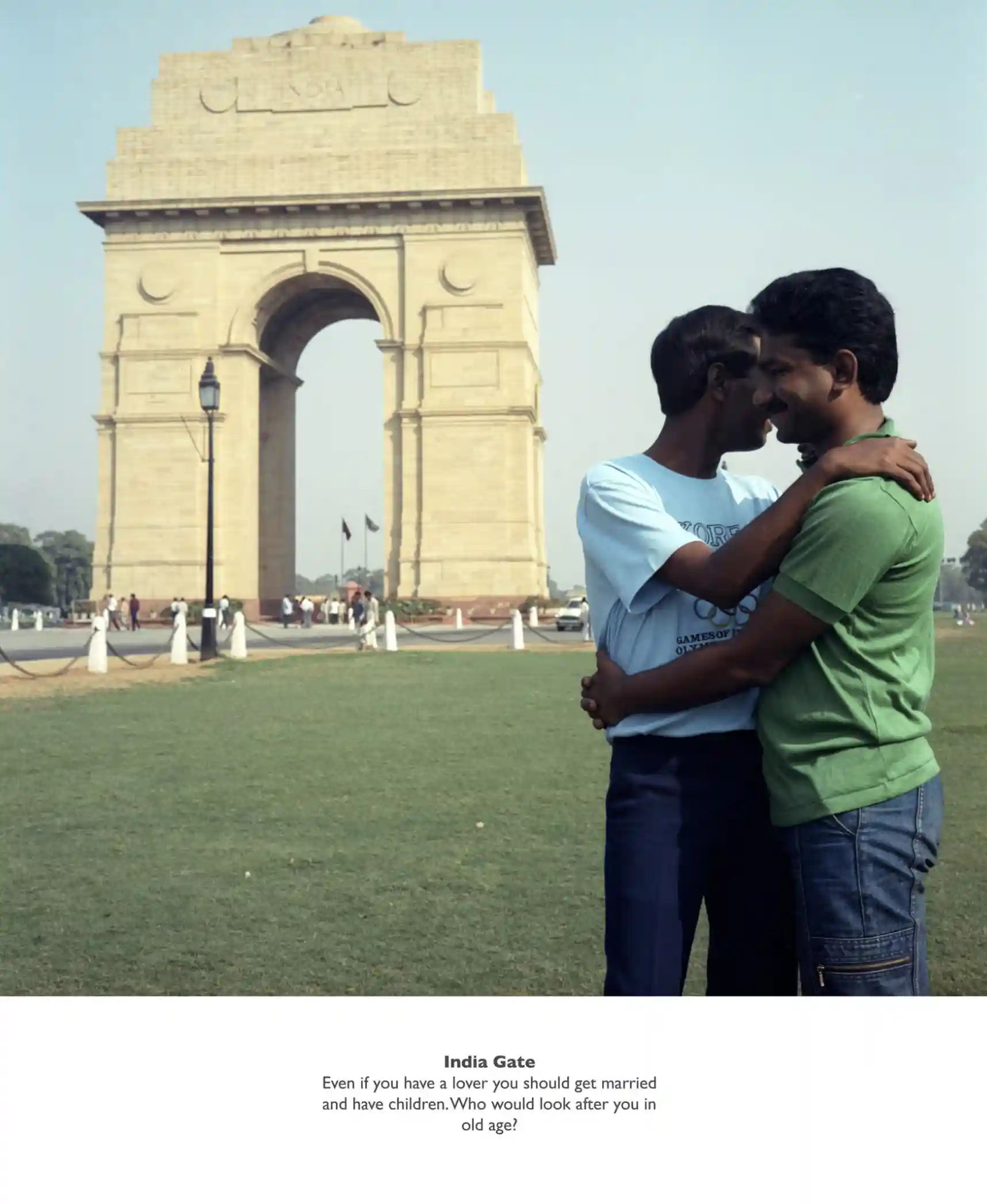
Photograph: © Sunil Gupta. All rights reserved, DACS 2025.
Commissioned by the London-based The Photographers’ Gallery, Gupta traveled to Delhi to document the lives of gay Indian men.
His guides showed him outdoor cruising spots and agreed to be photographed, subject to certain restrictions. Gupta also recorded audio interviews on a tape recorder and added excerpts from them to the photographs.
Gupta describes bringing gay Indian men into global cultural history as his life's primary goal. The series was recently acquired Museum of Modern Art in New York (MoMA), which the photographer considers the ultimate fulfillment of his mission.
The retrospective “Sunil Gupta: Life with a Camera, 1970 – Now” is on view at Kettle’s Yard gallery in Cambridge until January 31, 2027.






0 comments
Enter your email and we will send you a one-time code. No passwords, no accounts.
Code sent to
If the email does not arrive in your inbox within a few minutes, check your Spam, Junk or Promotions folder — some mail services may wrongly place automated messages there.