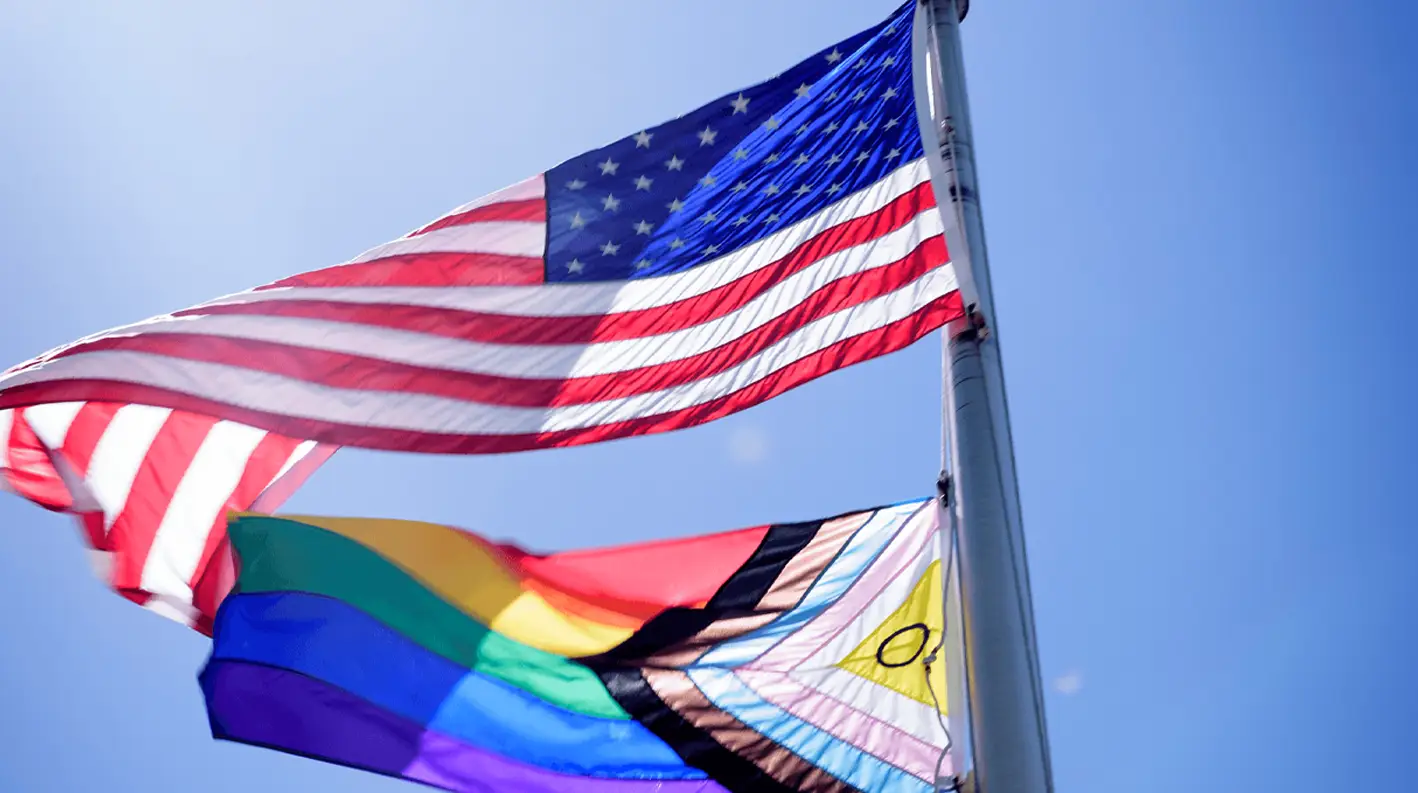

October 8, 2026 edition The Washington Post published a widely discussed article about the latest data from the U.S. Centers for Disease Control and Prevention (CDC). According to the study, the proportion of American teenagers identifying as gay, lesbian, or bisexual has fallen sharply over the past few years—especially among younger students.
Conservative media outlets and right-wing bloggers immediately declared that “being LGBT is no longer fashionable,” while progressive experts point to rising homophobia, fear of coming out, and the possible political bias of the revised statistics.
GBT magazine Doberman Media investigated what really happened to the data, why the decline primarily affected 14-year-old girls, and whether these figures can be trusted.
Table of Contents
What happened?
The U.S. government agency CDC released the survey Youth Risk Behavior Surveillance System (YRBSS) for 2025 and the accompanying report Youth Health in Focus Report. San Diego State University psychologist Jean Twenge analyzed the data on her platform Generation Tech.
After years of rapid growth in the share of teenagers identifying as LGB, the trend has shown a marked decline. The surge occurred between 2015 and 2021: during that time, the share of teenage girls reporting a non-heterosexual orientation rose by 128%, while the share of teenage boys nearly doubled. However, new data for 2023–2025 show the trend reversing—a shift that researcher Jean Twenge and right-wing commentators have already dubbed a “free fall.”
What exactly do the figures show?
The decline was highly uneven, concentrated almost entirely among the youngest teenagers and among girls:
- Ninth graders (ages 14–15): The share of ninth-grade students identifying as gay, lesbian, or bisexual fell from 17% in 2023 to 11% in 2025.
- Teenage girls: Среди девятиклассниц падение оказалось наиболее драматичным: если в 2021 году 30% из них называли себя лесбиянками или бисексуалками, то к 2025 году этот показатель снизился до 17%.
- Bisexuality: The main driver of the change was the halving of the share of bisexual ninth-grade girls, from 26% in 2021 to 13% in 2025.
- Boys: Changes among boys were minimal: the share of bisexual and gay ninth-graders declined from 9% in 2021 to 7% in 2025.
- High school students and young adults: Among 12th-grade students (ages 17–18), the figure declined slightly, from 18% in 2023 to 16% in 2025. Among young adults aged 18 to 24, the figures remain stable.
Alongside the decline in LGBTQ+ identification, a decrease in same-sex sexual activity was also recorded: among sexually active teenage girls, the share of those who had had same-sex sexual contact peaked in 2021–2023 (at about 30%) before falling to 21% in 2025.
In addition, a report by the Center for Heterodox Social Studies (Center for Heterodox Social Studies) at the University of Buckingham documented a decline in the number of students identifying as transgender or nonbinary in campus surveys:
- At the private Phillips Academy, the share of nonbinary students fell from more than 9% in 2023 to 3% in 2025.
- In FIRE campus surveys, the share of transgender and nonbinary students fell from 6.8% to 3.6%.
- At Brown University, the figure fell from about 5% in 2022–2023 to 2.6% in 2025.
Why does this happen?
The researchers themselves acknowledge that the exact reasons for this reversal remain unclear. Jean Twenge notes that we may be seeing the dividing line between Gen Z and Generation Alpha (ninth graders in 2025 were born in 2009–2010).
Several hypotheses are being discussed among experts:
- The end of a social trend and the “pandemic effect”: Right-wing commentators, such as Eric Kaufmann, argue that nonheterosexual identity among teenagers was a sociocultural “trend” or a consequence of isolation during the COVID-19 period, and that the figures are now returning to baseline levels.
- Fear and the rise of anti-LGBT rhetoric: Human rights advocates and social media users link the decline to mounting political pressure and a reduced sense of safety. Teenagers may still experience attraction but avoid publicly labeling themselves for fear of bullying and family conflict.
- A temporary statistical fluctuation: Twenge emphasizes that the sharp decline among younger teenagers may prove to be a temporary “spike” (blip), which will level off in subsequent observations.
Can these statistics be trusted?
Researchers have raised serious questions about the quality and context of the data collection:
Jody Herman of the Williams Institute points out that the CDC report does not provide confidence intervals, making it impossible to determine precisely whether the observed differences are statistically significant.
Critics have questioned the CDC's objectivity in light of the Trump administration's political decisions. In August 2025, Dr. Demetre Daskalakis, the former head of the CDC's vaccine division, resigned, accusing the leadership of “clumsily manipulating data” and applying pressure to make materials conform to a political agenda.
An official notice also appeared on the CDC website itself (pursuant to a court order), stating that the U.S. administration rejects “gender ideology.” The report itself Youth Health in Focus no longer tracks gender identity.
What is the bottom line?
Claims that American teenagers are “becoming heterosexual en masse” do not tell the whole story. The statistics show a decline in LGB identification primarily among 14- and 15-year-old girls, while rates among older teenagers and college students remain stable. Whether this shift represents a new trend among Generation Alpha or a response to the changing political climate will become clear only through future waves of research.









0 comments
Enter your email and we will send you a one-time code. No passwords, no accounts.
Code sent to
If the email does not arrive in your inbox within a few minutes, check your Spam, Junk or Promotions folder — some mail services may wrongly place automated messages there.