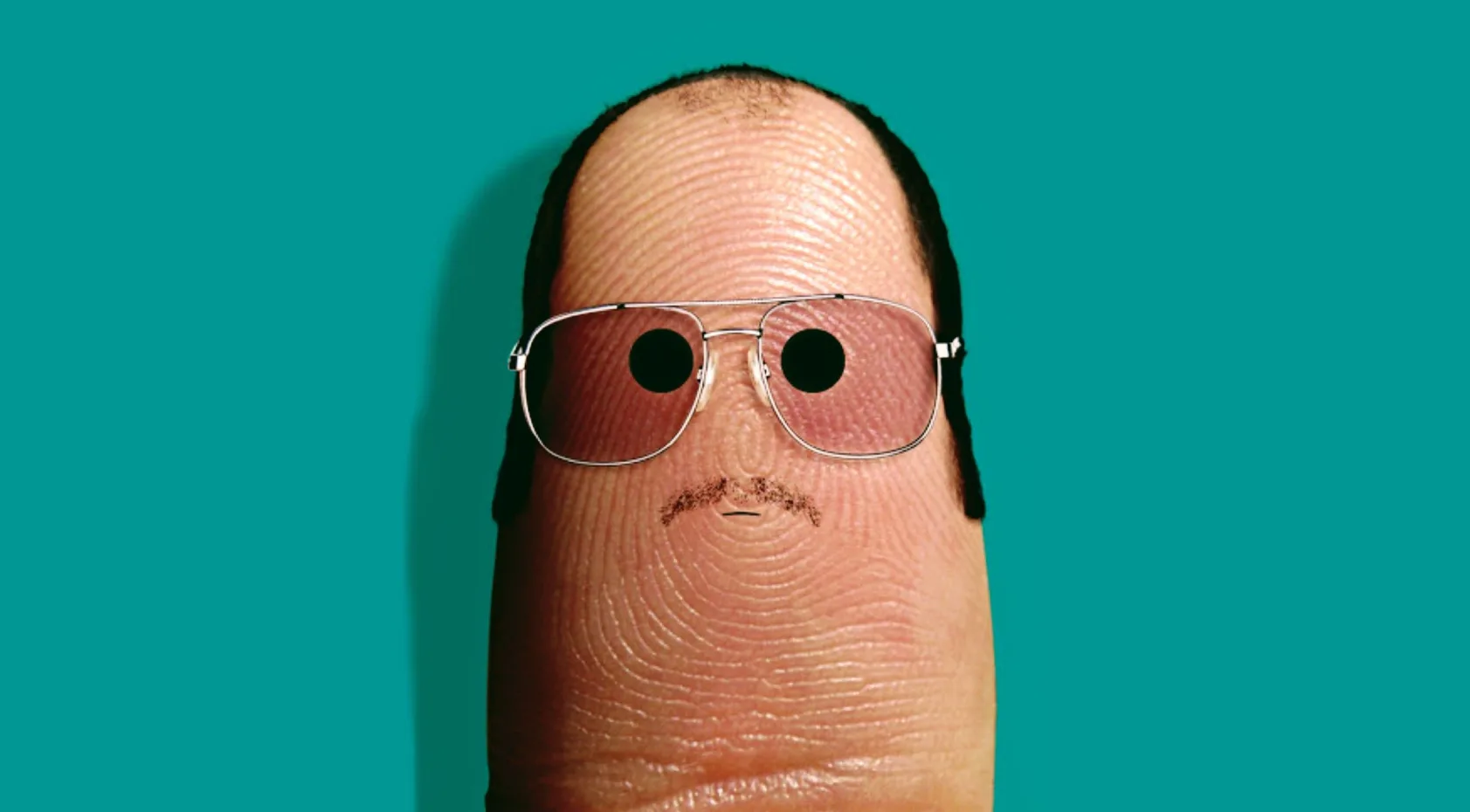

One delightful genre regularly goes viral on TikTok: someone who is 30, 32, or 35 looks into the camera and announces that people constantly mistake them for an eighteen-year-old.
No, darling.
You're thirty.
You just look very good for thirty.
And the most interesting thing is that the person is probably telling the truth. We've gradually forgotten what our real faces look like.
We look in the mirror for just a few minutes a day. But our phones show us constantly: a flattering angle, good lighting, a front-facing camera that automatically alters our proportions, and then a “nothing special” filter that only ever so slightly erased our pores, slimmed our face, lifted our eyes, and accidentally shaved off seven years.
After a while, this version of ourselves starts to feel like the real one, while the person in the mirror somehow looks like Yefim Shifrin (when we'd rather look like Friske). Bad mirror, obviously.
Meanwhile, the beauty industry has understood perfectly well that selling youth is more profitable than selling beauty.
Botox used to be associated with people whose faces had suddenly stopped expressing surprise. Today, it has become “preventive.” In other words, you're encouraged to treat wrinkles before they appear.
The perfect business model: first invent a problem, then spend several decades preventing it.
Age gradually went from a biographical fact to a personal failing.
You’re 25—it’s time to start thinking about 35.
At 35, you’re expected to look 28.
At 40, you want to hear the magic words: “I never would have guessed.”
And if someone actually guesses your age, for some reason it feels almost like an insult.
— How old do you think I am?
— Thirty-eight.
— I am thirty-eight.
— Oh.
That “oh” is especially delightful.
But appearance is only half the story here. Even we are no longer quite sure when exactly we are supposed to feel like adults. Previous generations at least had a clear roadmap: a job, a place of their own, a family, children. Not everyone got to follow it, and it did not make everyone happy, but at least it was clear roughly where adulthood began. Today, someone can be 35, on a temporary contract, living in a rented apartment, preparing for yet another move, and feeling that real life is still just a little way off.
For migrants, this is especially noticeable.
You can arrive in Germany as an adult with a profession, experience, and a normal social life. Then, a few months later, find yourself delighted that you managed to call the doctor on your own and understand most of the reply.
It really takes years off you.
About fifteen years.
Part of your adult life has to be rebuilt from scratch: language, work, friends, status, the ability to argue effectively and stand up for yourself.
Our “fellow travelers” have another distinctive trait. Some of us really do begin to experience youth later in life. While their classmates were going on dates, some people were keeping an eye on their browser history, making up answers when relatives asked whether they had a girlfriend, and learning not to stare too long at a handsome guy. So someone who, at 32, calmly goes to Pride for the first time, parties until dawn, and holds a man’s hand in public is not necessarily acting like a teenager.
Sometimes he is simply living out what he was once denied.
But there is a very fine line between “living the life you never got to live” and trying to remain there forever.
And this, it seems to me, is where the real conversation about growing up begins.
Not having an apartment doesn't make someone a child.
Neither does not having children.
Nor does partying at forty.
After all, you can have a mortgage, two children, and the emotional range of a decorative cactus. Or you can dance until dawn and know perfectly well who you are, what you want, and what you are responsible for.
The real problem is that growing older seems to have become a bad deal.
Age used to at least promise a reward: more status, experience, money, and respect.
Today, you can grow older without growing richer. You can gain experience only to find that suddenly no one needs it. And on a dating app, you may also discover just how tenuous the idea is that people become more interesting with age.
So we cling to youth, inject our foreheads, edit our photos, keep saying that people always think we're younger, and feel a little resentful toward the calendar for breaking a promise it never made to us.
It seems to me that the problem isn't that we don't want to grow old.
We've simply lost sight of what we're supposed to get in return.
And so every morning, looking in the mirror after applying a bunch of face masks, it's much easier to tell yourself, “At least I look 25.”
Actually, no.
At thirty... (pause) eight... (pursing his lips), is it already... or still... (smiles)
And that's okay.







0 comments
Enter your email and we will send you a one-time code. No passwords, no accounts.
Code sent to
If the email does not arrive in your inbox within a few minutes, check your Spam, Junk or Promotions folder — some mail services may wrongly place automated messages there.