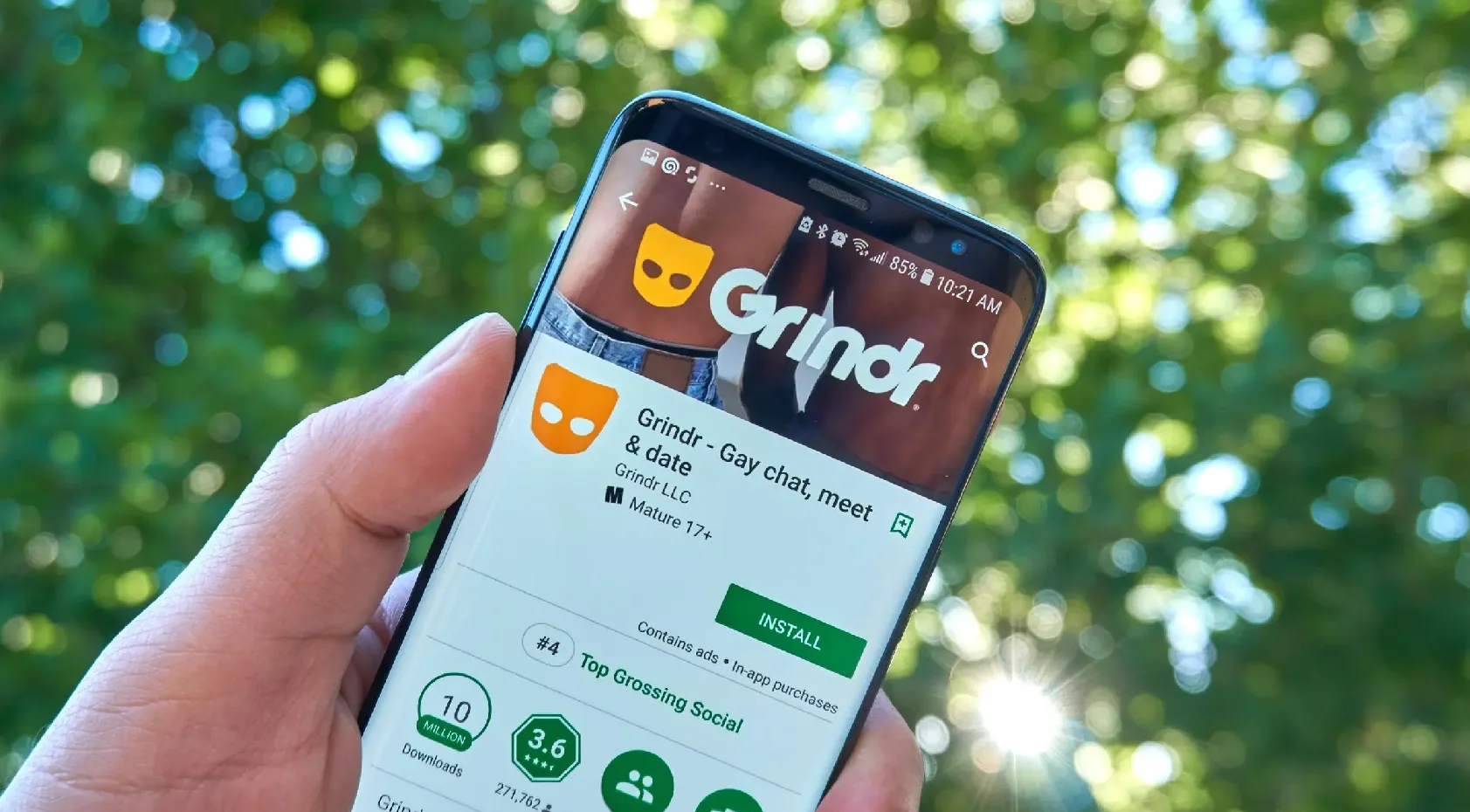

Grindr no longer wants to make money solely by showing users nearby men. The company plans to gradually turn the app into what it calls “a gayborhood in your pocket”: dating, health, PrEP, medication, travel, finding a community in another city — and perhaps someday even a doctor right inside Grindr.
And part of this vision is already being built.
In an interview with TechCrunch, Grindr CEO George Arison said the company sees several new avenues for growth beyond its usual paid subscriptions.
One of the main ones is health.
In the U.S., Grindr is already expanding its Health Center and Woodwork service. They provide users with sexual health information and certain medical products, including erectile dysfunction medications. The app has also added an AI bot that lets users complete part of the process without going to a separate website. Separately, the company has pledged to give 10 million people access to information on where to get PrEP, both in the U.S. and abroad.
But it is important not to confuse these plans with a service that already exists.
Grindr is not turning into a clinic just yet.
The idea of using the app to find, for example, a gay-friendly doctor and receive a telemedicine consultation is a long-term plan. Arison is talking about a roughly ten-year horizon and believes that one day healthcare could bring Grindr more money than its current core business. For now, however, revenue from such new services remains a small share of the company’s total revenue.
There is also a second direction: travel.
In its roadmap, Grindr discusses maps, location discovery, and testing hotel bookings. The logic is fairly obvious: if you fly to Berlin, Madrid, or Lisbon, for example, the app should help you not only see who is within a kilometer, but also understand where the local queer scene actually is.
For migrants, this idea is especially familiar. Even now, Grindr sometimes serves as the first unofficial “guide” to a new city: people use it to find acquaintances, bars, and parties, and to ask where to go and where to meet other members of the community. The company is simply trying to turn this organic use case into a standalone product—and, of course, figure out how to make money from it.
The most controversial part of the new Grindr is called EDGE.
This is a new subscription tier above the current XTRA and Unlimited plans that the company is still testing. In one Canadian test, the converted price was approximately $350–375 per month, prompting the internet to ask the obvious question: who would actually be willing to pay that much for Grindr.
The company says this was merely one of the prices it tested and that the final price has yet to be determined. EDGE is expected to fully launch toward the end of 2026 or in early 2027.
More interesting than the price itself is what Grindr wants to charge that money for.
The company plans to use AI for more than just profile analysis. According to Arison, with the user’s consent, the system will be able to take their behavior and intentions within the app into account and use that information to find better matches.
And not necessarily nearby.
The idea is that the algorithm can figure out that a man who is genuinely right for you is not in the next neighborhood over, but in another city altogether—and show him to you. Grindr believes this is especially important for gay men, since even without additional filters, their potential dating pool is significantly smaller than that of the heterosexual majority.
This makes for a rather interesting reversal of roles.
The old Grindr primarily answered one question: “Who’s nearby right now?”
The new one aims to answer several questions at once: “Who is right for me? Where can I find my community in another city? Where can I get PrEP? How can I find a doctor? Where should I stay when traveling?”
That is precisely why Grindr’s strategy deserves attention even from those with absolutely no interest in its stock.
У приложения около 15 миллионов активных пользователей в месяц, а компания уже открыто описывает себя не просто как сервис знакомств, а как «Global Gayborhood in Your Pocket». Финансовая логика при этом довольно прозрачна: сегодня около 83% доходов всё ещё дают подписки, поэтому Grindr ищет вещи, которые можно продавать той же огромной аудитории помимо дополнительных профилей и просмотра тех, кто заходил в приложение.
And this is where a question arises that is far more interesting than yet another debate over subscription prices.
Grindr truly has something rare: a huge international audience of gay and bisexual men that other companies would have had to build from scratch.
But the closer the app moves toward health, travel, and personalized recommendations, the more its value begins to depend on how well it knows the user.
Today, it knows who you like.
Tomorrow, it wants to know whom it should show you, where you are going, and what services you might need. Perhaps this really will prove convenient. But then Grindr will become something far greater than an app we open at two in the morning to see who is still awake.
And so far, this transformation raises far more questions than yet another new subscription tier.








0 comments
Enter your email and we will send you a one-time code. No passwords, no accounts.
Code sent to
If the email does not arrive in your inbox within a few minutes, check your Spam, Junk or Promotions folder — some mail services may wrongly place automated messages there.