

There has long been a stereotype in popular culture that men buy huge SUVs or loud sports cars to "compensate" for certain physical shortcomings — a small penis. Scientists decided to check whether there is any scientific basis behind these jokes.
It turned out that the connection really does exist: the psychological feeling of having a "small penis" directly affects men's consumer preferences.
How was the study conducted?
A team of scientists (Daniel K. Richardson, Joseph Devlin, John S. Hogan, and Chuck Thompson) conducted an experiment in which 200 men aged 18 to 74 took part.
To get honest results, the real purpose of the study was hidden from the men: they were told that their online shopping habits were being studied.
Data collection (standard questions + one "awkward" one)
The essence of the experiment was to manipulate self-esteem. “Group A" said that the average size was — 18 cm. Most men who saw this were upset, as their own measurements turned out to be "below average." Their self-esteem as "real men" took a hit. "Group B" said that the average penis size was only 10 cm. These men, on the contrary, felt like “giants” and leaders, since their result was above this figure.
After that, the participants were again asked to rate products, among which were sports cars.
Here it is important to note a nuance: the manipulation with penis size was only a way to induce a feeling of vulnerability, so that scientists could measure how strongly this insecurity pushes a man toward conspicuous consumption of “status” items.
What did the results show?
It turned out that those who considered their size to be "insufficient" ("Group A") were much more eager to buy a sports car.
Interestingly, this effect was most pronounced in men over 30 years old. In general, interest in sports cars gradually decreases with age,but not among those participants whose confidence in their manhood had been shaken. The theory of "male hypercompensation"
Does this only concern penis size? No, it’s much broader
Psychologists call this phenomenon the masculine overcompensation thesis (masculine overcompensation thesis). Men view masculinity as a “commodity” that must be constantly earned and defended. If this sense of “normalcy” is shaken, the reaction will be extreme.
According to the large-scale Research Robb Willer of Stanford found that men whose masculinity was called into question (for example, by giving them false results on a “femininity” test) began to show:
- Increased support for military action;
- A higher level homophobia;
- Greater interest in buying SUVs;
- I believe in male superiority and support rigid hierarchies.
Scientists also found that men with high levels of testosterone react to threats to their status much more aggressively than those with lower hormone levels.
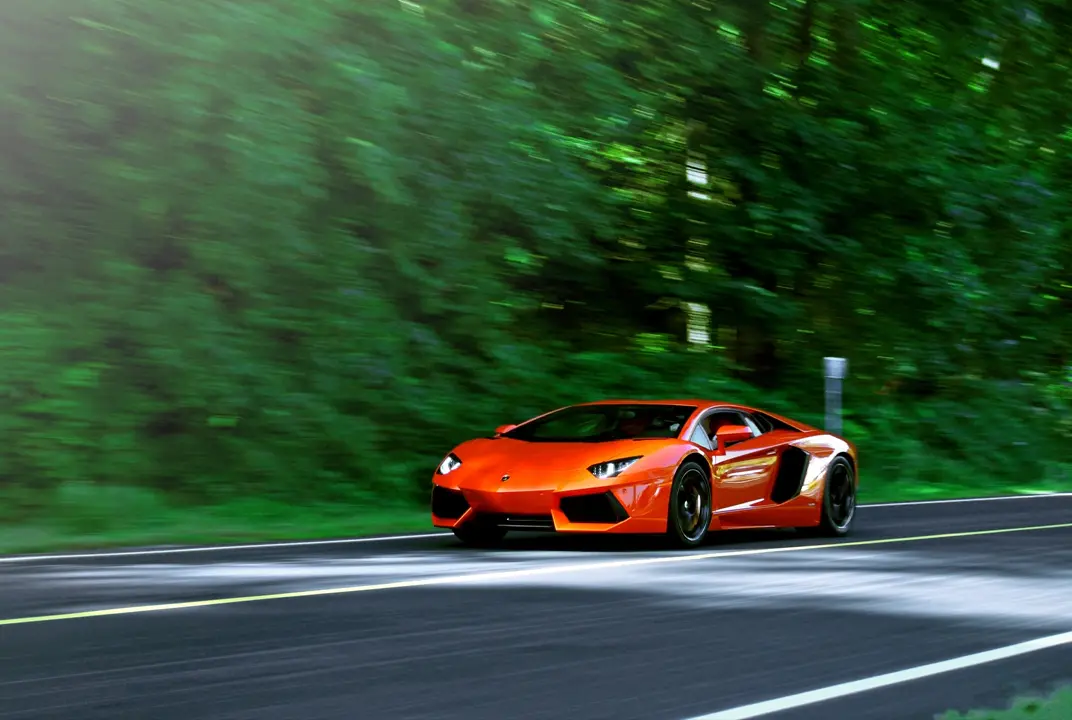
How does this affect behavior on the road?
The urge to “prove” one’s strength is not limited to buying a car — it carries over into driving style.
- Speed as a trigger: Studies using driving simulators have shown that simply mentioning words associated with masculinity (“strong,” “suit,” “father”) makes young men unconsciously increase their speed.
- Aggression: The threat to masculinity directly leads to an increase in driver anger. Men for whom the norm of “winning” is important tend to perceive the road as an arena for conflict. For them, the situation when another car overtakes them (especially if a woman is driving) turns into a “threat to status,” which provokes dangerous maneuvers.
Statistics confirm the theory
Data on traffic accidents in the USA for 2024 show a frightening gender gap:
- 72% of all those killed in traffic accidents — men.
- Men are 191% more oftenthan women, found to be at fault in fatal crashes.
- They are more likely to drive while intoxicated, speed, and ignore seat belts.
- In situations “road rage” (road rage) men are three times more likely to get into a direct confrontation or even deliberately ram other cars.
Why do we keep buying “status”?
Researchers believe the cause lies in deeply rooted social stereotypes. For decades, advertising and pop culture have linked cars with power, success, sexuality, and status.. As a result, the car came to be seen as an instrument capable of “building up” masculine identity if it turned out to be false. For many men, a car is not just a means of transportation, but a continuation of one’s own “I” and a status symbol.
This “behavioral crisis” also has a very concrete price: in most countries, insurance companies charge men higher insurance premiums, since their driving style is statistically considered more risky because of the need to constantly prove their masculinity.
Does that mean that all owners of sports cars have small members?
Not at all. Scientists emphasize that the study examined a specific psychological response to stress, not a way of life for all motorists. Buying a fast car may be driven by rational interest, a love of speed, or aesthetics. However, it is now scientifically confirmed: when a man feels “small” in one sense, he subconsciously seeks to become “big” in another.
You can read the results of the study at the link.








0 comments
Enter your email — we’ll send you a one-time code. No passwords or accounts.
Code sent to
If the email doesn't appear in your inbox within a few minutes, check your spam, junk, or promotions folder, as some email services may mistakenly place automated messages there