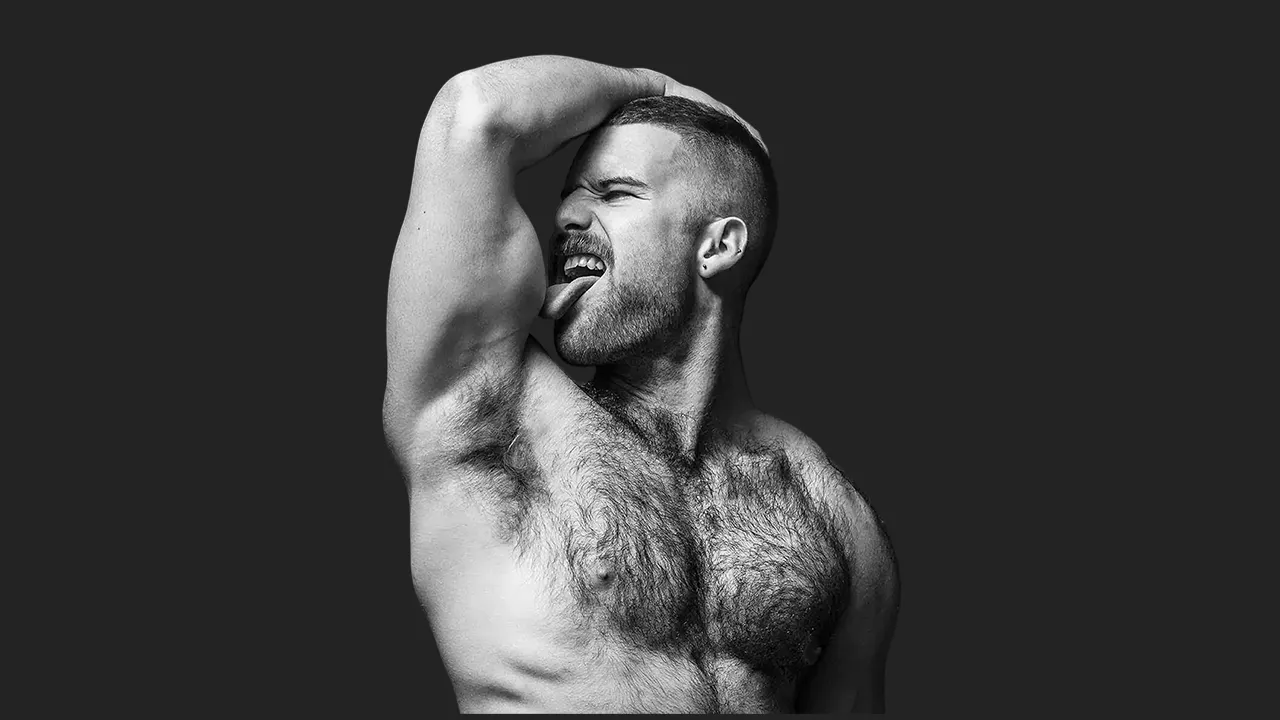
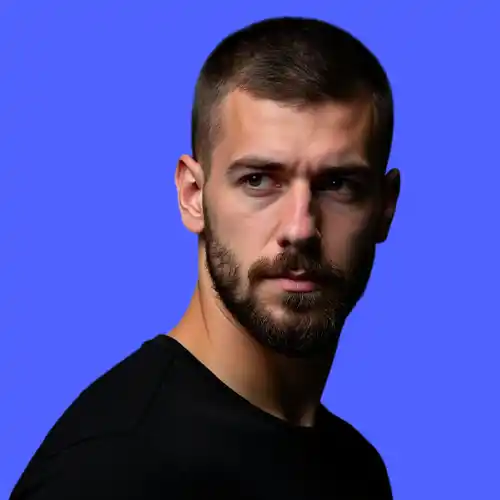
The world of male aesthetics is in a frenzy. Glossy magazines like GQ* solemnly proclaim the “return of the hairy chest,” social media is tearing apart the fake trends on TikTok and Instagram, and the queer community is tired of rolling its eyes: while mainstream media are making Columbus-level discoveries, within subcultures the hairy torso has never left the spotlight.
Meanwhile, clean-shaven devotees of the “smooth” aesthetic suddenly found themselves outsiders in a new era. Let’s unpack how, in Europe, the trend toward naturalness and the “bear” aesthetic replaced the body-perfect, smooth-as-glass ideal that had dominated for decades, why chest hair became the defining marker of the era, and how the HIV epidemic, queer history, and evolutionary psychology all played a role.
*Published in GQ (spring 2026). A trend piece by Tyler Chin in the magazine GQ, which named the hairy chest the key fashion statement of the year amid fatigue with the standards of hyper-smooth bodies.
The evolution of queer fur: from "Castro clones" to smooth parties
The relationship of queer men with body hair has never been simple — it is a full-fledged historical pendulum, swinging under the influence of politics, medicine, and fashion.
1970s: The era of natural triumph. After the Stonewall riots, in the wave of emancipation, the image of the "Castro clone" was born (named after the iconic gay neighborhood in San Francisco). The hypermasculine working-class style — tight jeans Levi’s, flannel shirts, mustaches, and thick, barely concealed chest hair — became a synonym for freedom, testosterone, and sex appeal.
1980s and 1990s: The shadow of crisis and the cult of the gym. The onset of the HIV/AIDS epidemic radically reshaped bodily codes. Since wasting was one of the disease's main symptoms, thinness came to be associated with mortal danger. In response, queer culture turned to the gym: hypertrophied muscles and impeccably smooth, waxed bodies became a visual manifesto of health, cleanliness, and control over life.
The Nineties: This “smooth” standard took hold in the 90s and early 2000s, becoming the calling card of visitors to major circuit parties, where wax removed everything — from chest hair to belly hair. At the same time, the rise of “metrosexuality” turned the glossy, sunbed-kissed, utterly hairless plastic torso into the ultimate cult object.
The rise of "bears": Over the past 15 years or so, the opposite trend has been observed. In major metropolitan areas, the gay community has beguna widespread return to beards and natural hair on the body. Social media accelerated the trend: accounts likeThe Bearded Man made a man with thick body hair the new standard, and the traits of “bears” and “otters” were adopted even by those who previously did not identify with these subcultures.
What's happening today
Today, the hairy chest has hit the most sensitive nerve in modern male grooming.
In gay clubs, it’s much easier to meet a man with an “untrimmed mane” peeking out from under his T-shirt than a man with a perfectly shaved torso. In response to a selfie asking, “Should I shave?”, social media users are now almost unanimously answering: "No," "Never," and "Don't even think about it".
On the one hand, the billion-dollar men’s grooming industry has spent years getting men used to trimmers, laser hair removal, and depilatory creams. On the other, the pendulum has swung toward a relaxed, “raw” masculinity.
“Men are no longer afraid of body hair, but now they approach it more consciously — the era of total smoothness has given way to the aesthetics of well-groomed nonchalance, where a beard and a hairy torso go hand in hand with an overall concept of hygiene,” notes a study on the evolution of men’s style Pride.
On TikTok and Instagram, hashtag trends #bodyhairpositive and #scruff are racking up millions of views, where users openly argue about the boundaries of what is aesthetically pleasing. At the same time, psychologists note an interesting paradox:
according to social media polls, the “want what I don’t have” phenomenon is often observed — smooth guys admire men with a more rugged, hairy look, while “bears” and hairy men reflect on how many years they spent dealing with insecurities because of glossy magazine standards imposed on them.
GQ: "The hairy chest is sexy again"
GQ magazine has published a piece with the headline “The hairy chest is sexy again.” However, for the gay community, this statement seems outdated by at least a decade. While mainstream advertising and film still often demand “boyish smoothness” from actors, real-life standards have long since changed. Even stars like Jonathan Bailey no longer feel the need to remove their body hair for fashion shoots.
What does science say?
Anthropologists and biologists have also been studying the phenomenon of male body hair for years. Researchers from the University of Turku in Finland (including the work of Markus Rantala) conducted experiments to find out how the perception of hairy and shaved male bodies changes.
Scientists have found that society’s preferences are cyclical and directly tied to social signals:
- Class marker: In a historical context, body hair was seen in some cultures as a sign of belonging to the working class, whereas smoothness was associated with elite grooming.
- Health signal: Evolutionary psychologists suggest that during periods of social upheaval, society tends to seek extremes in the body — either absolute sterile “safety” (as in the era of epidemics), or a return to a primordial, “wild” naturalness as a symbol of psychological stability and freedom from imposed corporate norms.
A New Form of Shaming
A side effect of the trend toward naturalness has beena biased attitude toward those who still prefer to shave. The author of the article, Johnny Lopez, notes that men who groom themselves with a razor face criticism today, which he compares to “bottom-shaming.”
The book describes an incident at a pool party where a man’s decision to shave his chest hair provoked an aggressive reaction from another guest, who declared, “I’m a man, and men have body hair.” Lopez highlights the irony of the situation: often, the very same people who oppose shaving their chests spend a great deal of effort in the shower trying to achieve perfect smoothness in other areas.
Personal Choice Versus Social Expectations
Johnny Sibilli, an actor on the series *Hacks*, admits that for a long time he felt pressure and felt he had to shave his chest hair, until he realized thatHe shouldn't let other people's opinions take precedence over his personal care.
Ultimately, experts and participants in the discussion agree on one thing: the trend toward hairy chests represents a positive acceptance of one’s body, but it should not become a tool for bullying.Personal comfort and the right to use a trimmer in silence should remain a priority, regardless of what the latest fashion magazine declares sexy.







0 comments
Enter your email — we’ll send you a one-time code. No passwords or accounts.
Code sent to
If the email doesn't appear in your inbox within a few minutes, check your spam, junk, or promotions folder, as some email services may mistakenly place automated messages there