
Erobella’s analytical platform has published its annual “Sexually Liberal City Index” for 2026. Researchers examined 41 cities worldwide, evaluating them across four key criteria: sex work legislation, LGBTQ+ rights, reproductive rights (access to abortion and contraception), and the overall “culture of sexual life.”
The results are sobering for many world capitals: while some cities retain a liberal status, the global trend points to growing political pressure on human rights, especially in the US and the post-Soviet space.
Amsterdam is the champion, Moscow is at the bottom
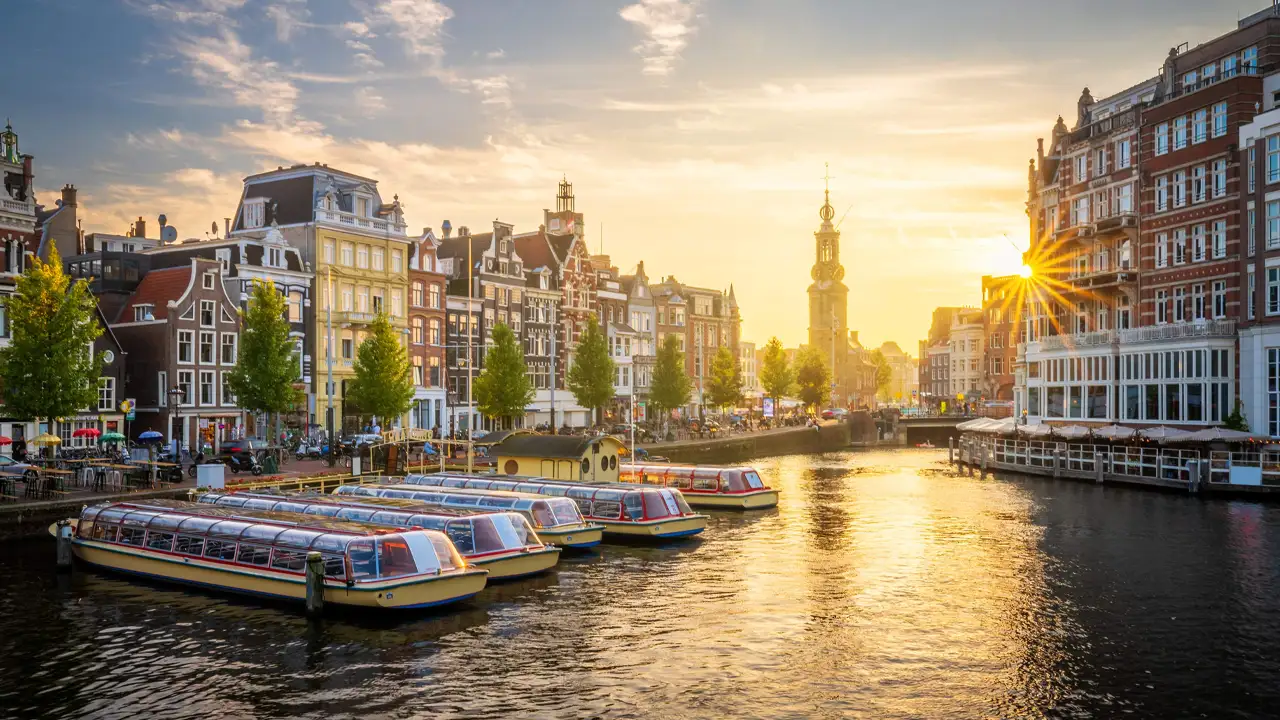
The outright leader of the ranking for the second year in a row is Amsterdam. The capital of the Netherlands scored 69.4 out of 100 possible points, posting the best results in questions of sex work legality and abortion rights, and was also recognized as the most balanced metropolis.
Related: Putin and Trump were depicted kissing each other at Amsterdam Pride (video)
At the other end of the list — Moscow, which took last place, 41st (11.6 points). In the LGBTQ+ life category, the Russian capital scored just one point out of ten. The study’s authors link this result to harsh legislation and the fact that any public LGBTQ+ activity in Russia is now effectively treated as extremism.
What is happening in the US?
Despite San Francisco remaining one of the world's most well-known "liberal hubs" (5th place), experts note stagnation and even decline in American cities. The main reason is a rollback in legal protection of LGBT rights. For example, Miami, which ranks 10th thanks to its developed infrastructure and nightlife, is losing ground because of legal restrictions on gender transition and weak anti-discrimination policies.
Top ten cities in the world (overall ranking)
The full top 10 list looks as follows:
- Amsterdam (Netherlands) — the city earned perfect scores for abortion rights and sex work freedom, and was also recognized as the most balanced metropolis.
- Vancouver (Canada).
- Manchester (United Kingdom) — emerged as one of the biggest surprises, surpassing London.
- Cologne (Germany) — is known as one of the largest Pride parades in Europe.
- San Francisco (USA) — recognized as the best city specifically for LGBTQ+ life, though its overall ranking positions have come under pressure.
- Berlin (Germany) — noted for its vibrant nightlife and strong community.
- Vienna (Austria).
- Glasgow (United Kingdom).
- Paris (France) — stands out for its rich cultural infrastructure and legal protections for safety.
- Miami (USA) — despite high event scores, the city dropped to 10th place due to weak protection against discrimination.
Bottom of the ranking
On the other end of the list were cities with the harshest restrictions on freedoms. The worst scores were shown by:
- Cape Town (South Africa).
- Tokyo (Japan).
- Moscow (Russia) — the capital of the Russian Federation came in last, scoring only 1 point in the LGBTQ+ life category. Researchers attribute this to the adoption of laws that equate public expression of identity with extremism.
The ranking shows a simple pattern: the size of a metropolis or its popularity among tourists no longer guarantees the status of a "safe space." In 2026, the key factors for success were concrete legal protections and government policy that safeguards a person's right to control their own body and identity. If liberalism used to be defined by the presence of "gay bars on every corner," today cities where people have the right to quality medical care and legal protection from discrimination inevitably win out in the long term.
The study emphasizes that in the modern world, a city's appeal is determined not only by entertainment, but also by the ability to live openly and under the protection of the law.
Key findings
Europe's dominance.
7 of the world's top 10 cities are in Europe. Notably, Manchester ranked 3rd in the world, at the same time as London came in only 23rd, proving that a city's size does not guarantee equality.
The situation in the USA is worsening.
Despite San Francisco’s leadership in the LGBTQ+ category, experts note stagnation and a worsening legal situation in American cities due to political decisions that restrict minority rights.
Methodology.
Cities were rated across 10 indicators, including the number of gay bars, access to contraception, gender transition rights, and anti-discrimination laws.
Full city rankings (2026)
| Location | City | Overall score |
| 1 | Amsterdam | 69.4 |
| 2 | Vancouver | 58.9 |
| 3 | Manchester | 58.6 |
| 4 | Cologne | 58.5 |
| 5 | San Francisco | 55.6 |
| 6 | Berlin | 53.2 |
| 7 | Vienna | 53.1 |
| 8 | Glasgow | 52.7 |
| 9 | Paris | 49.0 |
| 10 | Miami | 48.1 |
| 11 | Hamburg | 47.8 |
| 12 | Atlanta | 47.7 |
| 13 | Lisbon | 47.2 |
| 14 | Madrid | 45.6 |
| 15 | Prague | 43.6 |
| 16 | Melbourne | 43.0 |
| 17 | Birmingham | 42.5 |
| 18 | Toronto | 42.2 |
| 19 | Buenos Aires | 41.7 |
| 20 | Barcelona | 41.6 |
| 21 | Milan | 40.9 |
| 22 | Turin | 40.3 |
| 23 | London | 39.7 |
| 24 | Sydney | 38.7 |
| 25 | Montreal | 38.0 |
| 26 | San Diego | 37.1 |
| 27 | Los Angeles | 36.1 |
| 28 | Budapest | 35.7 |
| 29 | Chicago | 34.6 |
| 30 | Rome | 34.5 |
| 31 | Rio de Janeiro | 34.0 |
| 32 | New York | 32.4 |
| 33 | Santiago | 32.1 |
| 34 | Shanghai | 29.3 |
| 35 | Dallas | 29.0 |
| 36 | Seoul | 28.9 |
| 37 | Mexico City | 28.4 |
| 38 | Houston | 23.1 |
| 39 | Cape Town | 20.1 |
| 40 | Tokyo | 17.7 |
| 41 | Moscow | 11.6 |









0 comments
Enter your email — we’ll send you a one-time code. No passwords or accounts.
Code sent to
If the email doesn't appear in your inbox within a few minutes, check your spam, junk, or promotions folder, as some email services may mistakenly place automated messages there