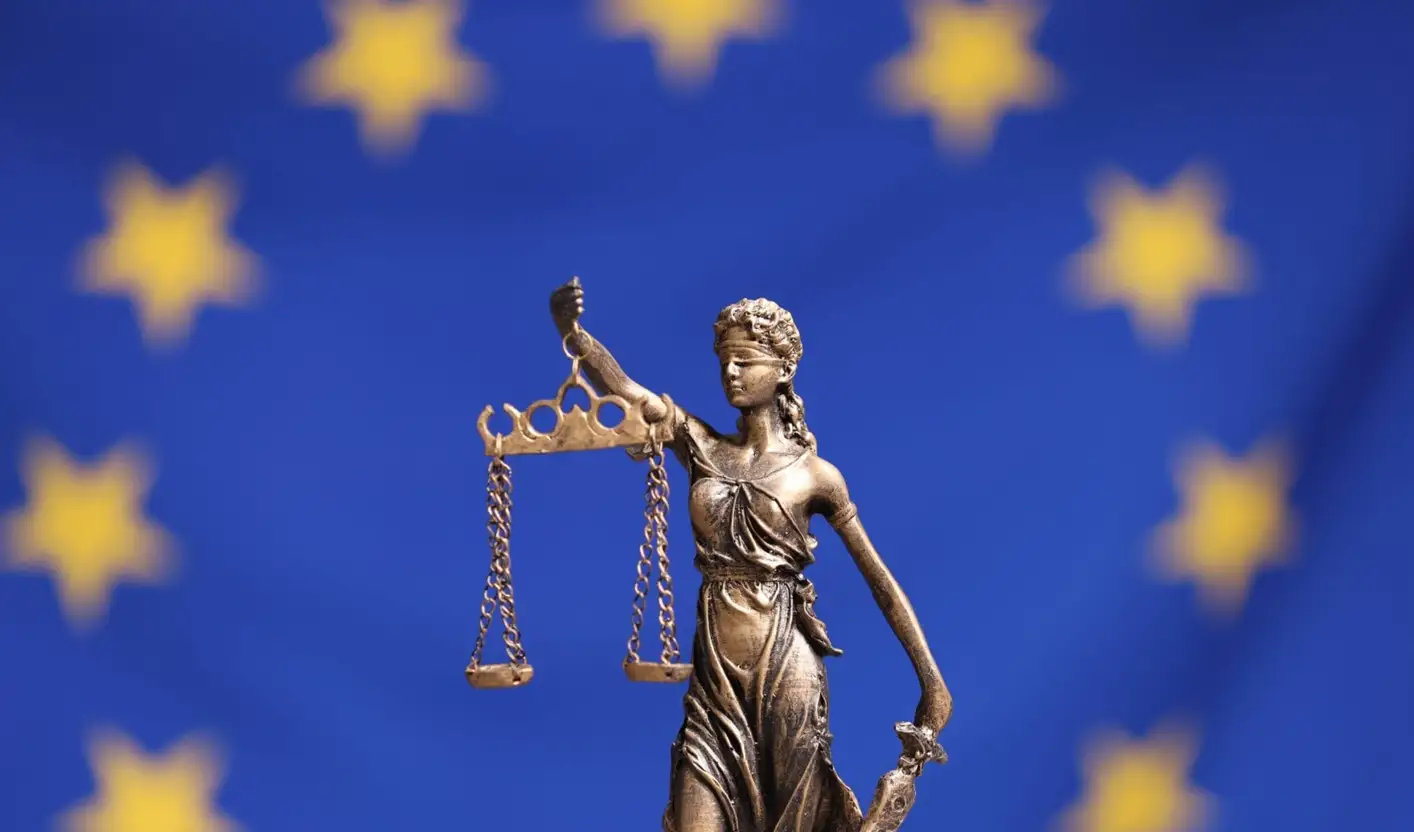

ILGA-Europe has published an updated register of court cases concerning the rights of LGBTI people in Europe for the period from January 2025 to May 2026. This document records the main trends in the practice of the European Court of Human Rights (ECHR) and the Court of Justice of the European Union (CJEU), which are increasingly considering not only individual cases of discrimination, but also systemic attempts by states to restrict the rights of citizens.
For the average person, these trials are important because they form legal standards that are binding on the governments of the Council of Europe and the European Union. At a time when attacks on the rights of the LGBTI community are intensifying in a number of regions, it is strategic litigation that is becoming a tool for protecting basic freedoms, such as the right to privacy, freedom of expression and security.
Scale and geography of cases
During the reporting period, the courts communicated 35 new cases and rendered 45 court decisions. The main activity of the ECHR was focused on Russia (15 decisions), Poland (9 decisions), Greece and Moldova (3 decisions each). In the new complaints received by the courts, Bulgaria, Russia, Hungary and the Czech Republic most often appear.
Most of the decisions made (26 out of 45) relate to hate crimes, hate speech and violations of freedom of assembly. At the same time, new lawsuits are more often filed for the recognition of same-sex unions (12 cases) and legal gender recognition (6 cases). This shows that the focus of human rights defenders is shifting towards the institutional consolidation of rights.
Landmark decisions of the Court of Justice of the European Union
This year, the Court of Justice of the European Union adopted several decisions that experts call constitutionally significant for the entire union. One of the main ones was the decision on the claim of the European Commission against Hungary. The court recognized that the Hungarian law, which restricts access to LGBTI content under the pretext of protecting children, violates not only EU directives, but also fundamental values of the European Union.
Another important precedent was the case of Kupryak-Troyan v. Poland. The Court ruled that EU member states are obliged to recognize marriages contracted by same-sex couples in other member states of the union if this is necessary for the exercise of the right to free movement. A similar principle was confirmed in the case of Shipovoy v. Bulgaria in relation to trans people: if a person has officially changed the gender marker in one EU country, other countries cannot ignore this fact when processing documents.
Rights of trans people and intersex athletes
Judicial practice in cases of trans people is becoming more diverse. If earlier the disputes mainly concerned the change of documents, now the ECHR considers complaints of domestic violence on the basis of gender identity (the case of L.B. v. the Czech Republic) and transphobic statements in the media.
An important event was the decision in the case of T.H. v. the Czech Republic, where the court recognized a violation of human rights in the requirement of mandatory sterilization for legal gender reassignment. Also, the Grand Chamber of the ECHR considered the case of the famous track and field athlete Caster Semenya. Although some of her complaints were declared inadmissible, the court found a violation of the right to a fair trial in Switzerland, where the legality of the claims to reduce testosterone levels was not properly verified.
The problem of non-enforcement of decisions
Despite victories in the courts, real change is often stalled at the national level. At the moment, 39 leading decisions of the ECHR are under the supervision of the Committee of Ministers of the Council of Europe, which have not yet been implemented by states.
The oldest of these cases, L. v. Lithuania, concerning the lack of legislation on legal gender recognition, has remained unresolved since 2007. Experts note that monitoring the implementation of decisions remains a key stage of work, since without changes in national laws, court verdicts remain only declarations on paper.
This review is based on the annual register of court cases that ILGA-Europe has maintained since 2010 to support strategic litigation and human rights protection. The document serves as a tool for lawyers and activists, helping to track the dynamics of legal standards in the Council of Europe and the European Union. The full report, which includes a detailed analysis of 35 new cases and 45 court decisions for the period from January 2025 to May 2026, can be found at official website of ILGA-Europe.








0 comments
Enter your email and we will send you a one-time code. No passwords, no accounts.
Code sent to
If the email does not arrive in your inbox within a few minutes, check your Spam, Junk or Promotions folder — some mail services may wrongly place automated messages there.