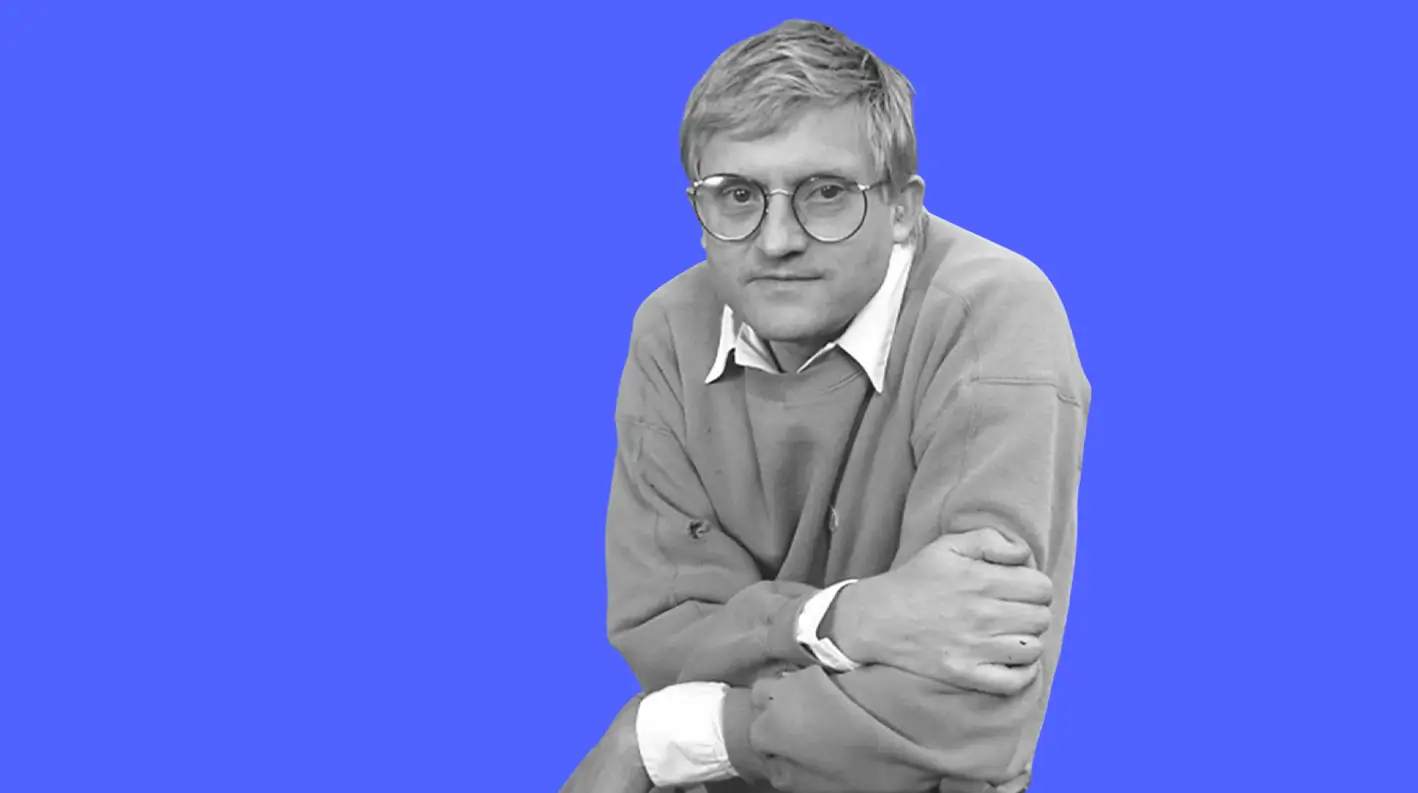

June 12, 2026, at the age of 88 died David Hockney is one of the most influential contemporary artists, whose works depicting sun-drenched swimming pools and California life have become iconic. Hockney was not only a master of Pop Art but also a pioneer of queer art, who began depicting same-sex love and desire long before their partial decriminalization in Britain.
Here's how David Hockney changed our perceptions of beauty and intimacy, revolutionized art without resorting to direct activism, and why his works have become a staple in the homes of millions of people.
"We're two guys clinging to each other": How Hockney Got His Start Under Censorship
Hockney began speaking openly about his identity in art as early as the early 1960s, while he was a student at the Royal College of Art in London.
In 1961, he wrote a piece titled “We Two Boys Together Clinging,” a title that referenced a poem by Walt Whitman. It was a code understood only by “those in the know,” allowing him to avoid accusations of violating the censorship laws of the time.
In the painting *Brushing Teeth, Early Evening* (1962), Hockney depicted two figures squeezing toothpaste from red Colgate tubes into each other’s mouths. To the general public, this seemed innocent, but to the queer community, it was a bold and ironic allusion to sexual intimacy.
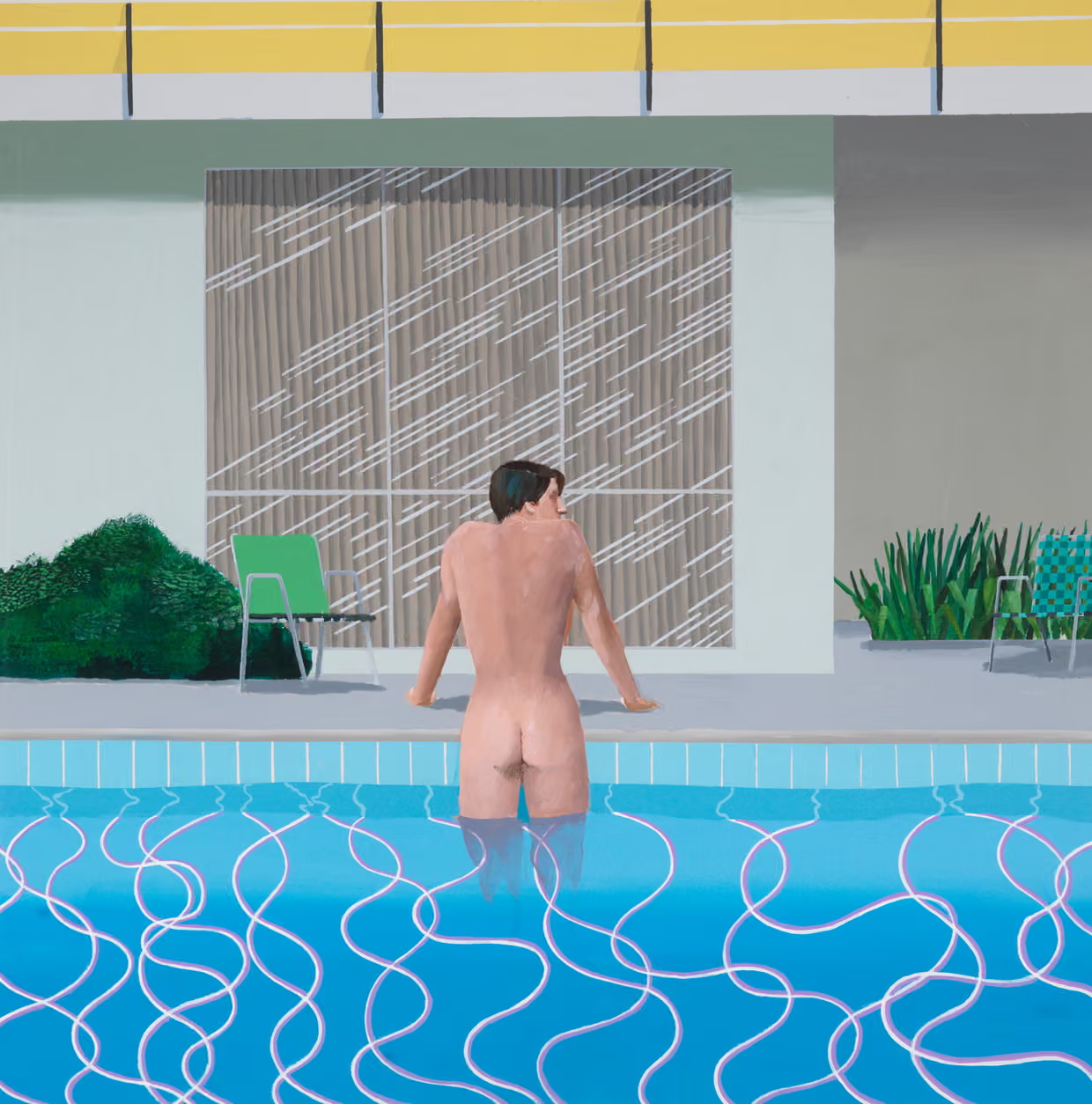
The California Dream: Pools, Tenderness, and Everyday Life
In 1964, Hockney moved to Los Angeles, where he found much greater freedom. It was there that he created his most famous works, transforming California into a sun-drenched fantasy of perfect lawns and swimming pools.
Unlike many of his contemporaries, Hockney did not depict provocative sexual scenes, but rather everyday intimacy: men showering together, brushing their teeth, or swimming.
At a time when homosexuality in art was often associated with loneliness or tragedy, Hockney showed that same-sex intimacy could be beautiful, tender, and full of pleasure. His famous painting *A Bigger Splash* became a symbol of this new vision.
How He Conquered the Art Establishment
Hockney managed to achieve what had long seemed impossible for an openly gay artist—full acceptance by the conservative art world.
He was not afraid of being accused of “frivolity” and openly used vivid patterns, floral curtains, and ornaments in his works, proving that decorative art can be profound and serious.
Hockney set auction records and held major retrospectives at leading museums around the world, such as Tate Britain. His success brought visibility to the queer community in the most prestigious cultural venues.
Hockney’s legacy is not just about technique or vibrant colors, but also a unique “gay sensibility” that radiates freedom. He showed the whole world the beauty of a life that had long been forced into hiding. From posters in apartments to pillow covers—Hockney’s images have become part of the visual language of our time, reminding us that art has the power to change the world simply by “looking closely at it.”








0 comments
Enter your email — we’ll send you a one-time code. No passwords or accounts.
Code sent to
If the email doesn't appear in your inbox within a few minutes, check your spam, junk, or promotions folder, as some email services may mistakenly place automated messages there