
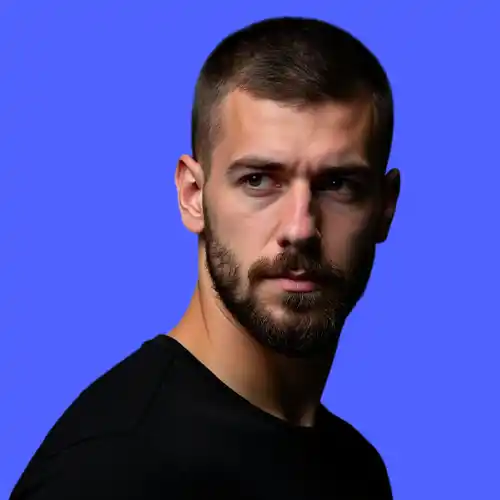
When we talk about queer invisibility in Russia, we usually mean state pressure, laws, and fear. But within this invisibility lies another—a quiet one that people don’t usually talk about, even within the community itself. It is the invisibility of age. Men over 50 are almost entirely absent from queer media, queer narratives, and queer life—as if they don’t exist. Or as if simply existing at that age and being gay is, in and of itself, an awkwardness.
Table of Contents
How real is this “invisibility” anyway? Maybe mature gay men are simply less active in public spaces?
It’s not a matter of activity—it’s a matter of structure. In 2023, Italian researchers from the University of Trieste conducted a series of cognitive experiments and confirmed what has long been intuitively felt: in the public consciousness, the category “gay man” is automatically associated with youth. An aging gay man literally does not fit into any of the familiar stereotypes—neither that of a “typical gay man” nor that of a “typical older man.” He falls outside both. 
In queer media, this pattern is reproduced mechanically: the subjects of the stories are young, the bodies in advertisements are young as well, and narratives about “coming out” typically involve a young person who is just starting to build a life. None of this is done with malicious intent—it’s just that no one has ever framed the question any other way.
Source: Coladonato et al., “A Cognitive Look at the Invisibility of Older Gay Men,” Social Psychology, 2023.
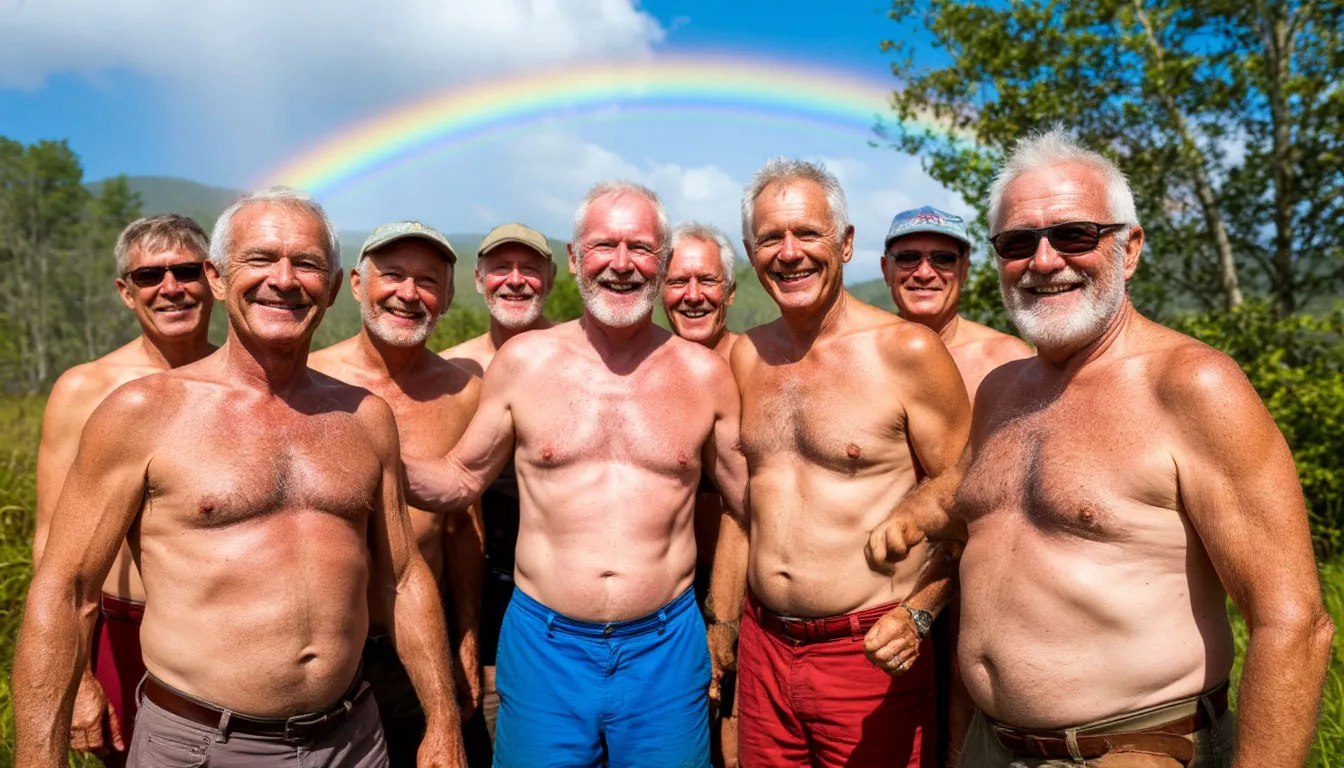
And within the community itself? Is there ageism there, too?
Yes, and it’s pretty harsh. British researchers have documented a specific phenomenon—“accelerated aging”: in gay culture, men subjectively “age” earlier than they do in the heterosexual world. While in mainstream culture a 45-year-old man is still “in his prime,” in a gay bar or on a dating app, he’s long since become invisible.
One participant in a British study described it this way: there is a culture of youth in the gay community, and if you’re past a certain age, you’re just an old man—and sometimes even a “dirty old man.” 
Grindr and other apps have made this ageism algorithmic: age filters, a culture of ignoring others, and a system for rating bodies and youth—all of this is hard-coded into the very architecture of these platforms.
Source: Jones & Pugh, 2005; Cambridge Ageing & Society, 2020.
"I'm 54. I simply don't exist on these apps. When I put my real age, I get no response. If I don't list my age at all, sometimes people message me, but then they find out and disappear. I've realized it's easier not to even try."
— Victor, 54, Moscow (name changed)
What happens to your mental state when you’re not seen by both sides at once—both society and your own community?
Scientists have coined a specific term for this condition: “internalized gay ageism.” This isn’t just a matter of feeling offended. It’s an internalized belief that growing older as a gay man means becoming less valuable, less desirable, and less visible. A study published in Social Science & Medicine found a direct link between this condition and symptoms of depression in men over 45. 
A 2024 study in the *Journal of Homosexuality* identified the following chain: internalized gay-ageism → a negative body image → decreased sexual satisfaction → an overall decline in quality of life. Being in a relationship does not break this chain—the loneliness here is not physical, but structural. 
Масштабное американское исследование Caring and Aging with Pride зафиксировало: 53% из 2560 квир-людей старше 50 регулярно испытывают одиночество. 
Sources: Wight et al., Social Science & Medicine, 2015; Prieto et al., Journal of Homosexuality, 2024; Fredriksen-Goldsen et al., Caring and Aging with Pride.
For Russian men, this is probably a very special story—after all, they grew up in the USSR or right after it, didn't they?
Yes, and here the post-Soviet context radically changes the picture. A man who is now between 55 and 65 years old grew up in a country where homosexuality was a criminal offense—Article 121 of the RSFSR Criminal Code was not repealed until 1993. Not only did he lack access to queer narratives—the very word “gay” was either a slur or a criminal offense.
The organization “Vykhod”—one of Russia’s oldest LGBTQ rights groups, which was forced to leave the country—focused specifically on queer people over the age of 45 in its report from late 2025. Conclusion: This group remains one of the most vulnerable and “invisible,” even within a community that is already subject to repression. They do not receive medical care—they hide their sexual orientation from doctors. They are afraid to communicate online due to surveillance. One in four regularly experiences loneliness. 
Historian Rustam Alexander (University of Melbourne, author of *Red Closet: The Hidden History of Gay Oppression in the USSR*) calls this generation “the generation of unfulfilled hopes.” After the collapse of the USSR, there was no serious public reckoning with decades of persecution—neither by the state nor by society. The current wave of state-sanctioned homophobia exploits this unresolved trauma. 
Sources: Vyhod / Coming Out, December 2025 report; Rustam Alexander, Russia Post, January 2026.
“I came out at age 47. Before that, I had a wife, kids, and a normal life. When I finally came out, it turned out that I was already considered old in the community. The young people look at me like I’m a dinosaur. It’s as if I’d arrived too late—not just in life, but in that community as well.”
— Andrei, 52, St. Petersburg (name changed)
You wrote about people who “came out” as adults. Are there many people like that?
This is a distinct history that has been scarcely studied in the context of Russia. In the post-Soviet context, a late coming out is not a personal choice, but often the only possible path. Many men lived in heterosexual marriages not out of fear of themselves, but out of fear of the state, society, and their families—and because there simply was no other language to describe who they were.
A man like this, coming out at age 50, faces a double disadvantage: he’s too old for the young queer community and too “uncomfortable” for his heterosexual peers. He has neither the “coming out” story that people usually tell nor the support network that is typically built in one’s youth.

“I go to the doctor just like any other older man. No one knows anything about my life. Once, my doctor asked if I had a wife. I said no. He nodded and wrote something down in my chart. I don’t know what. I’m too scared to ask.”
— Mikhail, 61, region (name changed)
Are gay men in the West in the same situation?
Ageism Within the Gay Community — This is a global phenomenon, not a post-Soviet one. Among sexual minorities, the rate of loneliness is approximately 35% higher than among their heterosexual peers.  But for Russians, several unique factors compound this: unresolved Soviet trauma, a lack of legal protection, and the absence of a support infrastructure — LGBTQ+ centers, psychotherapists, age-based communities — and, after 2023, the criminalization of identity itself.
In Spain, the United Kingdom, and Australia, there are at least specialized programs for older LGBTQ+ people—support groups, needs assessments, and adapted nursing homes. In Russia, there is nothing—neither a demand for such services nor a response to it.
Sources: Gorczynski & Fasoli, 2022; “Loneliness and Intersectional Discrimination Among Aging LGBT People in Spain,” PMC, 2025.
Will that change?
To be honest, probably not—not until several things change at once.
We need to acknowledge the very fact that this generation exists and carries a specific trauma. We need visibility—not as a form of pity, but as a way of normalizing their experience. And we need infrastructure—which doesn’t exist and cannot exist under current laws.
For now, however, men who are currently between the ages of 55 and 65 are people who spent their youth in a climate of criminalization, their middle age in hope, and are now facing old age amid a new wave of repression. They don’t complain. They simply exist—quietly, unnoticed, nowhere.
“I don’t expect anyone to notice me. I stopped expecting that a long time ago. I just live my life. I watch TV, go to work, and sometimes go online. Somewhere out there, there are probably people like me. But we don’t know about each other.”
— Sergey, 58, Volga Region (name changed)
Names have been changed. The anonymous quotes are composite, based on documented patterns from research and public testimony.







0 comments
Enter your email — we’ll send you a one-time code. No passwords or accounts.
Code sent to
If the email doesn't appear in your inbox within a few minutes, check your spam, junk, or promotions folder, as some email services may mistakenly place automated messages there