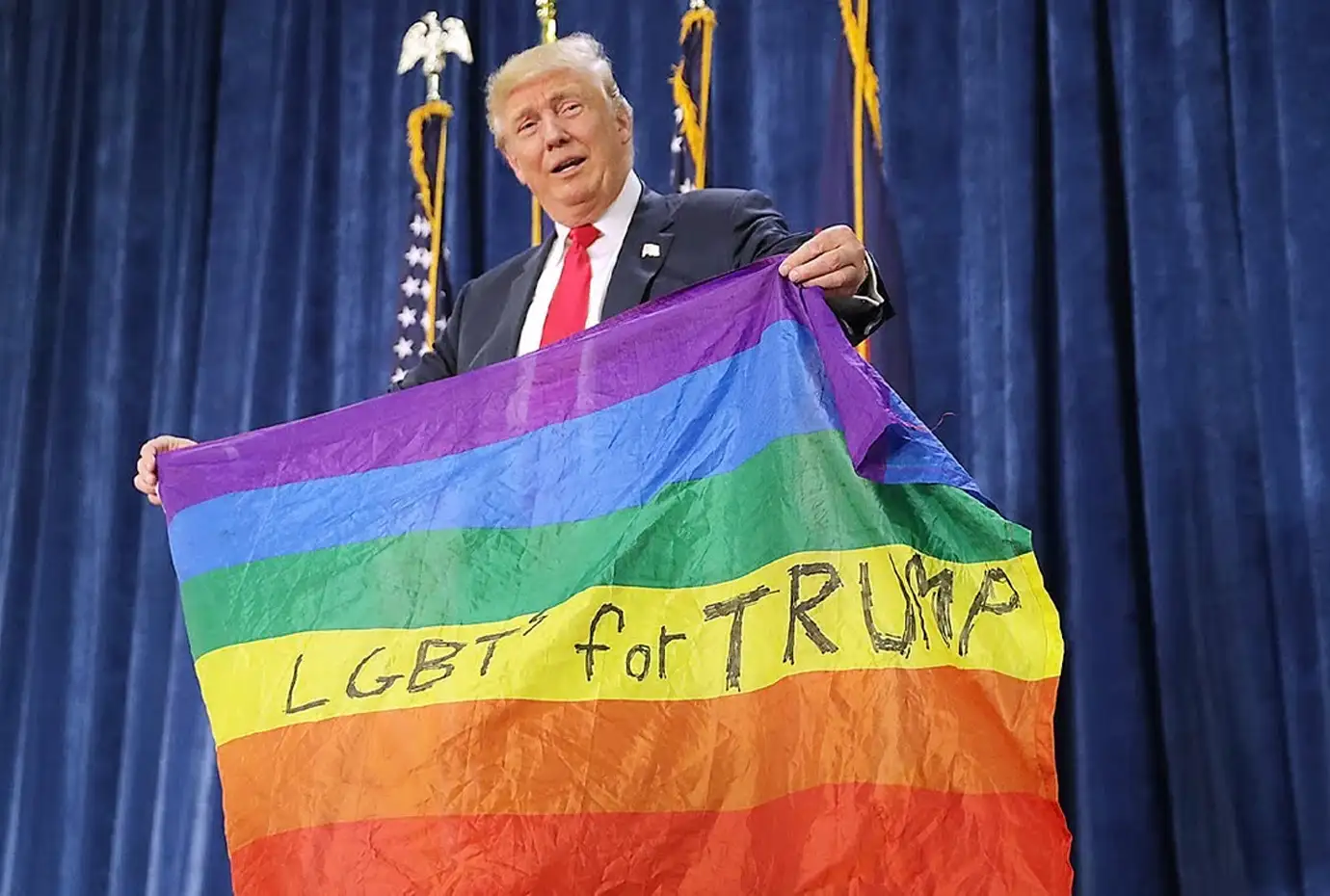
U.S. President Donald Trump offered an unexpected justification for the military operation against Tehran. At a press conference at the White House, he stated that the strikes on Iran were motivated, in part, by a desire to protect members of the local LGBT community. We’ll explain how human rights activists and world leaders reacted to this statement, and why experts are calling this conflict the first “TikTok war.”
What exactly did Trump say?
The American leader claims that sexual minorities in Iran allegedly support the bombings themselves. “They’re being killed; they’re being thrown off the roofs of buildings. They want us to keep bombing because their lives are in far greater danger,” Trump said.
The U.S. president had previously threatened to send Iran back to the “Stone Age,” promising to destroy all bridges and power plants in the country if Tehran did not open the Strait of Hormuz. At the same time, Trump himself emphasizes that he is not afraid of possible charges of war crimes stemming from his actions.
Human Rights Activists: “Bombs Don’t Bring Freedom”
Trump’s statement drew sharp condemnation from those he purported to be defending. On April 5, human rights organizations issued a joint statement emphasizing that the fight for LGBT+* rights is inseparable from the fight for peace.
The activists highlighted several key points:
Military strikes only make the situation worse. Bombings of civilian infrastructure harm the most vulnerable groups.
Human rights activists pointed out that the Trump administration had previously attempted to tighten immigration policy and deport two Iranian gay men back to their home country. “First, the administration tried to deport gay men to Iran, and now it’s bombing Iran to protect them,” sources quoted the activists as saying.
How are the world and Iran itself reacting?
The situation surrounding Iran is rapidly escalating, not only militarily but also diplomatically:
- The Reaction of Moscow and Beijing. The Kremlin called Trump’s rhetoric “yet another example of double standards” and opposed the use of the human rights agenda as a pretext for intervention. China also condemned threats of force, calling for de-escalation to avoid a humanitarian crisis.
- "The TikTok War." The conflict has already been given this nickname on social media. Iranian diplomats have begun using memes and satirical videos to mock the White House's statements.
- Energy blackmail. In response to Trump's threats, Tehran has officially refused to open the Strait of Hormuz, putting the stability of the global energy market at risk.
- A Change of Government in Tehran. Amid the crisis, the Islamic Revolutionary Guard Corps (IRGC) effectively took control of Iran, citing the incapacity of Supreme Leader Ali Khamenei.
For the Kremlin and other geopolitical opponents of the United States, Trump's rhetoric has become an "unexpected trump card." Moscow is using this incident to support its argument about the “corrupting influence of the West,” which imposes its values under the guise of military aggression. Ultimately, Trump’s attempt to win over the liberal public backfired: the civil rights movement is divided, and the United States’ opponents have gained a new tool for criticizing Washington.




0 comments
Enter your email — we’ll send you a one-time code. No passwords or accounts.
Code sent to
If the email doesn't appear in your inbox within a few minutes, check your spam, junk, or promotions folder, as some email services may mistakenly place automated messages there