
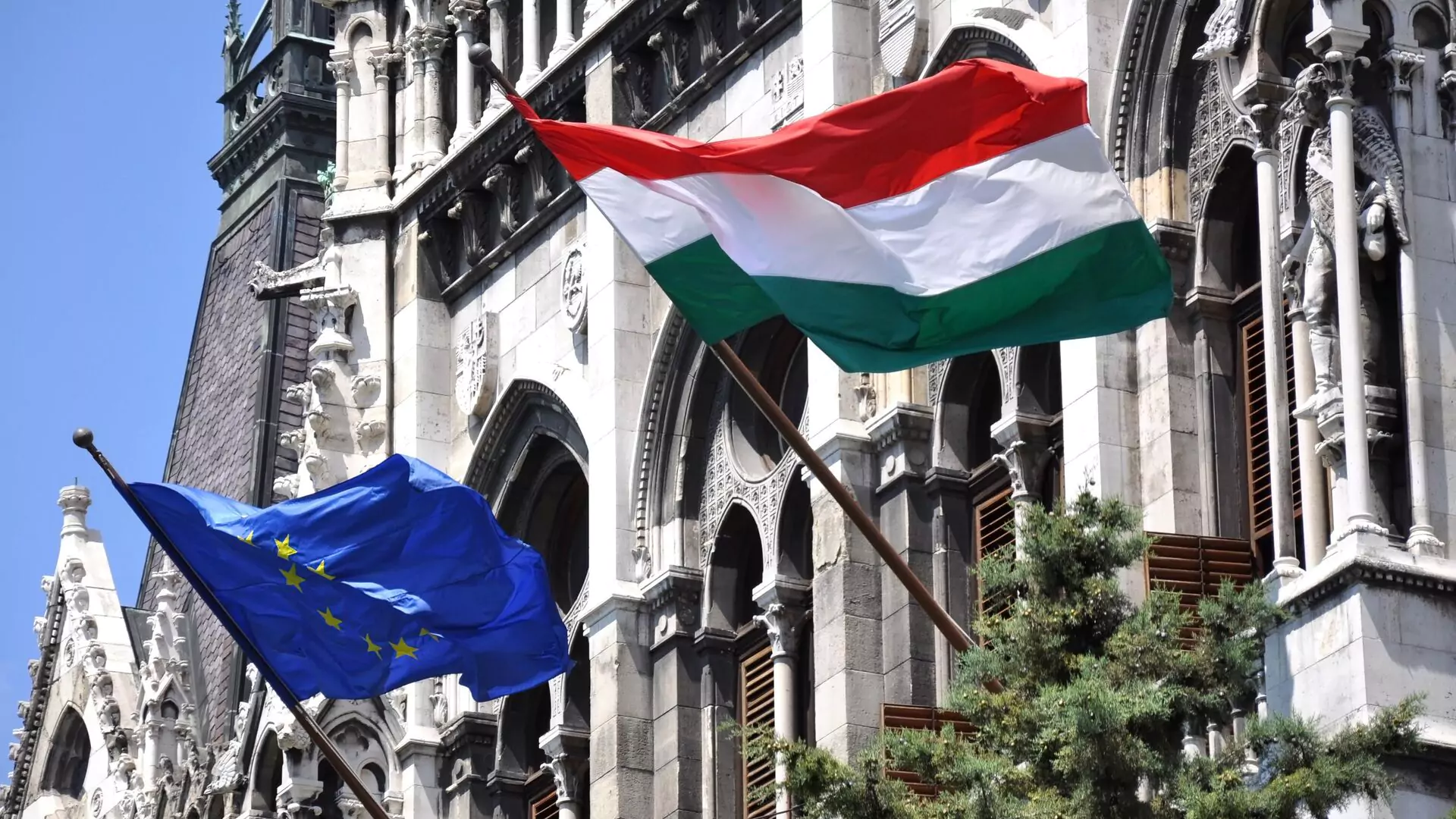
Elections will be held in Hungary next month, which Politico has already called “the most important of 2026.” Viktor Orbán, who has served as prime minister since 2010, may lose power for the first time in a long while. We examine how this “laboratory of illiberalism” has turned the country into one of the most corrupt in Europe, and why Orbán’s defeat would be a blow to right-wing populists around the world.

Viktor Orbán is running for re-election, but his position is weaker than ever. According to polls, he could suffer a “stinging defeat” at the hands of the pro-European party “Tisza,” which was founded in 2020 by Péter Magyar.
Over his 16 years in power, Orbán has methodically built a regime in Hungary that is described as “authoritarian” and “illiberal.” He has restricted the rights of the LGBTQ+ community, virtually driven Pride out of the public sphere, and turned the country into a place that Hungarian conservatives themselves call “Trump before Trump.”

Why is Orbán called Putin's key ally?
The Hungarian prime minister is considered Vladimir Putin's closest confidant in the European Union. His foreign policy often runs counter to that of the European Union as a whole:
- Just this week, Orbán blocked a 90-billion-euro EU defense loan for Ukraine.
- This happened right in front of Volodymyr Zelenskyy, who, according to eyewitnesses, was “as pale as a ghost.”
- Russia, for its part, supports Orbán not only politically but also through bot networks on social media.
What is his regime accused of?
In addition to political pressure, Orbán's administration has been marred by widespread corruption. An investigation Financial Times showed that during his time in office, government contracts totaling approximately 28 billion euros fell into the hands of people in his inner circle. Today, Hungary is considered one of the most corrupt countries in Europe and one of the most dangerous places for journalists to work.

Who supports "Viktator"?
Despite his reputation, Orbán remains an icon for conservatives around the world. This week, Budapest hosted the CPAC Hungary forum, which is described as “the only global anti-globalist forum.” The following figures spoke in support of Orbán:
- Donald Trump: praised him on FaceTime for “defending our borders and values.”
- Marine Le Pen: called him an “outstanding leader” (although she herself is currently barred from running for office in France due to allegations of embezzlement).
- Geert Wilders: A Dutch right-wing politician called Orbán “a lion on a continent ruled by sheep.”
- J.D. Vance and Marco Rubio: American politicians directly link the Republicans' success to that of the Orbán regime, which has become the ideological framework for "Trumpism."
Why is this important to the rest of the world?
Orbán's defeat could trigger a "domino effect." The right-wing bloc in Central Europe—which includes Czech populist Andrej Babiš and Slovak Prime Minister Robert Fico—could be shaken.
The first signs of cracks in the “right-wing bloc” are already evident: in Slovenia, the liberal Robert Golob managed to defeat Orbán’s ally, Janez Janša. If Orbán falls, it will be a symbolic humiliation for all right-wing forces, including Trump, whose approval ratings in the U.S. are currently falling amid the unpopular war with Iran.
However, it is too early for liberal forces to celebrate. Far-right sentiment remains strong in Germany, the United Kingdom, and especially in France, where—against the backdrop of Emmanuel Macron’s unpopularity—Le Pen’s party could come to power. The example of Hungary shows that if a right-wing populist is given free rein, the result is "apathetic kleptocracy", which is extremely difficult to get out of.
Let's hope that Hungary's next leader won't stay in office for another sixteen years.







0 comments
Enter your email — we’ll send you a one-time code. No passwords or accounts.
Code sent to
If the email doesn't appear in your inbox within a few minutes, check your spam, junk, or promotions folder, as some email services may mistakenly place automated messages there