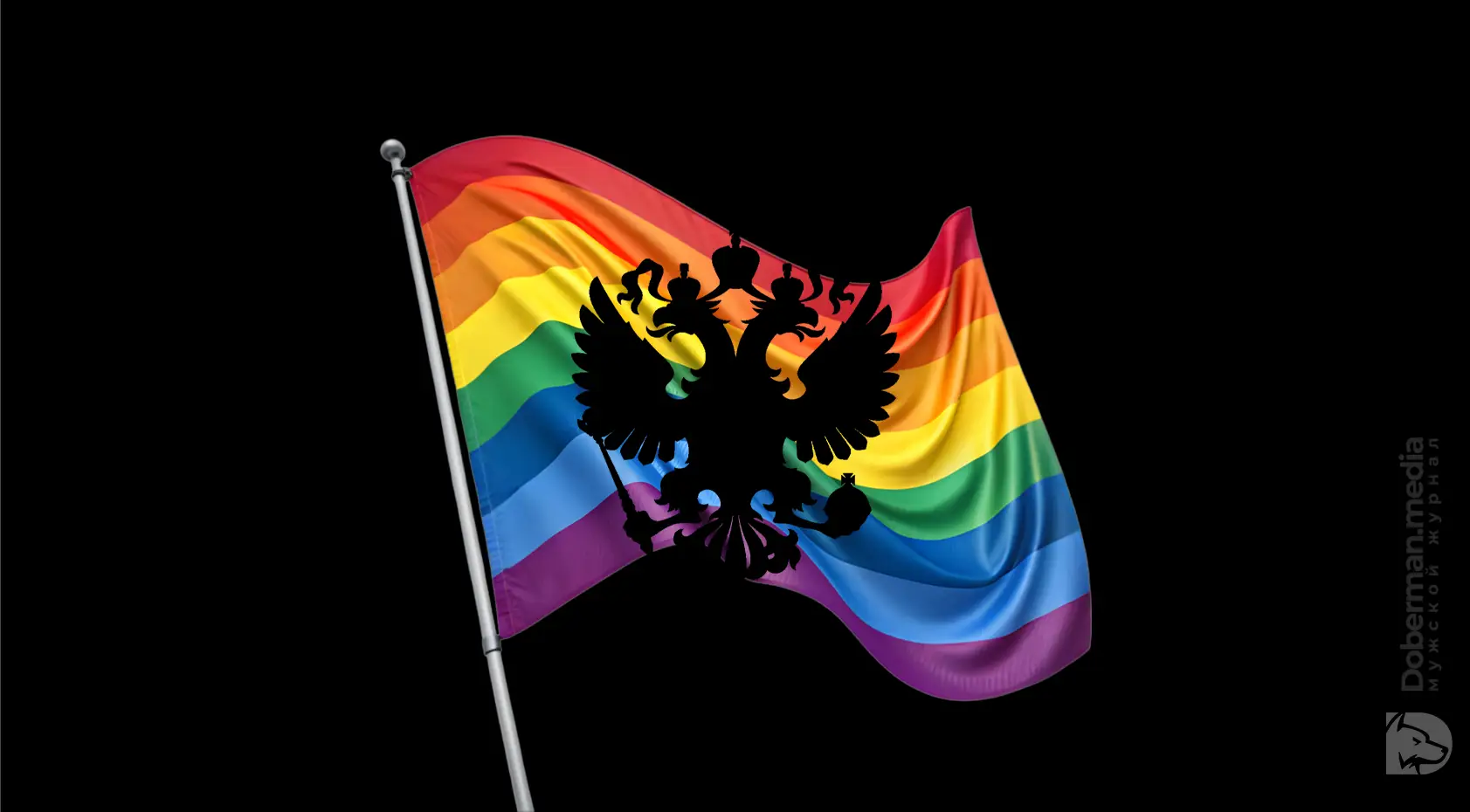

November 30, 2023. I remember that day as if it were etched into my memory. The Russian Supreme Court designated the “international LGBT social movement” as an extremist organization. There was no “movement” in the sense described in the Ministry of Justice’s lawsuit. There was no single headquarters, no single flag waved by an army, and no single plan to “destroy traditions.” There were just us—ordinary people who simply wanted to live, to love, and to be visible, at least within our own circles. And yet we were declared enemies of the state—like terrorists, like those who must be eradicated.
Three years have passed. January 2024 marked the first blow, when the ruling took effect. And March 2026—when, in a closed-door session, a St. Petersburg court designated “Coming Out” as an extremist organization. The first real, active LGBT organization in the country. This is no longer some abstract “international phantom.” This is us. These are the people who handed out condoms, who led support groups, who answered calls in the middle of the night saying, “I’ve been kicked out of my home.” Now even offering help has become a crime.
What has changed? Everything. And nothing. We’re still here. But the air feels different. Thicker. Heavier. As if every breath has to pass through a filter of fear.
Legal Terror: From Fines to Graves
Until 2023, we were under pressure from “propaganda.” The 2013 law, then its expansion in 2022. Fines, account suspensions, and firings. But that was like mosquito bites compared to what came next. Now the rainbow is considered “extremist symbolism.” Article 20.3 of the Code of Administrative Offenses: 15 days in jail or a fine. Do it again—Article 282.4 of the Criminal Code: up to four years. Organize a party, write a post, wear rainbow earrings—and you’re already a “member of an extremist community.” Up to 12 years under Article 282.2.
According to human rights activists, by mid-2025, more than 100 convictions had been handed down for “LGBT extremism” alone. Ninety-eight were administrative convictions, but more than 20 were criminal convictions. Three people received prison sentences for “recruiting” others into this “movement.” In 2025, publishing house employees were arrested for books featuring queer characters. In Orenburg, the case of the Pose club was the first of its kind: the art director and administrator were charged with organizing an extremist community—simply because of costumes, wigs, and people who were just dancing. And then— Andrei Kotov.
Andrei was the director of the travel agency “Men Travel.” He organized trips for men: cruises on the Volga, fishing trips, and outings. Nothing illegal—just tours where people could be themselves without worrying about what others thought. In late November 2024, he was detained. He was beaten during a search, and they used a stun gun on him. On December 2, he was sent to the “Vodnik” pretrial detention center. He was charged under Article 282.2 (organizing and participating in an extremist organization) and later charged under Article 242.2—allegedly for child pornography (according to the investigation, a video found on his phone).
A month in a cell. Pressure, humiliation, solitary confinement—according to friends and human rights activists. On December 29, 2024, he was found dead. Officially, it was ruled a suicide. At 4 a.m. In November 2025, the court posthumously found him guilty. The case was closed due to his death. But the verdict was handed down. To say: even in death, he is guilty. Even after death—an extremist. In 2026—“The Exit.” The rest will follow. We know this. They won’t stop.
Everyday Life: The Invisible and the Broken
We self-censor every day. The rainbow keychain goes in the trash. Our profile picture is neutral. In chat rooms, we use euphemisms: “those who,” “our people.” The words “gay,” “lesbian,” and “trans” are taboo in public. Books are confiscated. Movies are censored. Publishing houses are raided.
Trans people have disappeared. Transitioning, hormones, surgeries, and legal documents are all banned. Doctors refuse to treat them, citing “biological sex.” In prisons, trans people are classified based on their genitals; without therapy, this is torture. Many revert to their old names, clothes, and masks. They simply cease to exist.
Ordinary people, too. A teacher was fired because of an old post. A guy was summoned to the police station after his ex reported him. A mother told her daughter, “Stop it, or I’ll turn you in.” Fear is in every mirror, in every conversation.
Those Who Have Left and Those Who Are Holding On
Emigration has increased significantly over the past three years. For many people, it was the only way to stay safe and live openly. But emigration is not an easy decision. It means losing one’s home, language, career, and social circle. Many leave not because they want to, but because they feel they have no other choice. But thousands have stayed behind. No money, no visas—just parents and fear. We’ve gone underground. Private chat rooms for three people. Secret meetings. Therapy via Zoom from abroad. We’re helping those facing prison sentences to evacuate. Sharing a VPN, doctors, stories.
This isn't heroism. It's survival. We've learned to love more quietly, but more deeply. To hold hands in the dark. To hug when no one is watching.
What's Left of Us
We’ve been labeled extremists. But extremism is when the state kills its own citizens for love. For simply existing. We are not extremists. We are just people. And we haven’t disappeared.
We’ve grown deeper. Stronger. In everyone who decided today to live this day to the fullest. In every “I’m with you” in the chat. In every refusal to feel ashamed.
Three years ago, they thought they could wipe us out with a single decision. It didn’t work. We’re still here. In every breath. In every tear. In every little victory—just being here.
Someday, this period will be called the darkest of times. And we will tell our children: “They declared us enemies. They beat us, imprisoned us, and drove us to our deaths. But we didn’t give up. We simply kept on loving.”
And that will be our truth. The strongest one.






0 comments
Enter your email and we will send you a one-time code. No passwords, no accounts.
Code sent to
If the email does not arrive in your inbox within a few minutes, check your Spam, Junk or Promotions folder — some mail services may wrongly place automated messages there.